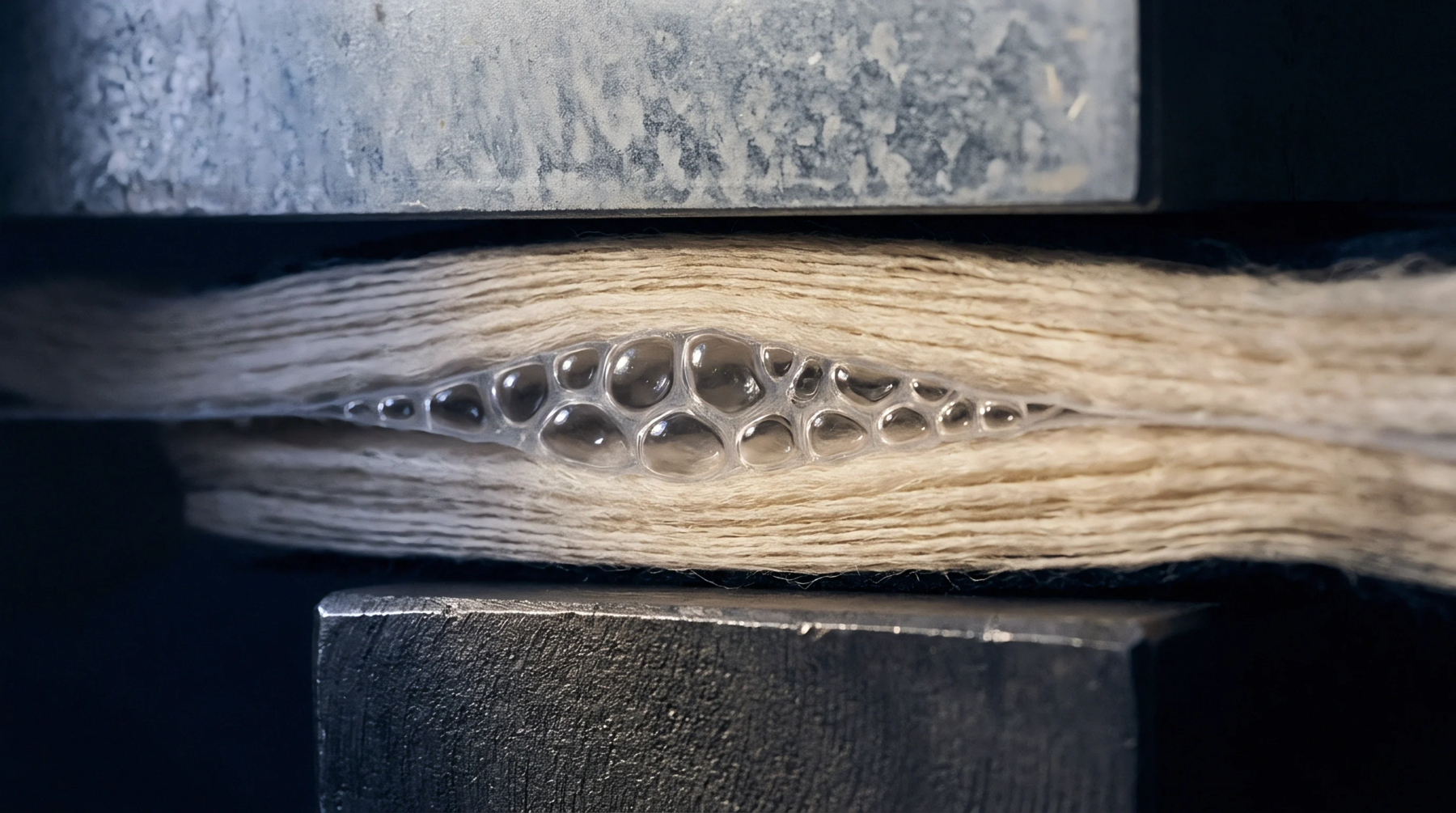
Weaving Machine Disruption
Mechanical and pneumatic interruption of yarn delivery across an open warp shed during shuttleless weaving operations defines an unscheduled cycle stoppage. In air-jet weaving, filling insertion failure denotes the inability of the propellant air stream or mechanical grippers to deliver the complete length of weft yarn to the opposite selvedge within the allotted angular window of the main shaft. The condition registers immediately at the arrival sensors, which trip the loom stop motion mechanism before reed beat-up occurs.
This prevents the formation of structural fabric flaws such as missing picks, partial picks or broken filling. The designation ceases to apply once the yarn has successfully traversed the shed, reached the right-hand feelers and been bound by the closing warp cross sheds.
Interference Kinetics
Progression of weft transport relies on steady momentum transfer between high-pressure air streams and the yarn line. When filling insertion failure develops, mechanical or aerodynamic breakdown disrupts this critical balance midway through the shed. Yarn can snag on open warp ends whose shed geometry exhibits insufficient separation, or cling to fuzzy yarn fuzz caused by improper sizing.
Relay nozzles that pulse out of sequence fail to support the traveling pick, permitting the leading yarn tip to droop out of the profiled reed guide channel. Once out of the protective tunnel, the pick loses forward velocity, folds over on itself or blows out between upper warp ends. Arrival sensors monitor the presence and timing of the yarn tip, cutting electrical power to the drive motor when the yarn fails to arrive within specified crank degree limits.
Structural Fabric Deterioration
Unresolved insertion faults leave severe visual and physical defects across woven goods. When the stop motion fails to arrest the machine instantly, filling insertion failure produces partial picks, loose picks, double picks and visible stop marks across the cloth. In high-density apparel fabrics and fine industrial weaves, even a momentary stoppage creates an uneven pick spacing band visible under direct illumination.
Broken filaments or shredded staple fibers shed into the open shed, contaminating subsequent insertions and creating repeated yarn snarls. Excessive loom down-time damages fabric economics by diminishing overall weaving shed efficiency and forcing manual operator restarts that introduce tension variances across warp lines.
Root Cause Mitigation
Systematic remediation of insertion interruptions requires analyzing sensor logs that categorize fault types by shed location and crank angle. Technicians verify warp sizing quality to confirm that fiber hairiness is suppressed, reducing shedding cling between adjacent warp sheets. Main nozzle acceleration profiles, relay nozzle blowing angles and pneumatic tank pressure settings are checked with digital pressure probes to confirm correct air staging along the sley.
Verifying reed alignment removes physical burrs or misaligned dents that mechanically intercept the trailing weft yarn. Stable yarn packages with uniform take-off tension from pre-winder accumulators eliminate unwinding snags, ensuring consistent pick insertion and stable running efficiency across demanding continuous weaving shifts.