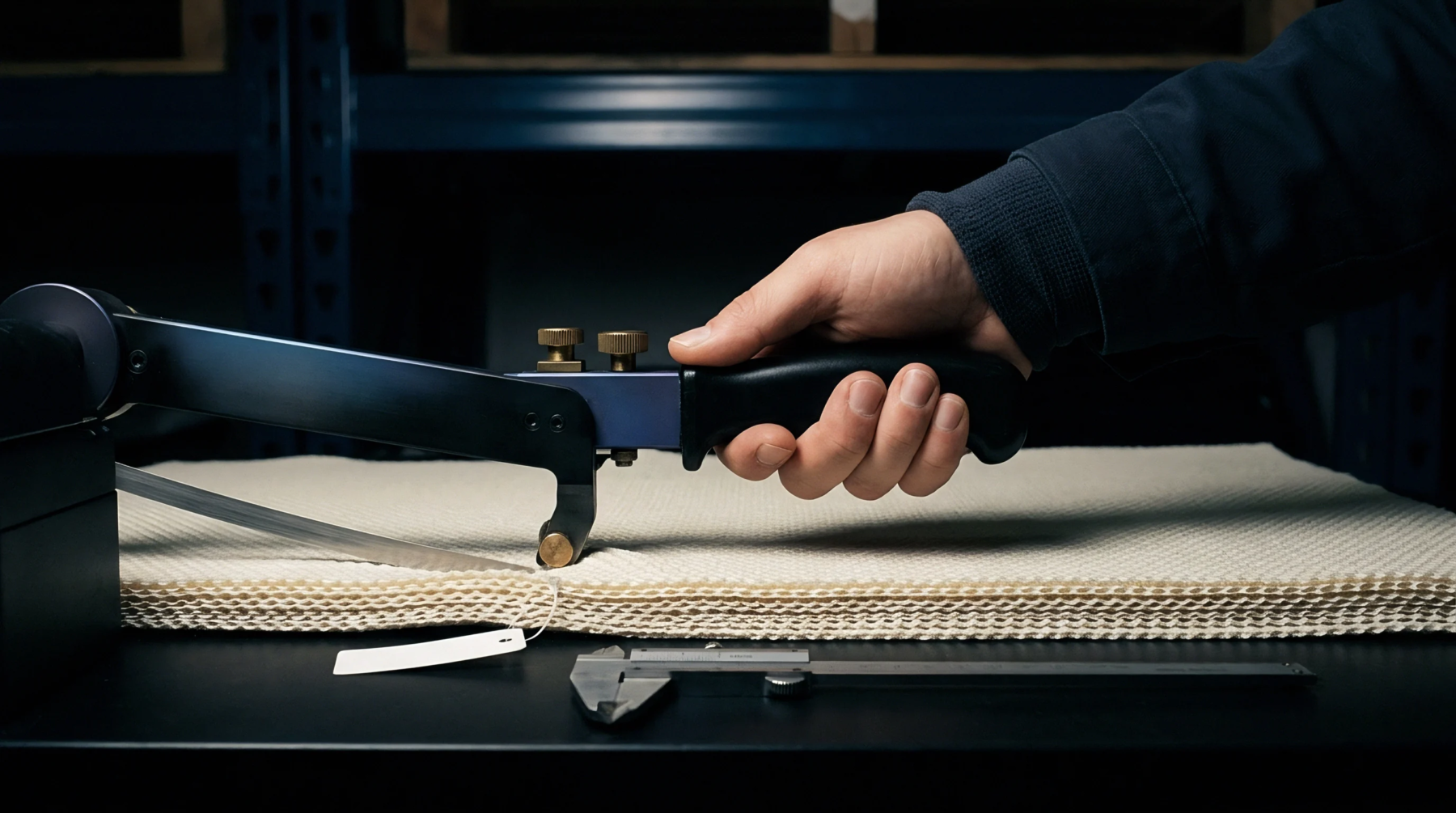
Swatch Sampling Position Deciding Whether a Batch Passes
Physical swatch position across fabric width and length determines chemical compliance, requiring three-point cross-web sampling to validate batch pass status.
Chemical retention on textile substrates occurs during pad dry cure application steps where perfluorinated compounds bind to cellulose or synthetic blend yarns. Fluorinated repellent deposition quantifies the amount of active chemical clinging to the fibre surface after the nip rollers squeeze excess liquor from the goods. Mills measure this parameter by extracting the bonded molecules from small fabric swatches and running gas chromatography to verify surface concentration.
The finish acts as a barrier against water and oil by lowering surface tension, preventing liquid droplets from wetting the individual capillaries within the yarn bundle. Precise control of bath chemistry ensures the wet pickup matches the target retention window specified by the apparel brand. Too much chemical creates stiff hand feel and fails physical audits, while insufficient retention leads to premature oil penetration during consumer use.
Impregnation takes place inside industrial finishing ranges where continuous rolls of woven fabric travel through a chemical trough at high speed. Vertical padding mangles exert mechanical pressure to force the liquid emulsion uniformly across the warp and fill directions before the goods enter the drying chambers. Evaporation removes carrier water, leaving the fluorocarbon side chains free to orient outward into the surrounding air for maximum repellency.
Heat setting temperatures inside the stenter frame must reach specific thermal thresholds to promote crosslinking between the resin backbone and the textile substrate. Operators monitor liquor pick up rates continuously to adjust pneumatic pressures on the squeeze rollers whenever fabric weight variations occur across the batch.
Quality control laboratories audit finished fabric lots by subjecting small circular samples to hydrostatic head testing and spray rating evaluations under controlled climatic conditions. A spray test rating measures dynamic water shedding performance by grading the visual appearance of droplets rolling off the inclined sample surface after standard water impact. Oil repellency grades follow hydrocarbon resistance testing where drops of different liquids sit on the fabric for thirty seconds without causing wetting or absorption.
Auditors reject bulk shipments failing these physical benchmarks, returning the rolls to the mill for reprocessing or chemical stripping.
Surface durability diminishes over repeated laundering cycles as mechanical abrasion and detergent residues gradually degrade the outer fluoropolymer barrier. Technical outerwear specifications require treatments to withstand twenty home wash cycles before the spray rating drops below an acceptable threshold for consumer utility. Staining agents with exceptionally low surface tension can still compromise the chemical shield if left in contact with the garment for extended periods.
Environmental regulations restrict the use of long chain carbon chemistries, forcing chemical suppliers to develop short chain alternatives that alter retention dynamics and drying parameters during production.
Physical swatch position across fabric width and length determines chemical compliance, requiring three-point cross-web sampling to validate batch pass status.
Expertise is a utility, not a secret. sentiention™ publishes its working knowledge as open reference: intelligence layer covering the materials it sources, the markets it enters, and the reference that serves both.