Statistical Tolerance Analysis for across Width Crosslinker Deposition in Continuous Stenters
Across-width crosslinker variation in continuous stenters requires statistical tolerance analysis combining pad nip deflection, migration, and L/C/R sampling.
Pickup
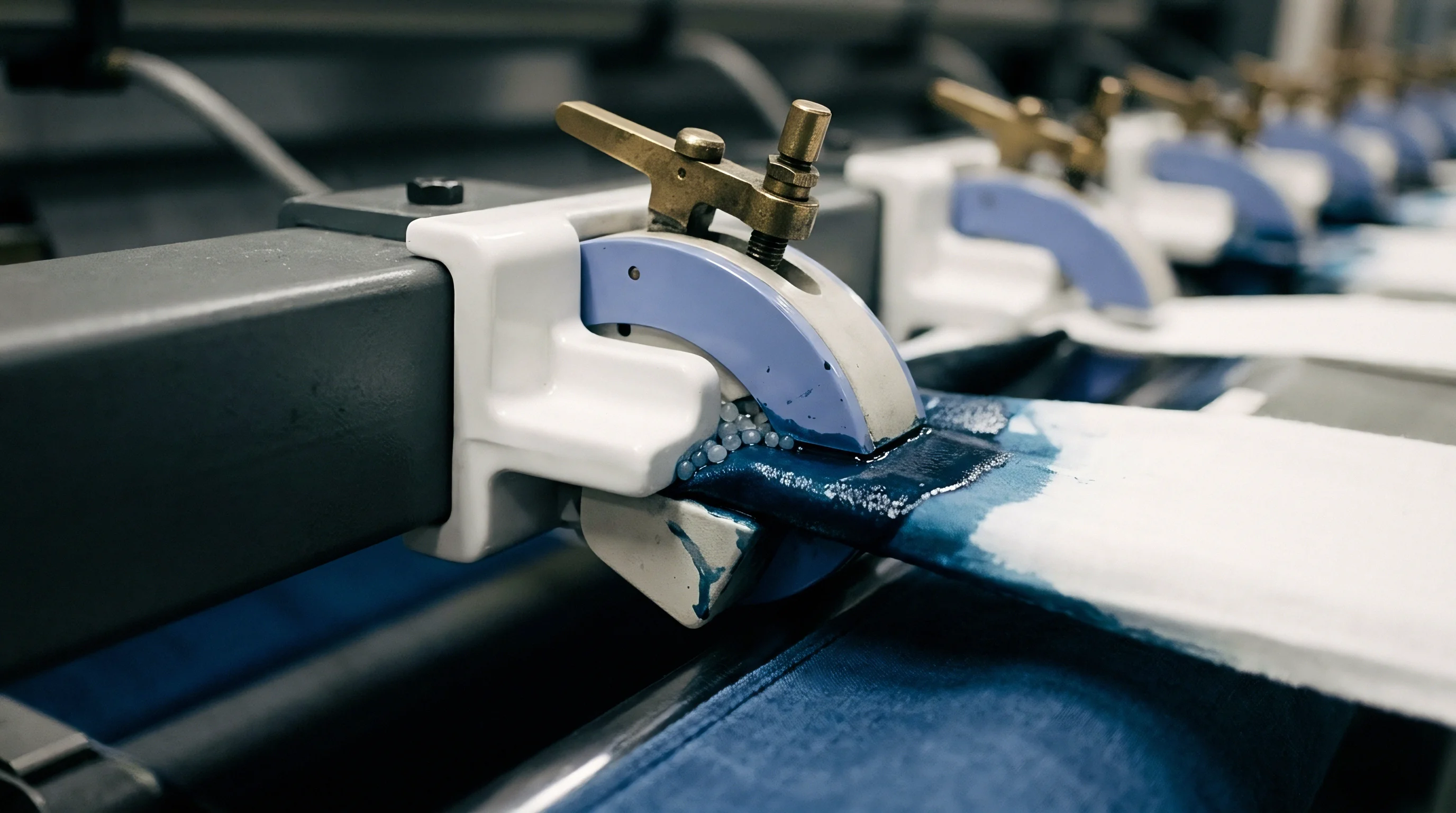
Liquid chemicals apply to continuous textile webs through squeeze rolls under pneumatic force. In chemical finishing operations, crosslinker agents including dimethyloldihydroxyethyleneurea, polycarboxylic acids, and blocked polyisocyanates enter the fabric web through immersion padding before drying and thermal curing. Squeeze rolls bend under load.
The mechanical deflection of the padder bowls creates a variable hydraulic nip pressure profile from the drive side to the operator side of the continuous machine. When nip pressure decreases at the center of the roll face relative to the edges, the local wet liquor pickup increases proportionally. This physical imbalance causes systemic across-width variation in the dry crosslinker deposition per unit area, directly altering key performance characteristics such as wrinkle recovery angle, dimensional stability, tensile strength retention, and wash durability.
Controlling this variance demands explicit characterization of padder dynamics, fluid rheology, and bowl geometry. Standard padding configurations utilize rubber-covered rolls mounted on steel cores. Crown deflection alters wet liquor application.
As hydraulic cylinders apply thrust to the roll journals, the elastomeric cover deforms, yielding a parabolic nip width distribution across the working width of the stenter. Without active deflection compensation, such as variable crown rolls or swimming rolls utilizing internal hydraulic pressure zones, wet pickup variation across a two-point-eight-meter fabric web frequently exceeds ten percent. Fluid viscosity dictates nip retention.
Crosslinking formulations containing high-solids thermosetting resins, catalyst salts, softeners, and fluorocarbon polymers exhibit non-Newtonian shear-thinning behavior under the high shear rates present within the pad nip, exacerbating lateral flow and concentration gradients during continuous operation.
Trough residence time governs absorption. As fabric travels through the chemical bath, immersion time must allow complete displacement of entrapped air within the yarn structure. Capillary pickup dynamics depend on substrate porosity, fiber surface energy, and wet-out speed.
When fabric speed increases on a continuous finishing line, the hydrodynamic boundary layer pulled along by the moving web increases in thickness, modifying the chemical volume ingested into the nip zone. If the bath liquor concentration fluctuates due to differential absorption of water versus chemical actives, an across-width chemistry imbalance develops alongside the physical pickup variation.
| Working Width (m) | Roll Technology | Line Speed (m/min) | Nip Pressure (N/mm) | Left Pickup (% wof) | Center Pickup (% wof) | Right Pickup (% wof) | Cross-Web RSD (%) |
|---|---|---|---|---|---|---|---|
| 1.8 | Standard Fixed Rubber Crown | 45 | 30 | 62.4 | 67.1 | 62.8 | 4.1 |
| 1.8 | Internally Hydropneumatic Swimming Roll | 45 | 30 | 64.1 | 64.5 | 64.2 | 0.3 |
| 2.4 | Standard Fixed Rubber Crown | 40 | 35 | 58.2 | 65.8 | 58.9 | 6.7 |
| 2.4 | Internally Hydropneumatic Swimming Roll | 40 | 35 | 61.5 | 62.0 | 61.7 | 0.4 |
| 3.2 | Standard Fixed Rubber Crown | 35 | 40 | 55.1 | 66.4 | 55.8 | 10.2 |
| 3.2 | Multi-Zone Controlled Crown Roll | 35 | 40 | 60.8 | 61.1 | 60.9 | 0.2 |
Hydraulic Pressure Distribution across Padder Bowls
Fluid film thickness in the squeeze zone depends on roll crown geometry and rubber cover hardness. Roll deflection under mechanical loading follows classical beam bending equations, where deflection scales with the fourth power of the face width. In wide continuous stenters processing three-meter substrates, uncompensated roll flexure yields severe center-heavy chemical deposition.
Rubber hardness, measured in Shore A or Pusey and Jones (P&J) degrees, changes under temperature and continuous compressive stress. As rubber covers warm during extended production runs, hysteresis heating reduces cover modulus, widening the nip footprint and altering local liquor expression rates. Mill operators frequently adjust overall pneumatic pressure to compensate for poor absorbency without accounting for the altered deflection curve, transferring central crosslinker excess into localized strength failures.

Hydrodynamic Shear and Trough Mass Transport
Fluid residence times within the chemical bath dictate concentration stability across continuous immersion zones. Squeeze rolls continuously recirculate expressed liquor back into the pad trough. This continuous expression creates localized eddy currents near the liquor entry ports and replenishment feed lines.
If fresh chemical liquor is introduced at a single central inlet without lateral distribution pipes, concentration gradients form across the trough. The fabric web strips specific formulation components at different rates based on fiber affinity, causing selective chemical depletion. Depleted liquor returning from the nip edges further degrades across-width uniformity, leaving edge swatches under-crosslinked despite identical gross wet pickup measurements.
- Asymmetric Pneumatic Cylinder Thrust occurs when pneumatic actuators on the drive side and operator side exhibit unequal pressure calibration or mechanical linkage friction.
- Elastomeric Cover Crown Wear develops through prolonged running of narrow fabric constructions, creating permanent physical grooves in the rubber roll face.
- Trough Recirculation Short-Circuiting takes place when chemical feed liquor bypasses outer bath zones and flows directly into the central nip intake.
- Thermal Expansion Differential happens when internal roll bearings transfer heat unevenly into roll ends, softening peripheral rubber covers relative to the roll center.
Finish chemical compounders routinely claim that modern low-add-on crosslinking agents eliminate web variance through self-leveling surface action during initial heating. On the factory floor, high-solids formulations exacerbate application disparities, turning small mechanical pressure deviations into significant localized crosslink density shifts across the finished fabric web.

Gradient
Thermal drying chambers evaporate water from the wet fabric substrate before thermal fixation locks chemical bonds. When the wet fabric enters the initial drying zone of a continuous stenter frame, convective heat transfer drives water evaporation from the web surfaces. Crosslinker molecules dissolved in the aqueous liquor remain mobile during early drying stages.
Evaporation forces solute toward surfaces. As water vaporizes at the upper and lower fabric faces, capillary action pulls wet liquor from the internal core of the yarn structure toward the evaporation boundaries. This migration phenomenon alters the spatial distribution of crosslinking resins both through the fabric thickness and laterally across the working width of the machine.
Airflow distribution governs surface migration. Continuous stenters utilize nozzle systems positioned above and below the pin or clip chains to impact hot air directly onto the moving textile web. Nozzle air velocity, static chamber pressure, and exhaust balance vary across the width of the drying bay.
Variations in air velocity create non-uniform mass transfer coefficients across the left, center, and right sections of the web. Central zones experiencing lower air velocity retain liquid water longer, permitting extended lateral chemical migration toward higher-evaporation zones near the chain tracks. Temperature imbalance skews crosslinking speed.
Heat transfer rates govern both water removal and the onset of chemical reaction kinetics.
Crosslinker migration rates depend directly on water evaporation velocity before resin molecular weight reaches condensation thresholds.

Evaporative Water Transport and Solute Migration Mechanics
Liquid capillary action forces unreacted resin molecules toward the fabric surfaces as moisture vaporizes under convective heating. Solute migration kinetics depend on crosslinker molecular weight, liquor surface tension, substrate pore structure, and local drying intensity. Low-molecular-weight agents, such as monomeric methylol compounds or small-molecule polycarboxylic acids, migrate readily during early drying phases.
As water evaporates, these molecules move along thermal and moisture concentration gradients, congregating at local hot spots. If nozzle air temperature varies by five degrees Celsius across the jet box face, crosslinker concentration at the fabric surface can vary by up to fifteen percent prior to full polycondensation, leading to severe localized variations in fabric abrasion resistance.

Thermal Asymmetry in Multi-Zone Convection Chambers
Temperature imbalances across nozzle boxes alter local drying rates between the drive side and operator side of the frame. Modern continuous stenters feature individual temperature control for separate heating zones, but across-width thermal profiles remain vulnerable to mechanical air balance discrepancies. Wear on circulation fan impellers, clogged lint screens, uneven damper settings, and structural heat loss at chain housings create systemic temperature dips near selvages.
Heat drives water. When edge zones cool due to chain thermal mass or ambient air infiltration at housing seals, water evaporation slows near the selvages, creating an inward lateral moisture transport vector that concentrates crosslinker chemicals twenty to thirty centimeters inward from the pin line.
This evaporative profile leaves open the unresolved question of whether dynamic air velocity adjustments across segmented nozzle bays can actively compensate for mechanical padder nip asymmetry without inducing localized shade variations in dyed fabrics.

Stack
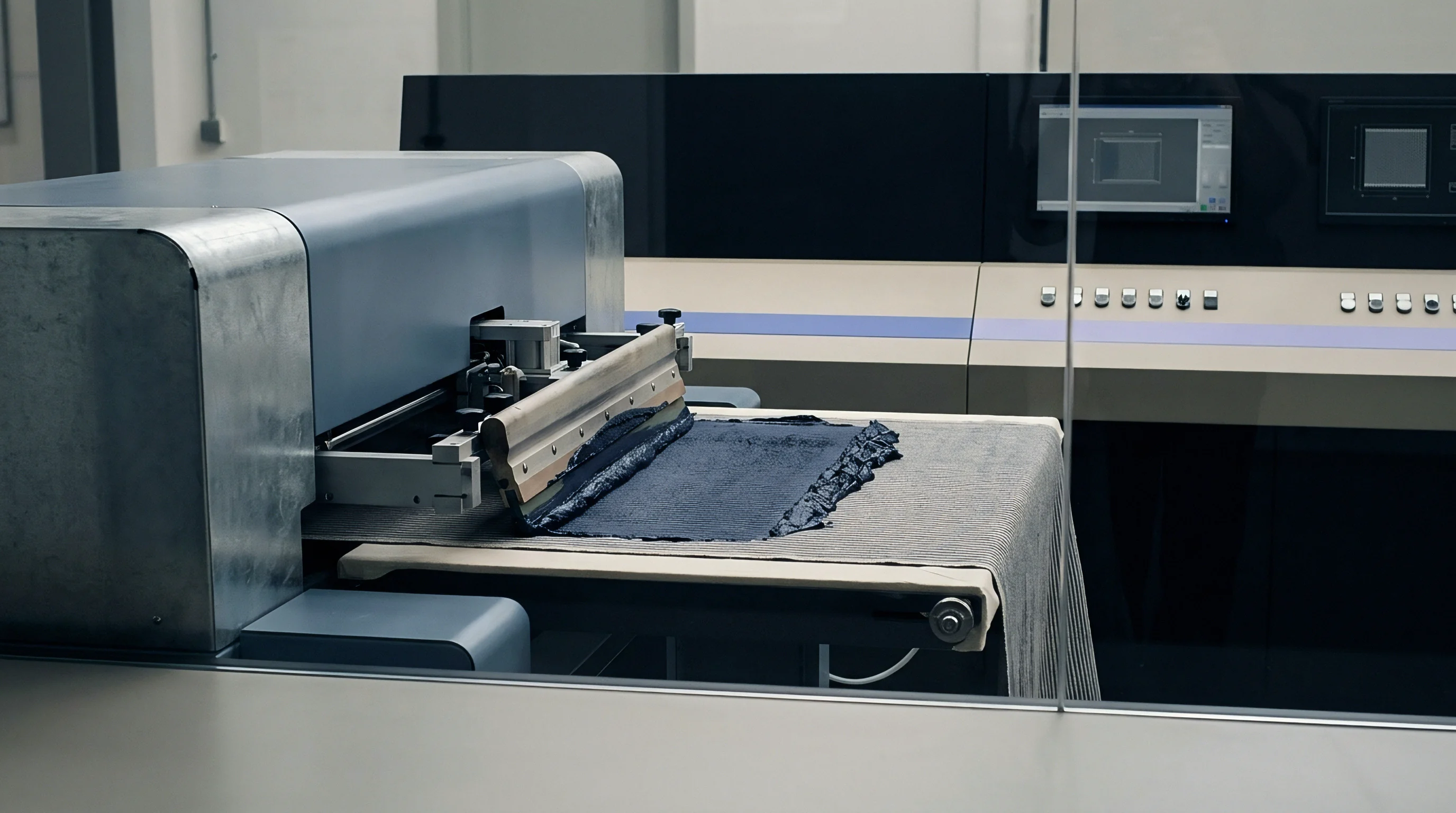
Mathematical modeling of finishing variance combines distinct mechanical, chemical, and environmental error distributions into a unified capability metric. In continuous finishing lines, total across-width crosslinker deposition tolerance is not determined by pad nip deflection alone. Instead, total variance represents the statistical sum of multiple independent and dependent operational variables: raw fabric mass basis weight variance, padder nip pressure profile, liquor concentration fluctuations, local airflow variations, and web temperature non-uniformity.
Tolerance stack-up analysis establishes whether a finishing line operates within defined statistical process control boundaries for specific functional finishes.
Variance components stack systematically across width. Let total dry crosslinker mass deposition per unit area at any width position x be denoted as M(x), expressed in grams of active chemical per square meter of dry fabric. The primary governing equation models dry mass deposition as the product of substrate dry weight W(x) in g/m², wet liquor pickup percentage P(x), and active crosslinker chemical bath concentration C(x) in grams of active solid per gram of liquor:
M(x) = W(x) × fracP(x)100 × C(x)
Applying the delta method for variance propagation under the assumption of independent variables yields the overall statistical variance of dry crosslinker deposition σ2M as a function of the component variances and their operational mean values (μW, μP, μC):
σ2M ≈ left( fracμP100 · μC right)2 σ2W + left( fracμW100 · μC right)2 σ2P + left( μW · fracμP100 right)2 σ2C
Where substrate weight variance σ2W combines yarn count variation and reed width density shifts, wet pickup variance σ2P incorporates roll deflection and speed fluctuations, and concentration variance σ2C captures bath dosing precision. Variance components stack systematically across width.
A two-percent shift in substrate basis weight across selvages consumes over half the allowable statistical tolerance band for crosslinker deposition.

Variance Components in Continuous Chemical Deposition
Individual error sources contribute disproportionately to the total deviation observed in dry resin add-on across the web. Edge cooling distorts add-on symmetry. Mass basis weight varies across selvages.
Woven fabrics frequently exhibit higher thread counts per centimeter near selvages due to loom tension regimes and reed density choices, yielding a structural basis weight curve that is naturally heavier at the edges than in the body center. When a uniform percentage of wet pickup is applied to a substrate with edge-heavy mass distribution, absolute crosslinker deposition per square meter increases at the edges automatically. If pad nip pressure drops in the center simultaneously, these two error curves interact, compounding total deposition non-uniformity.

Capability Indices for Non-Normal Edge Distortion Profiles
Standard normal distribution metrics miscalculate failure probabilities when selvage cooling creates U-shaped add-on curves. Classical statistical process control relies on capability indices Cp and Cpk derived from Gaussian distribution assumptions:
Cpk = min left( fracUSL – μ3σ, fracμ – LSL3σ right)
Where USL is the upper specification limit, LSL is the lower specification limit, μ is the process mean, and σ is the total standard deviation across all widthwise test points. When across-width crosslinker deposition profiles exhibit systematic non-Gaussian profiles, such as parabolic or bimodal distributions caused by symmetrical roll bending, standard Cpk calculations dramatically overestimate process capability. Under these conditions, process engineers must transform non-normal spatial data using Johnson or Box-Cox transformations prior to calculating failure rates against chemical specification limits.
A reliable rule of thumb dictates that if raw left-center-right deposition variance exceeds fifteen percent of the total tolerance window, mechanical roll deflection alignment must take precedence over chemical bath adjustment.


Probe
Accurate measurement of crosslinking agent mass per unit area relies on precise destructive and non-destructive laboratory techniques. Verifying crosslinker deposition profiles across the working width requires systematic swatch extraction across the left, center, and right (L/C/R) web locations. Analytical procedures must distinguish between unreacted chemical formulation applied at the padder and fully crosslinked polymer networks fixed after thermal curing.
Sampling protocols demand rigorous physical discipline to ensure test swatches accurately represent continuous manufacturing conditions without contamination or ambient moisture interference.
Gage error inflates reported variance ratios. X-ray spectroscopy targets tracer elements. To isolate measurement system error from actual mill process variation, quality assurance programs employ Gage Repeatability and Reproducibility (Gage R&R) studies.
Total observed measurement variance σ2total equals the true process variance σ2process plus the measurement system variance σ2gage:
σ2total = σ2process + σ2gage
Where σ2gage decomposes into equipment repeatability σ2equi±ent and operator reproducibility σ2operator. If measurement variance accounts for more than ten percent of the specified tolerance band, process capability indices become uninformative, masking real across-width chemical application defects.
Analytical Instruments for Crosslinker Mass Determination
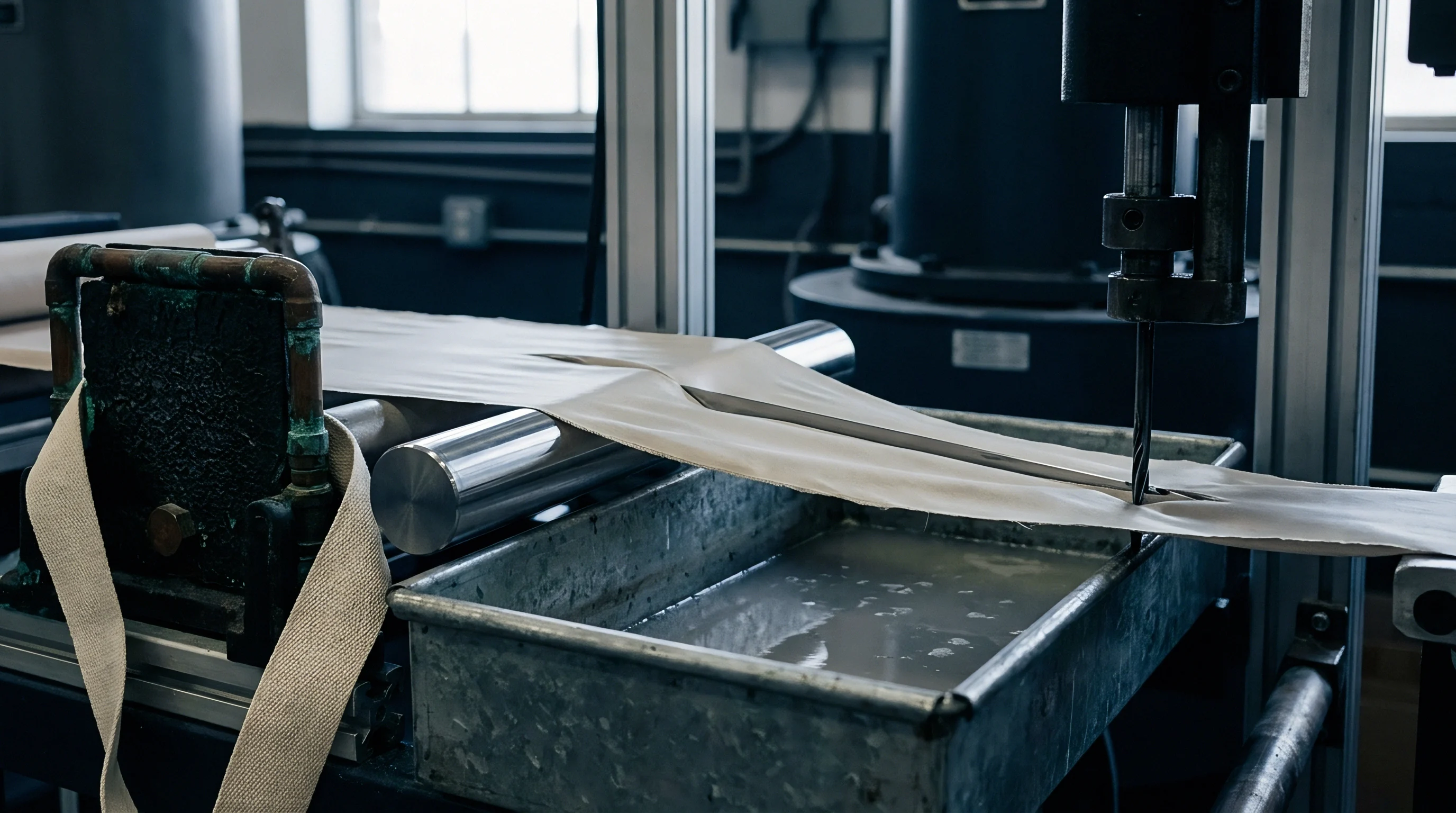
Spectroscopic and chromatographic testing quantifies specific element densities or extractable functional groups from finished swatches. Energy-Dispersive X-ray Fluorescence (EDXRF) spectroscopy offers rapid non-destructive determination by measuring elemental tracer signals incorporated directly into finishing formulations, such as zirconium catalysts, silicon softeners, or phosphorus-based flame-retardant crosslinkers. High-Performance Liquid Chromatography (HPLC) combined with mass spectrometry measures extractable unreacted monomers, providing precise quantification of uncrosslinked residual species down to sub-part-per-million levels.
Liquid extraction procedures require tight thermal and temporal controls to avoid ongoing hydrolysis during sample preparation.

Why Does Off-Center Deposition Compromise Finish Durability?
Chemical concentration drops on one side of the tenter frame cause localized reductions in crosslink density after repeated laundering cycles. Resins crosslink cellulose strands through ether linkages or ester bonds depending on chemical family. When low deposition zones receive insufficient active resin molecules per volume of fiber, wash durability falls below minimum commercial thresholds.
The fabric rapidly loses its smooth-dry appearance, dimensional stability, and durable press rating in the starved zone. Conversely, excess deposition on the opposite edge over-crosslinks the cellulose fiber matrix, causing embrittlement, catastrophic loss of tear strength, and severe flex abrasion failure along garment seams.
- Cut full-width fabric strips measuring fifty centimeters along the warp direction immediately following stenter exit cooling.
- Punch precise one-hundred-square-centimeter circular swatches from five defined widthwise positions: Left Selvage, Left Center, Center, Right Center, and Right Selvage.
- Condition swatches at twenty-one degrees Celsius and sixty-five percent relative humidity for four hours according to standard testing atmospheric requirements.
- Weigh conditioned swatches on an analytical balance calibrated to zero-point-one milligram precision to establish total dry mass per unit area.
- Perform quantitative extraction using standardized solvent mixtures in sealed Soxhlet apparatuses for two hours to isolate unreacted resin fractions.
- Analyze residual solids via EDXRF or UV-Visible spectrophotometry against matrix-matched calibration standards prepared with known chemical active masses.
| Test Method | Target Measured Entity | Limit of Detection | L/C/R Precision RSD (%) | Test Type | Typical Cost per Profile ($) |
|---|---|---|---|---|---|
| EDXRF Tracer Analysis | Elemental Tags (Zr, Si, P) | 5.0 mg/kg element | 1.2 | Non-Destructive | 45.00 |
| HPLC-MS Solvent Extraction | Free / Hydrolysable Monomer | 0.1 mg/kg monomer | 2.8 | Destructive | 220.00 |
| Kjeldahl Nitrogen Assay | Total Nitrogen Content (DMDHEU) | 0.01% N w/w | 3.5 | Destructive | 85.00 |
| Gravimetric Sol-Gel Extraction | Cured Polymer Network Mass | 0.10% add-on w/w | 4.2 | Destructive | 60.00 |
| On-line NIR Reflectance | C-H / O-H / N-H Absorption Bands | 0.20% add-on w/w | 2.1 | Non-Destructive | 5.00 |
Standard commercial purchase specifications stipulate that analytical measurement variation across five widthwise sampling points shall not exceed five percent of the nominal target dry add-on value.
Under ISO 17025 accreditation guidelines for textile testing laboratories, scope documentation must explicitly declare the analytical measurement uncertainty associated with each widthwise sampling location, converting raw instrument precision limits into legally binding batch acceptance criteria.
Arithmetic
Quantitative evaluation of across-width tolerance requires walking a production batch through raw deposition measurements and capability formulas. Consider a continuous finishing run processing a one-hundred-percent cotton woven twill fabric with a dry nominal weight of two hundred and twenty grams per square meter. The target working width at stenter exit is two point eight meters.
The line applies a modified dimethyloldihydroxyethyleneurea (DMDHEU) crosslinking resin formulation targeting a dry active chemical pick-up of forty-five grams of resin per kilogram of dry fabric (4.5% dry add-on wof). The liquor formulation contains one hundred and twenty grams per liter of active solid resin, run at a nominal wet pickup of thirty-seven point five percent.
Production conditions for the evaluated run establish target solid mass application rates across a two-point-eight-meter working width. Upper and lower technical performance limits for dry resin add-on are established based on functional performance limits: the Upper Specification Limit (USL) is set at fifty-two grams per kilogram (above which fabric tear strength degrades below acceptable brand specs), and the Lower Specification Limit (LSL) is set at thirty-eight grams per kilogram (below which durable press rating drops below Grade 3.5 after five wash cycles). A set of fifteen swatches cut across the width from five positions (L1, L2, C, R2, R1) over a ten-thousand-meter production lot yields the empirical deposition data set.
Raw measurements across fifteen swatch sets provide empirical standard deviation values for left, center, and right web locations. Calculating mean dry add-on rates yields: Position L1 (Left Edge) averages forty-nine point two g/kg; Position L2 (Left Center) averages forty-six point five g/kg; Position C (Center) averages forty-one point eight g/kg; Position R2 (Right Center) averages forty-six point two g/kg; Position R1 (Right Edge) averages forty-eight point nine g/kg. The overall lot mean dry add-on μ is forty-six point five2 g/kg.
The pooled process standard deviation σpooled across all positions equals two point four1 g/kg. Resin concentration governs crease recovery.
Calculating overall capability against specification limits yields:
CPU = fracUSL – μ3σ = frac52.0 – 46.523 × 2.41 = frac5.487.23 = 0.758
CPL = fracμ – LSL3σ = frac46.52 – 38.03 × 2.41 = frac8.527.23 = 1.178
Cpk = min(CPU, CPL) = 0.758
A Cpk of zero point seven five eight indicates an unacceptable process capable of generating significant non-conforming out-of-spec material. Analyzing positional sub-distributions separately highlights the localized nature of the failure: evaluating Position C (Center) alone reveals a local mean of forty-one point eight g/kg with a local standard deviation of one point one five g/kg:
CPLCenter = frac41.8 – 38.03 × 1.15 = frac3.83.45 = 1.101
Evaluating Position L1 (Left Edge) alone yields a local mean of forty-nine point two g/kg with a local standard deviation of one point two zero g/kg:
CPULeft = frac52.0 – 49.23 × 1.20 = frac2.83.60 = 0.778
Similar physical mechanics operate in continuous aluminum strip coil-coating lines, where fluid roll coaters experience dynamic roll deflection that distorts liquid polyurethane film thickness across meter-wide metal sheets. In both industries, local fluid dynamics and mechanical flexure dictate final coating tolerance stack-ups.
The statistical calculations demonstrate that while the center of the fabric web risks under-crosslinking, the edges simultaneously operate close to the upper embrittlement ceiling. Total process capability fails primarily due to the severe seven point four g/kg shift in mean deposition between the roll center and roll edges, caused directly by central padder bowl deflection under mechanical load. These exact figures rest on a fixed fifteen-swatch sampling grid evaluated under ambient laboratory conditions; increasing the sampling density to thirty swatches across width or shifting to NIR inline reflectance spectroscopy would refine the measured variance boundaries but would not eliminate the underlying hydraulic roll deflection delta.
Mill technical teams cannot resolve this out-of-spec condition by simply adding more chemical active to the feed trough, as increasing chemical concentration would raise the overall mean, pushing the left and right selvages above the upper specification limit and causing widespread tear strength rejections. Field laboratories often rely on a simplified four-point widthwise sampling model whose underlying measurement uncertainty of zero point nine grams per kilogram cannot be fully defended under strict ISO 17025 audit checks; under this specific uncertainty, prudence demands that buyers widen upper tear-strength tolerance buffers by five percent while maintaining absolute floor limits on dry add-on mass.
Correcting this process requires adjusting the hydraulic crown profile of the squeeze rolls to flatten the wet pickup curve, shifting the central pickup upward from thirty-three point seven percent to thirty-seven point five percent to match the edges, effectively collapsing positional variance and bringing the total lot Cpk above one point three three.

Exposure
Commercial contracts and international chemical compliance regulations enforce strict limits on residual crosslinker levels and variation. Deposition thresholds limit fabric strength loss. When continuous finishing plants output fabric with severe across-width chemical non-uniformity, commercial liability cascades down the supply chain.
Importers, brand owners, and garment converters face major financial risks when finished goods fail regulatory safety limits or brand performance standards. Compliance verification operates at the individual batch level: a single non-conforming roll swatch taken from an edge or center can trigger a entire container detention at the port of entry or cause complete brand audit failure.
Unreacted formaldehyde triggers regulatory detention. Regulatory limits on free and hydrolysable formaldehyde derived from N-methylol crosslinking agents (such as DMDHEU) are exceptionally stringent. OEKO-TEX Standard 100 Class I (Baby Articles) mandates a maximum threshold of sixteen milligrams per kilogram, while Class II (Direct Contact with Skin) sets the ceiling at seventy-five milligrams per kilogram.
EU REACH Regulation Annex XVII Entry 72 restricts formaldehyde in clothing textiles to seventy-five milligrams per kilogram. If a stenter frame applies excess resin to selvages due to pad roll wear, or fails to fix resin uniformly due to edge cooling in drying zones, local free formaldehyde levels near selvages routinely exceed seventy-five milligrams per kilogram even when center-web samples pass testing. The whole shipment becomes non-compliant.
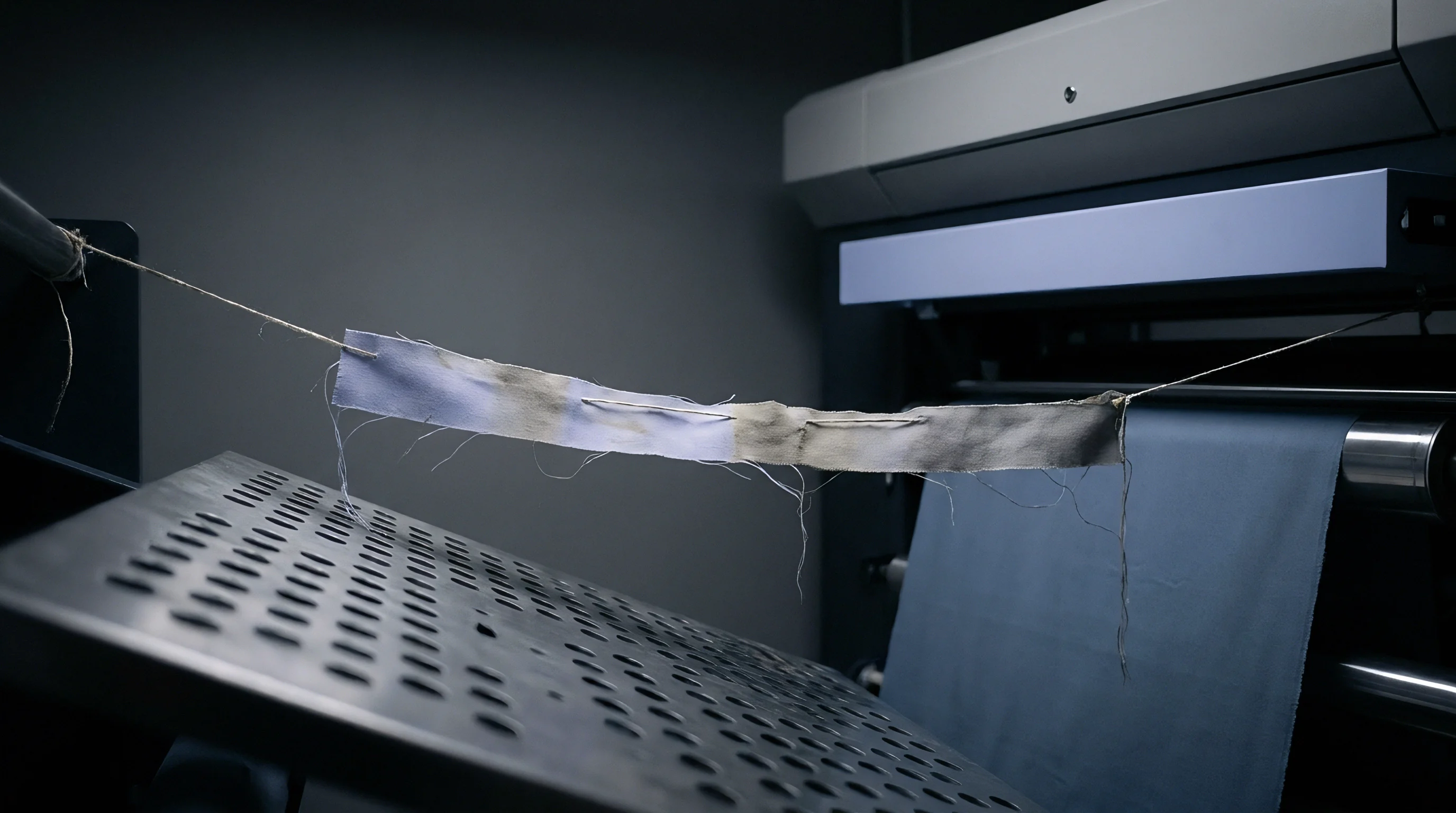
Regulatory Ceilings for Residual Monomers and Byproducts
Formaldehyde emissions from dimethyloldihydroxyethyleneurea reactions trigger immediate regulatory compliance actions when limits exceed threshold levels. Advanced zero-formaldehyde crosslinkers, such as polycarboxylic acids (BTCA) or 1,3-dimethyl-4,5-dihydroxyimidazole-2-one (DHDMI), eliminate formaldehyde exposure but introduce alternative compliance hurdles. Polycarboxylic acid crosslinkers require sodium hypophosphite catalysts, which are subject to strict wastewater discharge limits under local environmental regulations and industrial discharge permits.
Furthermore, high crosslinking temperatures required for alternative chemistries accelerate thermal yellowing near hot edge zones, generating unacceptable across-width shade listing.
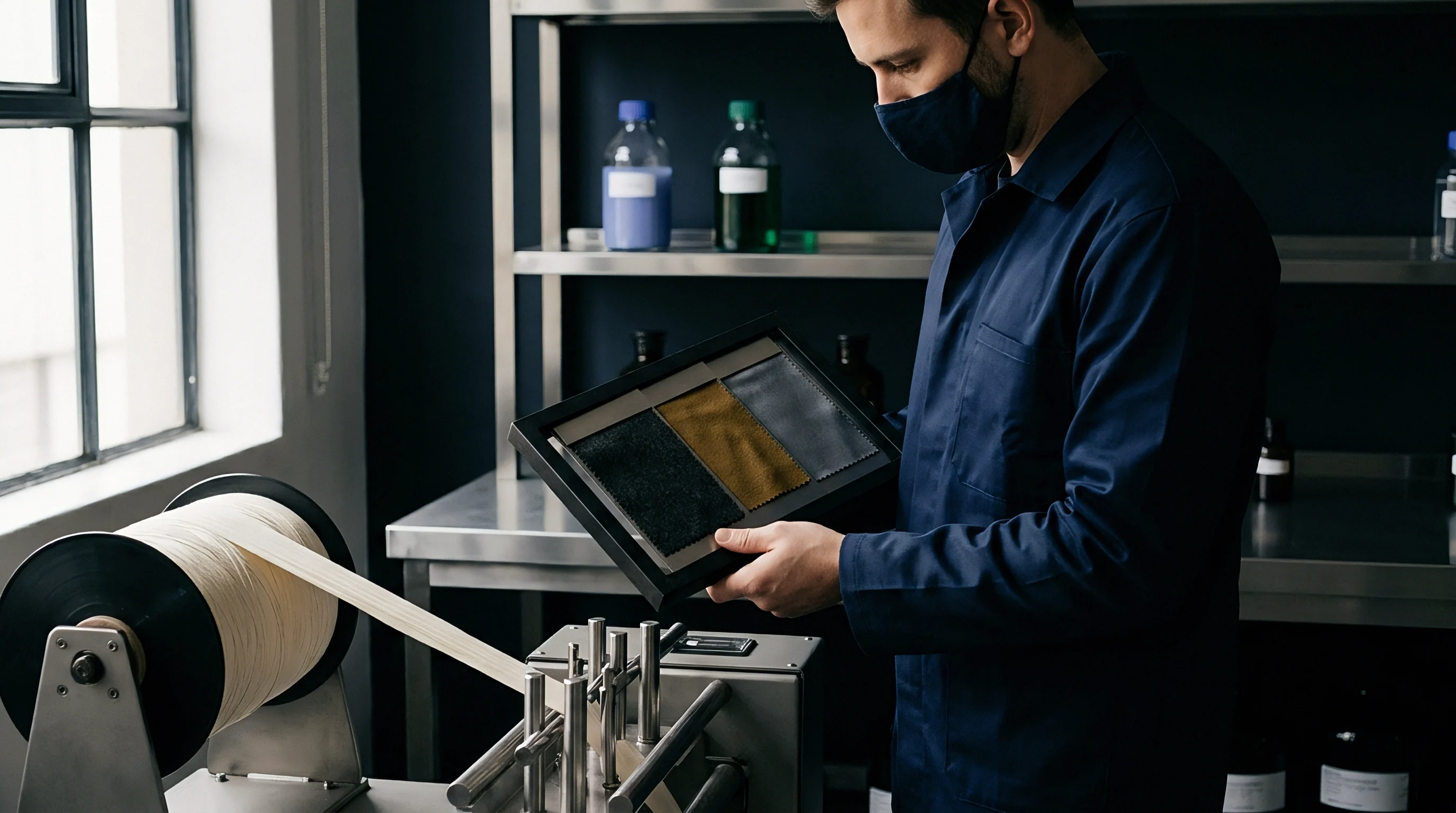
Contractual Risk Allocation for Widthwise Non-Uniformity
Purchase order specifications assign financial liability for off-spec finish distribution between converted fabric suppliers and apparel manufacturing plants. Standardized textile purchasing agreements draft detailed clauses governing sampling frequency, statistical confidence intervals, and re-testing rights. When an independent accredited laboratory identifies across-width chemical variation exceeding contract tolerances, the buyer retains legal rights to reject the entire batch, demand mill re-processing, or enforce financial chargebacks covering cut-and-sew labor loss.
- Scope Coverage Verification requires matching article numbers, finishing resin chemical families, and exact plant production lines directly against valid laboratory test certificates.
- Positional Test Swatch Protocol specifies that compliance test reports must present discrete L/C/R analytical values rather than a single composite average swatch result.
- Retest Arbitration Mechanism defines that disputed chemical results demand testing three original reserve swatches cut from left, center, and right web positions at an agreed ISO 17025 accredited laboratory.
- Batch Traceability Audit Trail mandates linking chemical mix batch records, pad nip pressure logs, and stenter temperature charts directly to specific roll identification numbers.
Standard brand quality purchase orders stipulate that any across-width tear strength variation exceeding twenty percent between selvage and center swatches constitutes ground for immediate lot rejection.
Failure to mandate spatial left-center-right chemical testing inside purchasing specifications leaves buyers fully liable for garment performance failures when uneven crosslinking causes localized panel tearing or selective wash fading after retail distribution.