Grounding Fluorinated Residue Testing in Textile Import Verification
Total organic fluorine combustion screening below 50 parts per million provides the only defensible import verification barrier for textile chemical compliance.


Border
A bill of lading describing waterproof nylon taffeta arrives at the customs terminal alongside a certificate declaring compliance with broad international chemical restrictions. When state market surveillance authorities draw a single yard of that fabric from the center of a roll, combust it in a quartz tube at 1050 degrees Celsius, and measure 180 parts per million of total fluorine via combustion ion chromatography, the entire container stops. Customs officials do not debate whether that halogen load stems from intentional side-chain fluorinated polymer application or cross-contamination in the scouring baths.
The numerical finding exceeds the 100 parts per million statutory ceiling for total organic fluorine enforced across several jurisdictions, triggering an immediate commercial hold.
Importers discover this exposure when authorities apply screening techniques that quantify total elemental fluorine rather than targeted liquid chromatography mass spectrometry. Regulatory thresholds under state statutes across North America and Annex XVII of the European Union Registration, Evaluation, Authorisation and Restriction of Chemicals framework separate into two distinct testing tiers. The first tier screens for aggregate fluorine presence; the second attempts to identify individual per- and polyfluoroalkyl substances such as perfluorooctanoic acid or perfluorohexanesulfonic acid down to trace parts-per-billion levels.
A supplier presenting an analyte-specific test report covering thirty targeted compounds leaves an unquantified liability on the dock. If the mill applied an unregulated short-chain perfluorinated treatment or a fluorinated processing aid during yarn extrusion, the targeted assay shows non-detectable concentrations. The quartz combustion tube reveals the aggregate load immediately.
Importers face seizure of goods, forfeiture of commercial bonds, and mandatory destruction costs when their incoming documentation relies on narrow compound lists while border officers run broad elemental sweeps.
A laboratory screen reporting non-detectable levels across thirty targeted fluorinated acids offers zero protection against an elemental fluorine seizure at the port terminal.
Establishing import clearance demands proof that links the shipment directly to the resin and auxiliary inputs on the factory floor. When a certificate of analysis lists a batch number disconnected from the physical piece tickets attached to the fabric selvage, the chain of custody collapses under customs scrutiny. Verification requires aligning the raw chemical inventory, the mill finishing schedules, and the specific instrument method utilized by the testing laboratory before the bill of lading issues.
Importers operating under strict supply agreements face mandatory commercial return provisions and carrier demurrage penalties whenever a batch stalls at the border for non-compliant chemical residues.


Combustion
Combustion ion chromatography serves as the definitive gatekeeping assay for total fluorine screening in textile goods. The physical mechanism behind this analytical approach converts stable carbon-fluorine bonds into ionic species measurable by standard liquid separation techniques. Standard EN 14582 outlines this thermal degradation pathway, burning a conditioned fabric specimen inside an oxygen-rich atmosphere within an enclosed chamber.
The high thermal energy breaks the refractory carbon-fluorine bond, oxidising the organic backbone into water and carbon dioxide while releasing hydrogen fluoride gas into an absorption solution.
The absorbed fluoride ions pass directly into an ion chromatograph equipped with an analytical column and a conductivity detector. Standard operating conditions require combustion temperatures between 950 and 1050 degrees Celsius to guarantee quantitative recovery of perfluorinated chains. A lower furnace temperature yields incomplete oxidation of high-molecular-weight fluoropolymer coatings, producing an artificial depression of the detected halogen content.

Combustion Parameters Affecting Ionic Yield
Textile matrices introduce substantial matrix interference during thermal breakdown. Cellulosic fibers release high concentrations of organic ash, while synthetic yarns such as polyester generate dense carbonaceous soot if the oxygen flow drops below optimal levels. The table below delineates the verified operational variables governing total fluorine and total organic fluorine determinations across standard commercial laboratories.
| Parameter | EN 14582 Combustion | Modified DIN 51723 | Combustion Ion Chromatography with Wash |
|---|---|---|---|
| Furnace Temperature | 950 to 1050 C | 1000 to 1050 C | 1050 C |
| Oxygen Flow Rate | 0.4 to 0.8 L/min | 0.5 to 1.0 L/min | 0.6 L/min |
| Extraction Wash Solvent | None (Total Fluorine) | None (Total Fluorine) | Methanol / Water rinse |
| Limit of Quantification | 50 mg/kg | 20 mg/kg | 10 mg/kg |
| Targeted Analyte Group | All elemental fluorine | All elemental fluorine | Total organic fluorine only |
| Combustion Time per Specimen | 12 to 15 minutes | 8 to 10 minutes | 15 minutes |
Total fluorine quantifies every fluorine atom in the matrix, encompassing inorganic fluorides derived from scouring salts, flame-retardant antimony complexes, and finishing baths. Total organic fluorine isolates the carbon-bound halogens by introducing a solvent extraction step before thermal degradation. The laboratory washes the dry textile with polar solvents to dissolve non-polymeric inorganic salts, retaining only the polymeric or organofluorine chemistries on the fiber matrix.
When an unwashed sample undergoes EN 14582 analysis, residual inorganic salts from water treatment plants generate false-positive indications of deliberate chemical water-repellent finishing.
Distinguishing organic from inorganic fractions prevents catastrophic misinterpretations of mill compliance. A fabric displaying 120 parts per million of total fluorine under crude combustion often reveals less than 5 parts per million of total organic fluorine once subjected to solid-liquid extraction with methanol. Importers specifying testing parameters must write the exact solvent wash protocol into their laboratory requisitions.
Failing to mandate an inorganic salt extraction prior to furnace oxidation results in automatic rejection of non-fluorinated garments bearing harmless water-treatment salts.


Extract
Liquid chromatography paired with triple quadrupole tandem mass spectrometry identifies and measures discrete chemical entities within an extracted fiber sample. While combustion techniques burn the entire sample to measure raw fluoride, targeted extraction relies on extracting the fabric using organic solvents like methanol, acetonitrile, or mixed water-alcohol matrices under elevated temperature. Standard methods such as DIN CEN/TS 15968 isolate targeted compounds, passing the liquid extract through chromatographic columns that separate linear and branched isomers of perfluoroalkyl carboxylates and sulfonates.
Laboratories optimize ion transitions in multiple reaction monitoring mode to register precise molecular fragments. A single perfluorooctanoic acid molecule displays characteristic parent-to-daughter mass transitions, allowing instruments to establish limits of quantification down to 0.025 milligrams per kilogram. The targeted instrument provides unequivocal molecular certainty.
It cannot, however, detect a fluorotelomer acrylate polymer melted into the polyester core, because high-molecular-weight polymers do not dissolve or pass through conventional liquid chromatography columns.

Targeted Mass Spectrometry Comparison
Targeted testing protocols list specific analytes governed by global regulations. The European Union Persistent Organic Pollutants Regulation restricts perfluorooctanoic acid, its salts, and related compounds to 0.025 milligrams per kilogram for the acid itself, and 1.0 milligram per kilogram for the total of all related transformation products. The scope of restricted substances expands continuously across international markets.
- Perfluoroalkyl Carboxylic Acids require negative electrospray ionization to detect carboxylate fragments across chain lengths from four to fourteen carbons. Target limits sit at 25 parts per billion.
- Perfluoroalkane Sulfonates run under parallel ionization conditions to identify legacy chemistries like perfluorooctane sulfonate. Detection limits fall within the 10 to 50 parts per billion spectrum depending on matrix interferences.
- Fluorotelomer Alcohols rely on gas chromatography mass spectrometry with chemical ionization because their high volatility and lack of ionic head groups prevent standard liquid separation. The regulatory boundary for volatile precursors sits at 1 milligram per kilogram in European import categories.
- Side-Chain Fluorinated Monomers require specialized non-aqueous extracts to capture unreacted residual acrylic monomers shed from finishing polymers. Extraction recoveries drop rapidly if temperature profiles fall below 60 degrees Celsius.
Targeted suites quantify only what they look for. A commercial panel testing forty target analytes identifies exactly those forty molecules, leaving thousands of known organofluorine substances invisible in the final data sheet. If a finishing chemical contains a proprietary perfluoropolyether chain or a short-chain fluoro-surfactant omitted from the instrument target library, the liquid chromatography run registers zero analyte detection.
Combustion screening catches what targeted mass spectrometry misses entirely.
A laboratory sheet showing negative target hits across forty individual perfluorinated acids means nothing if the yarn contains an unscreened fluorinated polymer additive.
Importers relying solely on targeted profiles expose their businesses to enforcement actions initiated by customs entities utilizing combustion sweeps. A comprehensive import dossier coordinates both analytical routes, utilizing total fluorine combustion to verify absolute halogen cleanliness and targeted spectrometry to investigate any non-compliant combustion excursion above 50 parts per million.
Mills often assert that a zero-target report proves the fabric is completely free of all perfluorinated compounds.


Flock
Fluorinated contamination enters textile manufacturing environments through physical pathways unrelated to intentional fabric finish chemistry. A mill operating five stenter frames may allocate frame one to fluorochemical water-repellent finishing for technical outerwear, while reserving frames two through five for non-fluorinated apparel. Volatile fluorotelomer alcohols evaporate within the heat-setting zones of frame one at 170 degrees Celsius, enter the exhaust ductwork, condense inside cooling chambers, and settle as microscopic airborne particulates across adjacent production bays.
These airborne residues settle onto open grey goods, winding stations, and spinning frames. When an unassigned batch of plain cotton twill passes through a downstream stenter whose circulation fans carry fluorinated flock particles, those fibers capture persistent halogen traces. The contaminated cotton roll subsequently registers between 15 and 45 parts per million of total fluorine during customs verification screening, sitting uncomfortably close to statutory non-intentional limits.
Contamination also propagates through shared wet-processing machinery. Continuous scouring ranges, padder boxes, and jet dyeing vessels maintain surface affinity for hydrophobic fluoropolymers. A fluorochemical emulsion leaves resilient, invisible organofluorine films on stainless steel roller faces and Teflon-lined guide plates.
If a finishing house shifts from a fluorinated order to an untreated batch without executing hot caustic wash cycles, mechanical carry-over distributes parts-per-billion concentrations onto the subsequent run.

Mechanical Sources of Unintended Chemical Residue
Sewing facilities introduce comparable cross-contamination variables. High-speed sewing threads frequently utilize fluoropolymer-coated lubricating waxes to reduce yarn friction and needle heat at 5000 stitches per minute. When an inspector cuts a test swatch across a seam allowance, the needle thread wax pollutes the base fabric substrate, generating anomalous targeted hits for perfluorocarboxylic acids.
Garment wet laundries present another point of vulnerability through shared tumble dryers and water-recycling circuits that contain persistent fluorinated surfactants stripped from technical jackets.
A buyer cannot assume that non-fluorinated product specifications will self-execute on a shared mill floor. Preventing cross-contamination requires rigid scheduling, physical separation of machinery, and continuous sampling of unbonded greige fabric before finishing begins.
Section 14 of standard manufacturing agreements assigns full liability for contamination to the supplier whenever finishing lines fail to maintain physical isolation.
The gap between intentional water-repellent coating and unintended mechanical contamination widens when operations handle recycled synthetic yarns. Mechanically recycled polyethylene terephthalate pellets derived from mixed industrial textile post-consumer scrap carry random burdens of fluorochemicals from legacy finishes. The re-extrusion process homogenizes these persistent polymers into the internal yarn core, creating a stable elemental fluorine signature that cannot be washed away by wet processing.
When an import authority detains a shipment for exceeding non-intentional residue allowances, cross-contamination explanations do not prevent the imposition of mandatory export or destruction orders.


Audit
Reviewing certification paperwork reveals deep gaps between commercial marketing claims and verified chemical realities. A supplier presents an OEKO-TEX STANDARD 100 certificate alongside an invoice, claiming the documentation guarantees zero perfluorinated substance content. The compliance officer must examine the certificate text, checking the specific product class, the listed article numbers, and the precise annexes covered.
A certificate issued under Product Class II for finished apparel does not automatically cover piece-dyed outerwear trims or coated functional interlinings shipped under the same commercial invoice.
Certificates carry expiration dates that run on strict twelve-month renewal cycles. If the testing laboratory verified an unwashed greige sample in February, but the mill altered its auxiliary surfactant supplier in June, the original transaction evidence fails to represent the shipped batch. Auditing the chain of custody requires tracing every raw input against the chemical inventory lists mandated by the Zero Discharge of Hazardous Chemicals Manufacturing Restricted Substances List.

How Do Discrepancies Surface between Certifications and Batches?
Discrepancies appear the moment an auditor compares raw formulation batch records with the specific scope boundaries of the supplied certificate. The table below illustrates the structural exclusions commonly hidden within typical textile assurance documents.
| Assurance Scheme | Nominal Scope Claim | Instrument Limit Applied | Common Scope Exclusion |
|---|---|---|---|
| OEKO-TEX STANDARD 100 | Free of harmful chemical substances | Total Fluorine below 100 mg/kg | Does not screen total organic fluorine below 10 mg/kg |
| bluesign Approved Fabric | Sustainable chemical management | Targeted LC-MS/MS compound list | Excludes unlisted processing aids and volatile telomers |
| GOTS Version 7.0 | Organic processing integrity | Zero intentional fluorination | Inorganic fluorine background can confound raw assays |
| ZDHC MRSL Level 3 | Zero discharge in wet manufacturing | Formulation targeted limits | Covers raw inputs, not final residue on export cloth |
A valid Scope Certificate proves that a production facility maintains certified systems, but only an authentic Transaction Certificate links that specific system to the precise mass of fabric loaded into the shipping container. Transaction Certificates must name the invoice number, the net weight, and the precise item description matching the customs declaration. When the net weight stated on the Transaction Certificate diverges from the packing list by more than standard moisture-regain allowances, the document loses its evidential value during customs verification.
Scrutinizing accredited laboratory reports demands confirming the test facility maintains ISO/IEC 17025 accreditation for that exact method. A general chemical testing laboratory lacking an explicit scope listing for DIN CEN/TS 15968 or combustion ion chromatography produces invalid test documentation. Importers must review the reported limit of quantification; testing laboratories frequently adjust dilution ratios to lower operational costs, inadvertently raising the reporting threshold above statutory enforcement levels.
Relying on a certificate whose article description departs from the commercial invoice transfers the total legal burden of chemical non-compliance directly to the importer of record.

Ledger
The landed cost of non-compliant chemical residues dwarfs the laboratory expense of rigorous testing protocols. Commercial consequences distribute across container detention, demurrage accrual, testing fees, contract chargebacks, and product destruction. Evaluating this exposure requires clear mathematical modeling based on typical commercial import conditions.
Let us examine a worked scenario based on published logistics fee schedules and accredited analytical laboratory price structures.
Assume a commercial shipment consisting of 20,000 meters of three-layer laminated technical shell fabric packed into a standard 40-foot shipping container, carrying a declared customs value of $160,000 ($8.00 per meter). The importer issues clearance documentation based on a supplier-provided targeted test report costing $250. Customs authorities detain the container at the marine terminal, issuing a red-lane inspection hold to verify chemical restrictions via combustion ion chromatography.
The commercial balance sheet fractures across several operational categories while testing and re-testing unfold:
- Container Demurrage Accumulation accrues at $220 per day after a four-day free-time allowance, reaching $4,620 across a twenty-five-day analytical verification hold.
- Port Terminal Storage Charges run concurrently at $140 per day, generating an additional $3,500 in non-negotiable marine terminal overhead.
- Emergency Confirmatory Testing by an accredited domestic laboratory for total organic fluorine and split-sample targeted liquid chromatography costs $1,800 under expedited 48-hour turnarounds.
- Customs Brokerage Administrative Fees for handling detention paperwork, bonded warehouse transfers, and specialized drayage consume $2,400 in direct outlays.
- Retail Delivery Penalties levied by the commercial buyer for missed seasonal delivery windows trigger a standard 15 percent purchase order cancelation chargeback totaling $24,000.
If the secondary total organic fluorine testing confirms a concentration of 140 parts per million (violating statutory limits), the importer loses the entire inventory value. Under mandatory re-export or destruction directives, return freight and customs-supervised high-temperature incineration add an estimated $12,000 in physical remediation costs. The total commercial loss reaches $208,320 against an initial fabric procurement value of $160,000.
Mitigating this financial risk requires instituting pre-shipment verification protocols directly at the origin mill. Commissioning an origin combustion ion chromatography screen costs approximately $350 per production lot. Allocating $350 per batch against a catastrophic exposure of $208,320 presents an obvious commercial calculation for risk managers.
A three-hundred-dollar origin combustion test prevents a quarter-million-dollar inventory write-off at the port of entry.
When supply contracts fail to explicitly state that all detention, re-testing, and destruction charges flow down to the manufacturing mill, the importer absorbs every dollar of the commercial loss.
Purchase contracts that lack specific indemnity clauses for fluorinated residue failures leave buyers completely unprotected when customs authorities seize non-compliant containers.

Dock
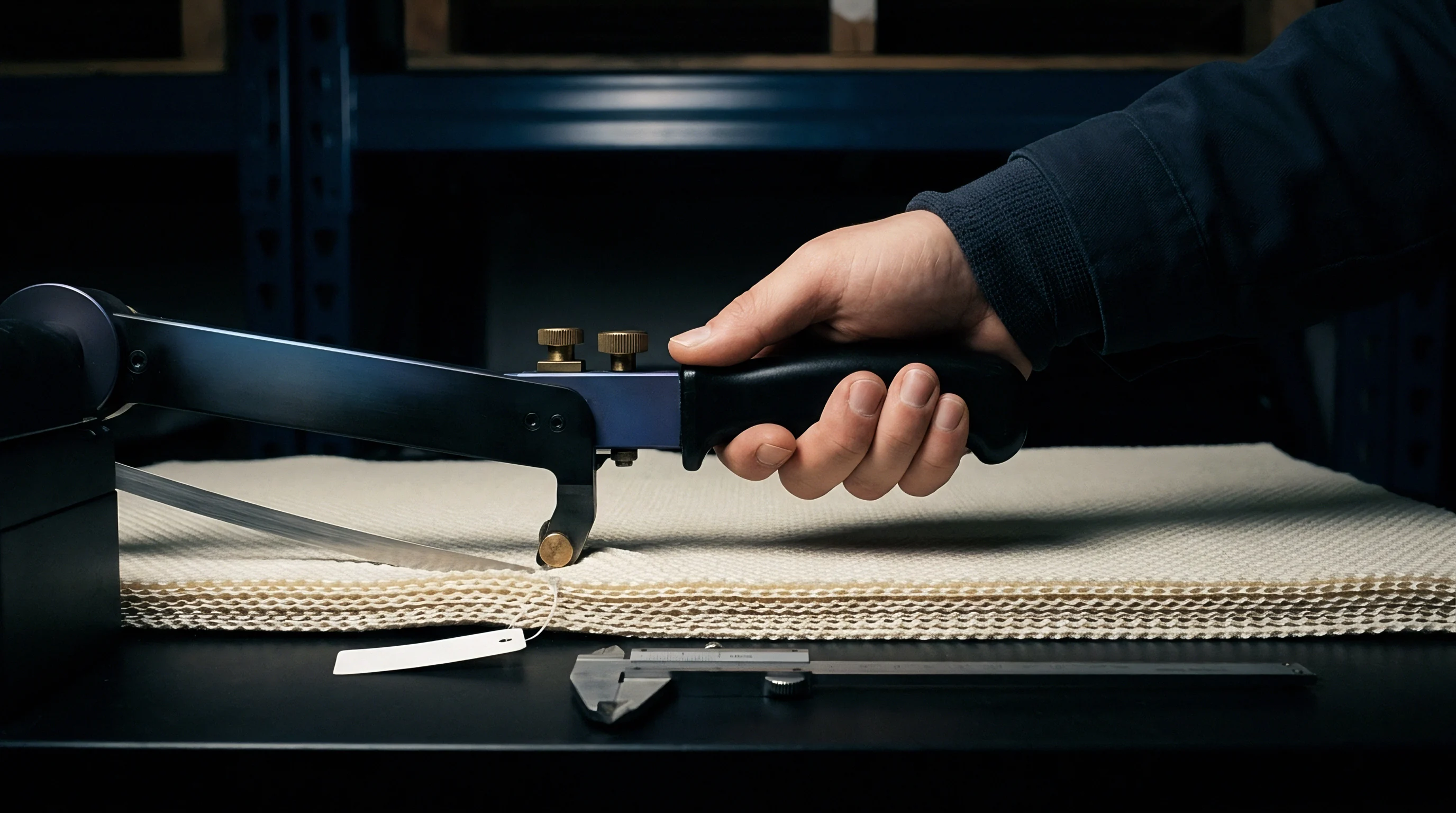
Verification protocols must live on the factory inspection floor to prevent contaminated shipments from reaching commercial transit. The first operational requirement centers on sampling geometry. An inspector cannot cut test swatches from the outer wraps of a fabric roll, where ambient dust, packing materials, and handling friction distort surface chemical properties.
Technicians must strip off and discard the outer three meters of fabric before extracting verification specimens.
Sampling plans must pull specimens across the full usable width of the roll. Finishing chemicals applied via padder bowls exhibit variable cross-roll wet pickup if nip-roller pressures drift out of true. An inspector cuts a one-meter full-width swatch, dissecting it into three separate subsamples labeled left selvage, center, and right selvage.
Combining these three swatches into a composite laboratory sample exposes whether chemical finishing treatments were applied uniformly across the entire batch.
Physical Protocol for Origin Material Verification
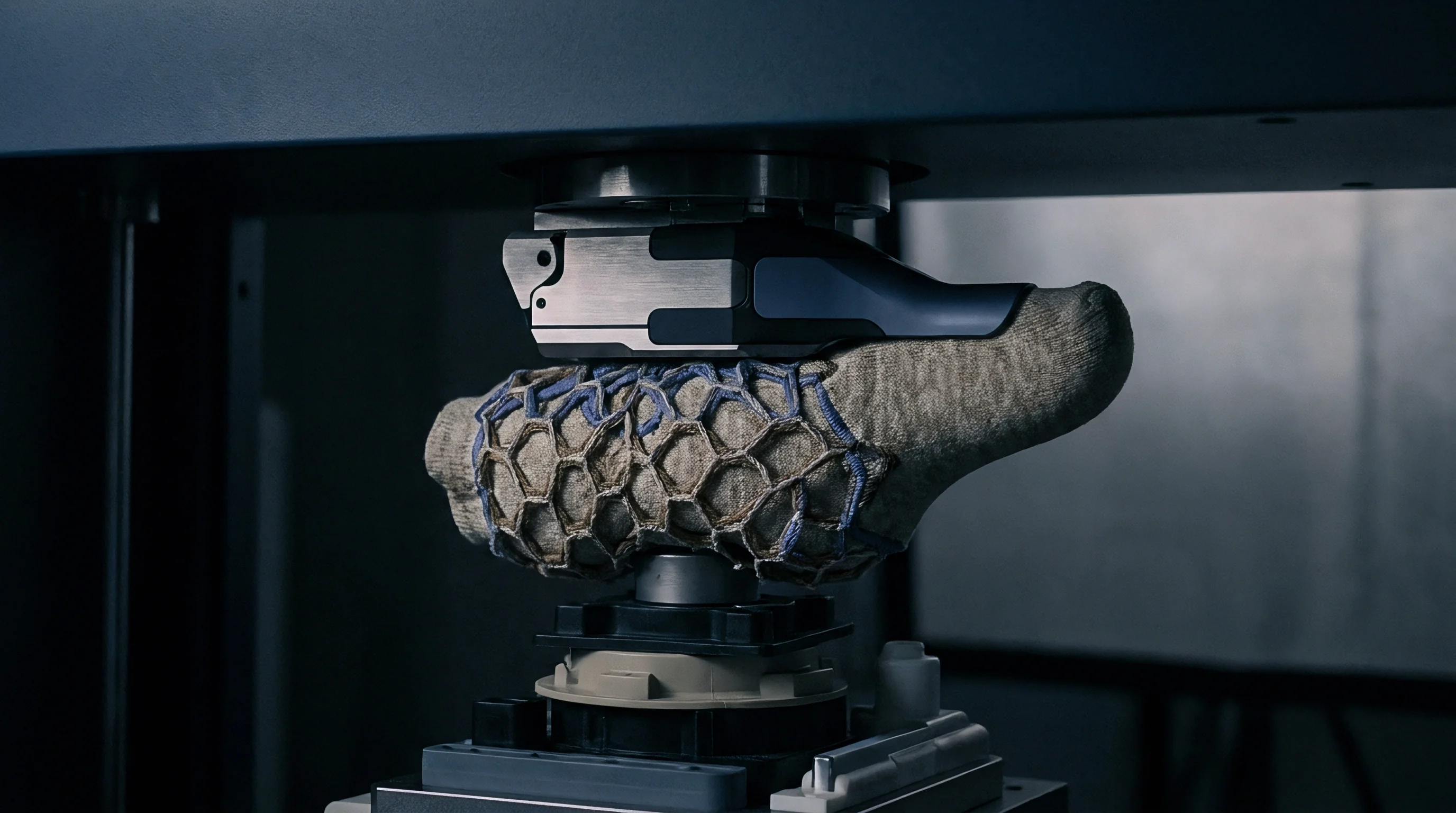
Handling and packaging specimens require absolute cleanliness to eliminate secondary field contamination. The field inspector executes a rigid physical protocol:
- The inspector cleans the cutting table using laboratory-grade isopropyl alcohol, verifying that no residual lubricants, vinyl adhesives, or wax markers contaminate the surface.
- The cutting technician dons powder-free nitrile gloves, avoiding skin contact, hand lotions, or water-resistant work gloves treated with fluoro-surfactants.
- Specimens are excised using dedicated, solvent-cleaned stainless steel shears rather than generic production knives that carry lubricating oils.
- Each test swatch is sealed immediately inside an unlined, high-density polyethylene specimen bag, completely avoiding low-density packaging materials that contain fluorinated slip additives.
- The inspector signs and dates an adhesive tamper-evident security seal over the bag closure, recording the roll number, batch ID, and loom identity directly on the chain-of-custody manifest.
The chain-of-custody documentation must accompany the shipment file, detailing the exact machinery line on which the lot was scoured, dyed, and cured. This documentation identifies the auxiliary lots used in the finish formulation, confirming that batch production records match the chemical inventory records signed by the plant chemist.
When the consignment reaches the loading dock, shipping containers require physical inspection before roll stuffing begins. Wooden container flooring frequently carries pesticide treatments or waterproofing applications applied during maritime manufacturing. Lining the container floor and interior walls with certified virgin polyethylene film shields the boxed fabric rolls from external chemical absorption throughout ocean transit.
Executing rigorous extraction procedures and sealing protocols at the origin factory turns verification into an enforceable gatekeeping mechanism that keeps non-compliant goods out of maritime shipping lanes entirely.

Clause
Securing cross-border shipments against fluorinated residue failures demands enforceable language integrated directly into commercial purchase contracts. Standard boilerplate terms stating that goods must comply with applicable chemical laws do not protect an importer when a container is impounded. Purchase orders must detail specific analytical standards, explicit measurement cutoffs, accredited laboratory credentials, and immediate commercial consequences for analytical failure.
Contractual terms must explicitly identify combustion ion chromatography under EN 14582 or modified DIN 51723 with a mandatory inorganic salt wash as the primary acceptance assay. Specifying an absolute total organic fluorine limit of less than 50 parts per million creates an unambiguous contractual gate. The clause must state that compliance is measured at the batch level, establishing that a single non-compliant test result across any drawn roll invalidates acceptance of the entire associated production run.
The contract must assign definitive financial responsibility for laboratory testing, port detention, and regulatory fines. Language should state: Seller warrants that all goods supplied under this agreement contain less than 50 milligrams per kilogram of total organic fluorine, determined via combustion ion chromatography following solvent extraction of inorganic fluorides. In the event of a regulatory detention or third-party laboratory failure exceeding this threshold, Seller assumes full liability for all port demurrage, customs fines, bonded storage, re-export freight, or destruction expenses, alongside refunding all received purchase sums within ten business days of written notice.
The fundamental challenge remaining across the textile assurance sector is whether commercial test methods can reliably distinguish legacy recycled fiber contamination from the deliberate low-level application of short-chain fluorochemical finishing agents.