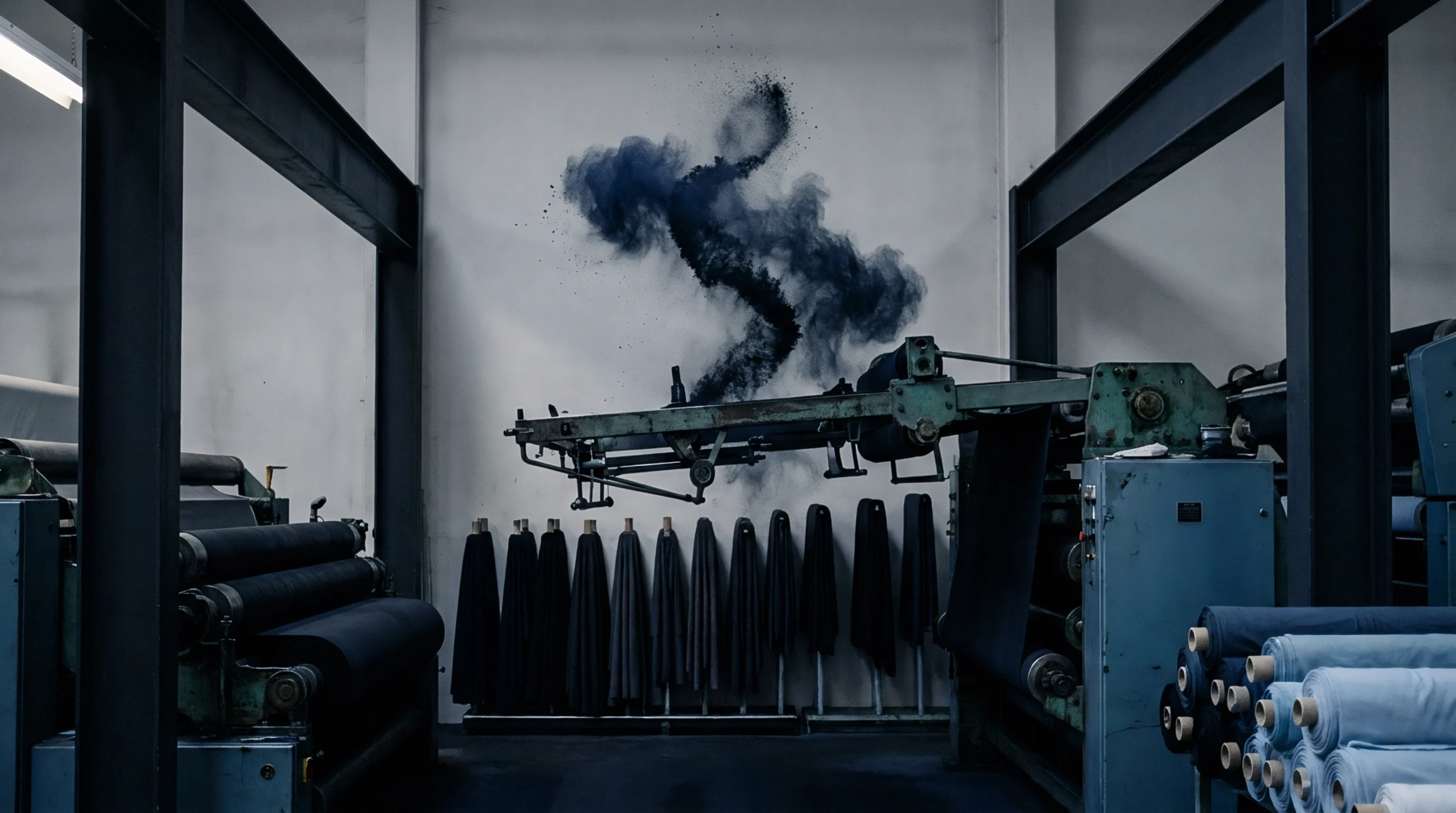
Dimensional Equilibrium
Aqueous conditioning cycles restore structural balance to synthetic filaments by applying heat and moisture to manage tension. Hydro thermal relaxation works by reducing internal molecular stress developed during melt spinning or drawing operations. Higher energy levels within the polymer chains frequently result in shrinkage when textiles reach elevated temperatures during dyeing or finishing.
The process eliminates these stresses through a controlled transition that allows chains to shift into more stable positions. Excess tension is released to prevent future distortions in the fabric geometry.
Kinetic Sequence
Thermal energy combined with water molecules plasticizes the internal structure of the fibre to facilitate chain realignment. The mechanism forces the polymer to move from a high energy non-equilibrium state into a relaxed crystalline or amorphous configuration. Steam chambers or pressurized water baths provide the necessary environment for this shift.
Heat penetrates the cross section of the filament to increase chain mobility while water acts as a lubricant for the movement. This temporary reduction in modulus allows the material to contract to its natural length before setting occurs.
Processing Constraint
Fabric stability depends upon the temperature and duration settings calibrated during the final stabilization phase of production. Variations in steam pressure produce inconsistent results across different batches of synthetic goods. Overheating leads to excessive fibre degradation while insufficient exposure fails to remove internal stresses.
Technicians monitor the weight per unit area to verify that the material reaches the target contraction level without losing physical integrity. Accurate control prevents the recurrence of puckering or dimensional change after the garment leaves the factory floor.
Performance Benchmark
Physical dimensions of a knit or woven textile remain fixed if the treatment successfully resets the latent energy of the construction. Post-treatment shrinkage rates provide an assessment of how well the filaments survived the stresses of earlier mechanical manipulation. Stable fabrics resist alteration in length and width through multiple washing cycles.
Proper execution ensures that subsequent thermal treatments during apparel assembly do not cause the material to shift or warp. High stability represents a quality requirement for technical garments subjected to frequent temperature fluctuations.