Sizing Process
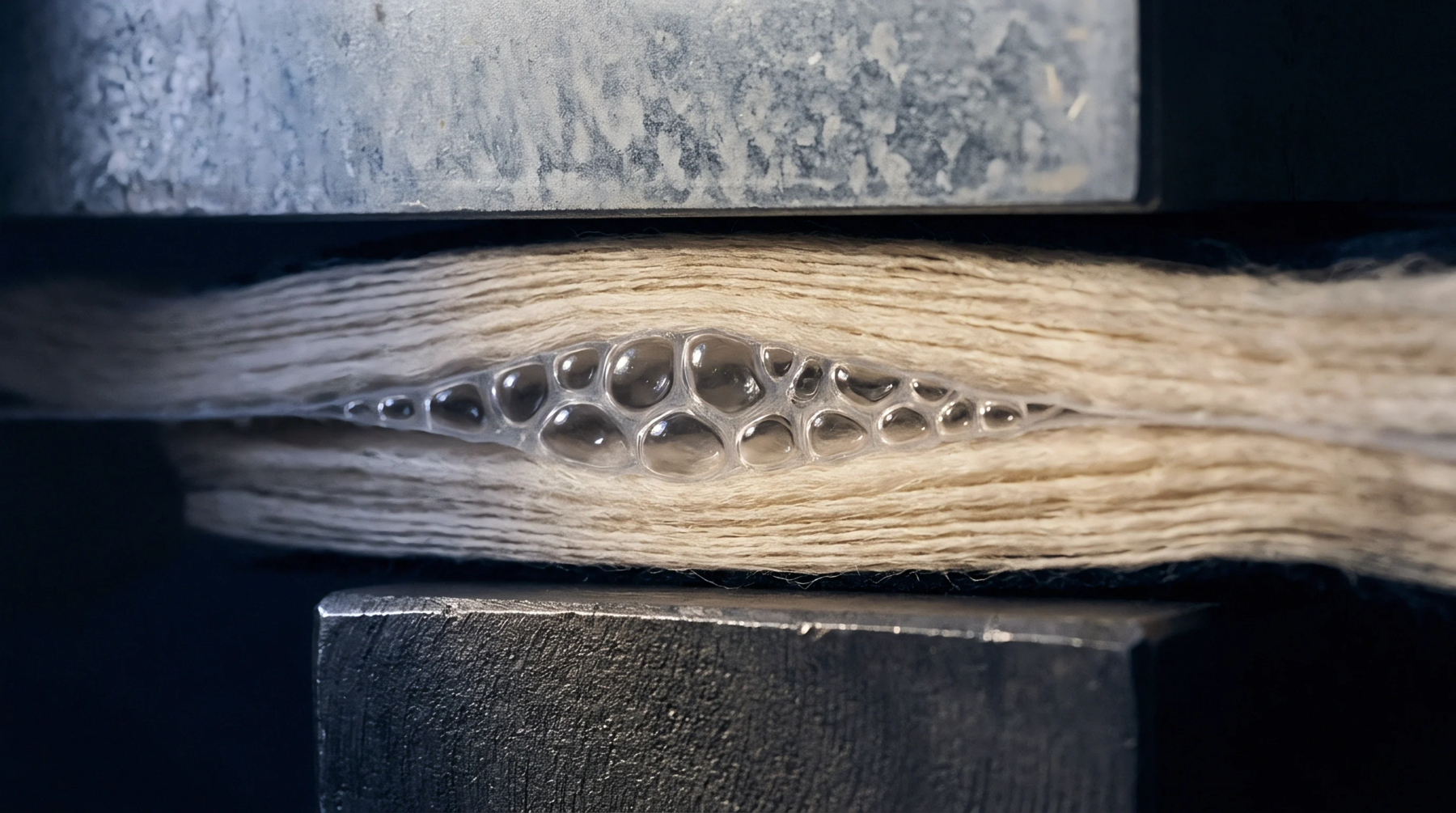
Yarn-preparation physical phenomena occurring during the weaving prep phase involve the volume change of protective coatings upon contact with atmospheric moisture. When warp yarns are coated with sizing agents, hygroscopic size swelling occurs as these starch or polymer films absorb water vapor from the loom-room air. This expansion modifies the mechanical properties of the protective film, making it more flexible and resilient.
Consequently, the coated yarn can endure the severe abrasive forces encountered as it passes through the heald eyes and reed during weaving.
Moisture Absorption
The degree of swelling depends directly on the relative humidity of the weaving environment and the chemical composition of the size mix. Highly hydrophilic ingredients like carboxymethyl cellulose swell rapidly in humid conditions. This increased volume reduces the brittleness of the size coat, preventing it from flaking off under the high-frequency friction of the loom.
Weaving Influence
Excessive swelling can cause adjacent warp yarns to stick together, increasing the risk of yarn breaks during shed opening. Conversely, if the air is too dry, hygroscopic size swelling is insufficient, leaving the size coat stiff and prone to cracking. Correctly balanced swelling is therefore essential for maintaining high loom efficiency.
Control Method
Precise regulation of the humidity and temperature in the weaving hall represents the primary method for managing this swelling behaviour. Automated climate systems maintain a constant environment to stabilize the moisture content of the yarn. This stabilization ensures consistent yarn behaviour and high weaving productivity.