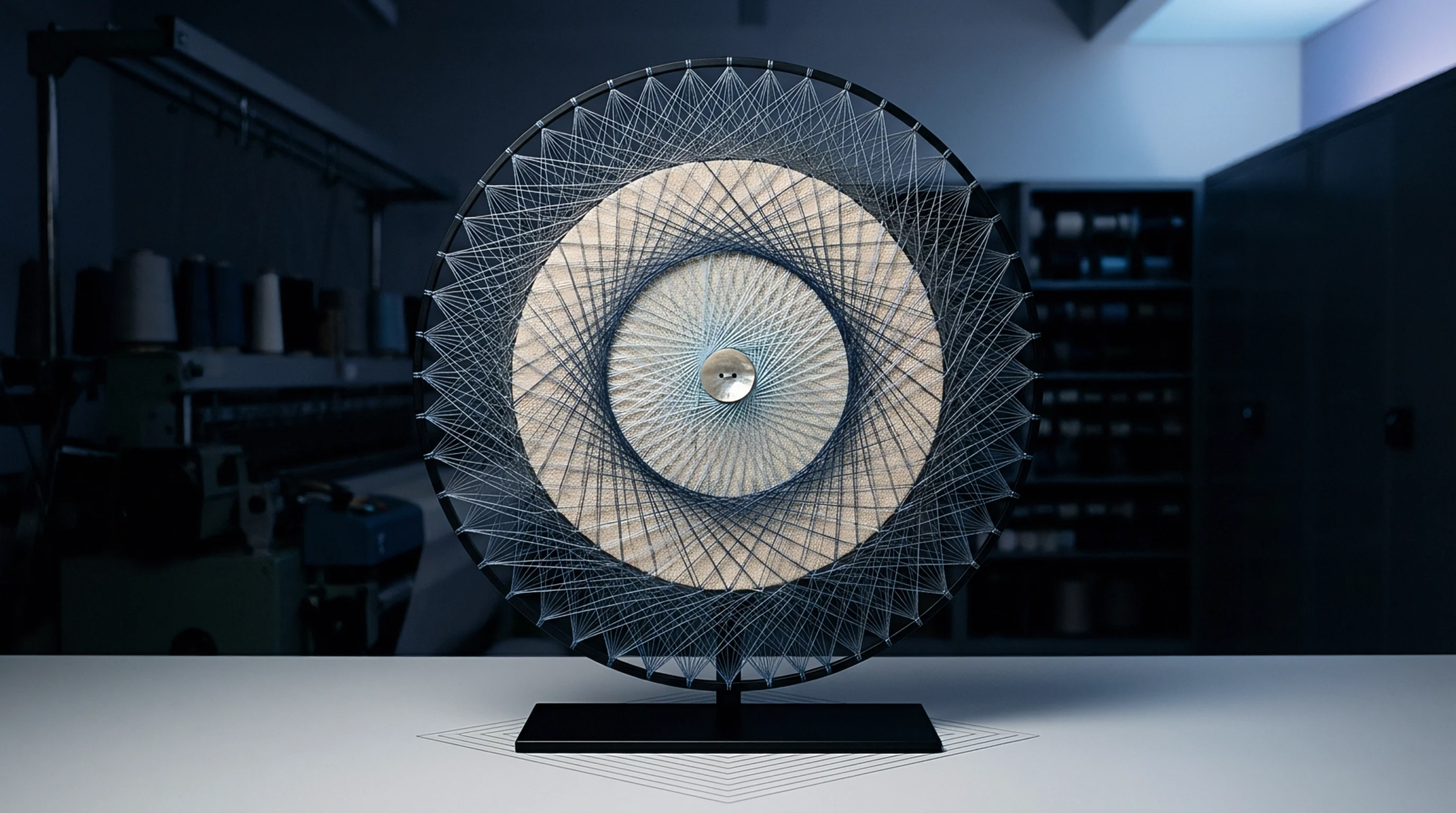
Needle Path
A metallic component in a circular knitting machine guides the descent of knitting needles during the loop formation cycle. The knock-over plane facilitates the cast-off of the previous stitch while the needle draws new yarn through the loop. This geometry defines the precise point at which the old loop is shed over the head of the needle.
Mechanical Clearance
The distance between this plane and the sinker top determines the tension of the formed stitch. Adjustments here dictate the regularity of the fabric grain by controlling how much yarn the needle pulls during each revolution. Variations in this setting result in uneven stitch density across the width of the fabric panel.
Proper calibration prevents needle damage caused by excessive strain during the clearing phase of the stitch cycle.
Operational Tolerance
Maintenance teams monitor the alignment of these components to detect signs of wear that compromise fabric quality. A change in the vertical position of the needles relative to the stationary plane alters the size of the loops being created. Consistent performance relies upon maintaining the gap between these parts within specified microscopic limits.
Thermal expansion or machine vibration often necessitates periodic re-indexing of the entire needle cylinder assembly.
Dimensional Influence
Fabric weight and surface texture depend heavily on the accuracy of this loop-clearing boundary. If the positioning shifts during high-speed production, the tension changes manifest as visible streaks in the final textile. Stable alignment remains a condition for ensuring that every needle performs an identical drawing operation during each rotation.
The structural integrity of the finished knit fabric rests on the uniformity of this clearance across every feeder of the machine.