Dynamic Optical Threshold Optimization for Minimizing Usable Fiber Carry over in Pneumatic Ejection Waste
Dynamic threshold tuning continuously adjusts optical gating against rolling background averages, cutting good lint carry-over in waste chutes below 45 percent.


Plume
High-speed pneumatic opening lines move raw cotton and synthetic staple fibers through ducting at 12 to 22 meters per second. As opened tufts pass through the inspection chamber, line-scan cameras with high-resolution charge-coupled devices map surface reflections under controlled lighting. These optical sorters depend on tufts expanding evenly to reveal embedded trash ~ jute fibers, polypropylene twine, synthetic foil, leaf bits, and seed coat fragments.
When tufts travel tightly packed, contaminants stay hidden inside the fiber mass, denying sensors the spectral contrast needed to fire ejection valves.
How tufts present themselves alters the apparent surface area of clean lint against foreign trash. Pressure fluctuations in transport ducts cause sudden density spikes inside the camera’s field of view. These transient surges change background light absorption, leading static detection channels to mistake clean fiber clusters for dense trash.
Because high line speeds demand short exposure times ~ typically 50 to 150 microseconds per camera scan line ~ available light energy for spectral differentiation remains tight.
Illumination geometry dictates how distinctly usable staple lint stands out from non-lint trash. Direct front-lighting accentuates surface color differences across the visible spectrum from 400 to 700 nanometers. Dark field and polarized backlighting bring out transparent or white synthetic contaminants like unpigmented polypropylene film and clear polyethylene wrap.
If airflow across the duct width proves uneven, tufts tumble and cast shadows that trigger false rejections under static threshold setups.
ASTM D2812 testing establishes that foreign matter separation efficiency drops when tuft density exceeds 150 grams per cubic meter in pneumatic blowroom transport lines.
Air turbulence inside the optical housing causes unpredictable shifts in fiber orientation right at image capture. Longitudinal alignment shrinks a tuft’s apparent area, whereas transverse bunching widens the reflective profile presented to the sensor array. Sorting software estimates particle surface area from connected pixel counts across neighboring channels.
If spatial calibration is off, minor density variations register as false rejection events, sending clean lint straight into waste chutes.
The boundary separating foreign contamination from clean fiber tufts stays volatile during high-throughput runs. Variations in bale moisture alter baseline raw fiber reflectance across visible wavelengths. Damp cotton drops baseline brightness, bringing clean fiber signals dangerously close to the dark threshold set for organic trash.
Dynamic optical response mechanisms must continuously account for these baseline drift patterns to preserve sorting selectivity across different fiber lots.
Unresolved aerodynamic variations across duct widths remain a persistent barrier to uniform tuft presentation at high line speeds.

Threshold
Static voltage gating in optical sorters sets fixed signal thresholds to separate trash from spinnable lint. When sensor output voltage drops below a preset white baseline or exceeds a color contrast limit, an ejection signal triggers downstream solenoid valves. But fiber lots naturally vary in color, trash content, and particle size distribution.
A fixed voltage boundary causes high good fiber carry-over when processing clean bales, or lets foreign matter slip through to carding lines when running lower-grade stock.

Chromatic Segmentation in Raw Cotton Streams
Red, green, and blue color spaces isolate organic trash from white cotton fibers by tracking color vector shifts. Organic trash like dead leaf, stem, and bark absorbs heavily in the blue spectrum near 450 nanometers while reflecting red wavelengths around 680 nanometers. White cotton fiber reflects uniformly across visible channels.
Color vector thresholds trigger ejections based on the ratio of red to blue reflectance. When cotton bales contain low-color-grade lint with yellowish tones, static red-to-blue ratio limits fail to separate discolored lint from light brown leaf fragments.
Spectral Reflectance of Synthetic Foreign Fiber
Near-infrared detection channels operate between 850 and 1700 nanometers to pinpoint synthetic polymers that match natural cotton in visible light. Polypropylene baling twine and polyester wrap reflect near-infrared radiation differently than cellulose fibers. Because of moisture regain, cellulose exhibits clear water absorption bands at 1450 nanometers.
Dry synthetic polymers lack these absorption bands, reflecting high NIR intensity back to the sensor. Static threshold gating fails when ambient relative humidity drops below 40 percent, lowering natural cotton moisture content and narrowing the NIR reflectance gap between cellulose and synthetic contaminants.
| Detection Channel | Wavelength Range (nm) | Target Contaminant Type | Cotton Reflectance (%) | Contaminant Reflectance (%) | Static Voltage Gate (V) |
|---|---|---|---|---|---|
| Visible Monochrome | 400 – 700 | Dark leaf, bark, soil | 75 – 90 | 15 – 45 | 2.10 |
| RGB Blue Channel | 420 – 480 | Yellow stain, light leaf | 70 – 85 | 30 – 55 | 1.85 |
| Polarized Light | 520 – 560 | Clear film, white PP twine | 10 – 20 | 60 – 95 | 3.40 |
| Short-Wave Infrared | 1400 – 1550 | Polypropylene, polyethylene | 25 – 40 | 70 – 90 | 2.75 |
Dynamic threshold adjustments monitor background signal shifts continuously. Processing units calculate a running average of clean fiber signal levels over a rolling 500-millisecond window, allowing signal thresholds to float at a fixed offset above or below this baseline. As clean cotton brightness shifts during lot transitions, the floating threshold resets its trigger point to preserve target detection margins.
Noise floors rise as dust gathers on glass inspection windows. Static systems interpret dust buildup as persistent foreign matter, causing continuous false valve actuations across affected inspection channels. Dynamic baseline algorithms track window clouding by detecting gradual downward signal drift, adjusting detection boundaries while alerting operators to perform optical maintenance.
A simple rule governs threshold positioning: wider optical margins always yield heavier waste boxes.


Actuation
Pneumatic rejection systems rely on banks of fast solenoid valves mounted on air manifolds downstream of the optical sensors. Valve response times run between 1.5 and 3.0 milliseconds from electrical trigger to full plunger displacement. Compressed air blasts at 0.4 to 0.6 megapascal exit directional nozzles spaced 10 to 15 millimeters apart across the duct width, deflecting detected foreign matter out of the primary fiber stream into a waste collection hopper.

Air Blast Timing and Physical Carry-Over Mechanics
Pneumatic valve dwell time determines how long each air blast lasts per ejection event, typically running between 10 and 40 milliseconds. Short dwell times risk incomplete particle deflection, leaving fast-moving contaminants to clip nozzle edges and stay in the spinnable fiber stream. Long dwell times ensure full contaminant removal but disturb a larger volume of surrounding air, drawing usable cotton staple fibers next to the target particle into the expanding air jet cone and out the ejection chute.
Nozzle pitch dictates the spatial precision of the air curtain. Narrow 10 millimeter spacing isolates small foreign particles across specific spatial channels. Wider 20 millimeter spacing demands higher compressed air volume per blast, expanding the physical impact zone.
When a tiny 2 millimeter seed coat fragment fires an air valve on a wide-pitch manifold, the resulting blast sweeps away clean cotton tufts up to 35 millimeters long alongside the target fragment.
ISO 2060 moisture conditioning rules require land-weight adjustments on ejection waste shipments when relative humidity shifts waste mass by more than two percent.

Usable Fiber Loss Mass Calculation
Calculating fiber carry-over loss requires tracking rejection frequency against ejected mass per pulse. Consider a blowroom line processing 800 kilograms of raw cotton per hour at a duct velocity of 16 meters per second. The optical sorter detects 120 contaminant particles per minute.
Under a fixed valve dwell time of 35 milliseconds at 0.5 megapascal pressure, each pneumatic ejection impulse removes an average waste mass of 0.85 grams.
Total waste generated per hour equals 120 ejections per minute multiplied by 60 minutes multiplied by 0.85 grams per ejection, yielding 6.12 kilograms of total ejection waste per hour. Laboratory separation of this waste using a Shirley Analyzer (ASTM D2812) reveals a non-lint content of 12 percent by mass. Clean spinnable cotton lint comprises the remaining 88 percent of the ejected waste mass.
Usable fiber carry-over equals 6.12 kilograms multiplied by 0.88, resulting in 5.385 kilograms of good lint lost per hour. Over a 24-hour production period, total usable lint lost to ejection waste reaches 129.24 kilograms. At a raw cotton bale price of 2.10 USD per kilogram, direct material loss amounts to 271.40 USD per line daily.
Reducing valve dwell time from 35 milliseconds to 18 milliseconds decreases average waste mass per pulse from 0.85 grams to 0.42 grams without reducing contaminant capture rates. Total hourly waste drops to 3.024 kilograms. Clean lint content within the reduced waste mass measures 78 percent due to higher contaminant concentration per pulse.
Usable fiber carry-over drops to 2.358 kilograms per hour, or 56.59 kilograms per day. Daily financial loss from lint ejection drops to 118.84 USD, saving 152.56 USD per processing line each day.
Inappropriate valve dwell settings increase compressed air consumption while stripping valuable long-staple lint from the mill production stream.

Wastage
Analyzing ejection waste composition balances foreign matter removal efficiency against spinnable fiber loss. Raw blowroom waste contains clean lint tufts, neps, motes, broken seed coats, leaf fragments, sand, polypropylene shreds, and synthetic packaging bits. Fiber length distribution in the waste bin shows whether sorters are hitting trash or mistakenly rejecting valuable long-staple lint.
The usable fiber carry-over ratio is simply clean staple lint mass divided by total ejected waste mass.

What Level of Fiber Loss Remains Commercially Tolerable?
Usable fiber content in pneumatic ejection waste ranges from 60 percent to 90 percent under static threshold management. Well-tuned optical systems running dynamic threshold control keep usable carry-over under 45 percent of total waste mass. High-grade combed yarn applications tolerate very little foreign particle contamination in carded sliver, forcing mills to accept higher fiber losses to ensure clean yarn.
Coarse rotor-spun yarn production permits wider thresholds, prioritizing fiber mass preservation over minor trash removal.
Sorting lines encounter distinct operational failures that elevate fiber carry-over beyond target baseline levels.
- Optical window clouding reduces light transmission through the inspection pane, causing background signal drop that triggers continuous false ejections across affected channels.
- Pressure drop in air manifolds delays solenoid plunger response times, requiring longer valve dwell settings that sweep excess clean fiber into waste chutes.
- Uncalibrated background references create visual contrast errors across channel boundaries, misinterpreting clean fiber tuft shadows as foreign particles.
- High tuft density spikes block light penetration through dense fiber clusters, generating false dark signals on monochrome optical sensors.
- Static electricity accumulation causes loose cotton fibers to cling to optical housing surfaces, disturbing sensor calibration and light distribution patterns.
High waste volume is sometimes taken as proof of thorough contamination removal across all raw material grades.
Calibration
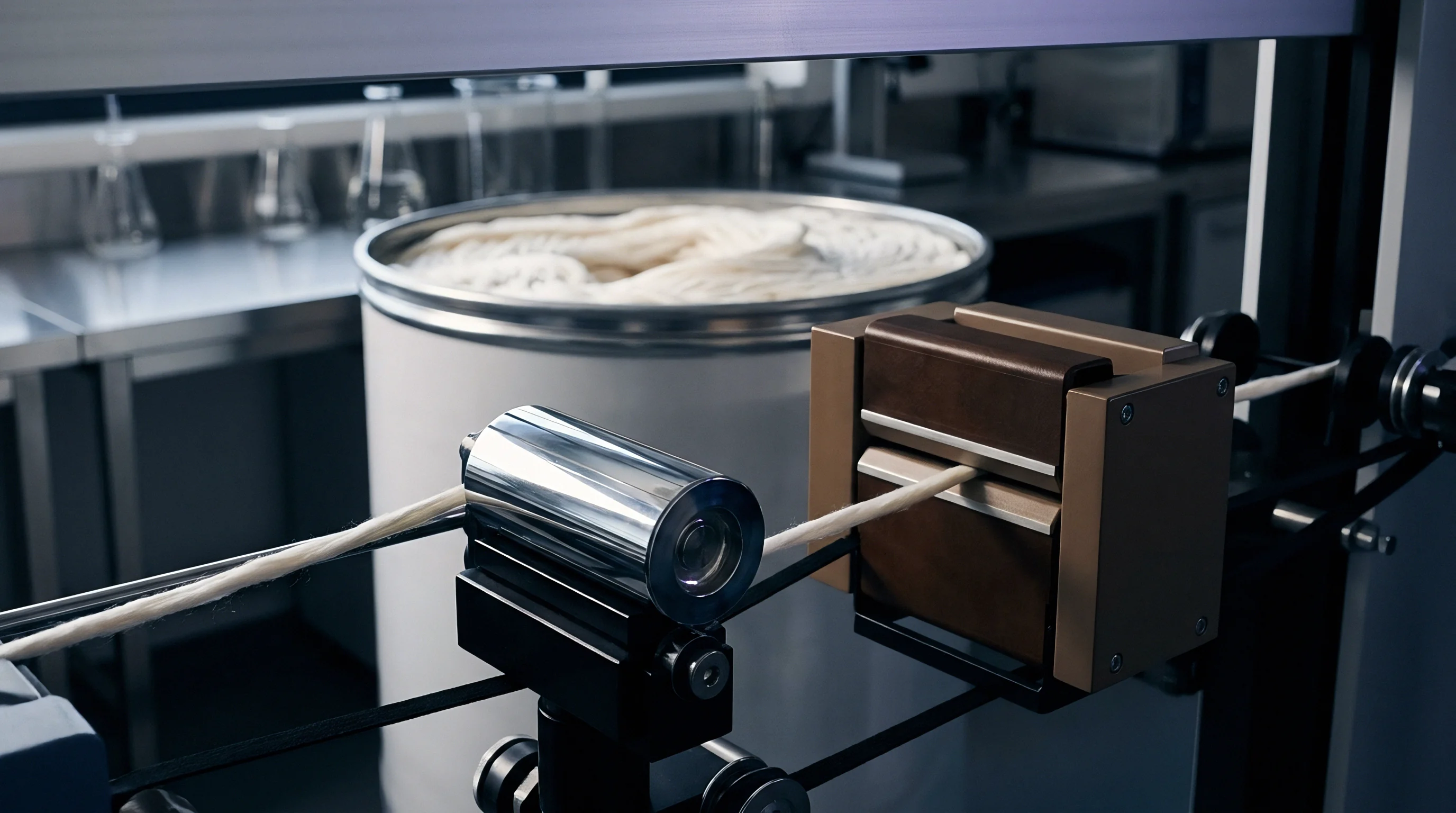
Dynamic optical threshold algorithms adjust gating limits based on real-time signal inputs across multiple sensor channels. Signal processing units recalculate threshold boundaries every 1 to 5 milliseconds, evaluating local image contrast, tuft movement speed, color channel variance, and historical detection frequency per valve channel. When foreign particle detection rates spike, dynamic systems tighten spatial boundaries around detected spots to avoid full-width air blasts.

Parameter Matrix for Adaptive Optical Gating Systems
Adaptive control systems rely on interconnected feedback parameters to maintain target separation ratios during continuous operation.
| Control Parameter | Input Signal Source | Adjustment Mechanism | Response Time | Target Operational State |
|---|---|---|---|---|
| Background Brightness Floating Baseline | Rolling 500ms RGB channel average | Shifts baseline voltage offset up or down | 2.0 ms | Eliminates false triggers from bale shade changes |
| Dynamic Valve Pulse Width Modulation | Particle surface area measurement | Adjusts solenoid open duration (10-35ms) | 1.5 ms | Matches air blast volume to contaminant size |
| Spatial Cluster Neighborhood Gate | Connected pixel array analysis | Requires minimum 4-pixel contiguous signal | 0.8 ms | Prevents ejections from single-pixel sensor noise |
| Spectral Ratio Cross-Verification | Combined RGB and SWIR channels | Requires dual-channel trigger confirmation | 3.5 ms | Distinguishes discolored lint from organic trash |
System calibration requires systematic setup sequences to establish correct baseline limits before launching dynamic adaptation loops.
- Run clean, hand-sorted raw cotton through the optical inspection chamber at normal operating velocity to record baseline reflectance profiles across all sensor channels.
- Set initial static signal thresholds 25 percent above peak background noise levels measured during clean cotton baseline sampling.
- Introduce known calibration samples of dark leaf, yellow stain, polypropylene twine, and clear film to verify detection channel trigger sensitivity.
- Activate rolling baseline tracking algorithms with a 500-millisecond signal integration window to enable continuous background shade compensation.
- Engage dynamic pulse width modulation software to automatically scale valve dwell time based on detected particle spatial dimensions.
- Measure Shirley Analyzer lint content on collected ejection waste after 30 minutes of continuous operation to confirm usable fiber carry-over remains below 45 percent.
Continuous closed-loop threshold adaptation preserves spinnable staple length while suppressing downstream yarn defect penalties.
Standard delivery contracts for optical foreign matter sorters stipulate that waste ratio verification must follow ISO 10306 test procedures for trash content determination.

Valuation
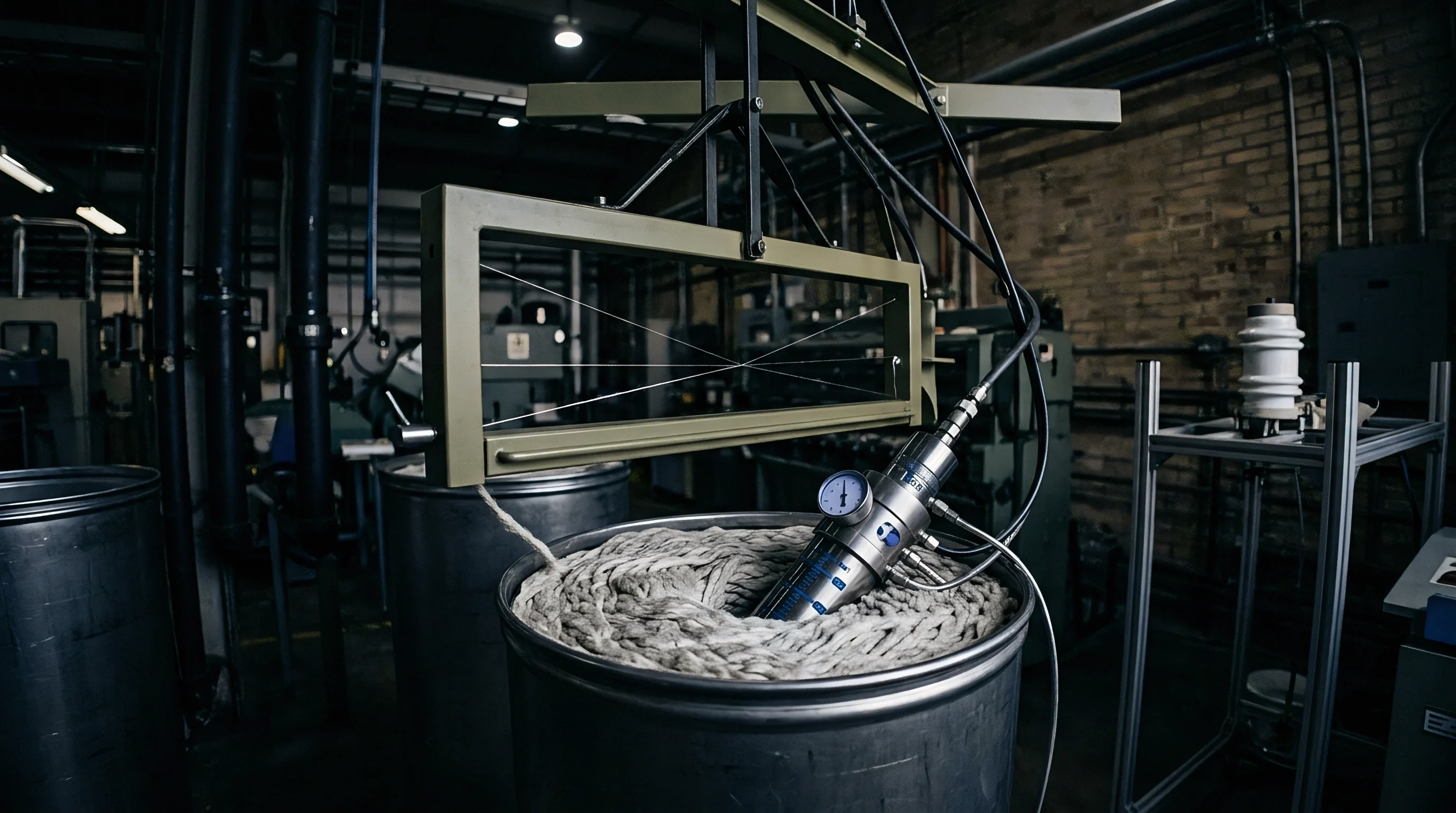
Evaluating sorting economics requires weighing raw material waste against downstream yarn defect penalties. Usable fiber lost in ejection waste represents an immediate cash loss per kilogram of processed cotton. Letting foreign contaminants pass into carding, drawing, and spinning leads to end breaks, lower spinning efficiency, winding machine clearer cuts, fabric rejects, and customer claims.
Defect Penalties and Downstream Processing Economics
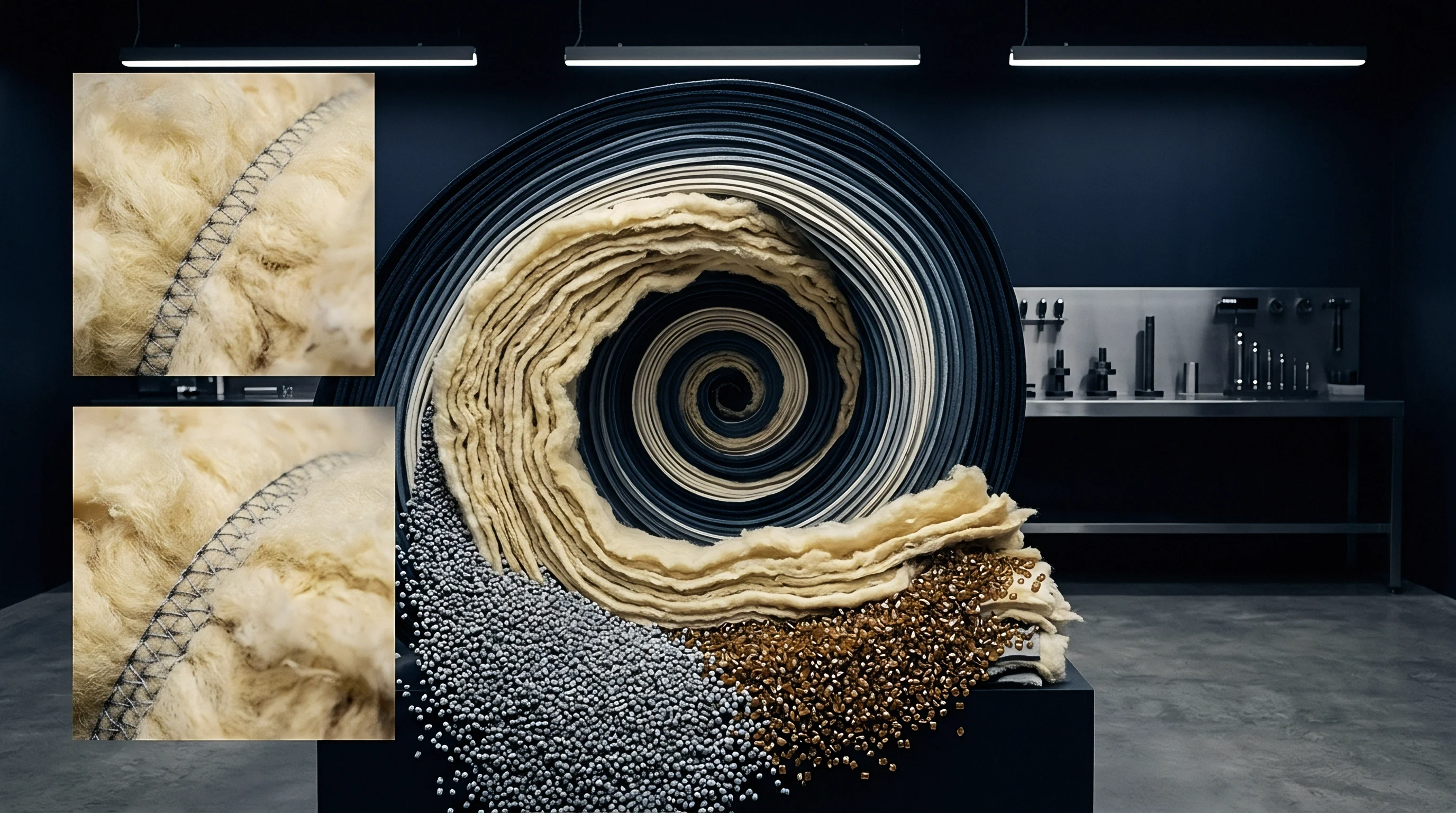
Polypropylene contamination creates severe financial exposure in finished dyed fabrics. A single white polypropylene filament unravels during carding, splitting into thousands of micro-fibers throughout the yarn. Polypropylene does not absorb direct or reactive cotton dyes, so during dyeing, these synthetic fibers stay uncolored and show up as white streaks across finished cloth.
Garment buyers reject entire fabric rolls contaminated with polypropylene, issuing chargeback claims that exceed raw yarn material costs by factors of five to ten.
High-speed winding machines cut yarn whenever optical clearers detect foreign matter thicker than 150 percent of nominal yarn diameter or longer than 10 millimeters. Each cut drops winding machine efficiency, demands operator labor, and creates a knot or splice that weakens thread structure. Aggressive foreign matter ejection at the blowroom stage protects winding productivity, even if blowroom fiber carry-over rises moderately.
Mills establish threshold target settings by aligning rejection sensitivity with final yarn quality standards.
- Fine combed knitting yarns (Ne 40 and higher) require maximum optical sensitivity settings, accepting usable fiber waste carry-over up to 55 percent to eliminate polypropylene risk.
- Coarse weaving yarns (Ne 12 to 24) permit relaxed dynamic contrast thresholds, reducing usable fiber carry-over to target levels below 35 percent of total waste mass.
- Open-end rotor spinning lines utilize moderate optical settings focused on dark particle removal, preventing trash accumulation inside spinning rotor grooves.
- Dyed yarn applications demand dual SWIR and polarized light channel verification to guarantee complete synthetic polymer extraction during blowroom opening.
Calculating the true cost per kilogram of delivered carded sliver incorporates clean fiber loss, compressed air power consumption, sorting line capital depreciation, and downstream clearer cut reductions. Dynamic optical threshold tuning optimizes this economic equation by maintaining strict contaminant extraction boundaries while continuously minimizing usable fiber carry-over in pneumatic ejection waste chutes.