Establishing Automated Dynamic Hydrodynamic Balancing Loops for Micro Denier Synthetic Fabric Jet Processing
Dynamic hydrodynamic balancing synchronizes venturi liquor velocity with lifter reel speed, eliminating shear pilling and rope marks on micro denier synthetics.
Nozzle
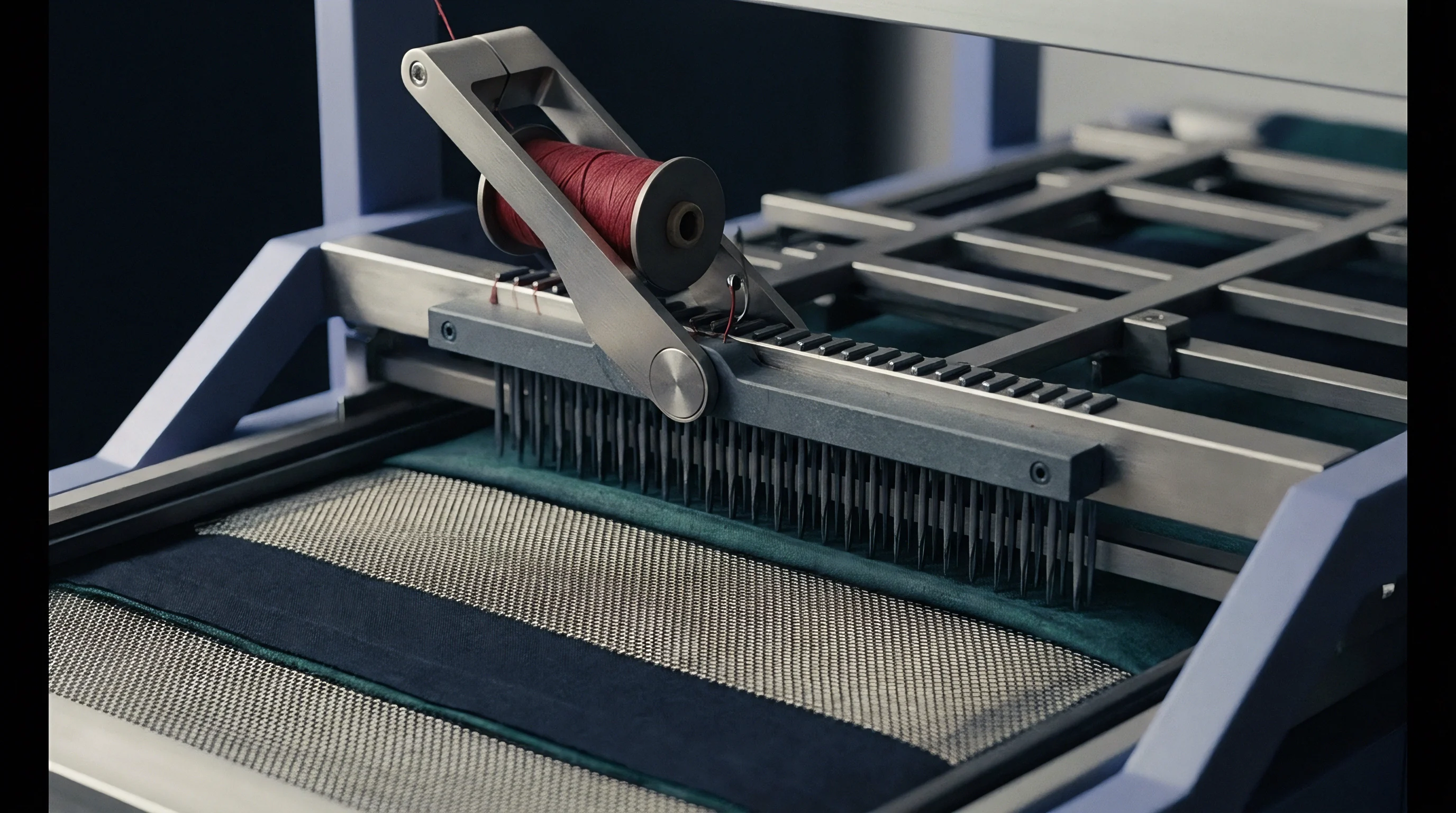
Automated hydrodynamic balancing loops synchronize liquor flow with linear rope movement, preventing shear damage during jet processing. Synthetic micro denier fabrics made from filaments under 1.0 denier per filament have high surface area and minimal flexural rigidity, making them vulnerable when conventional jet dyeing setups run static pump pressures that pull or abrade the bundle. Keeping the rope stress-free requires a dynamic response inside the venturi throat.
The main control variable operates at the venturi interface, where differential pressure across the convergent nozzle provides the hydraulic force that moves the rope. If liquor speed falls behind the peripheral speed of the winch reel, the rope suffers mechanical tension, surface flattening, and pilling as excess pumping energy turns into shear. Conversely, if liquor velocity exceeds rope speed by more than eight percent, turbulent fluid causes filament separation, ballooning, and entanglement.
Keeping these velocities aligned across changing bath temperatures requires continuous adjustments to the circulation pump frequency.
A venturi differential pressure swing of five kilopascals alters microfilament surface hairiness within two passes through the transport tube.
Synchronizing liquor mass flow to cloth transport at the nozzle eliminates the need for manual operator intervention during thermal ramps.
| Substrate Construction | Linear Density | Nozzle Diameter | Liquor Flow Rate | Differential Pressure | Target Rope Speed |
|---|---|---|---|---|---|
| Polyester Interlock Knit | 0.50 dpf (75d/144f) | 90 mm | 45 to 55 m³/h | 12 to 16 kPa | 280 to 320 m/min |
| Polyamide 6,6 Plain Weave | 0.70 dpf (40d/58f) | 80 mm | 38 to 44 m³/h | 15 to 19 kPa | 220 to 260 m/min |
| Polyester Micro-Twill | 0.35 dpf (50d/144f) | 100 mm | 52 to 62 m³/h | 10 to 14 kPa | 300 to 350 m/min |
| Polyester Double Knit | 0.80 dpf (100d/128f) | 90 mm | 48 to 58 m³/h | 14 to 18 kPa | 250 to 290 m/min |
Control loops rely on high-speed pressure transducers positioned immediately upstream and downstream of the venturi cone. The transmitters feed pressure drop readings to a programmable logic controller running a proportional-integral-derivative algorithm, which adjusts the main pump inverter to keep differential pressure within target envelopes for the specific fabric weight. If the venturi throat chatters, pump speed has exceeded the natural absorption rate of the gathered filament bundle.
Vessel
Chamber dynamics determine whether micro denier synthetic ropes stack neatly or knot inside the J-box. Because synthetic microfilaments have low bending stiffness ~ typically below 0.015 micronewton meters ~ and a high specific surface area above three square meters per gram, the rope tends to trap small air bubbles and float on the liquor instead of sinking smoothly into the plaiting zone.
Why Do Microfilaments Migrate toward Vessel Dead Zones?
Micro denier synthetics undergo notable buoyancy shifts during the dye cycle. As temperatures pass the polymer glass transition point, expanding micro-bubbles and falling liquor density alter float height. If internal bath levels remain static, the rope drifts into dead zones of the autoclave instead of feeding smoothly toward the lifter reel suction, making dynamic drainage controls essential.
Displacing chamber liquor under close control keeps the rope positioned without crushing filament surfaces. Pressurized jet machines achieve this using compartmentalized lower sumps fitted with perforated displacement plates that route returning liquor away from the fabric channel, pulling the rope down by gentle suction rather than mechanical tension. Maintaining balance between suction grid flow and nozzle delivery prevents internal friction and keeps dense fabric packing from choking liquor return.
Chamber liquor level variations directly shift rope cycle turnaround time by altering the flotation height in the J-box.
Managing chamber transport requires continuous oversight of several interdependent hydrodynamic variables:
- Chamber Liquid Ratio establishes the buoyant baseline, running between 1:5 and 1:8 for micro denier synthetics to ensure smooth rope migration without flotation stalls.
- Plaiter Traverse Frequency matches instantaneous rope exit velocity, distributing the wet cloth in uniform folds across the inclined chamber base.
- Perforated Sump Velocity draws spent dye liquor through lower extraction ports at controlled rates, preventing turbulent backflow from disrupting the layered rope stack.
- Chamber Pressurization Gradient controls dissolved air release during thermal ramps above 100 degrees Celsius, eliminating buoyant gas pockets inside the synthetic filaments.
How the rope stacks inside the chamber determines whether the batch finishes uniformly or develops defects across thousands of meters. If hydrodynamic balance breaks down, fabric compacts unevenly under its own weight, leaving permanent pressure marks that subsequent stenter heat setting will not remove.

Instrumentation
Closed-loop balancing depends on sensors that track fluid and fabric velocity without adding line drag. Because optical sensors routinely foul in hot, pressurized chambers from steam dispersion and dyestuff deposits on sight glasses, effective systems combine non-contact microwave Doppler radar, magnetic seam detection, and electromagnetic flowmeters.
The lifter reel tachometer measures mechanical surface speed, while an external microwave Doppler sensor at the nozzle exit tracks actual linear cloth speed, using magnetic seam pulses to establish cycle benchmarks. The controller calculates instantaneous reel slippage from these inputs; if slip exceeds three percent, it restores balance by boosting liquor flow or trimming winch speed.
A sustained slip value above four percent between the driven reel and the microfilament rope abrades outer filament layers within six machine cycles.
| Measurement Target | Sensor Technology | Operating Range | Response Latency | Calibration Limit |
|---|---|---|---|---|
| Rope Linear Speed | Microwave Doppler Radar | 50 to 600 m/min | 25 ms | ± 1.0 m/min |
| Liquor Volumetric Flow | Electromagnetic Flowmeter | 5 to 100 m³/h | 50 ms | ± 0.5% full scale |
| Nozzle Differential Pressure | Piezoresistive Transmitter | 0 to 50 kPa | 10 ms | ± 0.05 kPa |
| Cycle Seam Arrival | Magnetic Coil Transceiver | Single pulse/loop | 5 ms | Zero positional drift |
| Chamber Bath Level | Hydrostatic Level Sensor | 0 to 2000 mm | 100 ms | ± 2 mm water column |
Tuning the automated loop demands systematic commissioning before committing full-scale synthetic production lots. Dyehouses follow a sequential calibration procedure on the live machine:
- Charge the vessel with scouring liquor and load greige goods at nominal capacity to establish the base friction coefficient of wet microfilaments.
- Run circulation pumps across five stepped flow intervals to record baseline nozzle differential pressures without engaging the driven lifter reel.
- Engage the lifter reel and match winch peripheral speed to the calculated hydraulic discharge velocity, verifying zero mechanical pull across the load cell.
- Inject simulated thermal ramp profiles into the controller, monitoring inverter output frequency to verify that the loop tracks liquor viscosity shifts without hunting.
Control algorithms maintain synchronization using feedforward logic. As bath temperatures rise from 80 degrees Celsius to 130 degrees Celsius, water viscosity drops by over forty percent. The controller anticipates this change, adjusting pump output to prevent nozzle pressure decay before rope speed errors manifest.
Unchecked sensor harmonics can induce pump cavitation and strip filament skins over ten thousand running meters.
Disruption
Hydrodynamic imbalance produces defects that often stay hidden until final drying and heat setting. Because micro denier synthetic yarns lack the physical mass to withstand erratic liquid forces, decoupling fluid velocity from mechanical drives turns the processing chamber into an abrasive environment.
Should Winch Speed Lead Liquor Velocity?
The winch reel must never pull fabric through a starving nozzle. Winch lead creates longitudinal tension that narrows the rope and forces microfilaments together under pressure, breaking individual fibrils and causing frosted chafe marks along outer folds. When nozzle liquor leads the winch instead, liquid cushions the rope through the transfer pipe and keeps its cross-section relaxed and round.
Hydrodynamic instability produces distinct structural breakdowns in synthetic piece goods:
- Crow Feet Creasing develops when rope loops stall in the J-box under excessive liquor drainage, setting sharp, multi-directional folds into thermo-plastic filaments.
- Filament Fibrillation Bands emerge from localized velocity spikes in the venturi throat, stripping outer filaments and scattering reflected light unevenly across the dyed face.
- Channeling Shade Variations occur when low nozzle differential pressure fails to open the micro denier rope, starving inner bundle cores of fresh dye liquor.
- Loop Entanglement Knotting follows liquor turbulence in the transport tube, throwing excessive slack into the plaiter and forcing automated emergency machine stops.
Once fine internal yarn structures suffer mechanical crushing at high temperatures, subsequent finishing processes cannot restore uniform light reflectance. Micro denier textiles magnify minor surface defects because of their high fiber density and thin filament diameter. Whether ultrasonic cavitation monitoring can detect internal tangling before nozzle blockage occurs remains an open question in dyehouse trials.
Settlement
Dynamic hydrodynamic balancing loops fundamentally alter the cost structure of micro denier wet processing. While open-loop machines suffer high rework rates, fabric scrap, and shade inconsistency, automated balancing reduces mechanical friction, shortens cycle times, and yields reproducible batches.
| Control Architecture Tier | Right First Time Yield | Rework Liquor Consumption | Specific Energy Demand | Defect Rate Below 4 Points |
|---|---|---|---|---|
| Manual Valve Regulation | 76.4% | 85 L/kg | 4.2 kWh/kg | 12.8% rejection |
| Open-Loop Preset Inverter | 88.1% | 62 L/kg | 3.1 kWh/kg | 4.6% rejection |
| Dynamic Hydrodynamic Loop | 97.3% | 44 L/kg | 2.2 kWh/kg | 0.7% rejection |
Rework quickly erodes commission margins. Stripping and re-dyeing micro denier goods stiffens delicate yarn structures, degrading premium activewear to secondary market values. Consequently, commercial contracts between brands and dyehouses increasingly set strict limits on surface distortion under standardized inspection lighting.
A point count above fifteen points per hundred square metres under four-point inspection triggers automatic commercial rejection under technical outerwear supply agreements.
Commission dyehouses protect their margins by logging sensor data from closed-loop runs to prove that differential pressures, cycle turnaround times, and flow rates stayed within specification. Adding a purchase order rider that links nozzle differential logs to defect liability transfers four-point inspection rejections straight back to the dyer.