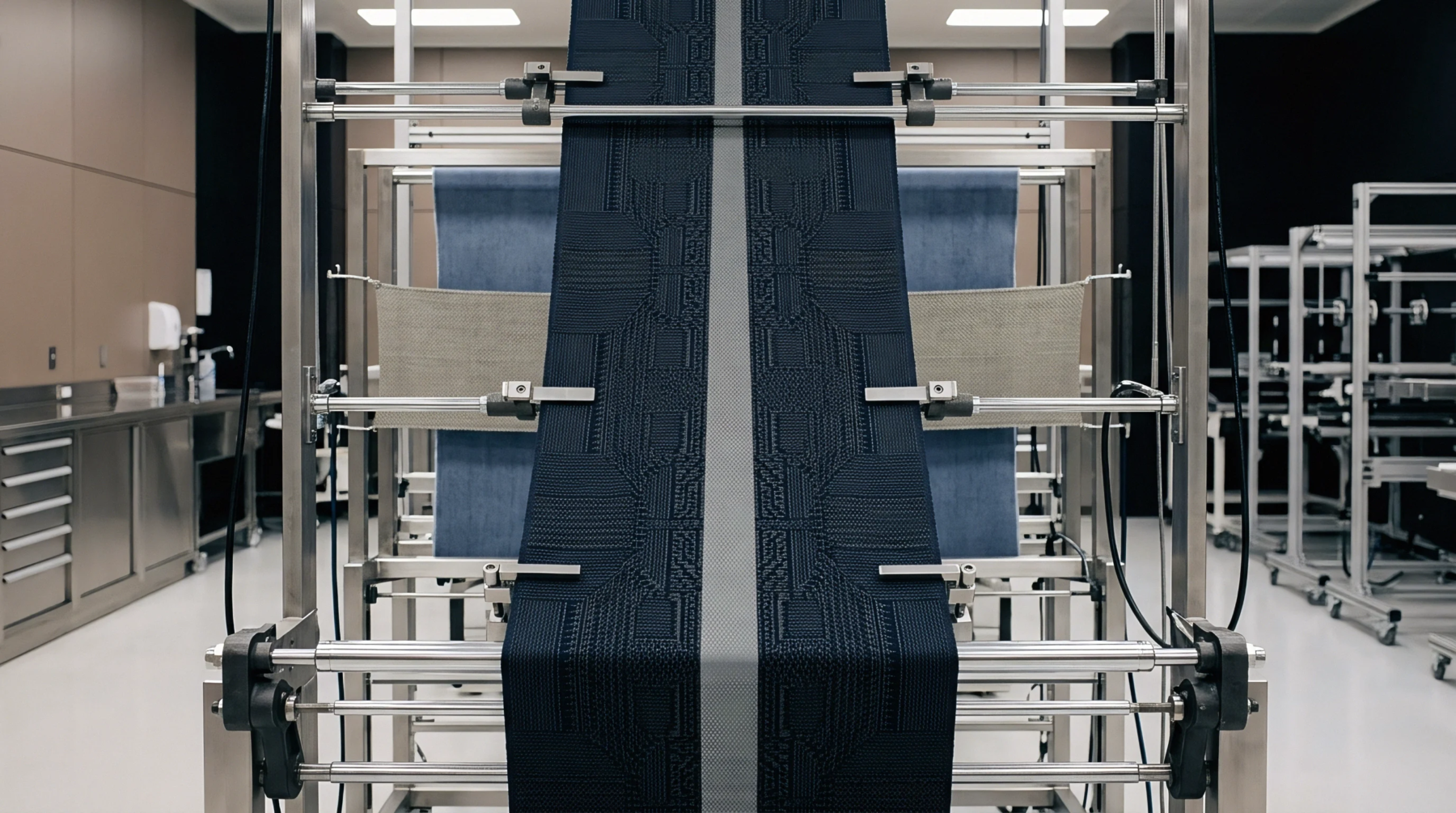
Force Regulation
Electromechanical sensing systems actively monitor and adjust applied mechanical forces across machinery components during continuous web processing operations. Integrated load cell feedback control utilizes strain gauge transducers embedded beneath roll bearings to continuously quantify nip compression force and send corrective signals to pneumatic or hydraulic actuators. Dyeing padders rely on this continuous force measurement to maintain precise squeeze pressure across varying fabric thicknesses and machine line speeds.
Uniform mechanical compression ensures constant liquor pick-up across the full fabric width. The control loop stops correcting force values when measured strain falls within the pre-set deadband tolerance of the control algorithm.
Transducer Response
Piezoelectric or strain gauge elements convert physical roll deflection into calibrated millivolt outputs. Internal amplifier circuits condition these raw signals to resist electrical interference generated by nearby drive motors. Calibration protocols adjust signal baseline figures to compensate for roll weight and bearing friction.
Drift in signal baseline causes systemic loading errors across long continuous runs.
Closed Loop
Microprocessor controllers process digital force readings and calculate error margins relative to targeted nip pressure setpoints. Proportional-integral-derivative algorithms output voltage signals to electro-pneumatic pressure regulators, adjusting cylinder pressure within milliseconds. Symmetrical force distribution across left and right roll bearings prevents diagonal fabric skew and shade shading across the selvedge.
Mechanical response latency limits control effectiveness during rapid speed changes.
Load Limit
Operational safety parameters establish maximum force thresholds to protect elastomeric roll covers and structural bearing housings from mechanical overload. Excess force damages sensitive rubber roll coatings, creating localized depressions that distort nip pressure profiles. Hardened stop blocks prevent mechanical contact between rolls in the event of transducer signal failure.
Load feedback control disengages automatically when safety limit switches detect structural deflection exceeding design limits.