Trash Extraction
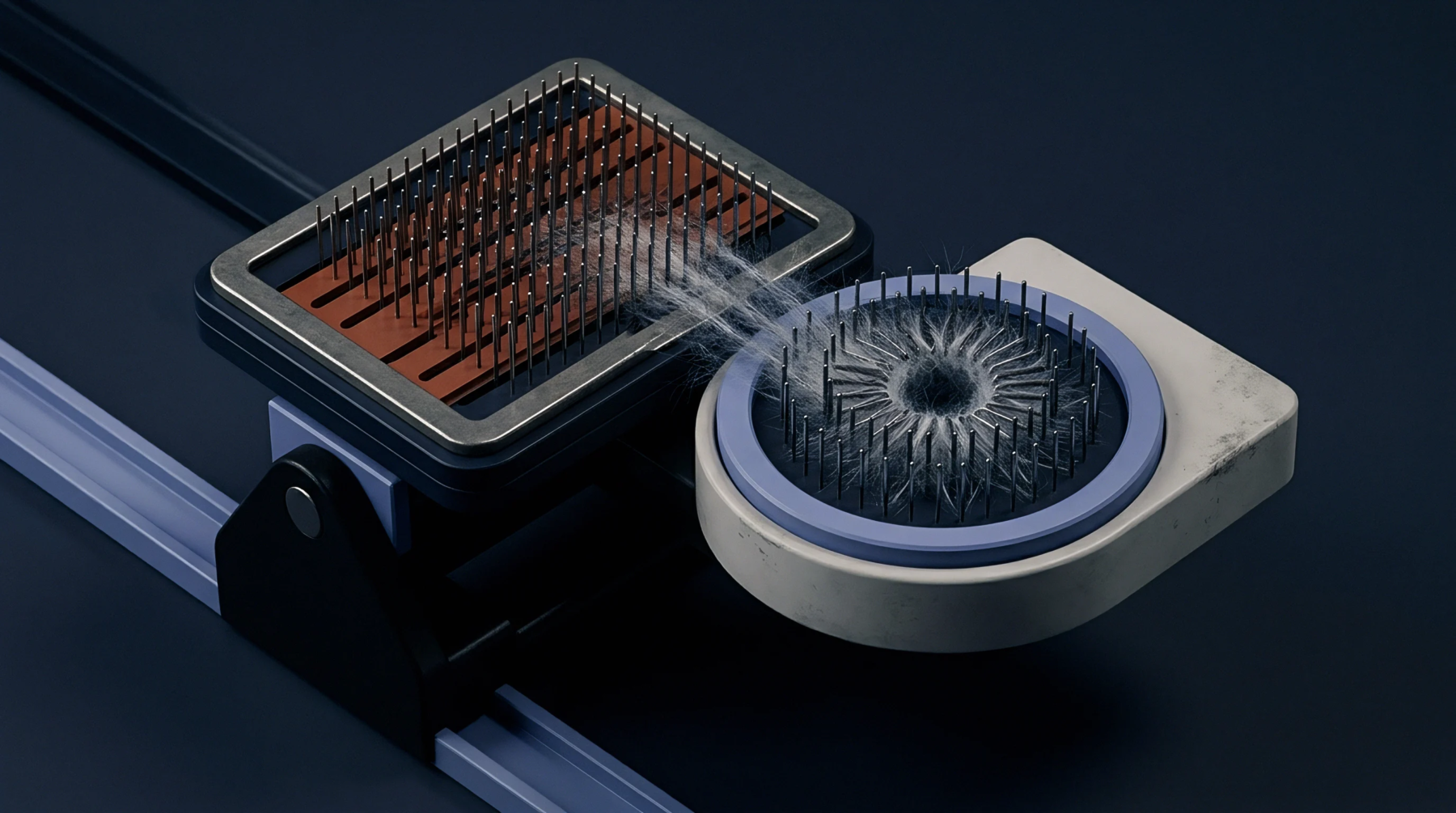
Rigid metal doctor-edge blades mounted adjacent to opening and carding cylinders mechanically strip dense foreign matter from airborne fibre tufts. Mote knives sit positioned around the high-speed licker-in or primary beater rollers to extract seed coat fragments, shale, and heavy vegetable trash. Centrifugal forces throw high-density dirt outward from the cylinder face, projecting these particles into the path of the stationary knife edge.
As the wire teeth sweep the fibrous fringe over the blade tip, foreign matter strikes the edge and diverts into waste hoppers. Spinnable fibres remain flexed within the wire teeth, continuing downstream into carding zones. The clearing action ends where finer flat-carding begins beyond the taker-in section.
Mechanical Alignment
Geometric settings between the knife edge and the clothed cylinder face govern cleaning efficiency down to hundredths of a millimetre. Mote knives require micro-metric adjustment mechanisms to calibrate their clearance, attack angle, and entry gap relative to the passing wire teeth. Typical machine layouts incorporate either a single blade or a pair of graduated knives arranged sequentially beneath the licker-in.
An aggressive knife angle peels out large trash fragments, though setting it too close shears off good staple and increases valuable lint loss. Worn, nicked, or burred blade edges collect fibre aggregates, sparking friction fires or choking the machine under high-speed operation.
Centrifugal Separation
Velocity differences between low-density fibre strands and high-density botanical impurities drive the cleaning separation mechanism. The high surface speed of the cylinder propels the heavier seed hulls through the boundary layer, bringing them into collision with the mote knives. These stationary bevelled bars halt the kinetic trajectory of the impurities, dislodging them from the passing fibrous web.
Deflected matter drops under gravity and directed extraction suction into closed reclamation waste receivers. Clean lint exhibits enough tensile flex to wrap securely over the blade tip, remaining anchored on the backward-angled wire teeth. Balancing extraction volume against spinnable lint retention demands continuous pneumatic adjustment across the knife slot.
Spinning Protection
Removal of dense contaminants at this initial carding stage shields subsequent fine wire clothing from rapid mechanical deterioration. Undetected stones, tramp metal fragments, and hardened seed shells passing past the mote knives will crush cylinder and flat clothing wire points. Damaged clothing degrades nep removal efficiency and forces costly, unscheduled re-clothing downtime.
Seed coat fragments allowed past the licker-in shatter into thousands of microscopic flecks that become embedded in the yarn structure. These fragments survive downstream chemical scouring, causing conspicuous dye resist spots on finished woven and knitted fabrics.