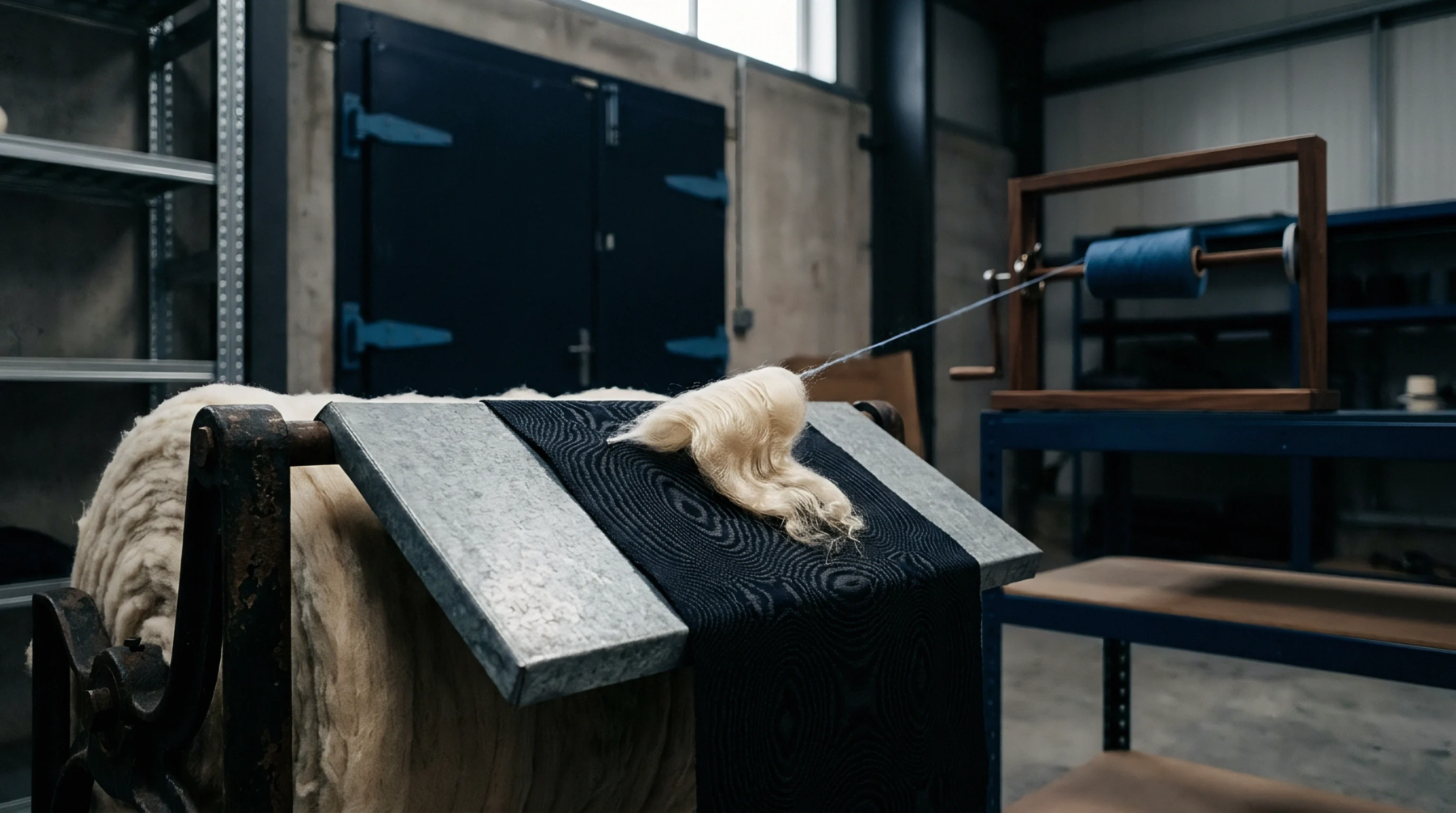
Follicle Origin
Initial hair growth emerges from the dermal papilla within the skin during the fetal stage of an animal. A primary follicle fiber develops from these early follicular structures before secondary follicles populate the skin surface. These hairs typically exhibit a greater diameter and medullation compared to later growth stages.
Biological Differentiation
Development follows a strict chronological order in mammals to establish the base fleece or coat density. A primary follicle fiber appears during the early prenatal phase, whereas secondary follicles form through subsequent budding processes. Each follicle contains a distinct sebaceous gland and arrector pili muscle that distinguishes the structure from auxiliary hair growth.
Manufacturing Impact
Sorting and scouring operations identify these thicker hairs to determine the grade and handle of a raw clip. A primary follicle fiber contributes to the coarseness of a lot when the proportion of medullated hair exceeds the acceptable threshold for specific spinning systems. Mills monitor the frequency of these coarse hairs to avoid processing irregularities that reduce the uniformity of finished yarn.
Test Validation
Optical projection microscopy measures the mean diameter distribution to detect the presence of these robust hairs within a wool sample. Technicians apply statistical analysis to evaluate the consistency of the clip against commercial standards for breed fineness. High concentrations of this hair type lower the overall economic value of fine wool batches by introducing irregular textures into the spinning process.