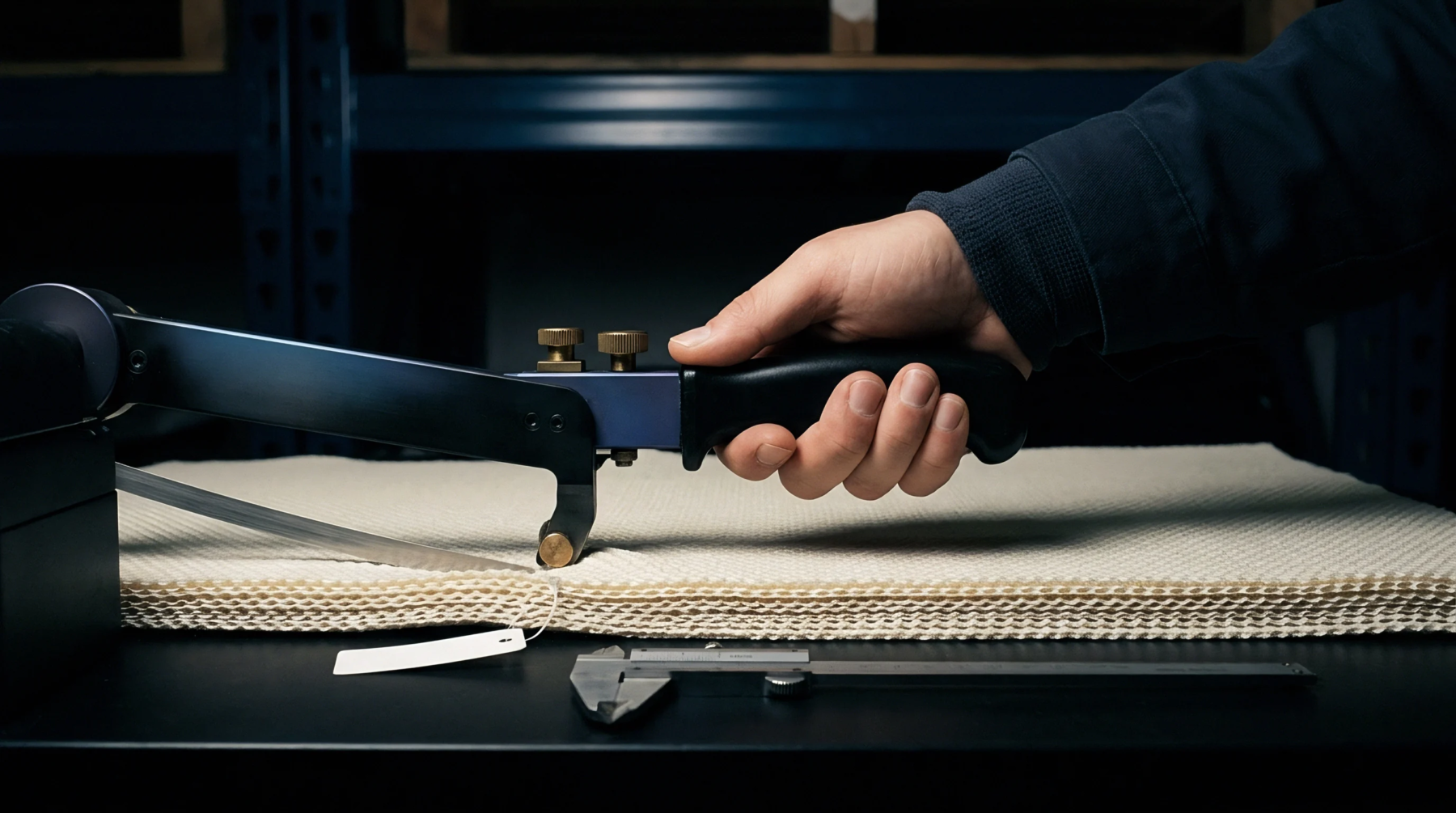
Swatch Sampling Position Deciding Whether a Batch Passes
Physical swatch position across fabric width and length determines chemical compliance, requiring three-point cross-web sampling to validate batch pass status.
A purchase order quality clause binds a textile mill to specific physical tolerances before the buyer accepts bulk garment shipments from the production floor. This contractual stipulation operates inside apparel supply chains by attaching mandatory performance criteria to commercial paperwork issued by clothing brands. Technical auditors verify compliance against these established parameters at the final inspection station inside the factory.
Mills fail the verification check whenever yarn tenacity or dimensional stability falls outside the agreed limits specified in the purchasing agreement. The mechanism operates through binding legal thresholds that halt financial settlement until third-party laboratory results confirm the physical properties match the approved reference sample. Buyers stop applying this clause once the designated shipping container leaves the warehouse dock and passes title to the importer.
The legal perimeter begins the moment the supplier signs the commercial document and terminates when the goods pass the final inspection checkpoint at the factory gate. Procurement officers draft these restrictive conditions to protect garment brands from accepting defective fabric rolls that fail standard tear resistance tests. Production planners establish the numerical limits using historical yarn data gathered from previous spinning runs.
Mill managers evaluate the cost of compliance against potential chargebacks issued by the buying house for sub-standard output. Operational friction occurs when laboratory test methods differ between the manufacturing facility and the independent testing agency hired by the purchaser.
Laboratory technicians measure physical properties under standard atmospheric conditions to determine whether the bulk material satisfies the contractual requirements. Technicians mount conditioned fabric specimens onto tension testing machines to record elongation percentages and breaking load values for woven cotton goods. Operators discard outliers and calculate arithmetic averages from five distinct test specimens taken across the width of the fabric roll.
Independent inspectors compare these laboratory results against the numerical limits printed on the commercial document before issuing an inspection certificate. Discrepancies between mill self-testing and buyer laboratory findings trigger mandatory re-testing protocols that require mutual agreement between both commercial parties.
Financial adjustments occur automatically when laboratory test results fall short of the technical thresholds established in the initial purchasing agreement. Finance departments deduct monetary penalties from the final invoice total to account for the diminished utility of the defective textile goods. Suppliers absorb the financial loss associated with rejected fabric batches because the contractual wording shifts the risk of non-conformance entirely onto the manufacturer.
Legal counsel drafts these remedial provisions to deter mills from substituting inferior synthetic fibres into yarn blends without prior written consent from the apparel brand. Arbitrators resolve commercial disputes by reviewing signed inspection certificates and independent laboratory reports rather than relying on verbal testimonies from production supervisors.
Physical swatch position across fabric width and length determines chemical compliance, requiring three-point cross-web sampling to validate batch pass status.
Expertise is a utility, not a secret. sentiention™ publishes its working knowledge as open reference: intelligence layer covering the materials it sources, the markets it enters, and the reference that serves both.