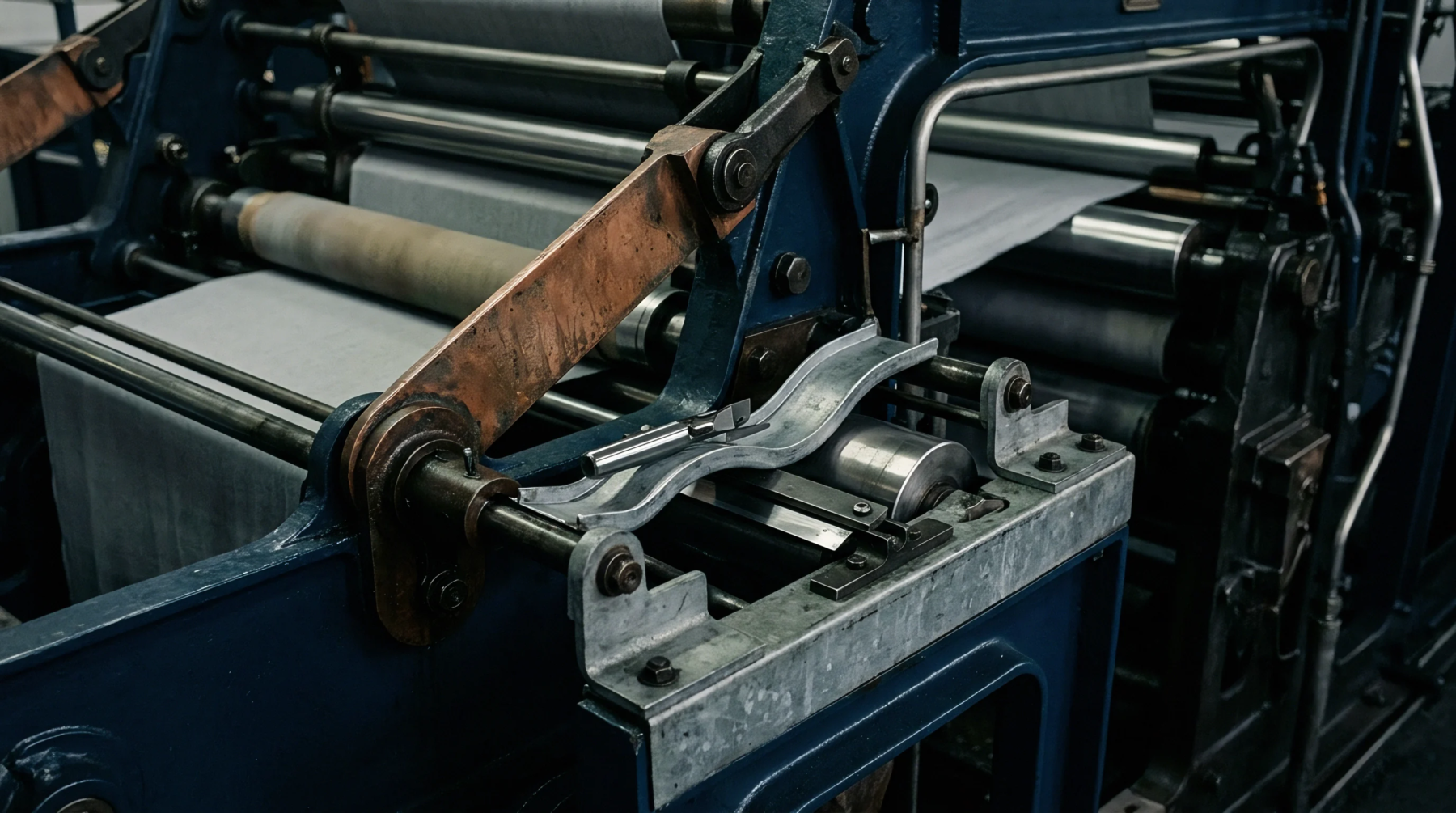
Camber Profiling
Mechanical roller geometry designates the intentional parabolic curvature ground into the face of extraction or calendering rolls to offset mechanical shaft deflection under loading. Designing roll crown compensation into machine rolls preserves uniform linear contact pressure across fabric widths during continuous squeezing or finishing passes. The engineering applies to wet padders, extraction mangles and thermal calendering machines handling open-width fabrics.
Low-pressure guide rolls and free-turning fabric idlers experience negligible bending stress and operate without cambered profiles.
Deflection Geometry
Hydraulic cylinders apply heavy vertical force onto the end journals of industrial processing rolls to achieve uniform chemical pickup. This pressure causes long metal roller cores to flex upward in the center, widening the center gap relative to the heavily loaded edges. Without roll crown compensation, fabric passing through the squeeze zone absorbs less chemical liquor at the selvages and retains higher moisture in the center.
Grinding the roll surface with a parabolic diameter profile counteracts this natural deflection under design loads. When mechanical force bends the shaft, the elevated center profile compresses into a flat, parallel nip line against the mating roll. Variable-crown rolls use internal hydraulic oil chambers to adjust local pressure profiles across varied fabric widths.
Pressure Uniformity
Unequal pressure distributions across padder rollers generate noticeable shade differences between fabric edges and center panels during continuous dyeing. When roll deflection goes uncorrected, excess liquid dye collects in the center of the fabric web, creating visible center-to-selvage shade variation. Calendering lines experience similar defects, where uncompensated deflection produces uneven fabric luster and thickness across the roll width.
Applying exact roll crown compensation prevents these costly edge-to-center finishing defects across long yardage runs.
Nip Audit
Technicians evaluate roll contact pressure across the machine width using carbon pressure paper or electronic sensor strips placed between roll faces. The visual impression reveals whether the contact band stays consistent across the entire working width under operating hydraulic pressures. Measuring pick-up percentage variations from left, center and right fabric swatches confirms mechanical alignment under real production speeds.
Irregular contact footprints require grinding new roll profiles or adjusting internal pressure chambers. Maintaining correct roll crown compensation protects chemical consistency and appearance standards across continuous textile production lines.