Mechanical Accumulation
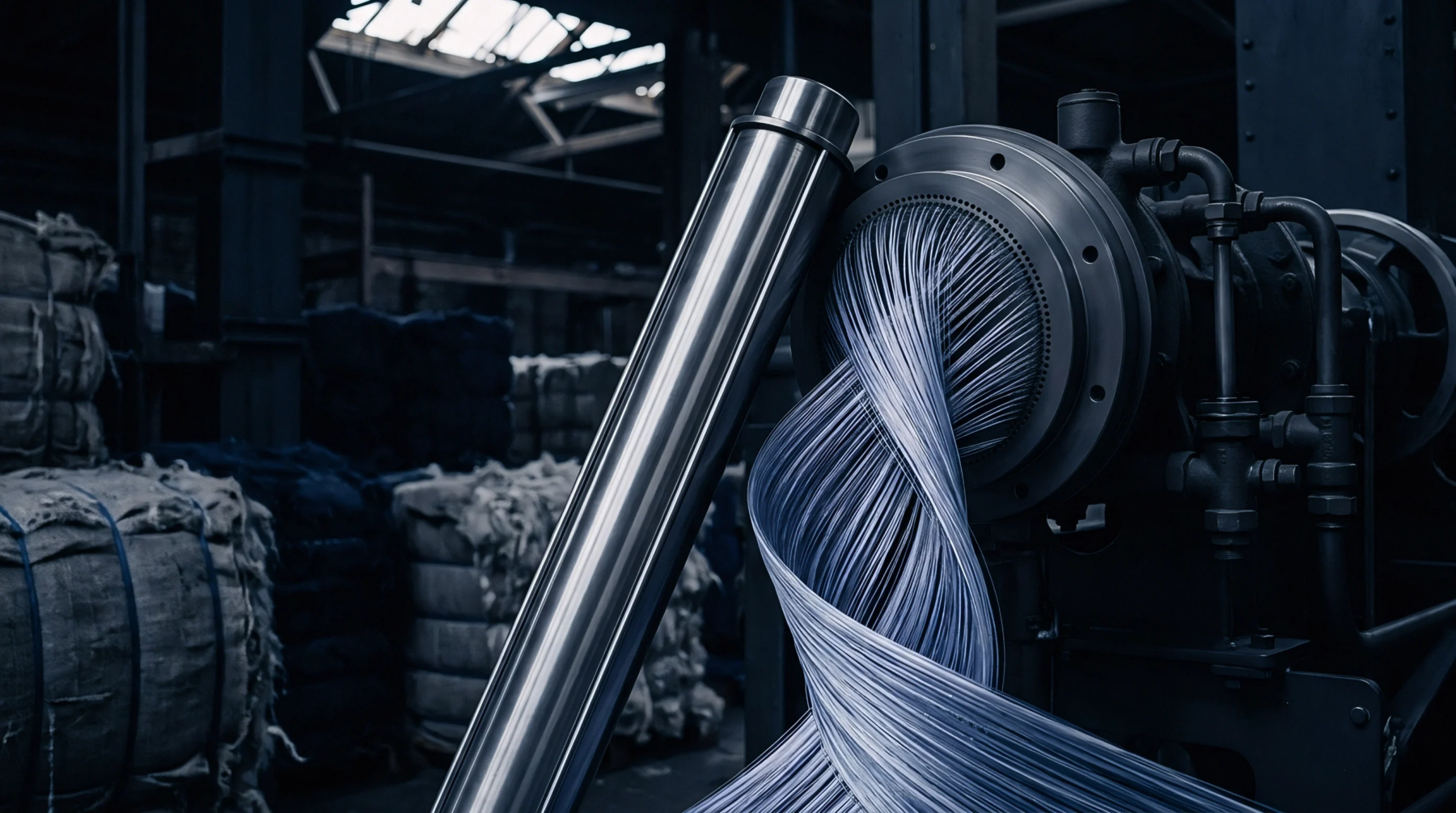
Roller lapping defines the process where yarn filaments wrap around the processing rollers of spinning or drawing frames instead of following the intended path through the machine. This buildup occurs when static charge or excessive fiber friction exceeds the tension applied by the drafting system. Accumulations create immediate stoppages in production and result in significant material waste.
Dense layers of fiber eventually push rollers out of alignment, which alters the gap settings and compromises yarn uniformity for every subsequent batch. Maintenance teams remove these wraps using specific scrapers to avoid damaging the metallic or rubber surfaces of the drafting elements.
Material Interaction
Synthetic fibers possess higher susceptibility to roller lapping because their smooth surfaces generate significant static electricity during high-speed transit. Humidity levels below a specific threshold exacerbate this tendency by preventing the dissipation of electrical charges on the fiber surface. Friction between the fiber and the synthetic roller coating triggers the initial adhesion.
Process Disturbance
Drafting systems require consistent roller pressure to maintain control over the fiber strand. When fiber wraps increase the diameter of a roller, the nip point effectively shifts, which forces the drafting rollers to stretch the material incorrectly. This variation leads to thick and thin spots that render the yarn unfit for high-quality knitting or weaving.
Operational Boundary
Periodic cleaning schedules mitigate the buildup, although prevention requires precise control of environmental conditions and spin finishes applied to the fiber. Machines integrated with electronic sensors detect diameter changes instantly and halt the motor to prevent catastrophic roller damage. Proper settings keep production runs clean and preserve the structural integrity of the processed output.