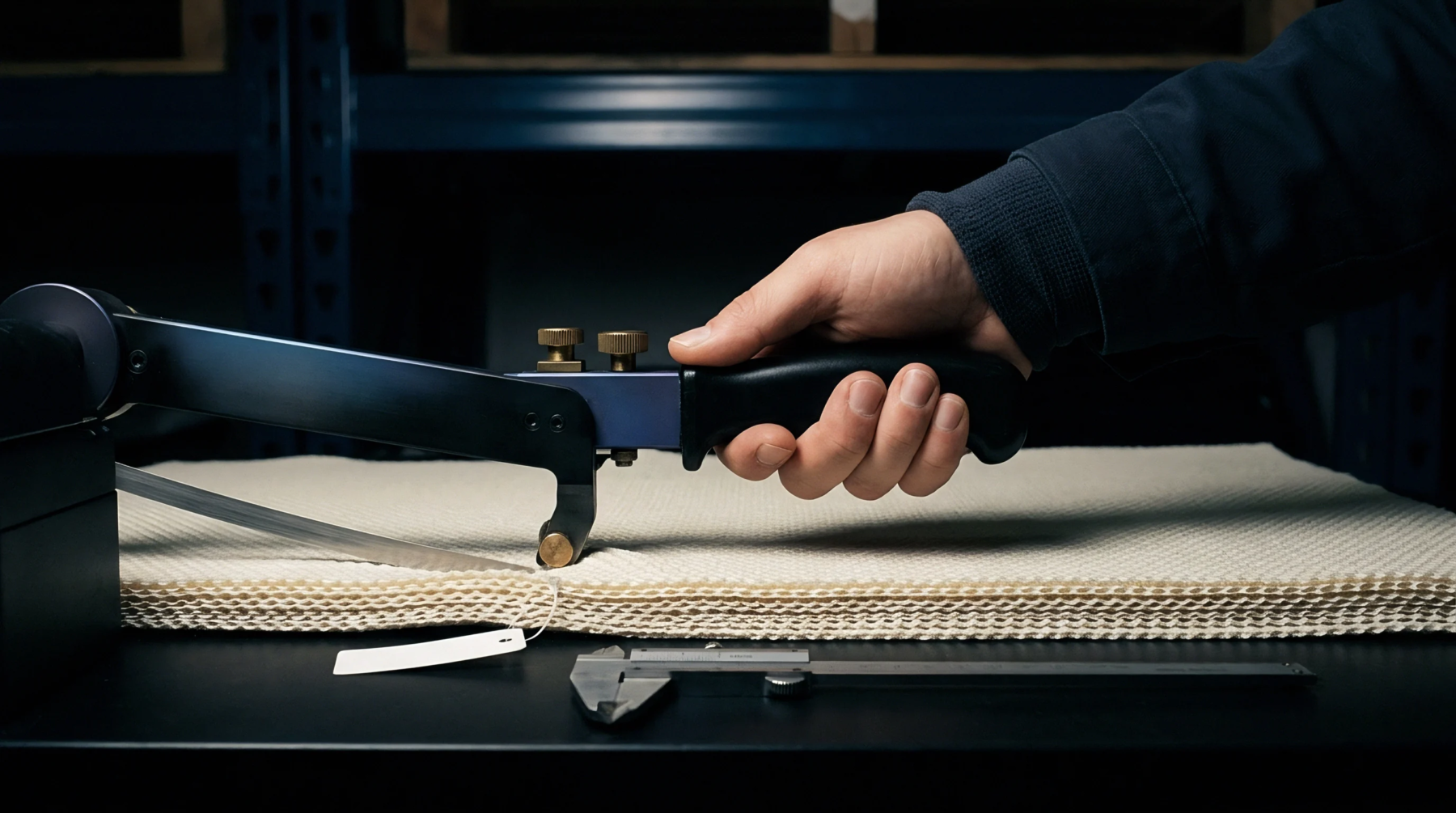
Swatch Sampling Position Deciding Whether a Batch Passes
Physical swatch position across fabric width and length determines chemical compliance, requiring three-point cross-web sampling to validate batch pass status.
Textile preparation requires physical separation of the tensioned outer edge from the primary fabric width to ensure uniform tension profiles across the loom state material. Selvedge extraction functions as a targeted removal process designed to mitigate bowing and skewing that otherwise compromises the final dimensions of finished piece goods. Removing this tight boundary zone happens after the final pass through the weaving machine but prior to any chemical wet processing or heat setting steps.
Tension profiles within the body of the fabric remain uneven when these reinforced lateral strips stay attached during finishing operations. Manufacturers utilize this removal to guarantee that width measurements remain consistent throughout the dyeing and coating stages of production.
Fabric consistency depends on the precise removal of these lateral reinforcements before the material enters the tentering frame. Technicians perform this separation using automated blades aligned with the internal seam where the structural reinforcement terminates. These high-speed cutters follow the transition point between the densely packed binding fibres and the primary weave construction.
Residual tension from the shuttle movement or gripper entry accumulates in this zone and forces the weave geometry out of square if left unaddressed. Machines pull the material through fixed guides that maintain a constant width while the cutting heads track the alignment of the warp ends. Operators monitor the resulting scrap weight to ensure that the blades cut exactly at the intended line without clipping into the saleable width of the fabric.
Proper extraction prevents the differential shrinkage that occurs when the constrained edge pulls against the relaxed central panel of the roll.
Fibre composition dictates the specific force applied during the cutting of the reinforced lateral bands. Heavy weight canvas or denim requires industrial grade steel blades that resist wear while managing the dense structure of the bound edge. Synthetic filament materials often require thermal knives that melt the edge to prevent fraying while performing the separation function.
This approach ensures that the cut remains clean and prevents the transmission of internal warp stresses into the finished roll. Natural fibres usually demand physical mechanical blades to avoid charred edges that interfere with downstream dye absorption. Adjustments to the gap between the cutting tool and the cloth face account for variances in thickness across different product types.
Stability across the width of the final textile roll relies on the complete elimination of the uneven pulling forces generated by tight edge weaves. When producers ignore the necessity of this removal, the resulting cloth loses its ability to lay flat on a cutting table for garment manufacture. Fabric panels cut from rolls with remaining edge tension exhibit warping that alters the layout of pattern pieces.
Proper handling of the boundary area ensures that the internal weave remains stable and uniform across every meter of the delivered shipment. Standard industry tests confirm that materials processed with dedicated extraction maintain tighter tolerances for skew and bow than those with the reinforcement left in place. Consistency in this process ensures predictable behaviour during subsequent cutting and sewing operations.
Physical swatch position across fabric width and length determines chemical compliance, requiring three-point cross-web sampling to validate batch pass status.
Expertise is a utility, not a secret. sentiention™ publishes its working knowledge as open reference: intelligence layer covering the materials it sources, the markets it enters, and the reference that serves both.