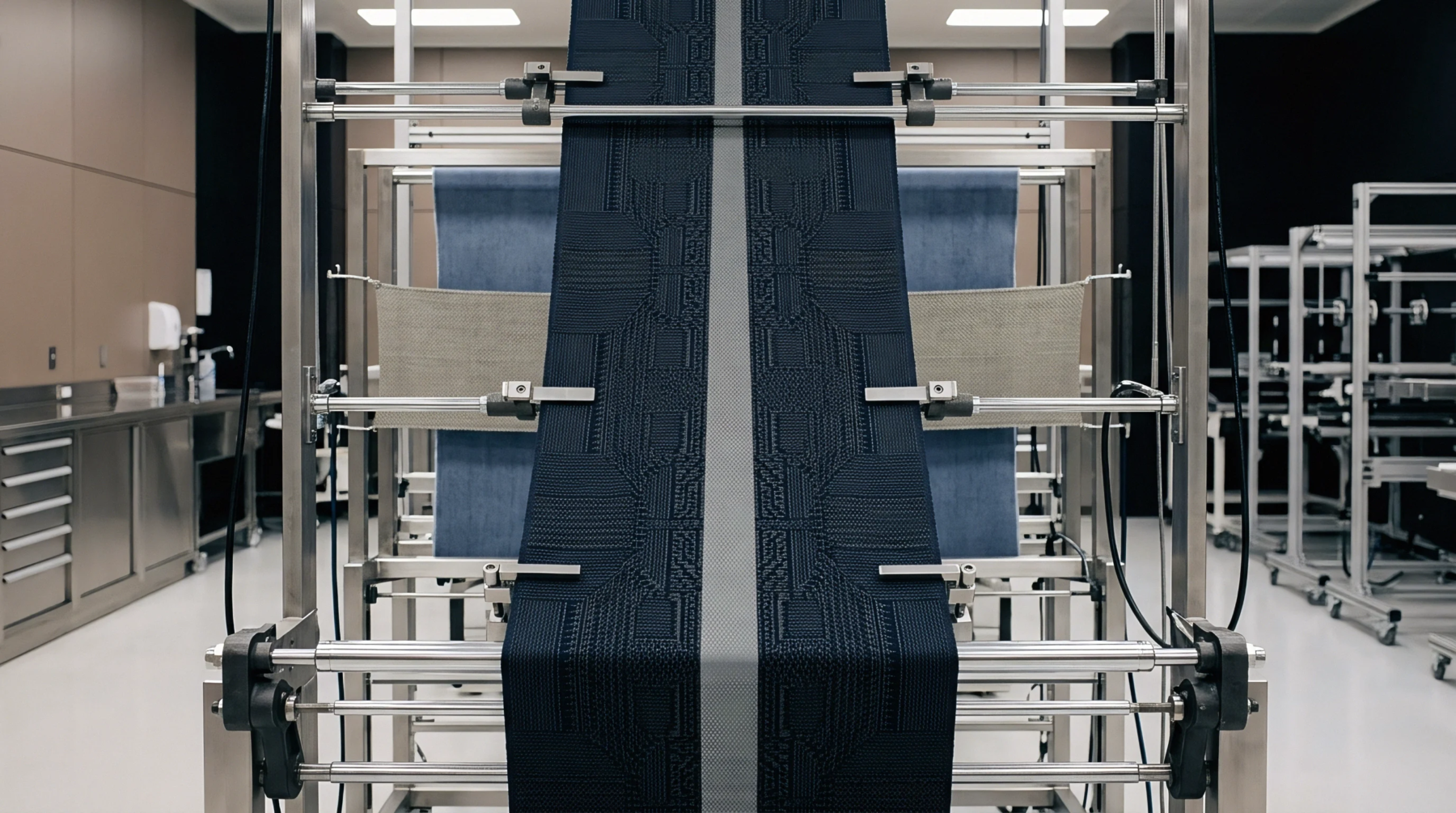
Rapier Technology
Modern weaving technology employs flexible or rigid rods to carry the weft yarn across the warp shed without the use of a traditional shuttle. In the modern textile mill, shuttleless rapier weaving offers high versatility for producing complex patterns and using diverse yarn types. The system works by picking up the yarn at one side and transferring it to a second gripper in the center of the loom.
Insertion Mechanism
Mechanical grippers move at high speeds to deliver the filling yarn with precision. One arm acts as the giver, bringing the yarn to the midpoint, while the other arm acts as the taker, pulling it to the opposite selvedge. This positive control allows for the weaving of irregular yarns such as slubs or high-twist filaments that would fail in air-jet systems.
Because the grippers physically hold the yarn, the risk of mispicks caused by air turbulence is eliminated.
Operational Range
Machine flexibility permits the production of everything from lightweight apparel fabrics to heavy technical textiles.
Output Limitation
Production speed remains lower than air-jet or water-jet methods due to the mass of the moving rapier heads. The mechanical nature of the transfer also introduces wear points that require regular maintenance and lubrication. Despite these factors, the ability to weave multiple colors and textures makes the system a standard choice for fashion fabrics.