Color Variation
Unwanted variation in dye depth or hue across the width of a finished textile roll indicates a failure in process uniformity. When side center side shading occurs, the fabric edges display a different color intensity compared to the middle region. This defect is a major cause of garment panel mismatching and results in rejected fabric lots, as the differences are highly visible when panels are stitched together.
Padder Influence
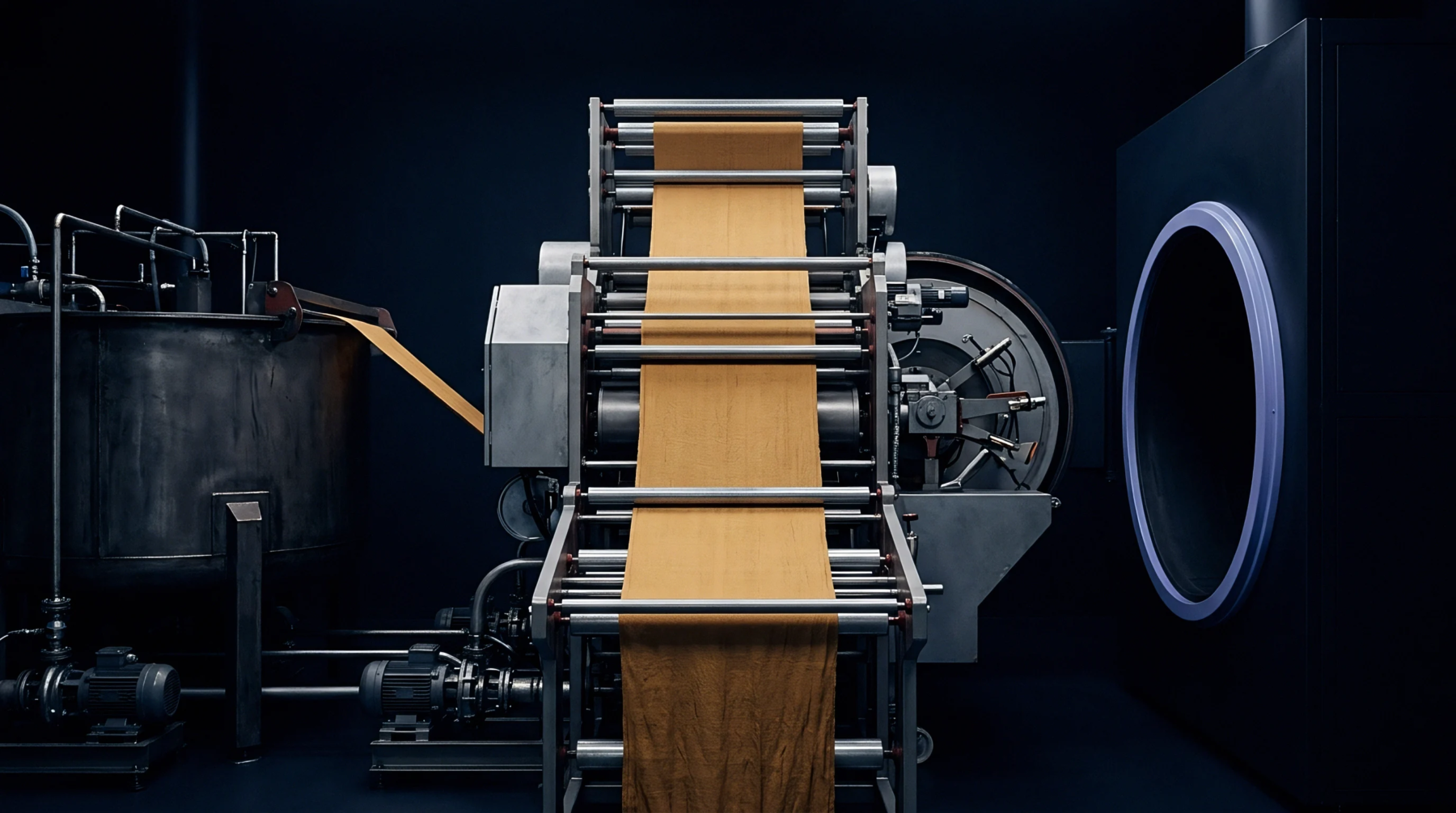
Uneven roll pressure during the pad dyeing process represents the most frequent mechanical cause of this defect. If the pad rolls flex under load, the squeezing force becomes unequal across the nip, causing more or less dye liquor to remain in the center than at the margins. This differential pickup leads to side center side shading after thermal fixation, creating bands of light and dark zones across the width of the fabric.
Dryer Influence
Drying dynamics can also induce this variance through uneven moisture removal. During convective drying, if the air nozzle distribution is non-uniform, migration of dye molecules towards the warmer regions occurs. This transport mechanism creates side center side shading even when the initial liquid distribution was uniform.
Correction Method
Spectrophotometer measurements taken at multiple points across the fabric web confirm the presence of this defect. Correcting the roller crown or adjusting nozzle dampers restores uniform moisture and dye distribution. This quality control step is performed before cutting.