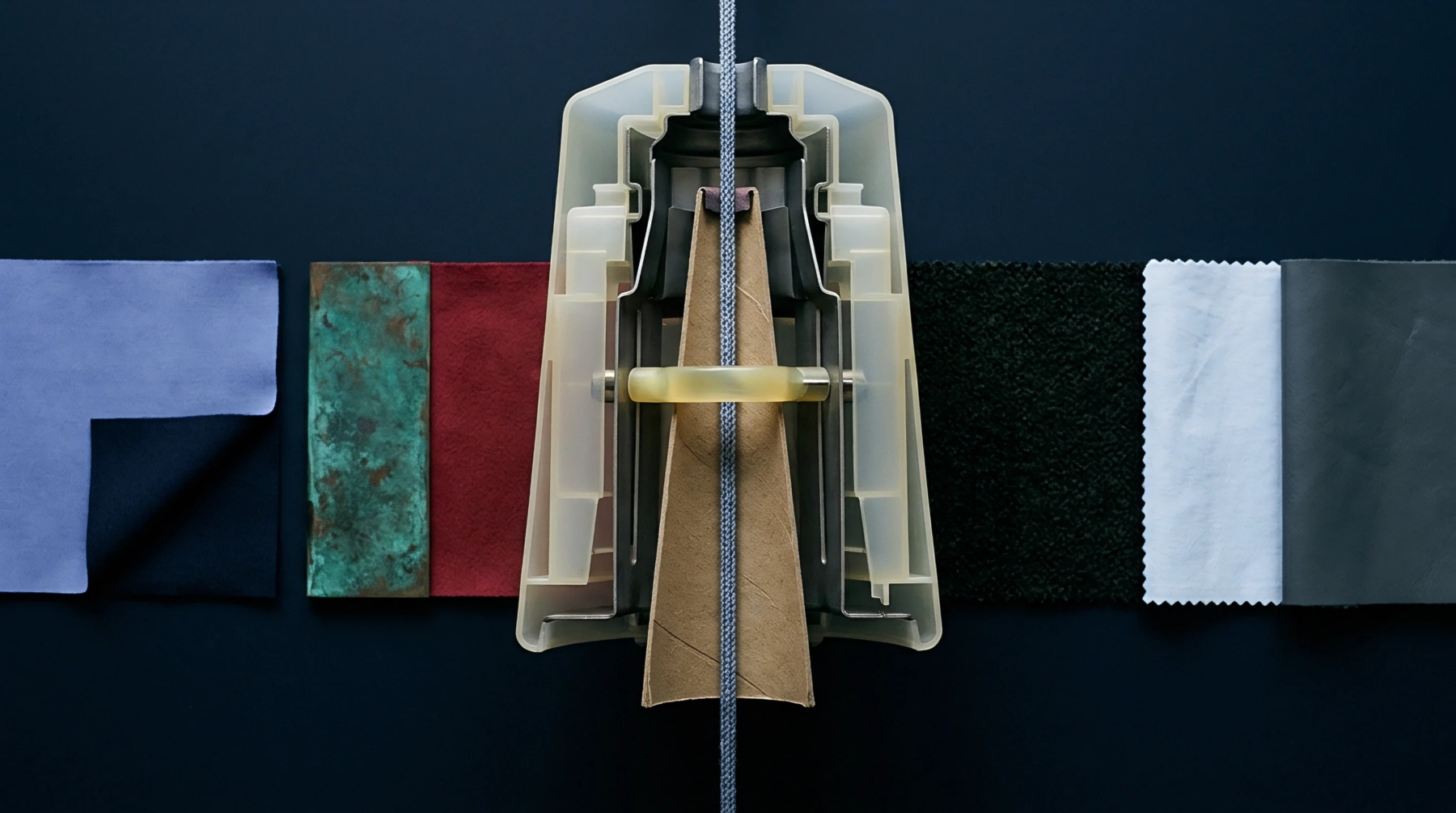
Finishing Machine
Thermal processing of open-width fabrics requires continuous support and transport to control dimensions and dry the material. In a textile finishing mill, a stenter is an industrial machine that grips the fabric edges with pins or clips to hold the material under tension while conveying it through a heated chamber. This equipment is the primary tool for adjusting fabric width and locking in dimensional stability.
Without this processing step, knitted fabrics would suffer from severe skewing and shrinkage during laundering.
Width Control
Dimensional control of both woven and knitted textiles depends on the mechanical adjustments of the conveyor chains. The stenter allows technicians to set the precise width and overfeed ratio of the fabric entering the oven. This adjustment controls the final weight per square meter and minimizes residual shrinkage.
Correct settings are verified by testing the fabric after it exits the cooling zone.
Heat Setting
Polymer stabilization occurs when synthetic fibers are heated to their transition temperature while held under tension. The stenter provides the uniform heat required to relax internal stresses within polyester and polyamide blends. This process prevents the fabric from curling or shrinking during subsequent garment manufacturing.
Air Circulation
Drying efficiency relies on high-velocity air nozzles that distribute heat evenly across both sides of the moving fabric. Modern stenter chambers use precise temperature profiles to ensure uniform drying and prevent migration of dyes or finishes. This thermal control is critical for maintaining consistent fabric quality.