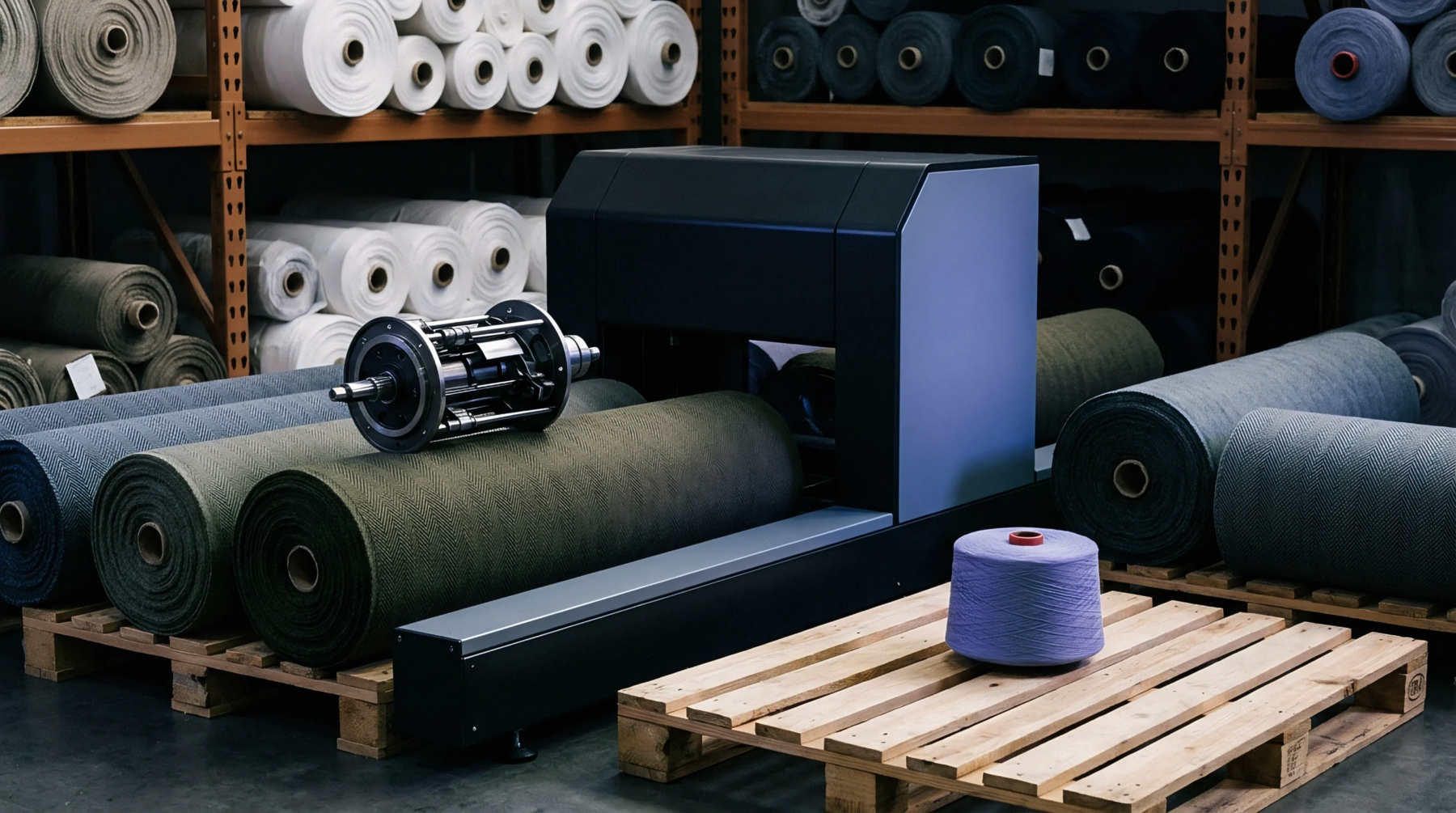
Physical Deformation
Permanent set within textile structures develops when folded goods remain under pressure during long transit durations or stationary warehouse periods. This storage creasing emerges when fibres under vertical force lose their elastic recovery capacity after extended compression cycles. Materials such as silk or polyester blends react to static load by shifting their molecular orientation while held in a bent state.
Mechanical constraints imposed by heavy stack heights prevent the material from relaxing back to its original flat geometry upon removal of the weight. High humidity inside a container increases the rate of fibre setting because moisture softens the crystalline regions within polymer chains. Chemical finishes applied to reduce friction sometimes accelerate the locking of these folds during cooling phases of the production cycle.
Laboratory testing confirms that internal stress distributions create these lines which then resist standard steam removal methods.
Load Impact
Compression density across pallet layers dictates the severity of material displacement observed after unwrapping bolts of fabric. Each layer added to a stack increases the downward force exerted on the base, forcing air out of the interstitial spaces between yarns. Pressure at the bottom of a high pallet reaches levels that exceed the bending stiffness of finished textile surfaces.
Fibres trapped in this high stress environment undergo plastic deformation rather than simple elastic flexing. Technicians verify this phenomenon by placing fabric swatches under calibrated weights for fixed intervals before measuring the recovery angle against a flat reference plane. Lower counts of warp and weft density allow for more movement and therefore reduce the risk of sharp indentations developing in the core of a roll.
Recovery Potential
Heat and moisture cycles allow for some reversal of surface distortion provided the damage remains at the elastic threshold. Steam treatment facilitates the movement of molecules within the fibre structure to release stored kinetic energy. Fabric moved to a climate controlled environment often regains its appearance as the fibres absorb ambient water vapor.
Permanent damage occurs when the load exceeds the yield point of the synthetic polymers used in the construction. Testing reveals that once a fold crosses into the plastic zone, the cross section of the yarn changes shape and retains that profile even after extensive conditioning. Mechanical rollers then press these flattened areas further into the fabric face to create visible lines that do not disappear with ironing.
Transit Risk
Long distance logistics expose finished goods to fluctuating temperatures that alter the mechanical properties of thermoplastic yarns. Heat generated inside steel containers shifts the glass transition temperature of the material, making the fibres prone to taking a permanent shape from the weight of the cardboard cores or binding bands. Cold climates induce brittleness, causing yarns to snap or fray when the fabric is unrolled after being held in a tight configuration for weeks.
Warehouse managers minimize these issues by limiting stack heights and ensuring that ventilation prevents moisture buildup near the floor. Proper orientation of rolls on racks removes the weight from the fabric surface and preserves the integrity of the material until the moment of final cutting. Permanent distortion remains a permanent defect in the cloth.