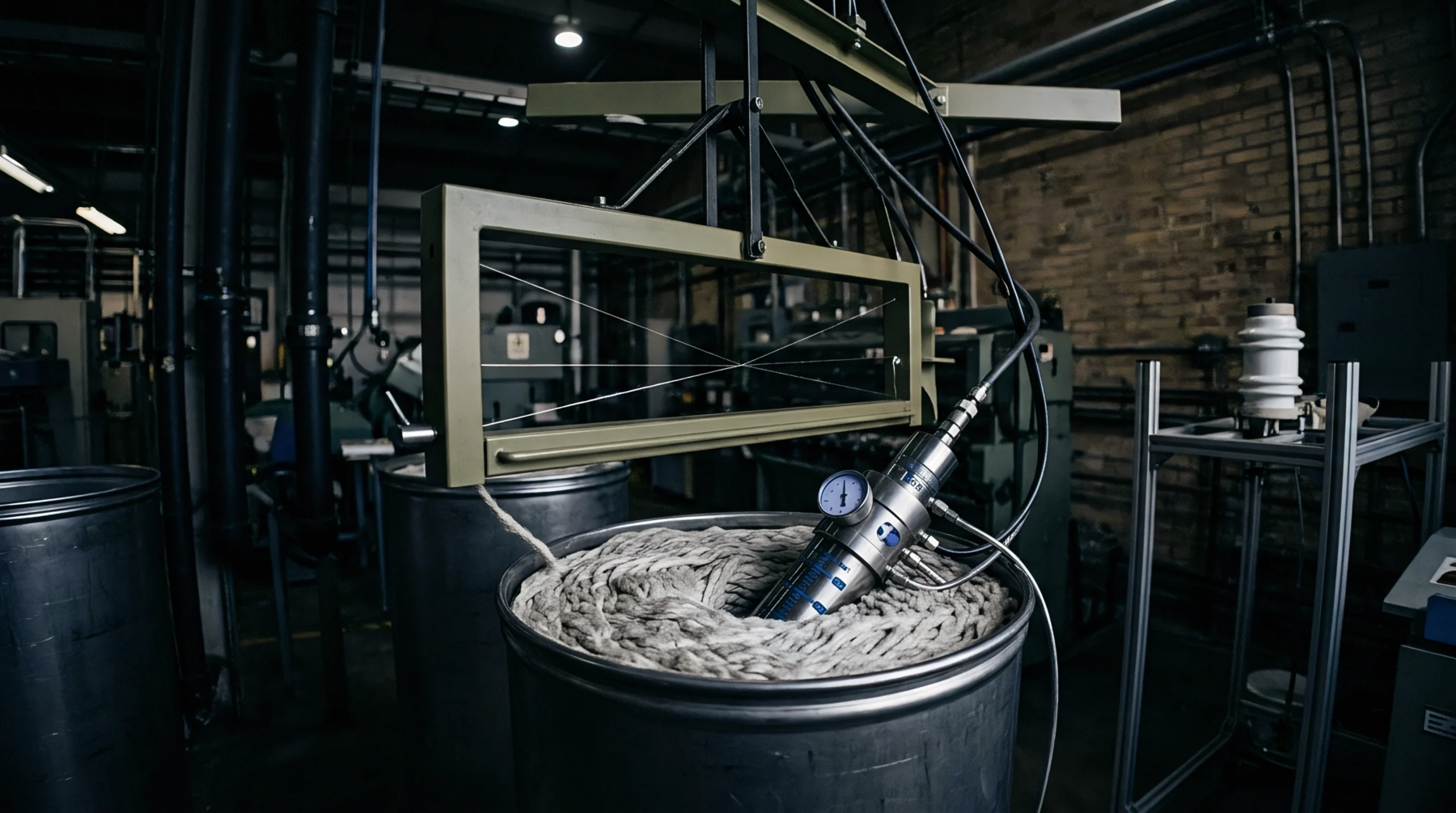
High-Pressure Scouring
Separation processes utilizing fluids held above their critical thermodynamic points isolate and remove soluble substances from solid textile substrates. By adjusting pressure and temperature, supercritical extraction exploits fluid states that blend liquid-like dissolving capabilities with gas-like diffusion rates and low surface tension. Carbon dioxide serves as the predominant solvent in textile applications, crossing into its supercritical domain at 31.1 degrees Celsius and 7.39 megapascals.
The process penetrates deeply into dense fabric structures and tightly wound yarn packages, dissolving non-polar contaminants without wetting the substrate. Once extraction finishes, lowering the pressure causes the fluid to vaporize completely, depositing extracted oils in a separation vessel while returning dry fabric ready for subsequent manufacturing phases.
Oil Removal
Greige elastomeric and synthetic fabrics arrive from knitting mills coated in silicone lubricants, mineral spin finishes, and residual knitting oils. Traditional aqueous scouring consumes substantial volumes of water, surfactants, and thermal energy to wash and dry these fabrics. Supercritical extraction dissolves these hydrophobic lubricants directly, achieving high extraction efficiencies within short cycle times.
The low surface tension of the fluid allows rapid wetting of inner yarn bundles, stripping oils from the core-sheath interface that aqueous wash baths struggle to reach. Oligomers and residual monomers unreacted during polymer synthesis are extracted simultaneously, preventing subsequent machine plate-out during high-temperature stentering.
Polymer Interactions
Direct exposure to the dense fluid swells synthetic polymers, plasticizing the amorphous matrix and altering chain mobility. In elastomeric yarns, this swelling requires tight pressure and temperature controls to avoid disrupting the phase-separated hard segments that supply mechanical elasticity. The speed of pressure letdown following extraction represents a critical operating threshold; if depressurization occurs too rapidly, escaping gas nucleates inside the filaments, producing internal microcavities that degrade tensile strength.
Operating conditions must be calibrated to remove surface finishes while keeping the core elastomeric framework structurally intact. Pre-treating technical fabrics via supercritical fluids also strips sizing agents without leaving salt or acid residues on delicate functional fibres.
Analytical Validation
Extraction efficacy undergoes verification through gravimetric finish-on-yarn tests and Soxhlet extraction benchmarks using standard laboratory solvents. Gas chromatography coupled with mass spectrometry identifies residual spin finish compounds on extracted textiles, ensuring compliance with automotive or medical volatile organic compound standards. Physical testing under ASTM D3822 measures single-fibre breaking strength and elongation to confirm that high-pressure vessel cycles have not damaged the load-bearing synthetic core.
Fabric lots undergo dimensional stability and stretch recovery testing to verify that plasticization under pressure has not distorted the knitted geometry. Commercial systems measure extracted oil mass in real time to establish precise cycle endpoints, eliminating redundant processing time.