Resolving Analytical Limit Discrepancies between Total PFAS Extraction Protocols and Extractable Fluorine Screening Criteria
Resolving PFAS limit discrepancies requires pairing bulk combustion screening with targeted precursor assays and solid-phase extraction to isolate inorganic salts.


Furnace
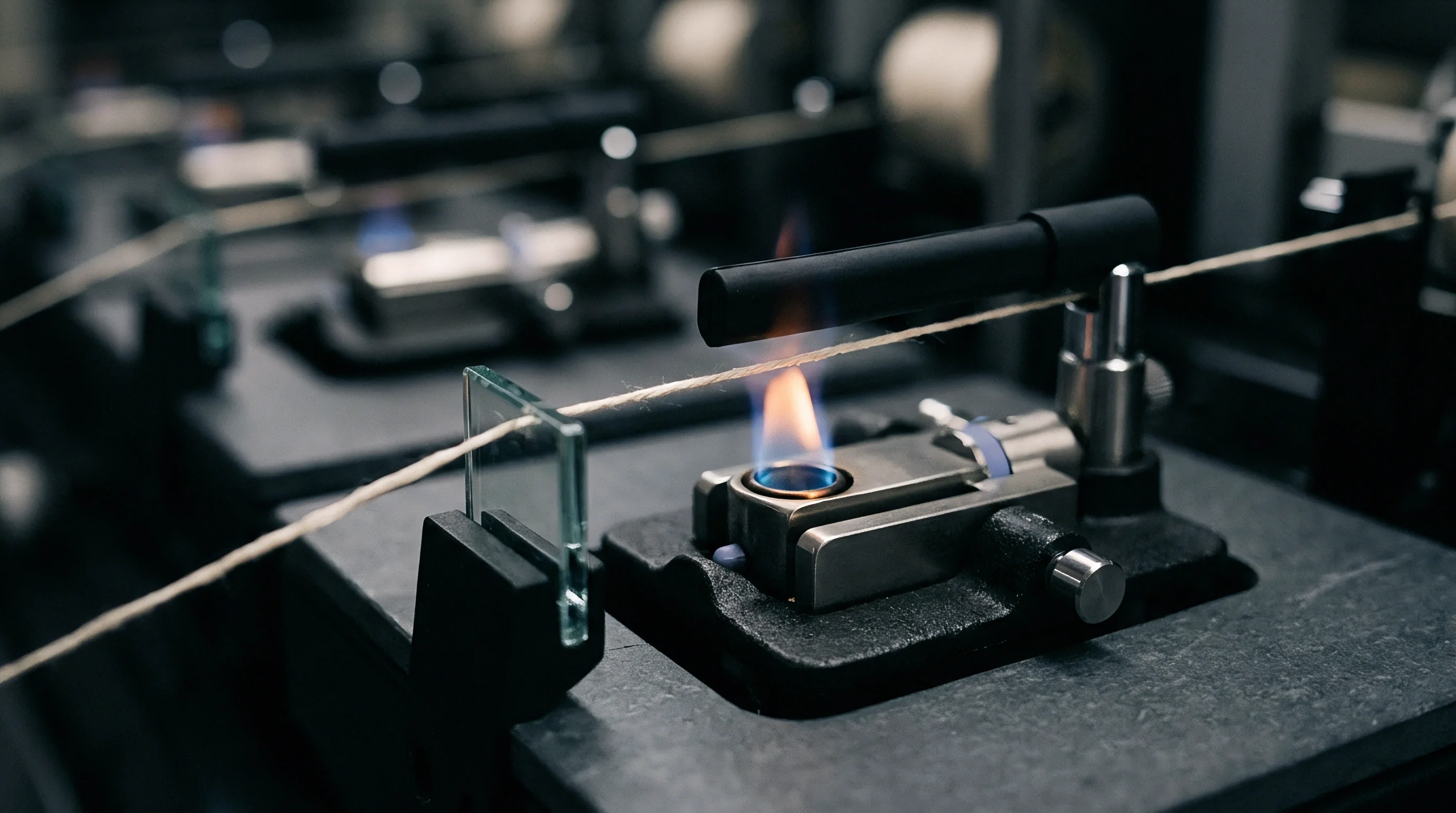
Combustion tubes run at 1050 degrees Celsius convert every organofluorine compound in a textile swatch into hydrogen fluoride gas. An automated absorption unit captures that stream in an alkaline buffer, and an ion chromatograph measures fluoride ions against certified aqueous calibration curves. This procedure defines combustion ion chromatography under DIN 51723 and ASTM D7359.
When a testing house receives a roll for total fluorine screening, this thermal oxidation yields a bulk number. The reading tells the buyer whether fluorine exists in the matrix, without identifying the molecular structure.
State legislations in California, New York, and Minnesota establish regulatory thresholds using this screening boundary. California Assembly Bill 1817 sets an initial threshold of 100 parts per million of total organic fluorine, dropping to 50 parts per million on January 1, 2027. Laboratories running bulk combustion often report values that trigger initial rejections even when the intentional chemistry consists solely of paraffin wax or silicone-based durable water repellents.
Inorganic fluoride salts from dye bath auxiliaries, flame retardant synergists, and optical brighteners survive mild rinses and combust inside the quartz tube. They release fluoride ions indistinguishable on the conductivity detector from fluorine originating in perfluoroalkyl side chains.
A bulk combustion reading of 120 milligrams per kilogram fluorine drops below 8 milligrams per kilogram once hot water extraction isolates non-volatile inorganic salts.
Resolving this mismatch begins with selective extraction and sample digestion. Total Fluorine procedures combust the whole textile substrate, including inorganic ash, polyester catalysts, and fluoropolymer membranes. Extractable organic fluorine isolates only the solvent-soluble fluorinated fraction.
Technicians chop the swatch to two-millimeter flakes, submerge the specimen in methanol or ethyl acetate, and extract the targets under ultrasonic agitation or accelerated solvent extraction at 60 degrees Celsius. The extract passes through weak anion exchange solid-phase extraction cartridges to eliminate inorganic fluoride ions before combustion.
| Analytical Parameter | Total Fluorine (DIN 51723) | Extractable Fluorine (EN 17681-1) | Extractable Organic Fluorine (CIC) |
|---|---|---|---|
| Matrix Digestion | Complete thermal pyrohydrolysis | Methanolic ultrasonic extraction | Solvent extraction with SPE cleanup |
| Target Chemistry | All organic and inorganic fluorine | Non-polymeric target acids | Free solvent-soluble organofluorine |
| Quantitation Limit | 10 to 20 mg/kg | 0.010 to 0.025 mg/kg per target | 2 to 5 mg/kg |
| Polymer Capture | Full recovery of PTFE and PVDF | Zero extraction of fluoropolymers | Zero extraction of fluoropolymers |
| False Positive Risk | High from cryolite and flux salts | Low, limited by cross-talk | Moderate from organic co-extractives |
Direct comparisons between total fluorine and extractable organic fluorine break down when testing mills skip the solid-phase exchange cleanup. Methanol extracts carry solubilized inorganic fluorides directly into the combustion boat. When laboratories omit the water wash on the solid-phase resin, the detector records inorganic background salts as organic fluorine.
A verification sequence eliminates this error before reporting results to customs or brand audit desks.
- Substrate Milling cuts the fabric swatch into uniform particles under two millimeters using an immersion-cooled rotary mill to prevent thermal degradation of short-chain volatile fluorotelomers during sizing.
- Aqueous Leaching strips soluble mineral salts, ambient dust contamination, and residual dyeing salts from the milled fibers using high-purity deionized water at 50 degrees Celsius for forty minutes.
- Solvent Phase Partitioning recovers the non-polymeric fluorinated organics using methanol modified with ammonium hydroxide to separate target surfactants from the insoluble textile yarn.
- Solid Phase Chromatographic Cleanup drives the organic eluent through a weak anion exchange column, discarding the aqueous rinse to guarantee absolute separation of inorganic halides from the final pyrohydrolysis chamber.
Laboratories that run standard combustion halometry without these preparation stages deliver screening failures that generate unnecessary commercial friction across supply chains.


Speciation
Chromatographic separation on triple quadrupole mass spectrometers measures individual perfluoroalkyl substances at trace concentrations. While screening halometry operates in parts per million, liquid chromatography paired with tandem mass spectrometry quantifies analytes in parts per billion. Laboratories reference CEN/TS 15968, EN 17681 parts 1 and 2, and EPA Method 1633 to isolate targeted carboxylic acids, sulfonic acids, and fluorotelomer alcohols.
The target lists under these standardized methods contain between thirty and seventy specific compounds.
A frequent compliance failure arises when combustion ion chromatography shows 70 milligrams per kilogram of extractable organic fluorine, while the targeted LC-MS/MS run reports all individual analytes below detection limits. The difference stems from the unmonitored chemical universe. Chemical databases document thousands of unique PFAS structures, whereas routine testing panels screen for fewer than one hundred defined chemical reference standards.
Side-chain fluorinated polymers, synthetic textile auxiliaries, and proprietary fluorinated surfactants escape targeted mass spectrometry libraries entirely.
Targeted liquid chromatography quantitates fifty individual compounds but ignores the unmapped polymeric surfactants that trigger bulk screening limits.
Resolving this analytical divergence involves the total oxidizable precursor assay. This reaction subjects the solvent extract to heated alkaline persulfate oxidation at 85 degrees Celsius for six hours. The oxidative digestion clips side chains and polyfluorinated telomers, converting obscure precursor molecules into stable perfluorinated carboxylic acids that routine LC-MS/MS systems readily identify.
When a swatch exhibits high screening fluorine and negligible target compounds, the oxidation step transforms the hidden fraction into quantifiable chain lengths like perfluorohexanoic acid and perfluoropentanoic acid.

Will Targeted Extraction Overturn Combustion Screening Totals?
Regulatory border enforcement policies in the United States and the European Union rely on total organic fluorine thresholds to determine compliance. An importer presenting a clean LC-MS/MS report cannot bypass a total organic fluorine seizure notice issued under state legislation. The targeted report proves the absence of regulated legacy compounds like PFOA and PFOS down to 0.025 parts per million.
It fails to prove the absence of non-targeted fluorinated water repellents or side-chain polymers that exceed the statutory 100 parts per million limit.
Mill technical directors often defend positive bulk halometry by pointing to clean target certificates obtained from overseas chemical suppliers. That argument collapses during third-party customs verification because chemical vendors formulate water repellents around novel C4 or C6 fluorotelomer acrylates that deliberately avoid historical restricted substance lists. The targeted laboratory report certifies absence of seventy listed substances while the total fluorine combustion apparatus measures the true fluorine volume loaded onto the yarn surface.
The dyehouse representative insists that the chemical package satisfies zero-PFAS certifications because the material safety data sheet lists no reportable substances.
Interference
Inorganic constituents create persistent baseline distortions in textile chemical testing. Natural cellulosic fibers, recycled polyester filaments, and mineral-weighted curtain yarns accumulate chemical impurities across spinning and wet finishing operations. Trace minerals present in process water, fixing salts, and bleaching baths introduce substantial inorganic halide loads into fabric swatches.
When testing technicians subject these samples to combustion without solvent extraction, total fluorine readings escalate rapidly.
Silicone finishes introduce severe matrix interferences during liquid chromatography analysis. Polydimethylsiloxanes present in water-repellent emulsions foul electrospray ionization sources, causing rapid signal suppression that hides actual targeted perfluoroalkyl carboxylic acids. Conversely, trace levels of hydrofluoric acid or fluorosilicate catalysts utilized in polyester polycondensation reactions survive thermal polymerization and deposit in the yarn core.
These inorganic compounds combust inside the tube and generate apparent PFAS infractions on screening certificates.
| Interference Source | Affected Analytical Stage | Observed Discrepancy Direction | Resolution Protocol |
|---|---|---|---|
| Cryolite and fluorite dirt | Direct combustion halometry | False positive total organic fluorine | Preliminary hot water leaching step |
| Silicone oil emulsions | LC-MS/MS electrospray source | Severe signal suppression of targets | Florisil cartridge cleanups |
| Wetting agent sulfonates | Weak anion exchange SPE | Displaced target analyte recovery | Fractionated solvent elution curves |
| Polyester antimony catalysts | Combustion ion chromatography | Quartz tube devitrification errors | Inline matrix combustion filters |
| Fluoropolymer membranes | Targeted solvent extraction | False negative compliance status | High-temperature solvent reflux digestion |
| Analytical conditions: 1050 C furnace temperature, 0.5 mL/min liquid chromatography mobile phase, solid-phase extraction with 150 mg weak anion exchange sorbent. | |||
Laboratories overcome these matrix interferences through selective wash procedures and internal standard monitoring. Adding isotopically labelled internal standards directly to the milled textile prior to extraction reveals recovery losses caused by matrix suppression. If carbon-13 labelled perfluorohexanoic acid displays recovery below forty percent, the laboratory cannot confirm compliance.
The technician switches to secondary solid-phase cleanups using graphitized carbon black or Florisil to trap co-extracted oils and dyes without binding the target fluorochemicals.
- Mineral Salt Overlap introduces elevated inorganic background counts during total combustion when process rinse water contains dissolved industrial halides.
- Polymer Membrane Insoluble Barriers resist organic extraction baths, leaving PTFE and PVDF laminates undetected by standard CEN/TS solvent protocols while triggering total fluorine alarms.
- Dye Carrier Co-Extraction releases disperse carrier organics that contaminate anion exchange resins, lowering PFAS extraction recoveries on finished polyester knits.
- Matrix Flame Retardant Blends yield thermal combustion residues that foul conductivity cells, inflating integrated fluoride chromatographic peaks.
A standard test report remains unverified unless labelled internal standard extraction recoveries fall strictly between fifty and one hundred twenty percent.
The operational divide deepens when considering whether regulatory definitions of total organic fluorine intend to penalize insoluble mineral halides that survive rigorous laboratory cleanups.


Variance
Analytical discrepancies between European certifiers and American regulatory laboratories arise from mismatched screening limits and incompatible definitions of target compliance. European eco-labels enforce rigorous low-level cutoffs for targeted species alongside total fluorine screening. OEKO-TEX Standard 100 Annex 4 establishes an absolute total fluorine ceiling of 100 milligrams per kilogram, coupled with strict per-compound limits of 0.025 milligrams per kilogram for legacy perfluorinated acids and 1.0 milligram per kilogram for total extractable organic fluorine.
Meanwhile, ZDHC Manufacturing Restricted Substances List Version 3.1 mandates zero intentional use across chemical formulations through strict raw material audits.
These divergent testing standards produce conflicting transaction certificates for identical fabric yardage. A batch of polyamide performance fabric treated with a non-fluorinated water repellent may clear an OEKO-TEX examination with a total fluorine finding of 45 milligrams per kilogram. That same yardage ships to the United States, where a brand importer retests the fabric using direct total organic fluorine screening at an independent commercial bench.
If that domestic laboratory skips the inorganic extraction sequence, ambient particulate dust and fluorinated process water can push the recorded value to 110 milligrams per kilogram, violating California statutory requirements.
Are Organic Fluorine Values Legally Defensible Post-Extraction?
A buyer faced with an apparent statutory failure relies on documented extraction partition data to challenge market detention notices. The discrepancy between total fluorine and extractable organic fluorine proves that the measured halogens are not part of an applied perfluoroalkyl finish. Standard testing houses run three consecutive diagnostic tests to build a legally defensive technical dossier.
The diagnostic sequence establishes the chemical nature of the fluorine detected on the garment. The laboratory measures total fluorine on the raw fabric, measures total fluorine on an exhaustively water-washed specimen, and runs combustion ion chromatography on a methanolic solvent extract cleared through weak anion exchange sorbents. When the post-wash specimen drops below 50 milligrams per million and the extractable organic fluorine reads below the detection limit of 5 milligrams per kilogram, the evidence demonstrates inorganic contamination rather than intentional fluorochemical application.
Understanding sample testing chemistry protects commercial distribution channels from improper stop-sale actions. A clean bill of testing depends on measuring the extracted organic molecule rather than relying on unwashed furnace pyrohydrolysis.

Indemnity
Commercial purchase orders must allocate liability for laboratory testing variances before yarns enter the dyehouse. Standard supply agreements frequently contain vague warranties guaranteeing compliance with all applicable global restricted substance laws. These loose statements fail to protect garment brands when border authorities seize cargo based on combustion ion chromatography screenings.
A mill can legitimately produce an LC-MS/MS test report verifying zero detected PFAS while customs officials detain the container under total fluorine screening standards.
Precise purchase orders state explicit analytical parameters, defining exact test standards, extraction chemistries, and acceptable discrepancy resolution pathways. Contracts link delivery acceptance directly to DIN 51723 total fluorine screenings below 50 milligrams per kilogram, with a contractually mandated right to secondary extraction under EN 17681 in the event of an initial screening failure. The supply agreement sets the operational boundaries for sample preparation, mandating that any regulatory challenge must involve total oxidizable precursor assay analysis before commercial penalties apply.
Purchase specifications define the allocation of laboratory expenses and commercial remedies. When an overseas shipment triggers a border hold due to elevated inorganic fluorine from unwashed dye auxiliaries, the buyer incurs demurrage charges, freight detention fees, and independent laboratory verification bills. Without an indemnification clause tying batch release to extractable organic fluorine benchmarks, the importer absorbs all testing costs while the fabric sits in bonded customs warehouses.
Executing an airtight purchase agreement requires shifting responsibility for process control to wet processing facilities. Wet processing mills control salt selections, rinse sequences, and scouring baths. When chemical management breaks down at the stenter frame, cross-contamination deposits ambient fluorochemicals across untreated batches.
Failure to define exact analytical extraction methods inside supply agreements leaves brands exposed to full regulatory inventory write-downs, unsalvageable customs seizures, and catastrophic retail recalls across international markets.