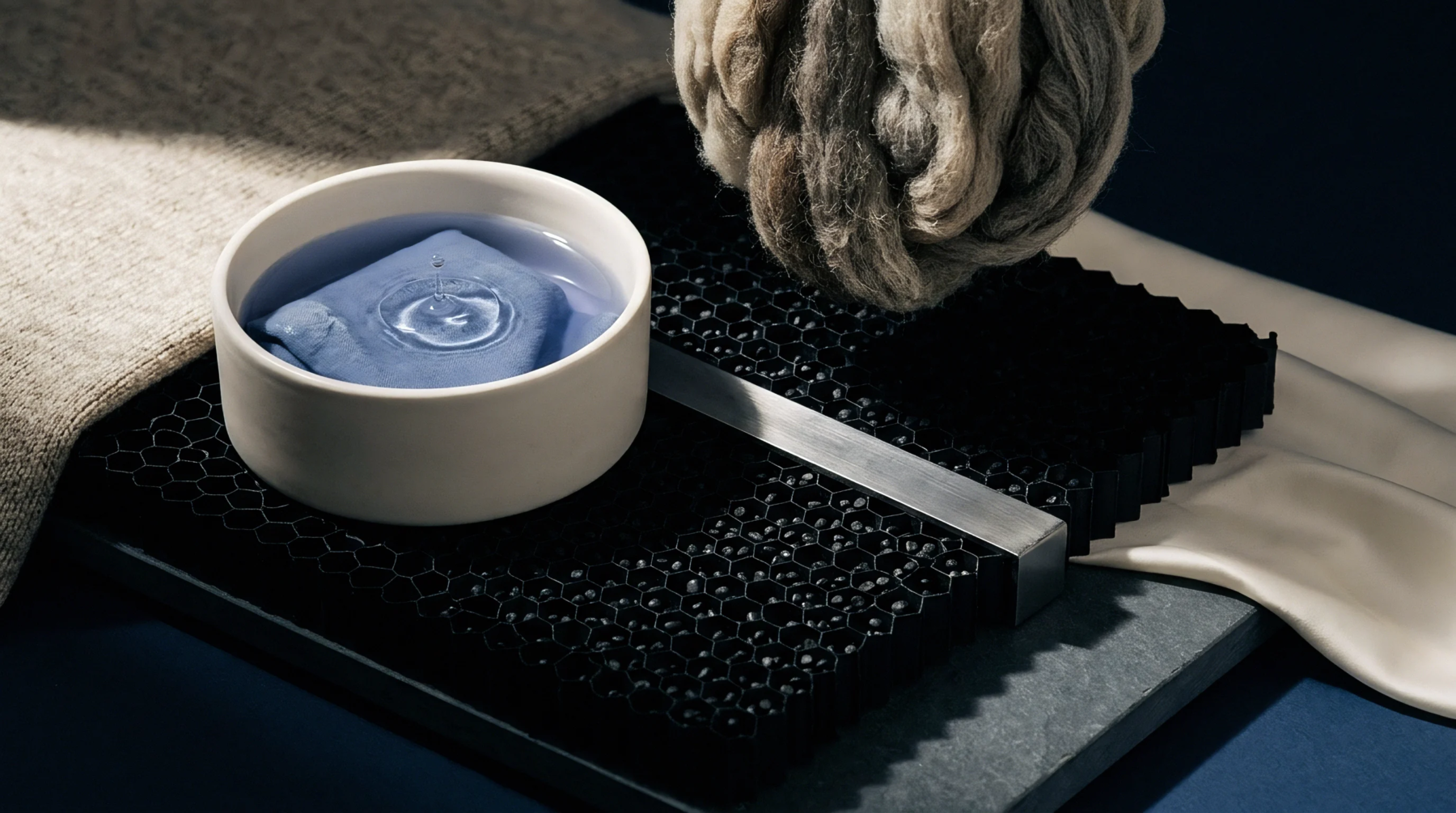
Moisture Removal
Phase change of water from liquid to vapor through heat application represents the standard mechanism for drying textiles after wet processing. The rate of thermal energy evaporation governs the speed at which fabrics can be dried in industrial stenter frames. This drying process requires massive heat transfer to break the bonds holding water molecules within the fiber capillary structure.
Minimizing energy losses during this phase is essential for industrial profitability because thermal energy represents the largest operating cost in finishing plants.
Process Mechanics
Hot air circulation and heated cylinders provide the heat needed to dry the running fabric. Efficient thermal energy evaporation depends on maintaining high temperature gradients and low humidity in the surrounding air. Exhaust systems remove the saturated air to prevent re-condensation on the dry fabric.
This balanced flow ensures continuous and rapid drying.
Fabric Performance
Excessive heating rates can cause synthetic fibers to shrink or turn yellow during the drying cycle. Regulating the thermal energy evaporation prevents over-drying and protects the physical properties of natural and synthetic yarns. Consistent drying temperatures also avoid the migration of finishing chemicals to the fabric surface.
This control ensures a soft handle and uniform appearance.
Efficiency Measurement
Energy consumption calculations compare the fuel or electricity used against the weight of water removed from the textile lot. Engineers track thermal energy evaporation rates to assess the performance of heat recovery systems in industrial laundries and finishing mills.