Controlling Wet Pick up in Continuous Fabric Dyeing
Controlling wet pick-up in continuous dyeing requires balancing pad squeeze hydrodynamics, vacuum extraction, and web absorbency to stabilize shade uniformity.
Web
Continuous impregnation of a woven substrate relies on the balance between capillary suction and hydrodynamic displacement. When dry cloth enters the liquid trough, interstitial spaces between warp and weft yarns rapidly fill through capillary forces. The rate of absorption varies with yarn density, fiber surface energy, and liquor viscosity.
Dense constructions, like 3/1 cotton twills or poplins, trap substantial liquid in structural voids, leading to wet pick-up levels between seventy-five and ninety percent of dry web mass. Lowering that liquid mass before thermal drying cuts natural gas consumption and prevents dye particles from migrating.
Wet pick-up expresses the mass of chemical liquor retained by a substrate relative to its dry weight, calculated after conditioning under ISO 139 standards. Achieving uniform dye deposition over thousands of metres requires precise control of substrate absorbency. Incomplete desizing or uneven scouring leaves hydrophobic waxes in raw cotton, leading to erratic liquor uptake.
Standardized drop absorbency testing under AATCC TM79 demands instant wetting, requiring drop sink times under two seconds across all web lanes. Any variance in pre-treatment absorbency directly generates shade bands across the width during continuous pad application.
A woven web entering the pad mangle with residual moisture variance above two percent generates shade streaks in continuous dye application.
Mechanics of Substrate Impregnation and Capillary Retention
Pores within spun yarns absorb liquid along surface tension gradients. As the web plunges into the bath, air trapped inside yarn core bundles has to escape so liquid can fully displace it. High line speeds shorten dwell time in the trough, limiting that air evacuation; a substrate running at sixty metres per minute spends less than one second submerged in the pad liquor.
Adding wetting agents to the dye bath drops surface tension below thirty dynes per centimetre, accelerating fluid penetration into micro-cavities.
Compression within the mangle nip forces surplus liquid out of yarn interstices, leaving behind liquor bound within the fiber matrix itself. Total retention after squeezing consists of this structural liquor held between yarns combined with intra-fiber liquor absorbed by swollen cellulosic or synthetic polymers. Reducing that interstitial volume without starving the fiber matrix is the central challenge in low wet pick-up processing.

Variables Governing Fiber Swelling and Hydraulic Pressure
Cellulosic polymer chains expand on contact with aqueous liquor. Cotton fibers swell radially up to fourteen percent when immersed, changing internal void volume and resisting mechanical extraction. Synthetic fibers like polyester exhibit zero moisture swelling, retaining liquid purely as surface films and capillary voids within the yarn.
Blended fabrics sit between these extremes, with absorption governed by blend ratios and texturizing profiles.
Dynamic hydraulic pressure inside the nip wedge opposes mechanical squeeze forces applied by pneumatic cylinders. As line speed increases, dynamic pressure builds within the entering liquor wedge, pushing liquid back against web motion and raising residual wet pick-up if pneumatic loading stays fixed. Control systems compensate by adjusting cylinder pressure proportionally to web velocity to hold pickup steady.
| Substrate Construction | Fiber Composition | Linear Density (tex) | Cover Factor | Baseline Foulard WPU (%) | Critical Application Value (%) |
|---|---|---|---|---|---|
| Plain Weave Sheeting | 100% Ring Spun Cotton | 20 x 20 | 18.5 | 68 – 74 | 38 |
| 3/1 Heavy Denim Twill | 100% Cotton | 60 x 50 | 24.2 | 75 – 82 | 42 |
| Poplin Shirting | 65/35 Poly / Cotton | 15 x 15 | 21.0 | 55 – 62 | 28 |
| Filament Taffeta | 100% Polyester | 8.3 x 8.3 | 26.0 | 35 – 42 | 18 |
Liquor retention cannot drop below the critical application value without compromising dye coverage. This value represents the minimum liquid volume needed to coat exposed fiber surfaces uniformly; operating below it leaves microscopic white spots and a blotchy surface on finished goods. For woven cotton, critical application values sit near thirty-eight percent, whereas synthetic filament webs achieve uniform coverage at eighteen percent wet pick-up.
Matching mangle settings to substrate absorbency parameters prevents quality claims while keeping thermal drying loads down.

Metering
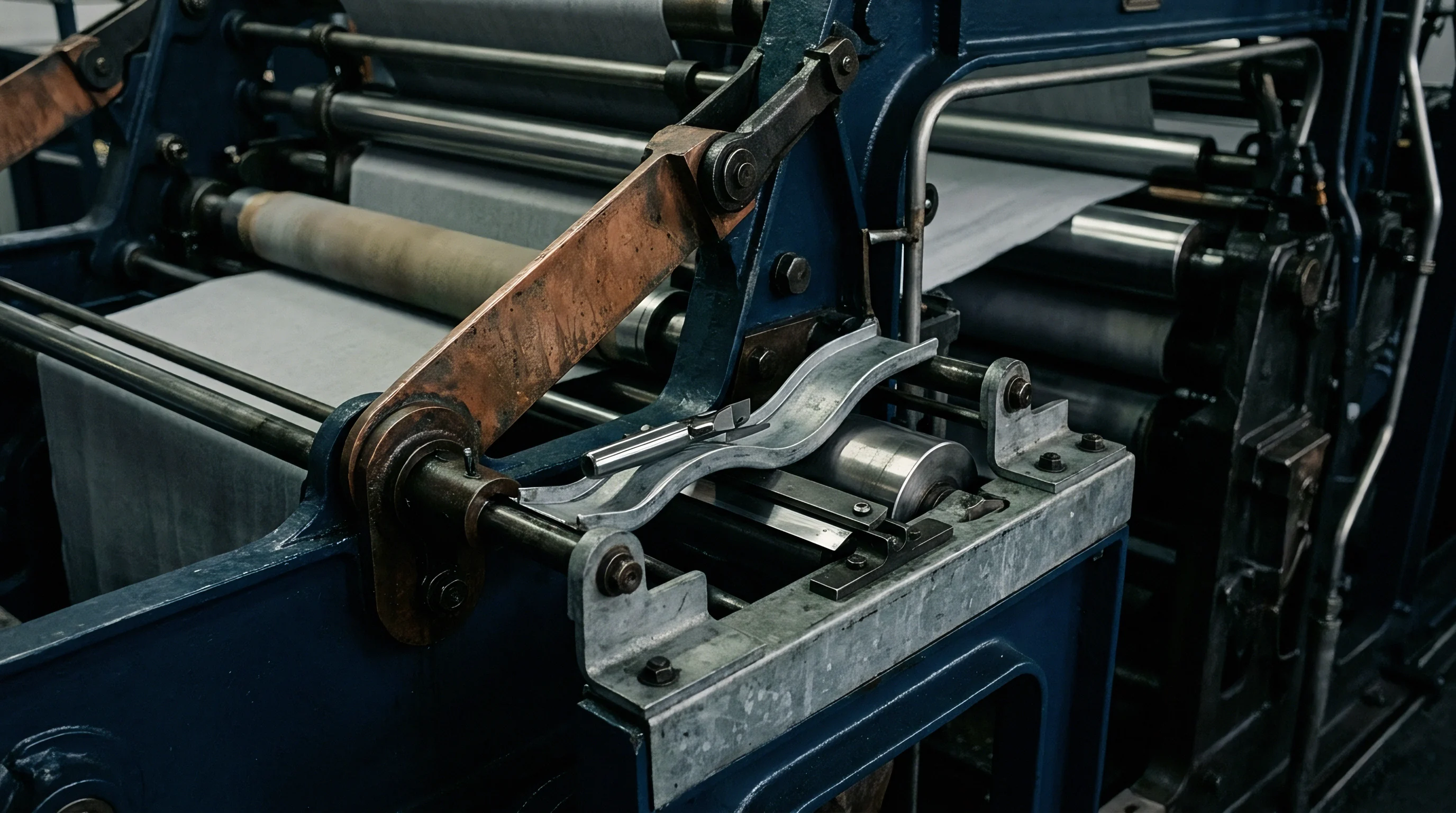
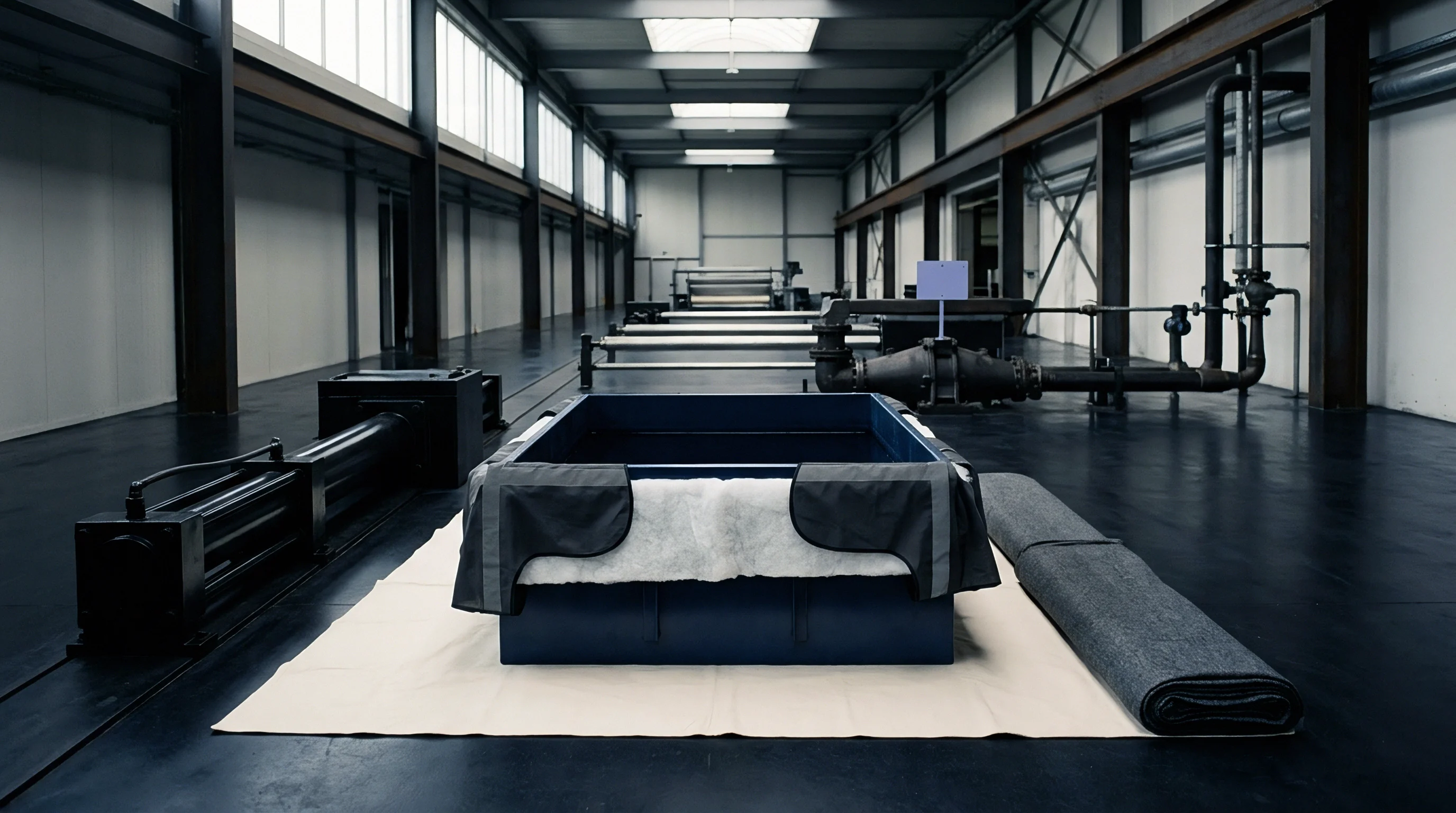
Foulard squeeze rollers apply mechanical force to expel free water from internal voids. The effectiveness of this extraction depends on roller diameter, rubber cover hardness, nip line pressure, and roll deflection profiles. Standard mangles use two or three rolls arranged horizontally or vertically.
As the web passes between pressurized rolls, fluid pressure spikes within the nip zone, forcing excess solution back into the trough. Softer roll covers flatten under pressure, creating wider contact areas that diminish peak hydraulic pressure and leave higher residual wet pick-up.
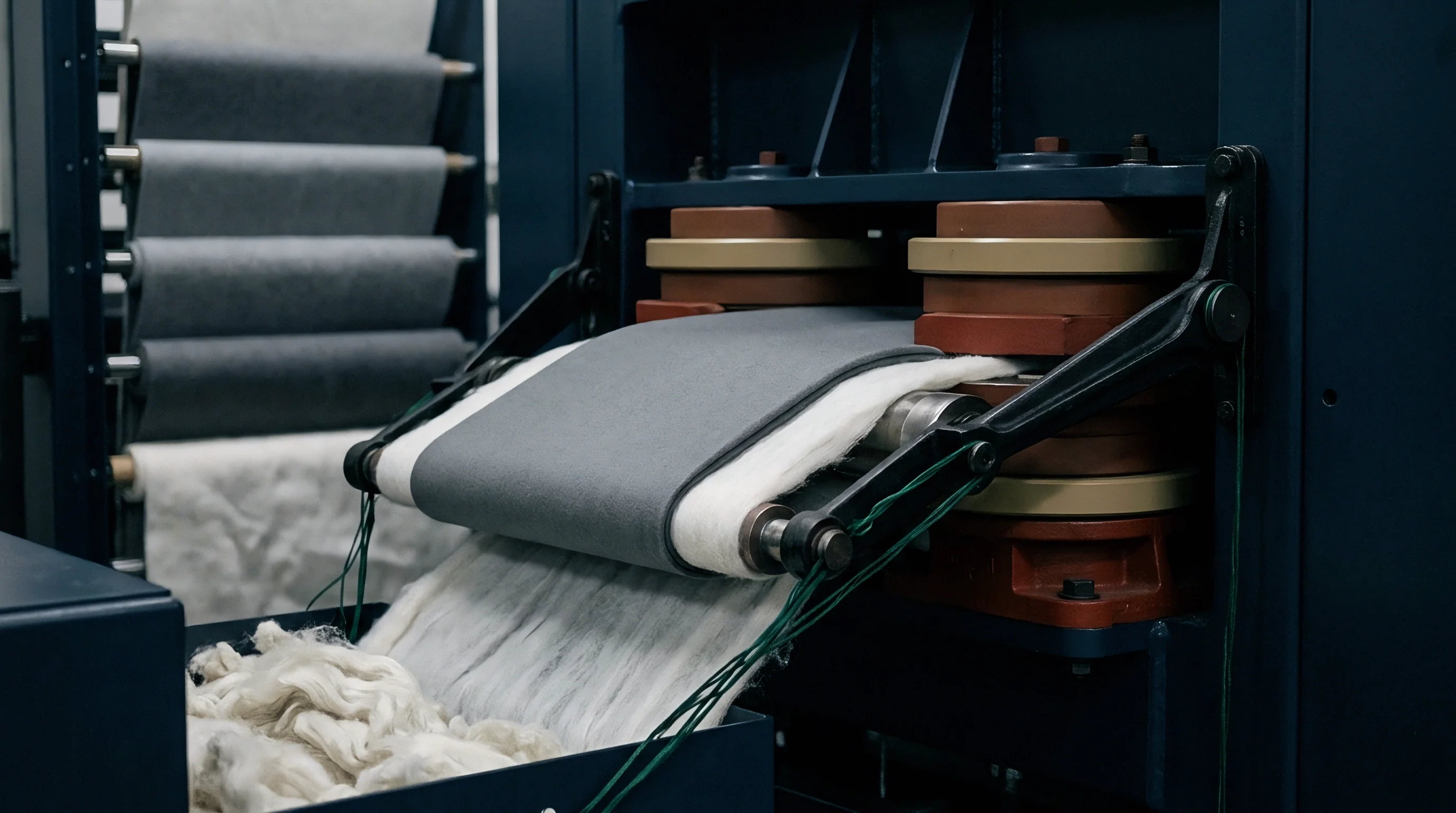
Hard rubber rolls rated at eighty-five to ninety Shore A deliver sharp pressure spikes that squeeze liquid down to minimal levels. Specialized microporous rolls, such as Roberto rolls composed of compressed nonwoven synthetic fiber disks, extract significantly more water than conventional rubber. Under pressure, Roberto rolls act as capillary sponges, creating sub-atmospheric suction at the nip exit that pulls residual water from dense cotton webs.
This mechanical suction drops cotton wet pick-up to forty-five percent without chemical additives.
Standard ISO 105-J03 dictates color difference evaluations where continuous pad liquor variances keep within a Delta E of zero point five across the width.

Foulard Squeeze Hydrodynamics and Roll Shore Hardness
Elastomer covers on mangle rolls deform under pneumatic loading. Deflection across wide machine widths leads to uneven squeeze pressure, causing higher wet pick-up along the edges or down the center lane. Builders correct this using crown-controlled or variable-swimming rolls.
Swimming rolls use an internal stationary axle surrounded by oil pressure chambers that push against the inner shell, offsetting physical bending to maintain uniform nip pressure from edge to edge.
Nip pressure directly alters dye yield. Increasing pneumatic line force from twenty Newtons per millimetre to forty Newtons per millimetre reduces pickup on cotton twill from seventy percent to fifty-six percent. Too much pressure can crush delicate yarns or shift warp ends in loose weaves, so mechanical adjustments must balance moisture reduction against fabric integrity.
Vacuum Extraction and Minimal Application Technologies
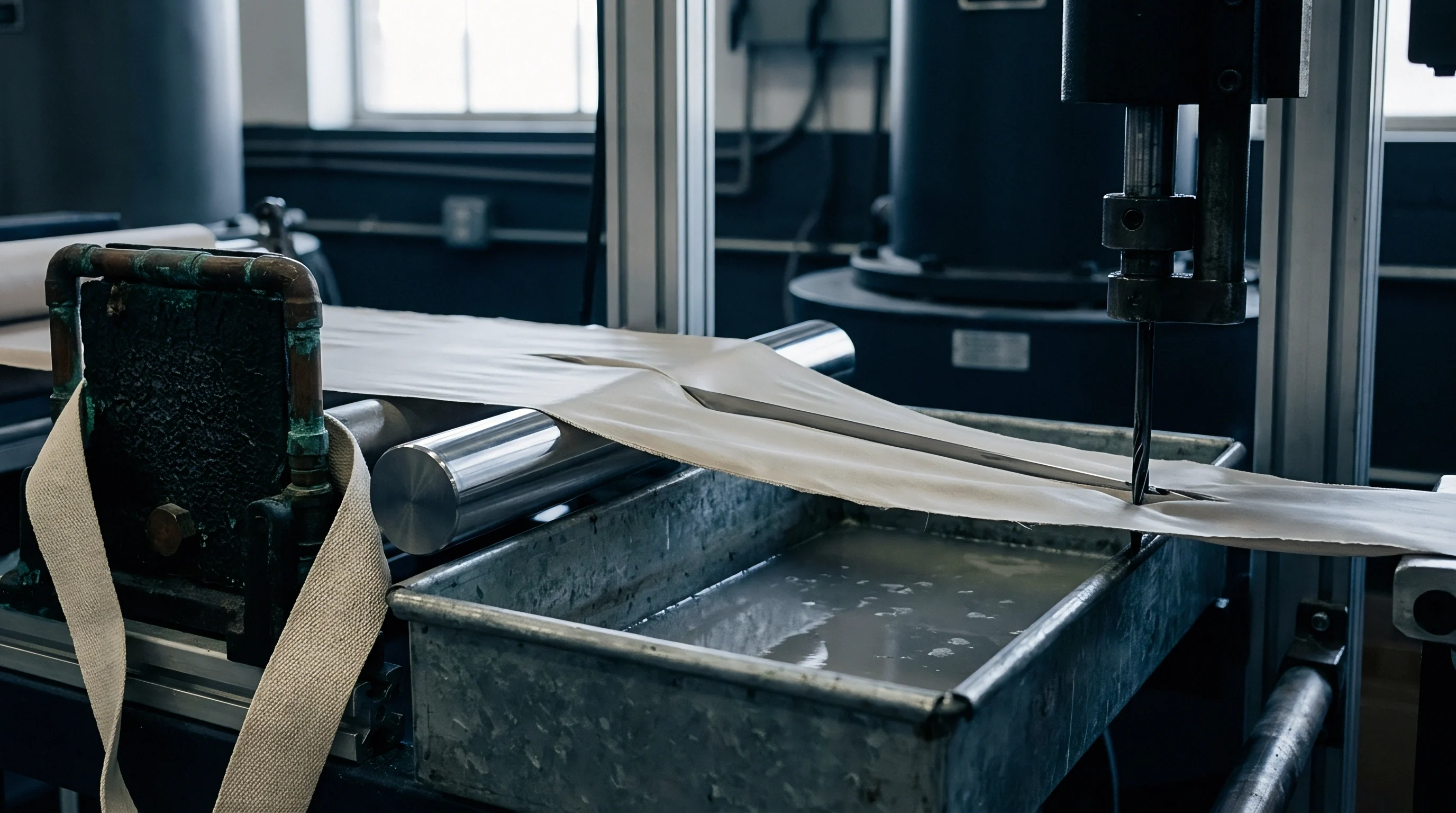
High-velocity air streams drawn through narrow slots strip surplus liquid from moving cloth. Vacuum extraction systems placed immediately after the dip trough remove mechanically bound water before thermal drying. Slot openings between one and two millimetres apply vacuum pressures of twenty to fifty kilopascals, drawing air through yarn voids that carries liquid droplets into recovery tanks and lowering wet pick-up to forty-five percent on heavyweight cotton.
Lowering initial wet pick-up via slot extraction conserves dye bath additives and stabilizes moisture levels before fabric enters the pre-dryer. Slot wear, lint buildup, or vacuum pump pressure fluctuations induce immediate side-to-center pickup variances across the web. Regular slot cleaning and differential pressure transducers prevent extraction drift during continuous dye runs.
- Non-uniform nip deflection creates side-to-center shade listing along the continuous line due to uneven hydraulic pressure across wide mangle rolls.
- Lico-film hydrodynamic buildup drives liquid backward at high production speeds, increasing residual moisture uptake along trailing fabric edges.
- Asymmetrical vacuum slot wear generates longitudinal moisture streaks, resulting in permanent shade bands after intermediate drying stages.
- Foam collapse in slot applicators causes localized liquor starvation, leaving uncolored fiber patches on dense woven substrates.
Minimal application hardware bypasses traditional pad troughs entirely. Spray systems, rotor dampers, and slot applicators meter liquid volumes onto moving fabric using high-frequency nozzle arrays, while micro-foam units collapse dense chemical foam onto the web inside a controlled chamber. Using air rather than water as the carrier medium drops wet pick-up to thirty-five percent.
Metering liquid so precisely eliminates bath tailing, reduces dye waste during style changes, and lowers energy needs. Roll maintenance records indicate that rubber covers softening over time account for subtle month-to-month pickup increases.
Migration
Thermal exposure drives liquid transport that carries dissolved dyes toward evaporation surfaces. When wet fabric enters an intermediate pre-dryer, water evaporates first from exposed surface fibers. Capillary action continuously pulls liquid and dissolved dye from the wet core out toward hot outer surfaces.
This movement ~ dye migration ~ causes face-to-back shade differences, side-to-center listing, and surface frosting. Controlling wet pick-up minimizes the volume of free water available to drive it.
High wet pick-up extends the critical drying phase during which water movement remains fluid. In this mobile phase, dye particles travel freely through moisture channels. Cutting initial wet pick-up from seventy-five percent to forty-five percent shortens that mobile window, freezing dye particles in place before surface concentration becomes uneven.
Uniform energy transfer during early drying stages prevents thermal gradients across the web width.
Lowering wet pick-up from seventy-five percent to forty-five percent cuts thermal evaporation energy demands in intermediate drying by forty percent.
Intermediate Drying and Thermal Water Evaporation Kinetics
Infrared pre-dryers stabilize particulate dye distribution before fabric touches the main drying cylinders. Non-contact electric or gas-fired IR panels heat water molecules directly throughout the fabric matrix, preventing rapid surface evaporation gradients. Operating these pre-dryers at wavelengths between two and four micrometres maximizes absorption by water molecules.
Web moisture content must fall below thirty percent within non-contact zones before the substrate hits metallic hot-flue rolls or drying cylinders.
Direct contact with hot cylinders while wet pick-up remains above forty percent causes immediate dye transfer to metal surfaces, creating dirty roll defects and shade mottling. Non-contact drying zones must remove enough water to cross the critical threshold where liquid capillary movement stops entirely. Moisture sensors at the exit of pre-drying units confirm when fabric transitions into safe solid-phase drying.
| Anti-Migrant Polymer Chemistry | Active Dosage (g/L) | IR Panel Output (%) | Line Speed (m/min) | Initial WPU (%) | ISO 105-Z06 Migration Rating |
|---|---|---|---|---|---|
| Sodium Alginate (Low Viscosity) | 15.0 | 75 | 45 | 70 | Grade 3-4 |
| Fully Synthetic Acrylic Polymer | 8.0 | 85 | 55 | 62 | Grade 4-5 |
| Carboxymethyl Cellulose (CMC) | 12.0 | 70 | 40 | 75 | Grade 3 |
| Modified Polyacrylamide | 6.0 | 90 | 60 | 48 | Grade 5 |
Anti-Migration Additives and Particulate Dye Mobility
High molecular weight polymers increase liquor viscosity to arrest capillary movement. Anti-migration agents added to pad baths flocculate disperse or vat dye particles as temperature rises, forming high-viscosity gels that block internal liquid channels. Polyelectrolytes, acrylamide copolymers, and alginates function by thickening rapidly inside infrared dryers.
The resulting gel network locks dye particles into fiber interstices, suppressing movement even while water actively evaporates.
Chemical additives must maintain low viscosity at ambient bath temperatures for uniform impregnation in the pad mangle, then instantly coagulate under heat. Incompatible anti-migrants cause bath separation, agglomeration, or lower color yield. Precise dosage testing ensures migration control without compromising bath stability or fabric hand.
Adding too much anti-migrant leads to stiffness and uneven wash fastness, forcing plants to balance chemical additions against physical squeeze optimization.

Telemetry
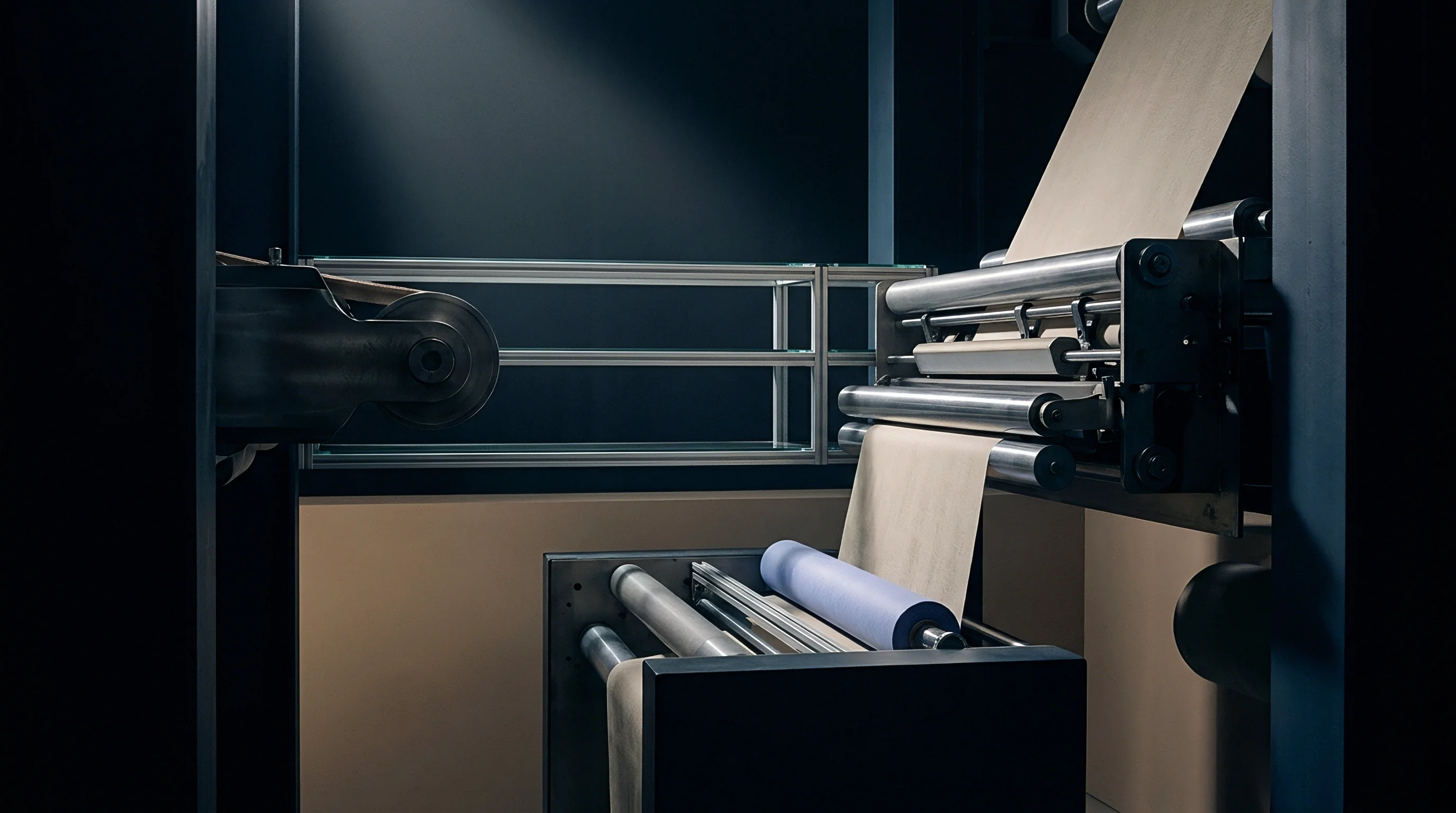
Continuous measurement of liquor pickup relies on non-contact sensor technology. Real-time telemetry systems mounted on continuous dyeing lines monitor mass per unit area before and after the pad mangle. Microwave absorption sensors, beta-radiation attenuation gauges, and high-frequency probes measure moisture mass across multiple parallel lanes.
Instant feedback allows automatic adjustments to pneumatic nip actuators or vacuum pump speed, stabilizing wet pick-up across full production shifts.
Online telemetry eliminates manual swatch cutting and weighing during bulk production runs. High-resolution sensors detect subtle moisture shifts caused by changing fabric density, yarn lot variations, or pad roll thermal expansion. Continuous pickup logging provides complete quality audit trails for technical textiles and brand compliance dossiers.
Which Mechanical Adjustments Correct Left to Right Pick up Variance?
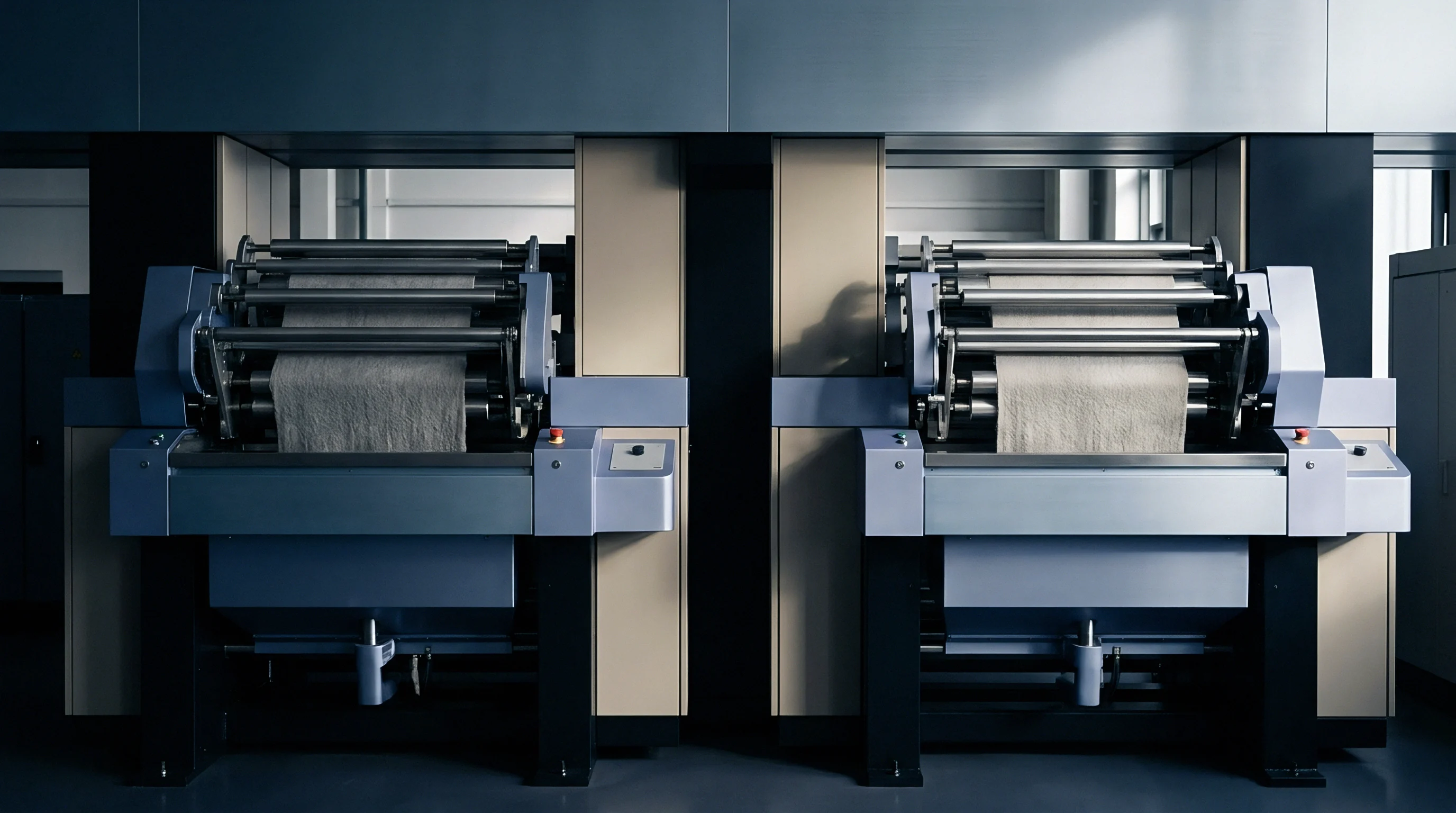
Asymmetrical nip pressure profiles respond to independent pneumatic cylinder controls. When telemetry displays elevated moisture on the left side of the moving web, control algorithms increase pneumatic pressure on the left cylinder. Modern swimming rolls feature segmented internal pressure zones that adjust local hydraulic forces across five to seven width locations, correcting localized center-bulge or edge-taper pickup variances in real time.
Temperature fluctuations in pad liquor change viscosity and surface tension, directly altering mechanical squeeze efficiency. Telemetry units linked to bath heat exchangers maintain constant liquor temperatures within two degrees Celsius, while automatic closed-loop feedback prevents pickup drift during morning startups or line speed changes.
- Calibrate high-frequency microwave sensor array across dry web to establish baseline mass zero.
- Measure total wet mass continuously at mangle exit across left, center, and right web tracks.
- Calculate instantaneous wet pick-up percentages using real-time dry web density data streams.
- Transmit correction signals to segmented pneumatic roll actuators when pickup drifts beyond one percent tolerance.
- Modulate slot vacuum pump frequency to stabilize moisture prior to infrared pre-dryer entry.
Online Moisture Mass Sensors and Closed Loop Control
High-frequency microwave resonance frames measure wet mass across moving web lanes by evaluating changes in dielectric constant caused by water within the fabric structure. Because water possesses a far higher dielectric constant than dry cotton or polyester fibers, microwave absorption correlates directly with total water mass per square metre. Sensor arrays traverse the web width on motorized frames, scanning up to sixty times per minute.
Closed-loop control systems adjust processing parameters without operator intervention. Integrated PLCs compare telemetry data against target wet pick-up setpoints, dynamically modulating line speed, nip pressure, or vacuum intensity. Continuous telemetry control holds pickup variance within plus or minus zero point five percent across a fifty-thousand metre production order, provided clean air reference zero points are checked every twenty-four hours to prevent signal drift.
What remains unmeasured is whether micro-variations in yarn texturing across different spinning lots create localized moisture retention anomalies that bypass high-speed traversing sensors entirely.

Ledger
Financial viability in continuous dyeing hinges on thermal energy utilization per kilo. Operating pad-dry lines consumes significant natural gas to evaporate water introduced during pad bath impregnation. A continuous line running heavy cotton twill at seventy-five percent wet pick-up uses thousands of gigajoules of energy monthly strictly for water phase change.
Reducing wet pick-up to forty-five percent through mechanical squeeze optimization and vacuum extraction slashes thermal drying costs, directly improving plant profit margins.
The latent heat of vaporization for water equals two thousand two hundred and sixty kilojoules per kilogram. Thermal efficiency calculations show that drying one thousand kilograms of fabric at seventy-five percent pickup requires evaporating seven hundred and fifty kilograms of water. Lowering pickup to forty-five percent reduces water mass to four hundred and fifty kilograms, eliminating three hundred kilograms of water evaporation per tonne of finished cloth.
The resulting energy savings translate directly into reduced utility expenses and lower carbon emissions.
Capillary condensation inside un-scoured yarn voids limits the minimum pick-up threshold regardless of squeeze roll pressure.
Thermal Energy Balance and Drying Line Speed Economics
Evaporating one kilogram of water requires approximately two thousand two hundred kilojoules of latent heat. Because of exhaust stack heat losses, gas-fired hot-flue dryers operate at thermal efficiencies between fifty and sixty-five percent, bringing real-world consumption to an average of three thousand five hundred kilojoules per kilogram of evaporated water. Reducing moisture pickup directly increases line speed potential, expanding plant output capacity without installing additional drying chambers.
Continuous dyeing plants locked into high wet pick-up must run lines at reduced speeds to ensure complete drying before thermo-fixation or chemical curing. Lowering wet pick-up from seventy percent to forty-five percent allows production speeds to rise from forty metres per minute to sixty-five metres per minute on identical machinery. Operating at these higher speeds reduces fixed overhead allocation per metre, lowering landed fabric cost.
| Operational Metric | Standard Foulard Padding | Vacuum Extraction Line | Delta / Variance |
|---|---|---|---|
| Target Wet Pick-Up (%) | 72.0% | 46.0% | -26.0% |
| Water Mass per 1,000 m Fabric (kg) | 201.6 kg | 128.8 kg | -72.8 kg |
| Thermal Drying Energy (MJ/1,000 m) | 705.6 MJ | 450.8 MJ | -254.8 MJ |
| Maximum Line Speed (m/min) | 42 m/min | 64 m/min | +22 m/min (+52%) |
| Natural Gas Cost per 1,000 m (USD) | $18.40 | $11.75 | -$6.65 (-36%) |
| Chemical Dye Consumption (g/L adjustment) | Baseline 100% | Concentrated 156% | Fixed Total Mass |
Worked Calculation of Chemical Consumption and Landed Textile Cost
Evaluating a forty-thousand metre continuous run of heavy cotton twill illustrates the financial impact of liquor control. Consider a lot at two hundred and eighty grams per square metre with a finished width of one point six metres, giving a total dry fabric mass of eighteen thousand kilograms. Standard padding at seventy-two percent wet pick-up applies twelve thousand nine hundred and sixty kilograms of aqueous dye liquor.
Installing a vacuum extraction unit lowers wet pick-up to forty-six percent, applying eight thousand two hundred and eighty kilograms of liquor.
Energy savings calculate directly. Evaporating twelve thousand nine hundred and sixty kilograms of water requires forty-five thousand three hundred and sixty Megajoules of gas thermal input, whereas evaporating eight thousand two hundred and eighty kilograms requires twenty-eight thousand nine hundred and eighty Megajoules. The net energy reduction comes to sixteen thousand three hundred and eighty Megajoules.
At a commercial natural gas price of twelve dollars per Gigajoule, gas cost drops from five hundred and forty-four dollars to three hundred and forty-seven dollars per batch ~ a net savings of one hundred and ninety-seven dollars in gas alone per forty-thousand metre run.
Productivity gains exceed gas savings. Operating at sixty-four metres per minute reduces batch running time from fifteen point eight hours to ten point four hours, saving five point four machine hours. At a plant overhead rate of eighty-five dollars per hour, labor and machine overhead costs drop by four hundred and fifty-nine dollars.
Total savings across the run equal six hundred and fifty-six dollars, reducing landed textile cost by one point six cents per linear metre.
- Thermal capacity verification prevents bottlenecking inside pre-drying chambers during speed escalations.
- Absorbency threshold testing guarantees adequate fiber penetration prior to reducing wet pick-up targets.
- Liquor bath volume ratio adjustments ensure correct dye concentration when converting to low-pickup equipment.
Commercial contracts specify shade tolerances, dimensional stability, and fastness properties under strict ASTM and ISO standards. Purchase agreements typically state that supplier wet pick-up modifications must not alter agreed colorfastness to light under ISO 105-B02 or rub fastness under ISO 105-X12, binding mills to re-verify fastness performance whenever low-pickup technology is deployed.