Dimensional Stabilisation
Synthetic fibre heat management involves the controlled application of high temperatures to yarns or fabrics to lock molecular chains into a permanent geometric arrangement. Through thermo fixation, manufacturers set the dimensions of synthetic textiles, such as polyester or nylon, by heating the material past its glass transition point while maintaining constant tension. The process ensures that the finished cloth resists shrinkage and prevents distortion when exposed to heat during subsequent laundering or ironing cycles.
It acts as the final structural anchor for synthetic goods. Beyond basic stability, the procedure alters the hand and dye affinity of the substrate. Precise control over the heat duration prevents thermal degradation, which otherwise results in yellowing or a loss of tensile strength.
Thermal Regulation
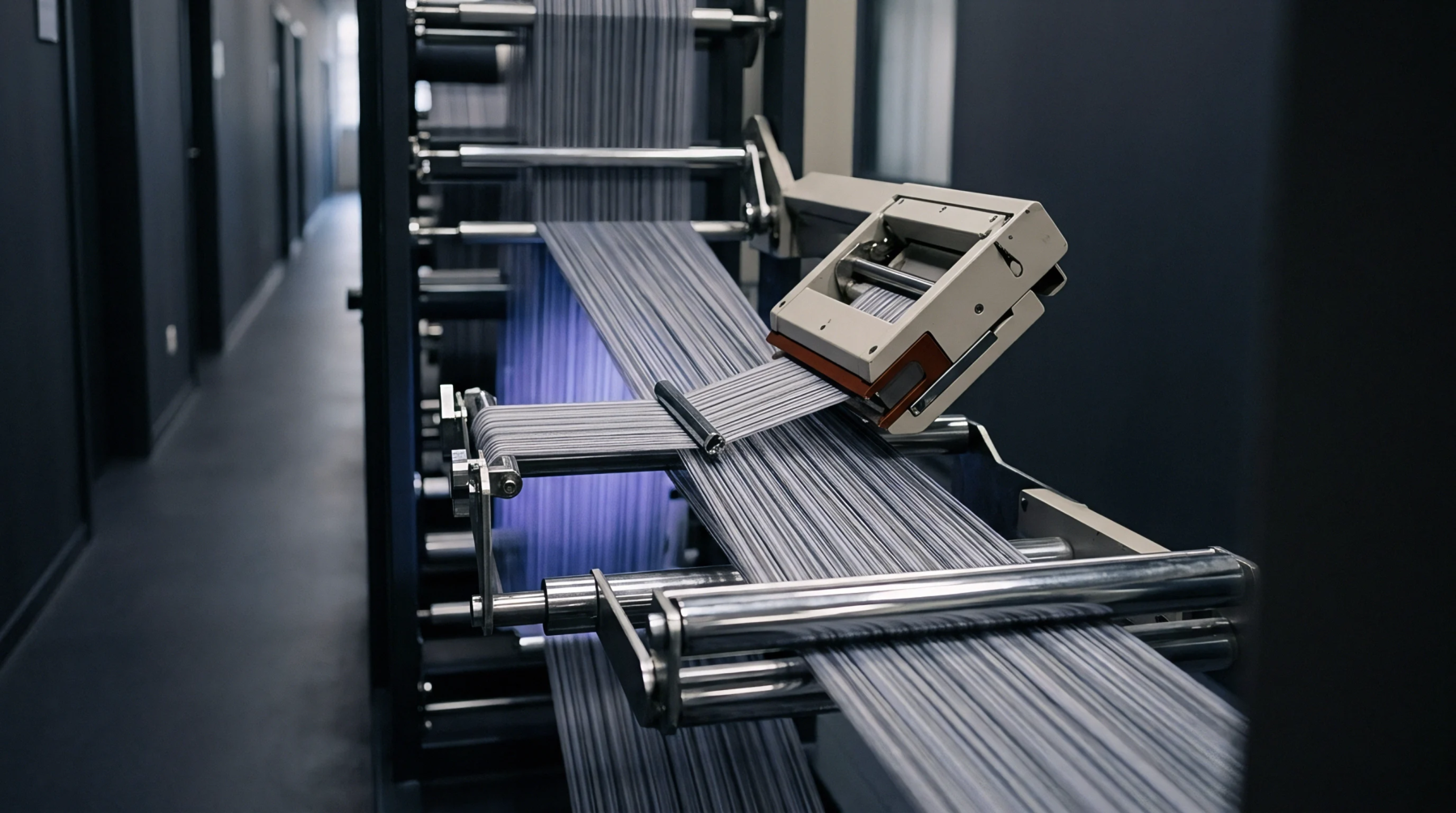
Operators deploy stenter frames to move continuous rolls of fabric through heated chambers where forced air provides consistent temperature distribution. As the material enters the housing, clips hold the selvages firmly to control width, preventing the narrowing that occurs naturally as synthetic fibres contract under heat. A dwell time within the oven allows the polymer structure to relax into the desired state.
Once the fabric exits the cooling zone, the internal stresses caused by spinning or weaving vanish. This state remains fixed until an external temperature higher than the setting threshold occurs. Failure to achieve proper uniformity leads to bowing or skewing in the pattern repeat.
Parameter Calibration
Quality control technicians monitor oven exhaust temperatures to verify that the energy transfer meets the material specification. Deviations beyond narrow tolerance bands cause variations in bulkiness or texture between separate dye lots. Analysts measure the shrinkage of a sample strip after soaking the fabric in boiling water to confirm that the previous setting operation functioned according to expectations.
High-speed cameras sometimes check for edge curling or surface markings as the web emerges from the heat cabinet. If the monitoring equipment detects a cooling pattern that deviates from the established curve, the drive speed adjusts automatically to compensate. Accurate sensing prevents the creation of brittle regions that tear easily under mechanical stress.
Application Limit
Mechanical stability gained from heat setting does not change the inherent chemical resistance of the underlying polymer chain. Synthetic textiles often hold a static charge that persists despite the application of heat treatments, which necessitates separate antistatic finishing steps. The method applies exclusively to thermoplastics, as natural fibres suffer charring or structural ruin when subjected to these intensities.
Fabrics containing fibre blends require careful selection of the temperature point, as the setting value must align with the component that possesses the lowest melting point to avoid damage to the yarn integrity. Once a garment fabric experiences this treatment, the shape remains locked against repeated water contact and standard atmospheric moisture absorption.