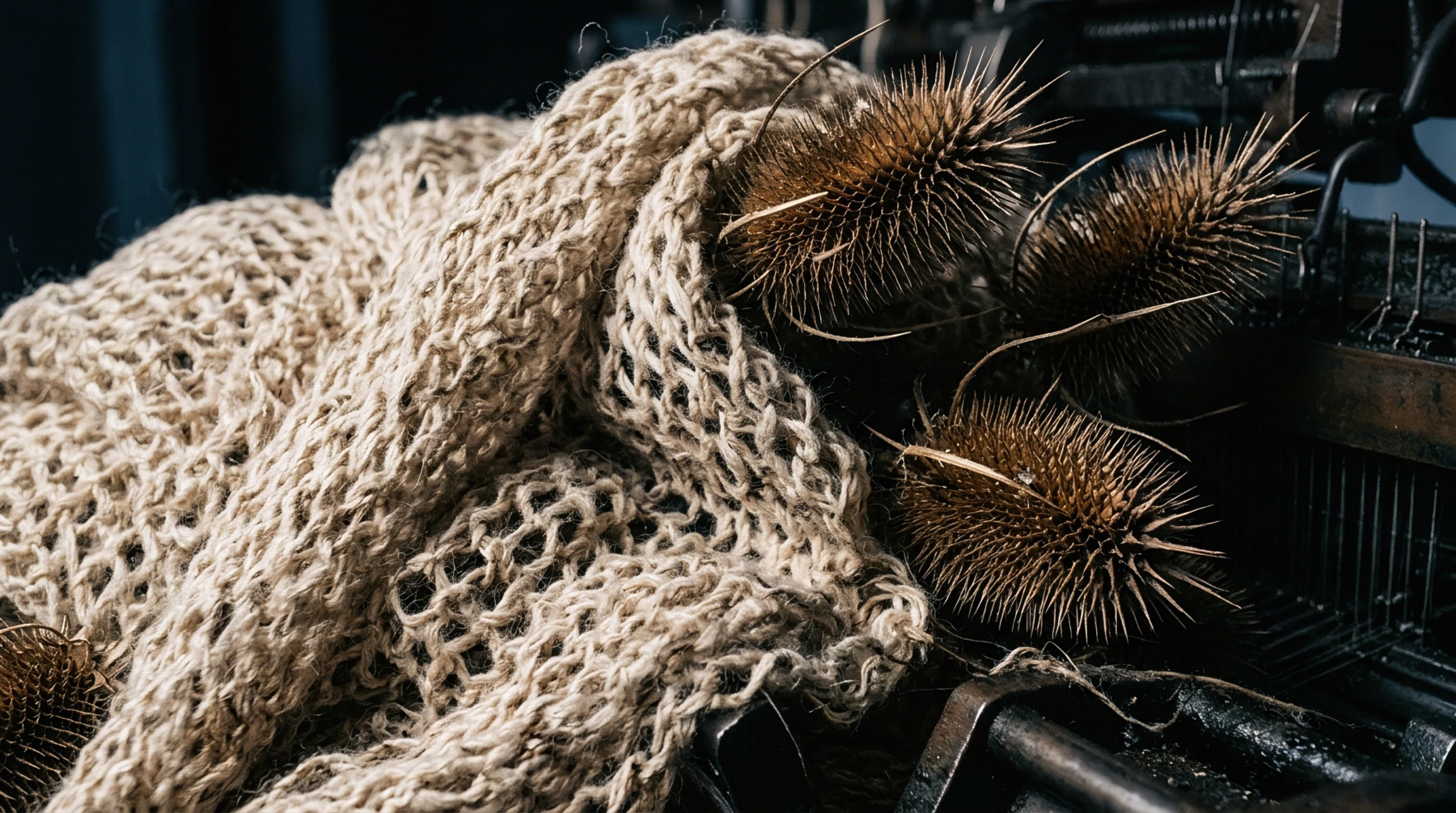
How Woven and Knitted Fabrics Are Built
Fabric performance depends on greige interlacing geometry, wet processing relaxation, and multi-mill supply chain lead times.
High-speed warp knitting equipment producing stable textile structures via simultaneous yarn manipulation falls under the broader category of industrial machinery designed for apparel and technical fabric manufacturing. A tricot machine feeds multiple continuous filament yarns from large beams directly through guide bars and needle beds to form interlocking loops in a vertical pillar formation. Mill operators rely on this mechanical setup to produce lightweight lingerie, automotive interior linings and athletic mesh fabrics with high dimensional stability.
Guide bars shift laterally across the needle bed according to a specific chain-link pattern plan, determining the geometric width and elongation properties of the resulting cloth. Each individual needle captures its assigned yarn during the descent stroke, closing its latch or hook to cast off the previous loop while drawing a new stitch through the structure. Defective yarn tensioning along the creel causes irregular loop formation during continuous high-speed runs, leading to rejected rolls during post-production inspection.
Precision yarn feeding systems regulate tension from the creel to the knitting elements to maintain consistent stitch density across wide fabric widths. Differential gearboxes or electronic servo drives control the rotational speed of the warp beam relative to the take-down roller mechanism below the knitting zone. Fabric pull-down tension directly dictates the longitudinal dimensions of the finished good, preventing distortions caused by excessive yarn accumulation behind the latch needles.
Mills calibrate these mechanical parameters against specific linear mass measurements to ensure compliance with buyer tensile strength specifications.
Interlocking loop architecture determines the inherent stretch characteristics and tear resistance of the final textile product without relying on elastomeric yarns. Lateral needle displacement controls the underlap length, which governs the stability of the fabric against transverse forces during garment assembly. Thicker filament deniers increase fabric weight and opacity, restricting applications to heavy industrial covers or structured outerwear linings.
Technical specifications establish acceptable tolerances for course count and wale density before the material reaches the commercial dyeing stage.
Needle density measurements per inch dictate the fineness grade of the mechanical assembly and determine the range of yarn counts compatible with the system. Quality control technicians inspect grey goods immediately after the knitting cycle to detect dropped stitches, broken filaments or oil contamination originating from the lubrication channels. Commercial contracts specify strict penalties for dimensional variance exceeding established mill tolerances, protecting garment manufacturers from assembly disruptions.
Proper alignment of sinkers and guide bars prevents yarn abrasion at operating speeds exceeding one thousand revolutions per minute.
Fabric performance depends on greige interlacing geometry, wet processing relaxation, and multi-mill supply chain lead times.
Expertise is a utility, not a secret. sentiention™ publishes its working knowledge as open reference: intelligence layer covering the materials it sources, the markets it enters, and the reference that serves both.