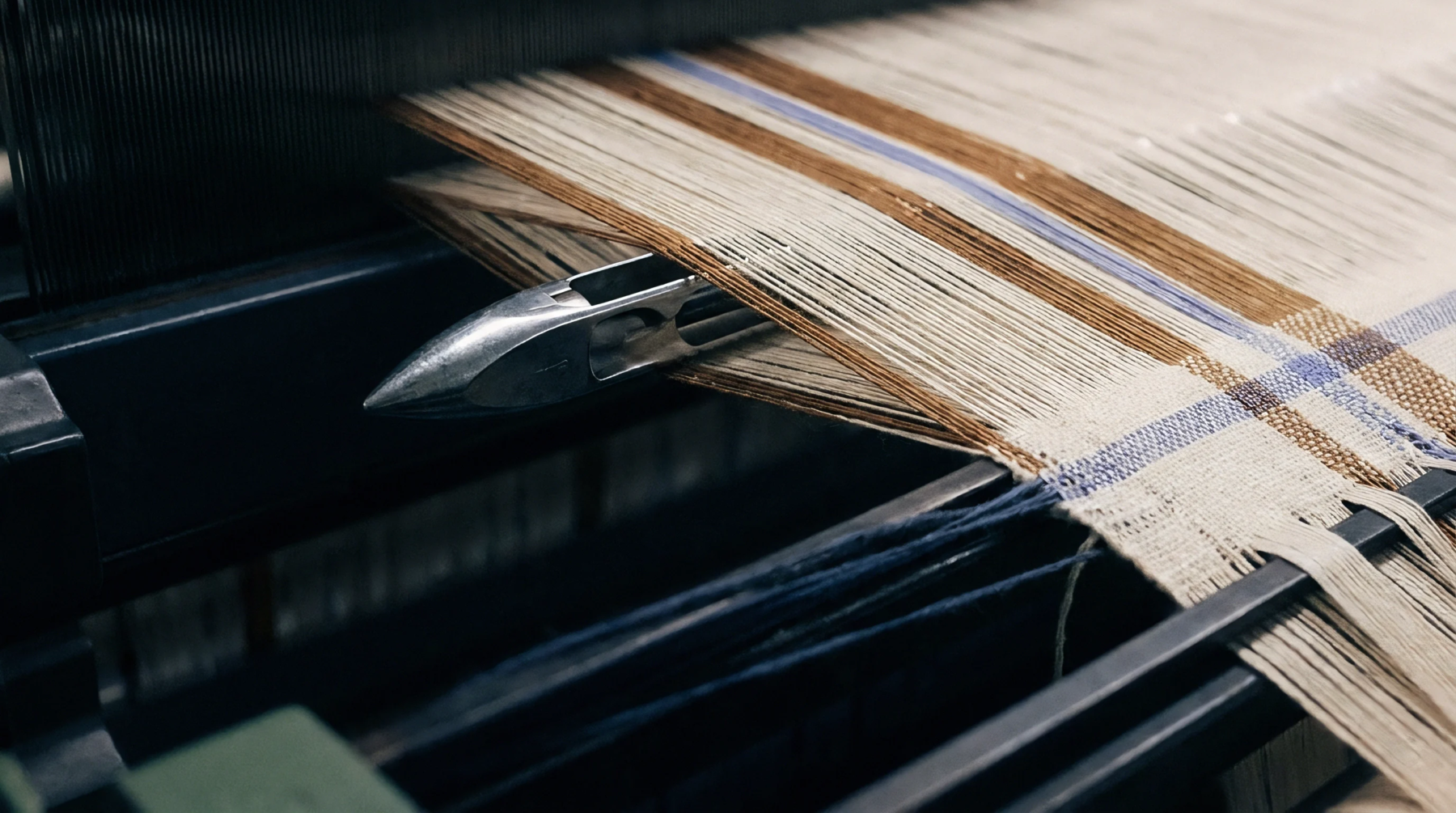
Basic Minimum Warp Set Calculation Principles for Greige Weaving
Greige warp set calculations must integrate reed width contraction, warp crimp, sizing stretch, and setup waste to establish accurate yarn purchase masses.
Mass variation between individual yarn segments quantifies the consistency of mass per unit length across a spun product lot through standardized electronic measurement. This uster yarn count variance tracks deviations from a nominal linear density value to establish a quality grade for the material. Automated capacitive sensors detect mass changes as the yarn passes through a measuring field, generating a signal proportional to the dielectric properties of the fibre bulk.
Differences in signal intensity identify fluctuations in mass distribution, which inform the grading of the final yarn package. The measurement applies exclusively to single yarns prior to assembly into ply or fabric structures.
High frequency monitoring captures mass irregularities by analyzing the signal output from the sensor gap. Capacitance signals convert into mass values at set intervals to determine if specific sections deviate from the targeted yarn count. Variations result from fibre density changes, drafting faults during the spinning process, or inconsistent fibre orientation within the strand.
The device processes these raw inputs to calculate standard deviation and coefficient of variation figures for the entire length tested. Periodic recalibration ensures the electronic drift remains within operational limits during long production runs. A shift in the detected voltage indicates a change in mass density, which the system records for statistical calculation.
Absolute count uniformity determines how the yarn behaves during subsequent textile operations like high speed warping or circular knitting. Low values indicate superior control over fibre distribution and drafting mechanisms in the spinning frame. Manufacturers use this data to verify that the raw material consistency aligns with machine settings for tension and loop formation.
Mills set threshold limits for the variance before moving the product to the weaving or knitting floor. Variations exceeding these limits force a reclassification of the yarn batch to prevent mechanical failure in downstream equipment. A stable count profile protects the integrity of the fabric structure.
Standards for this metric depend on the calibration of the capacitive sensor relative to the specific fibre type and moisture content. Synthetic filaments and natural fibres display different dielectric constants, requiring distinct baseline settings for accurate variance readings. Environmental factors like room humidity influence the moisture regain of the material, which alters its measured mass during testing.
Testing occurs under controlled atmospheric conditions to eliminate variables that inflate the count variance result. The sensor width limits the ability to detect microscopic imperfections that occur at the individual fibre level. Proper identification of the test range ensures that the calculated variance represents actual production quality rather than electronic noise.
Accurate assessment requires a standardized sample length to provide a valid representation of the entire yarn package mass. The index provides a reliable measure of production uniformity for all spun yarn classifications.
Greige warp set calculations must integrate reed width contraction, warp crimp, sizing stretch, and setup waste to establish accurate yarn purchase masses.
Expertise is a utility, not a secret. sentiention™ publishes its working knowledge as open reference: intelligence layer covering the materials it sources, the markets it enters, and the reference that serves both.