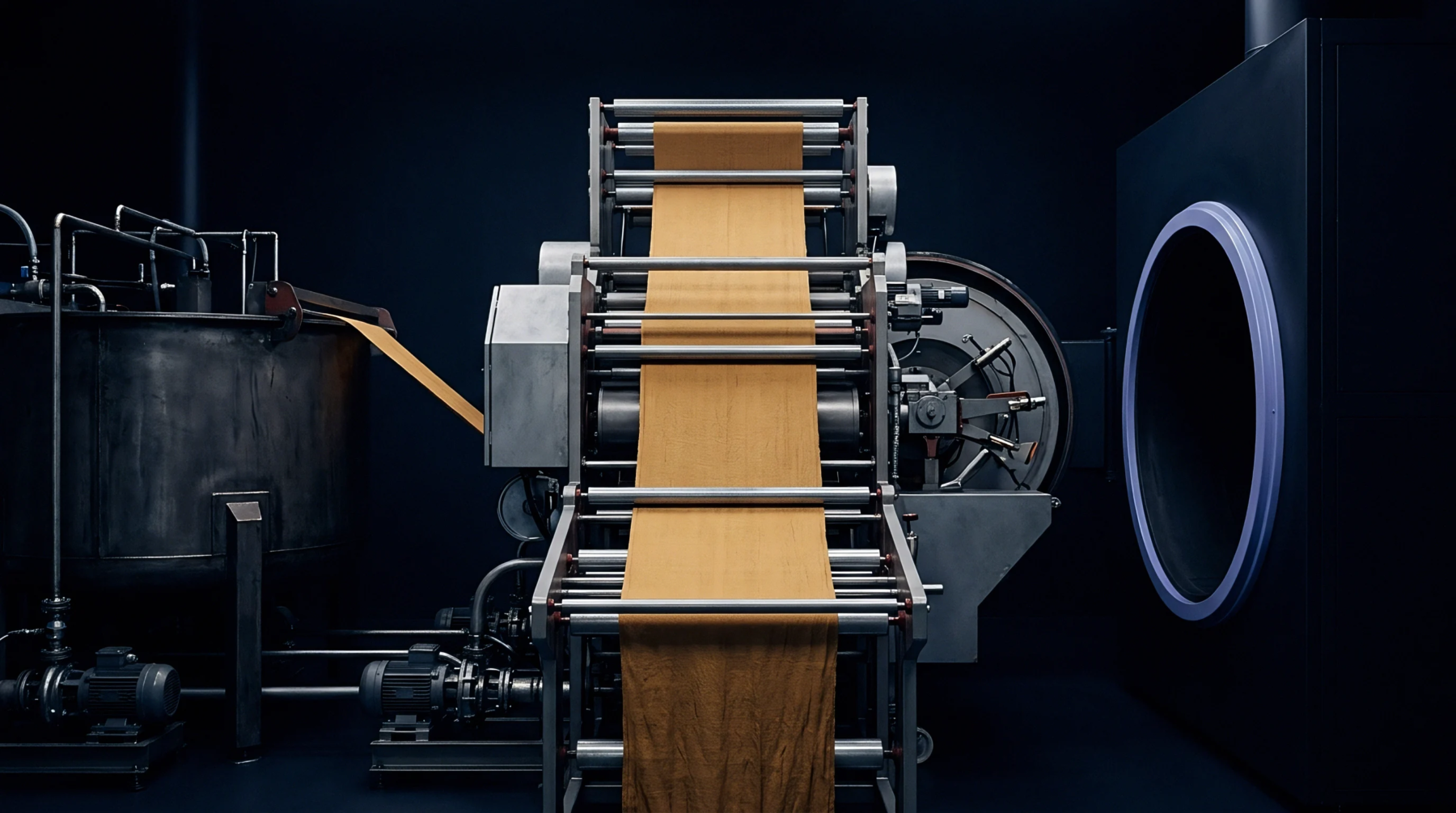
Thermal Migration
Pigment displacement during intermediate drying cycles affects shade uniformity across cellulose goods treated with insoluble colorants. Vat dye migration occurs when solubilized or dispersed color particles travel with liquid movement toward evaporating surfaces during the pad dry operation. Excess moisture in the fabric core pushes suspended molecules outward if moisture removal proceeds too rapidly without proper chemical retardation.
Cellulosic substrates absorb moisture through capillary action, dragging dyestuff particles toward outer yarn layers where heat concentrates. Temperature gradients across infrared predryers create vapor pressure differentials, drawing moisture and dissolved colorants to the fabric face. Anti migrant additives bind particles inside the interstitial spaces, halting lateral transfer before fixation occurs in subsequent reduction compartments.
Commercial acceptance depends on spectrophotometric readings confirming zero edge to center shade variation across the entire roll width.
Chemical Retardation
Hydrophilic polymers alter liquid viscosity inside the wet pad to restrict particle mobility during thermal transfer. Sodium alginate and synthetic polyacrylates increase aqueous phase resistance, slowing capillary transport toward drying surfaces. Polymer chains entrap dye aggregates within cellulose capillaries, preventing physical displacement during water evaporation.
Excessive binder concentrations stiffen hand feel, requiring precise dosing based on pickup percentages and fabric weight. Mill technicians monitor padding bath stability continuously to prevent premature precipitation of colorants caused by incompatible thickener grades.
Drying Mechanics
Infrared radiation intensity dictates surface evaporation rates and subsequent color displacement severity on treated fabrics. Contact cylinder temperatures exceeding optimal thresholds create localized boiling phenomena, driving pigment particles outward with escaping steam. Hot air impingement nozzles require balanced airflow distribution across top and bottom surfaces to maintain symmetrical moisture loss.
Uneven heat application generates bilateral shade streaks that persist through sodium hydrosulfite reduction and oxidation stages. Fabric speed adjustments alter dwell times within drying chambers, controlling thermal energy transfer rates to prevent destructive moisture gradients.
Fixation Control
Hydrosulfite reduction baths convert migrated pigments into soluble leuco forms for subsequent fiber penetration and final color yield. Caustic soda concentration and sodium dithionite levels must remain constant to regenerate uniformly distributed color throughout interior yarn bundles. Incomplete reduction leaves surface concentrated aggregates vulnerable to crocking and substandard wash fastness ratings during subsequent laundering cycles.
Standard laboratory wash tests verify that internal dye fixation compensates for minor surface concentration anomalies generated during preliminary drying phases.