Liquid Mass
Fluid retention in textile processing describes the proportion of moisture held within a fabric structure immediately following liquid application stages such as padding, scouring, or dye impregnation. Wet pick up ratio calculates this added liquor weight against the dry mass of the textile material before treatment. Commercial dyers apply this proportional value to monitor chemical consumption rates and prevent uneven shade development across continuous finishing ranges.
Mills verify this metric during routine laboratory padding trials and bulk production runs to ensure that the correct quantity of functional finish deposits onto woven or knitted goods. Over-saturation leads to chemical migration and dryer scorching, while under-saturation results in poor fixation and off shade deliveries.
Application Mechanics
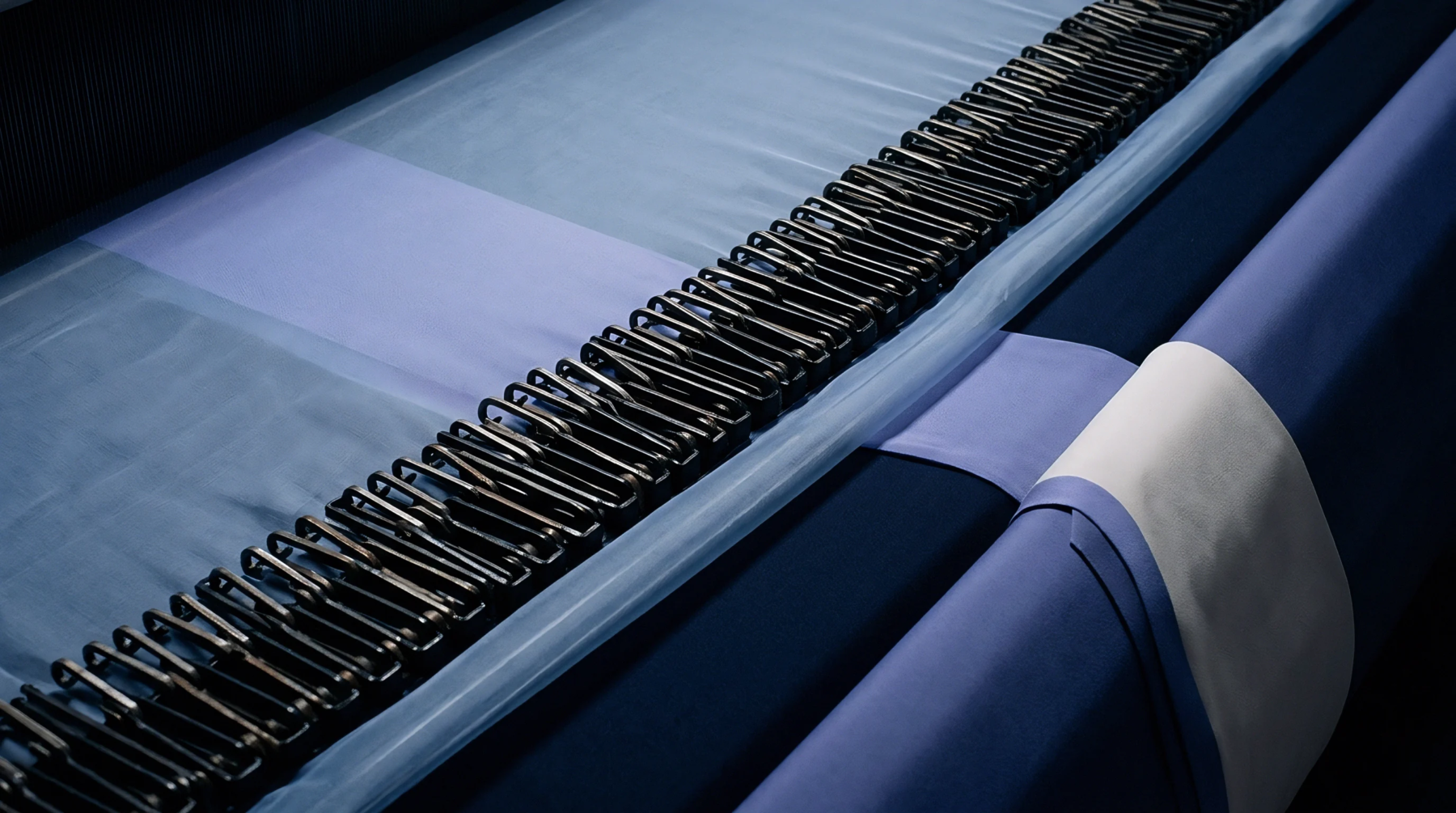
Impregnation machinery forces finishing liquor into open width fabric through a high pressure nip point between heavy rubber rollers. Squeeze roll pressure determines the final fluid content retained by the textile substrate after the material exits the bath. Variable squeeze pressure allows operators to adjust the retained liquid level to match the specific absorbency of cotton, polyester, or blended yarns.
High liquor pick up demands greater thermal energy inside the drying chamber, which increases overall utility consumption per linear metre of finished goods.
Substrate Influence
Different yarn twists and fiber surface energies alter fluid retention characteristics during continuous wet processing. Hydrophilic cotton constructions absorb and hold significant moisture volumes within their cellulose lumens, whereas synthetic filament yarns retain moisture primarily on external interstitial spaces. High twist density restricts liquid penetration, yielding lower proportional retention values during standard padding operations.
Fabric structure therefore dictates baseline processing parameters before machine variables are taken into account.
Commercial Variance
Mill audits frequently reveal discrepancies between targeted laboratory padding figures and actual bulk production outcomes on factory floors. Worn squeeze rollers develop uneven surface profiles, causing localized pressure drops that produce transverse wet pick up variations across the fabric width. Technicians measure these deviations gravimetrically by weighing small sample discs extracted from edge and center locations immediately after the nip point.
Constant monitoring of these retention levels maintains shade reproducibility and minimizes costly chemical waste during large scale textile manufacturing.