Calculating Direct Manufacturing Cost Crossovers in Textile Wet Processing
Continuous dyeing eclipses exhaust jet processing on direct manufacturing cost once run lengths surpass 3,200 finished metres for mid-weight woven twills.

Nip
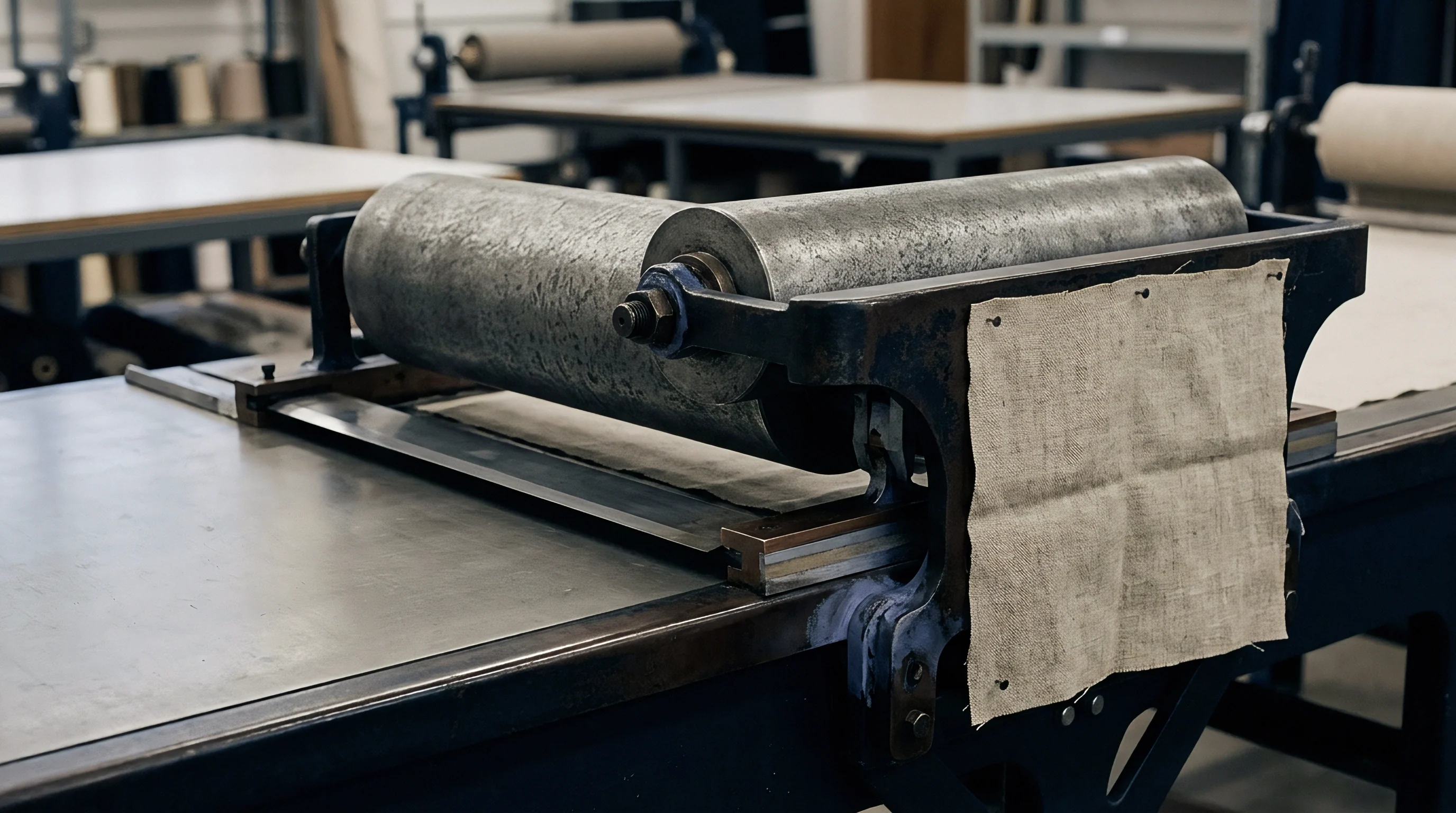
Mechanical expression across a padding mangle determines the volume of chemical liquor entering greige or prepared yardage before thermal fixation. When wet processing engineers evaluate running a shade on an atmospheric jet versus a continuous pad-steam range, this mechanical boundary defines direct chemical application efficiency. An exhaust dyeing vessel immerses fabric in an aqueous bath where water acts as the transport medium, requiring liquor-to-goods ratios between 5:1 and 10:1 for modern circular jet machines.
Continuous application squeezes liquid into the fibrous structure at pick-up levels between 55 percent and 75 percent based on dry substrate weight. The physical difference translates directly into dissolved solids deposition per linear metre of production.

Substrate Imbibition and Expression Dynamics
Dry cotton yarns absorb water rapidly through capillary channels between individual cellulose filaments. In a standard continuous pad-dry-pad-steam or pad-steam installation, pneumatic cylinders exert linear pressure along polyurethane or high-density rubber roll covers. The Shore A hardness of these covers, typically calibrated between 70 and 85 durometer, governs the width of the pressure contact zone.
Slower line speeds increase contact residence, enabling uniform core wetting of heavy yarns. Fast lines compress this contact window to fractions of a second, leaving inner core fibers dry if surfactant concentrations drop below critical wetting thresholds.
Woven twills with thread counts exceeding 110 ends per inch in the warp and 60 picks per inch in the filling resist rapid liquor penetration. When processors dye these structures on continuous equipment, they compensate for low dwell times by adjusting mangle pressure, increasing auxiliary penetrant concentrations, or raising dip tank temperatures to 60 degrees Celsius. In discontinuous jet dyeing, hydrostatic nozzles cycle ropes of fabric through the transport chamber every 45 to 90 seconds.
Liquor contacts every surface repeatedly across several hours, rendering yarn core penetration a non-factor for standard reactive or direct chemistries.
Water mass per kilogram of processed textile drops by more than seventy percent when fluid transfer shifts from bath exhaustion to continuous mechanical expression.
Surface tension governs how drops enter structural voids. Surfactant packages drop bath surface tensions below 30 dynes per centimetre, accelerating wet-out inside tightly twisted ring-spun yarns. If mechanical pressure drops unevenly across the roll face, pickup profiles vary from center to selvedge.
Machine Architecture Cost Allocations
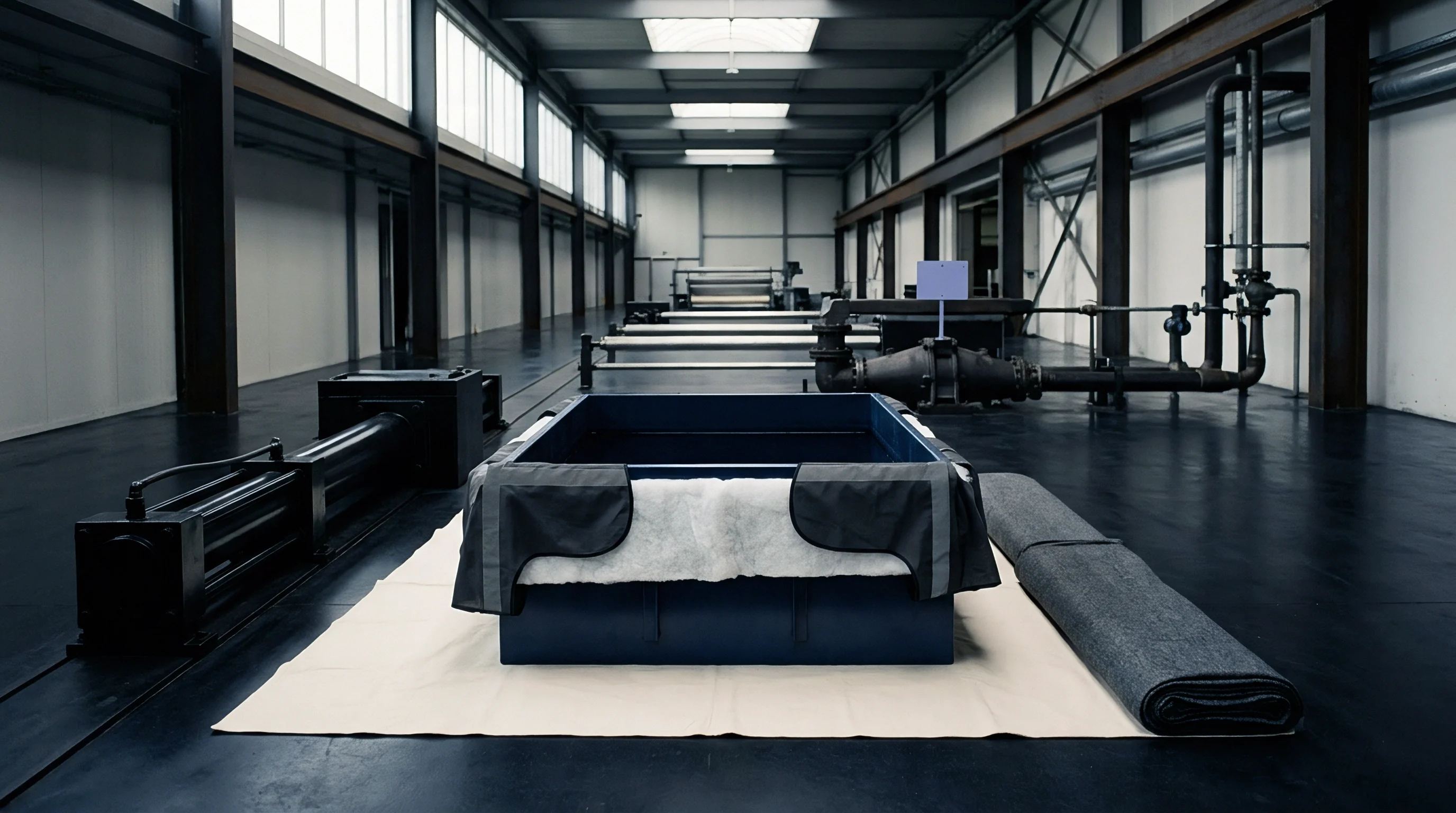
Direct expenditure in wet processing splits into chemical recipes, thermal energy, electrical power, fresh process water, wastewater remediation, and machine labor. Continuous operations require substantial initial setup yardage. Threading the accumulators, padder troughs, intermediate infrared pre-dryers, hot flue tunnels, steamer cavities, and multiple counter-current wash boxes consumes raw substrate that ends up discarded as off-shade lead cloth.
- Trough Volume Fill demands between 50 and 180 litres of active mixed chemical formulation before the main drive rolls begin rotation.
- Thread Path Tailoring consumes between 80 and 250 linear metres of greige goods merely to lace the machinery through tension rolls, steamers, and wash compartments.
- Scray Accumulator Operation generates continuous mechanical drag that distorts light plain weaves lacking sufficient warp crimp recovery.
- Nozzle Chamber Priming requires only five minutes of auxiliary pre-wash water cycling without sacrificing any greige leader yardage.
Jet vessels eliminate threading waste because operators sew greige fabric ends together inside the vessel nozzle to form an endless rope. The primary waste in batch operations concentrates in whole-bath dumps during multi-stage rinsing cycles. A reactive shade dyed on a 300-kilogram capacity jet requires salt, alkali for fixation, and up to seven consecutive bath fills to strip hydrolysed unfixed dye molecules from cotton fibers.
Selecting the incorrect mechanical application route causes severe unit margin erosion through unanticipated edge shading rejections across short yardages.
Steam
Thermal energy generation represents one of the largest controllable utility overhead items in wet processing operations. Boilers deliver saturated steam at gauge pressures between 6 and 10 bar to dyehouse heat exchangers, drying cylinders, and open-width wash boxes. Heating an aqueous bath from ambient well temperature up to 98 degrees Celsius for reactive boiling, or 130 degrees Celsius for polyester exhaust dyeing, demands massive natural gas therm consumption per kilogram of fiber.
Continuous steamers, by contrast, inject dry steam directly into compact vertical housings where atmospheric conditions lock air out to sustain saturated chemical reaction environments.
Caloric Balances across Processing Modes
Mass calculations illustrate the severe thermal penalties inherent to discontinuous processing. A jet dyeing machine running 500 kilograms of single jersey at an 8:1 liquor ratio heats 4,000 kilograms of water alongside the fiber mass. Elevating this mass across a temperature rise of 70 degrees Celsius consumes 1,171 megajoules of energy, ignoring radiation losses through uninsulated stainless vessel walls.
The subsequent neutralization, warm rinsing, soaping at 95 degrees Celsius, and cooling steps repeat this thermal demand across three separate bath exchanges.
Continuous pad-steam lines isolate thermal transfer to the active fabric mass plus the 70 percent wet pick-up liquid volume. A 500-kilogram lot traveling through an open-width steamer takes only 350 kilograms of water into the steam chamber. Direct condensation of atmospheric steam transfers latent heat at 2,257 kilojoules per kilogram instantaneously onto the textile face.
Thermal dwell times drop from sixty minutes down to sixty seconds. Total steam consumption per linear metre drops exponentially once the line reaches steady-state thermodynamic equilibrium.
| Processing System | Liquor Ratio or Pick-Up | Steam Demand (kg/kg Goods) | Fresh Water (L/kg Goods) | Electric Power (kWh/kg Goods) |
|---|---|---|---|---|
| Atmospheric Soft-Flow Jet | 7:1 Ratio | 4.2 | 68 | 0.35 |
| High-Temperature Jet | 6:1 Ratio | 3.8 | 58 | 0.42 |
| Semi-Continuous Cold Pad-Batch | 65% Pick-Up | 1.4 | 24 | 0.12 |
| Continuous Pad-Dry-Pad-Steam | 70% Pick-Up | 2.1 | 18 | 0.28 |
Cold pad-batch dyeing eliminates the thermal fixation step entirely. Pad-batch chemistry substitutes steam energy with ambient rotation dwell times spanning twelve to twenty-four hours on perforated A-frames. Chemical energy balances the thermodynamic deficit.
Cold pad-batch formulations demand elevated concentrations of sodium silicate or concentrated liquid caustic soda to elevate bath pH above 11.5, securing reactive dye covalent bonding at room temperature without boiler fuel expenditure.
Energy expenditure shifts from fuel gas combustion to chemical reagent loading when processing drops thermal fixation in favor of ambient dwell mechanics.
Sensible heat recovery from wastewater streams alters line economics. Modern finishing plants route outgoing wash water through plate-and-frame heat exchangers, recovering up to 40 percent of incoming boiler feed water requirements. This preheating step compresses the thermal cost gap on continuous ranges, whereas batch jet effluent discharges intermittently in high-volume, variable-temperature surges that complicate automated heat exchanger integration.
Thermal costs scale with water mass, leaving the leanest bath volume as the natural baseline for energy containment.

Equation
Mathematical modeling of direct manufacturing cost crossover requires isolating fixed setup expenditures from running variable rates. A buyer contracting fabric dyeing confronts two opposing financial curves. Discontinuous processing exhibits minimal setup costs but elevated variable costs per metre due to liquor ratios, chemical dilution, cycle cycle duration, and labour inputs per unit mass.
Continuous processing exhibits high fixed costs from leader fabric loss, line setup time, chemical mixing minimums, and cleanup cycles, accompanied by flat, low variable costs per metre.
Formulation of the Unit Cost Equilibrium Point
Let total direct manufacturing cost per finished linear metre be defined through fixed and variable components. The volume threshold where the unit cost of batch processing equals continuous processing represents the crossover yardage. The mathematical expression formalizes as follows:
Cost per metre discontinuous = (Setup Cost Discontinuous / Volume) + Variable Cost Discontinuous
Cost per metre continuous = (Setup Cost Continuous / Volume) + Variable Cost Continuous
Crossover Volume = (Setup Cost Continuous – Setup Cost Discontinuous) / (Variable Cost Discontinuous – Variable Cost Continuous)
To populate this relationship with operational parameters, specific variables must account for machine output rates, labor configurations, dye class efficiencies, and utility tariffs. The fixed continuous setup cost aggregates operator threading wages, chemical dump volume in the padder trough, and unrecoverable leader yardage scrap.
| Cost Component | Exhaust Jet Dyeing | Continuous Pad-Steam | Cold Pad-Batch |
|---|---|---|---|
| Setup Labour & Cleaning Cost per Shade Run | EUR 18.50 | EUR 95.00 | EUR 42.00 |
| Leader Yardage Loss Value per Run | EUR 0.00 | EUR 280.00 | EUR 35.00 |
| Trough Chemical Dump Loss per Run | EUR 0.00 | EUR 64.00 | EUR 18.00 |
| Direct Dyestuff & Chemical Cost per Metre | EUR 0.48 | EUR 0.36 | EUR 0.38 |
| Direct Utility Cost per Metre (Water/Gas/Elec) | EUR 0.22 | EUR 0.08 | EUR 0.05 |
| Direct Operating Labour Cost per Metre | EUR 0.14 | EUR 0.04 | EUR 0.06 |
| Total Variable Operating Cost per Metre | EUR 0.84 | EUR 0.48 | EUR 0.49 |
| Total Fixed Run Setup Cost | EUR 18.50 | EUR 439.00 | EUR 95.00 |
Applying the crossover equation between the exhaust jet and the continuous pad-steam route reveals the volume break-even point:
Crossover Volume = (439.00 – 18.50) / (0.84 – 0.48) = 420.50 / 0.36 = 1,168 linear metres.
Below 1,168 metres, the exhaust jet yields a lower manufacturing cost per finished metre. Above 1,168 metres, the continuous range provides substantial cost advantages. When comparing cold pad-batch against continuous pad-steam, the calculation shifts because setup costs on pad-batch are minimal, requiring no dry heat steamers or long wash train lacing:
Crossover Volume = (439.00 – 95.00) / (0.49 – 0.48) = 344.00 / 0.01 = 34,400 linear metres.
The thin variable margin between cold pad-batch and continuous pad-steam pushes their crossover far out into high industrial volumes. The primary differentiator between them hinges on shade reproducibility and fixation yield rather than basic utility costs.
Variable costs remain constant across volume runs.
Labour configurations introduce step functions into this theoretical line. A continuous range requires four skilled machine operators stationed across the feeder pad, steamer control panel, wash box cascade, and exit winder. Running a small 1,500-metre order ties up all four operators for forty-five minutes of processing plus an hour of wash-down and trough flushing.
A jet dyehouse distributes two operators across twelve closed vessels running automated microprocessor cycle routines.
Purchase order language stipulating full payment deductions for selvedge trim waste shifts the calculated financial crossover threshold upward by several hundred metres.
Yield losses from shade adjustments on continuous equipment cannot occur mid-process. An off-shade continuous run generates hundreds of metres of sub-standard product before spectrophotometric detection occurs. A batch machine allows laboratory additions directly into the vessel, correcting shade drift before fabric drainage occurs.
Supply agreements incorporating raw material waste caps penalize continuous processing heavily unless order sizes support uninterrupted multi-thousand-metre campaigns.

Drift
Physical tolerances across wet processing machinery govern whether an operation can sustain acceptable visual and structural parameters. While financial crossover formulas generate precise numerical thresholds, real processing lines encounter variations in fabric tension, nip deflection, pH balance, and reduction-oxidation potentials. When continuous machinery accelerates, mechanical stretching distorts the fabric sett, skewing warp crimp and picks per inch compared to relaxed exhaust processing.
Colorimetric Variance and Metamerism Mechanics
Laboratory dip confirmations rarely translate identically across competing application methods. Reactive dyestuffs rely on vinyl sulfone or monochlorotriazine reactive groups that exhibit distinct substantivity and exhaustion curves under varying electrolyte concentrations. In exhaust processing, high salt concentrations (typically 40 to 80 grams per litre of sodium sulfate) drive dye out of the aqueous phase onto the fiber before alkali introduction triggers covalent bonding.
Continuous dyeing eliminates migration phases. Dyes and auxiliaries are paddled simultaneously onto greige or prepared goods, frozen in position via intermediate infrared heaters, and fixed rapidly. If infrared lamps heat the front face more intensely than the reverse, moisture evaporates toward the heat source, dragging unbound dye particles through capillary suction toward the face.
This phenomenon, known as thermal migration, yields severe two-sidedness that fails visual inspection under standard D65 illuminants.
- Mechanical nip deflection checks along the rubber roller axis verify uniform line pressure from left to right, preventing side-center-side shade variation across wide fabrics.
- Alkali titration across continuous delivery lines guarantees consistent pH levels, preventing early hydrolysis of triazine chemistries inside the supply reservoir.
- Spectrophotometric analysis of head and tail swatches under ISO 105-J03 color measurement protocols confirms shade stability within a Delta E tolerance limit of 0.8 across runs exceeding 5,000 metres.
- Steam chamber wet-bulb calibration maintaining 100 degrees Celsius at 100 percent relative humidity precludes air ingress, preventing premature oxidation of vat dye leuco forms.
Cold pad-batch operations face distinct challenges termed tailing and listing. Tailing manifests when one component of a trichromatic dye recipe displays higher fiber substantivity than its companion dyestuffs. The more substantive dyestuff exhausts preferentially onto fabric passing through the padder trough, depleting its concentration faster than incoming fresh feed replenish rates can compensate.
The first 300 metres emerge dark and off-tone, while the tail runs light and deficient in the substantive component.
Fabric structures respond mechanically to the application route. Jet machines subject knit and loose woven structures to multidirectional hydrodynamic shearing, relaxing inherent spinning and weaving stresses. Dimensional stability after washing improves naturally in batch vessels because mechanical compaction occurs during tumbling.
Continuous open-width lines pull fabric under substantial warp tension through fifteen to twenty successive wash boxes.
Fabric processed under continuous longitudinal tension displays elevated warp shrinkage during subsequent domestic laundering tests executed under ISO 5077 specifications.
Tensile and tearing performance shifts according to processing tensions. According to ISO 13934-1 strip tensile tests, woven poplins dyed on continuous ranges exhibit lower elongation at break in the warp direction than identical greige yardage dyed in low-tension jiggers or soft-flow jets. Continuous machinery stretches yarn loops to their mechanical limit, exhausting crimp recovery capacity before drying cylinder heat sets the geometry permanently.
Dyehouse managers routinely claim that unavoidable bath temperature swings and minor operator metering errors prevent holding identical color limits across mixed processing routes.

Dispatch
Warehouse logistics, chemical shelf-life limitations, effluent discharge fees, and finished fabric delivery deadlines determine final sourcing execution. Sourcing specialists evaluating split routing between multiple contract facilities face varied supply chain friction points. A continuous mill functions on rapid throughput, turning raw greige goods into rolled, inspected, and palletized yardage within twenty-four hours of line start-up.
Batch houses operate within cycle constraints that compound lead times across multi-vessel schedules.
Commercial Verification and Sourcing Allocation
Effluent treatment capacity frequently caps discontinuous processing operations. A batch dyehouse consuming 80 litres of water per kilogram of cloth exhausts municipal discharge allowances rapidly when processing high-volume reactive or sulfur orders. High chemical oxygen demand and heavy salt loads incur severe wastewater surcharges from regional environmental authorities.
Continuous facilities with automated chemical metering and low liquor-to-goods footprints discharge concentrated, lower-volume effluent streams that simplify reverse osmosis and biological wastewater recovery systems.
Minimum order quantities set by mills reflect the physical crossover realities established in their machine costing models. Converter operations with continuous processing ranges typically reject purchase inquiries below 5,000 metres per colorway. Accepting smaller volumes forces the mill to absorb the fixed chemical trough dump and leader waste directly into their internal overhead or demand massive surcharges that turn quotes uncompetitive.
Sourcing offices that understand these equipment mechanics avoid sending sub-threshold volumes to continuous facilities, redirecting smaller development batches and seasonal boutique colorways to vertical commission houses equipped with soft-flow jet batteries or flexible jiggers.
Four-point fabric inspection systems executed under ASTM D5430 standards reveal distinct defect profiles tied directly to equipment selection. Jet dyeing exposes lightweight or loosely woven goods to rope marks, crow’s feet, and surface pilling driven by chamber friction. Continuous open-width processing preserves smooth fabric faces and eliminates rope crease deformities, but introduces risks of continuous line stops, pin marks, and edge-to-center shading defects that run uninterrupted across thousands of metres before detection.
Technical buyers examine cut swatches from both extremities of the shipping roll to verify that shade integrity holds across the entire bolt length before clearing bills of lading.