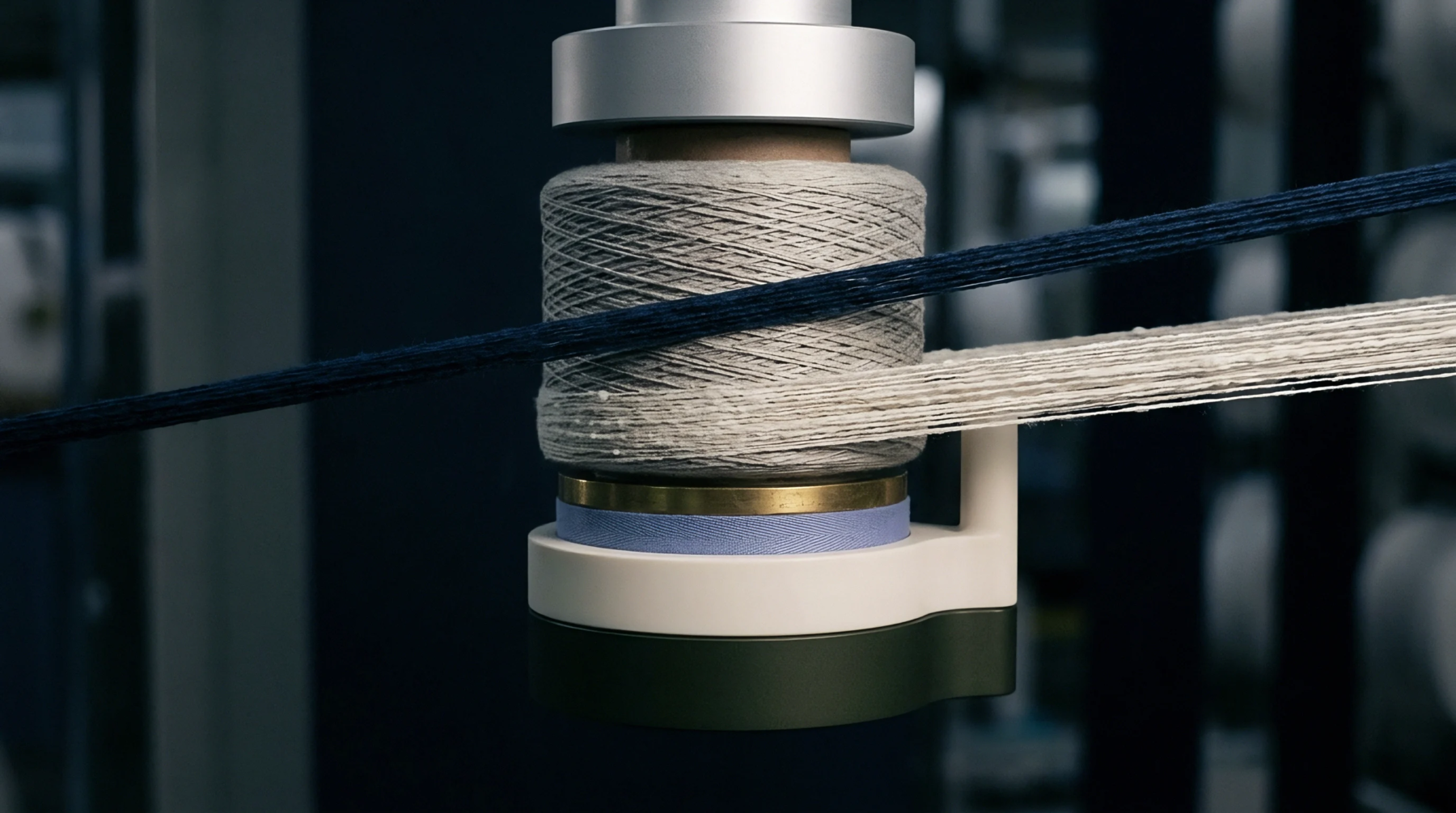
Yarn Quality Control Device
Electromechanical monitoring and cutting assemblies mounted directly along yarn paths in automatic package-winding machines form the principal barrier against physical defects in finished yarn cones. Recognized throughout spinning and textile processing facilities as a winding clearer, this inline instrument evaluates continuous textile strands at production speeds to excise yarn faults. The unit houses measuring sensors, high-speed microprocessor boards and mechanical cutting knives within a compact modular housing.
Its monitoring parameters isolate mass variations, hairiness shifts, foreign polymer contaminants and irregular splice profiles. The clearer arrests defective yarn lengths before they transfer onto high-density shipping cones intended for subsequent processing.
Sensor Discipline Operation
Modern clearer units employ capacitive, optical, or dual-sensor technologies to continuously monitor travelling yarn strands. Capacitive sensor variants pass the running strand through a high-frequency electric field between sensor plates, reading mass shifts through changing dielectric properties. Optical clearer heads employ infrared emitters and photodiode arrays to measure yarn diameter silhouettes from multiple viewing angles.
Advanced units pair optical and capacitive sensors together within a single housing, enabling the unit to separate low-density synthetic film contaminants from high-density seed coat fragments. The clearer microcomputer evaluates these sensor inputs against preset clearing matrix coordinates in real time.
Cutting and Splicing Integration
Detection of an out-of-spec defect triggers a rapid electromagnetic or pneumatic solenoid that drives a hardened steel cutter across the yarn path. The severed defective section stops travelling, and the winder’s suction arms retrieve the upper and lower yarn ends to transport them into an automatic splicing chamber. The winding clearer then scans the newly formed splice to confirm structural integrity, tensile security and correct mass profile before winding resumes.
Defective splices are cut and reworked automatically. This continuous cycle prevents slubs, long thin places and plastic film fragments from entering downstream weaving and knitting production channels.
Maintenance and Verification Protocols
Mill quality control technicians verify clearer performance using calibrated test bobbins containing simulated fault profiles. Accumulations of cotton lint, processing wax or sizing compounds within the measuring corridor cause baseline drift, resulting in missed defects or excessive false cuts. Automatic winders implement scheduled air blasts to clean the sensor gaps between bobbin cycles.
Clearer performance data transfers through central plant networks to generate Classimat defect distribution reports across the entire spinning operation. These reports provide production managers with clear insights into carding, drawing and ring spinning efficiency across the mill.