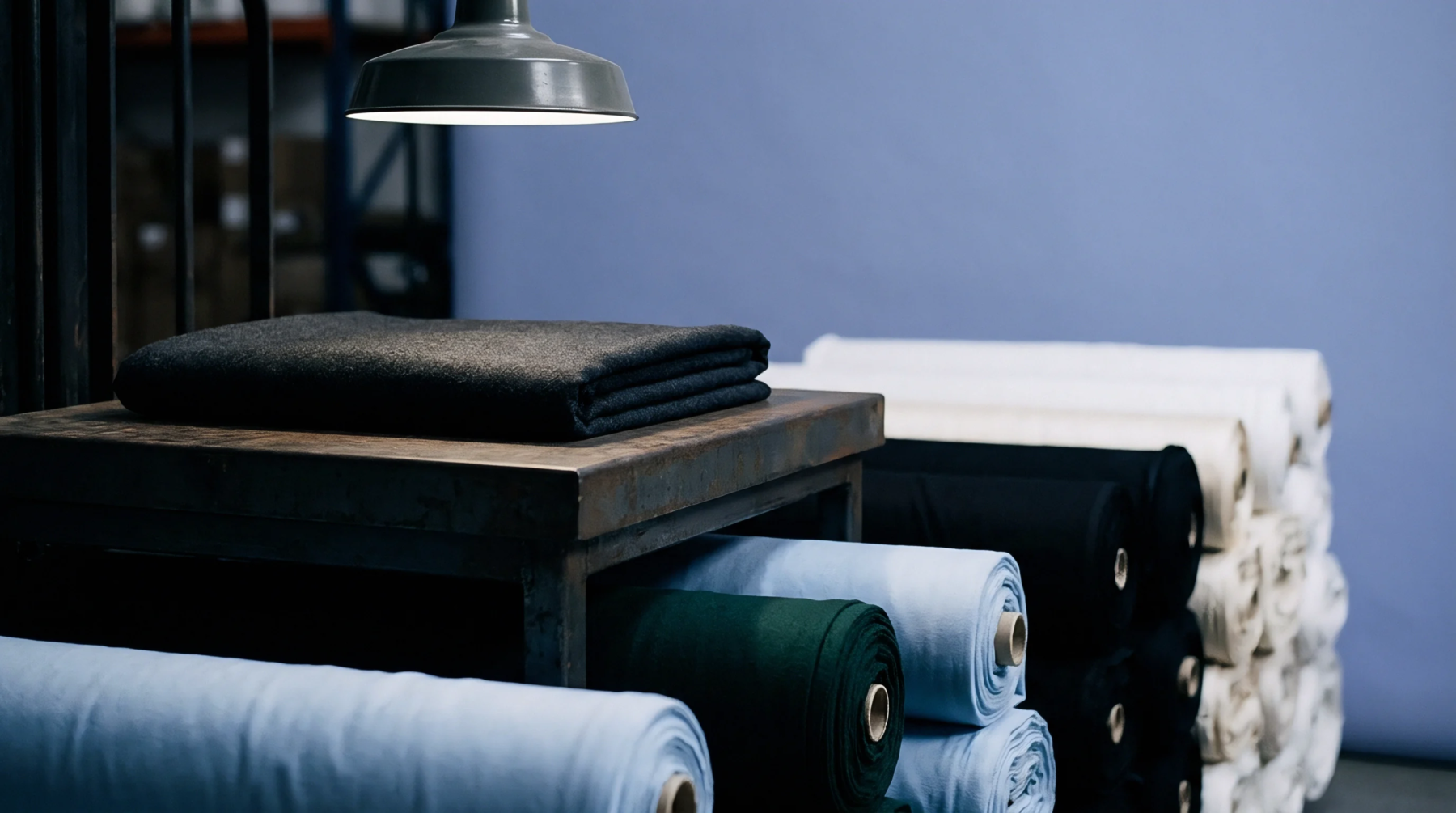
Textile Standard Alignment
Technical verification protocols ensure that interlaced warp and weft fabric constructions satisfy regulatory safety standards and buyer quality specifications before bulk garment manufacturing begins. The broader framework of woven fabric compliance dictates whether a finished mill lot meets dimensional stability, colorfastness, and chemical safety criteria. This verification regime governs physical woven substrate performance and does not apply to knitted structures or nonwoven web materials.
Physical Test Parameter
Laboratory testing evaluates structural durability through standardized mechanical test methods before fabric approval. Establishing woven fabric compliance requires measuring tensile strength, seam slippage, tearing resistance, and skewing across representative bulk swatches. For example, a heavy cotton twill intended for workwear garments must demonstrate a minimum tensile breaking force of four hundred newtons and less than three percent dimensional change after washing.
If seam slippage testing shows thread separation at low load levels, the fabric lot fails compliance and cannot proceed to garment assembly.
Quality Control Verification
Mill inspections verify that bulk production runs maintain consistent yarn counts, weave density, and finishing treatments across all dye lots. Achieving woven fabric compliance involves testing fastness to rubbing, washing, and light exposure using standardized rating scales. Inspection teams compare bulk lot lab dips against approved master shade standards under standardized light boxes.
Failure to meet fastness requirements causes crocking or color bleeding during consumer wear, resulting in commercial chargebacks against the weaving mill.
Production Clearance Boundary
Authorized laboratory test reports validate woven fabric quality before cutting room operations begin laying out yardage. Verification under woven fabric compliance ends once bulk fabric passes final warehouse inspection and enters factory production lines. Garment assembly flaws, such as improper needle sizing or sewing tension defects, fall under garment manufacturing quality assurance rather than mill fabric compliance parameters.