Degradation Metric
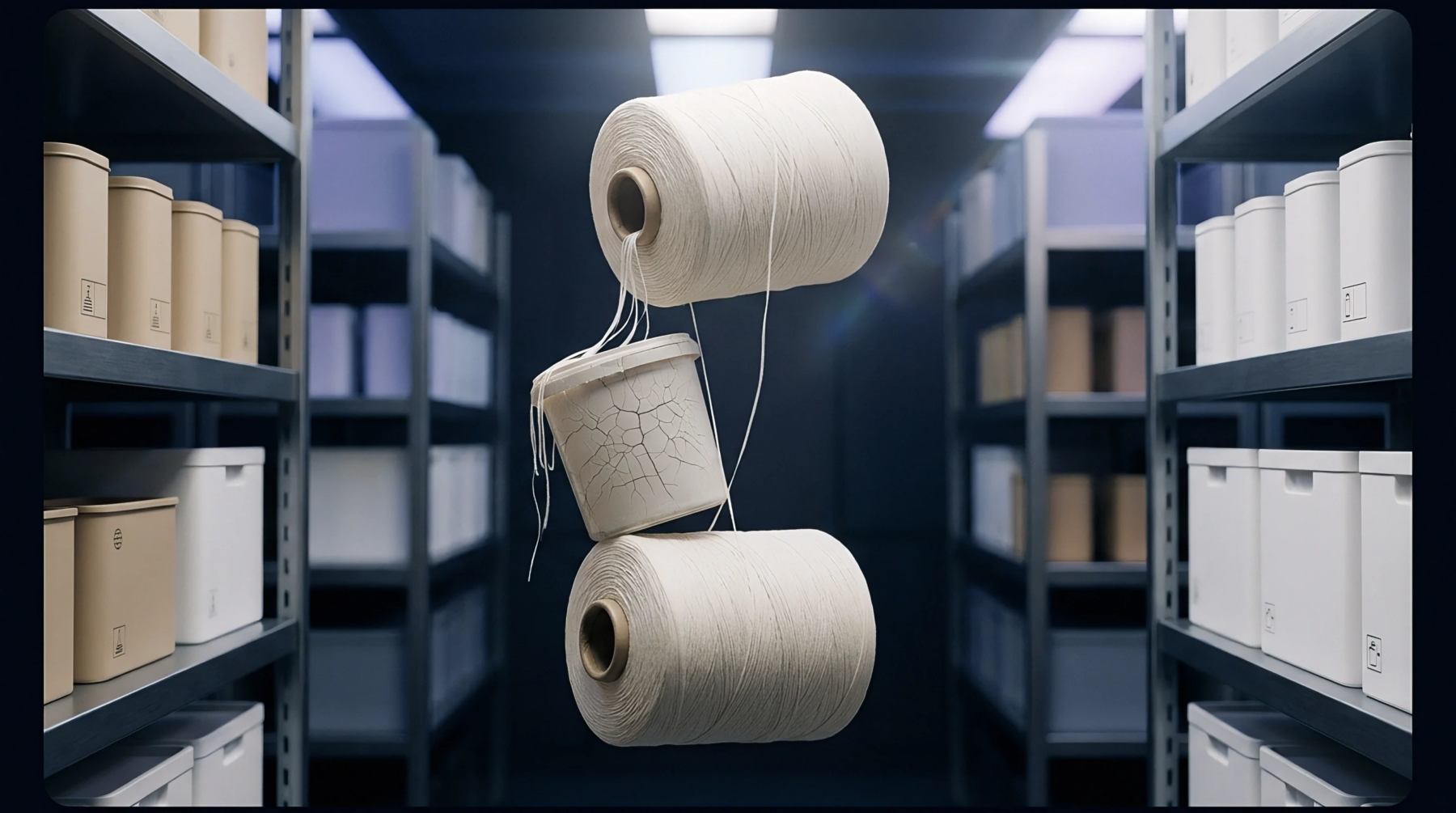
Reductions in breaking force per unit linear density reflect structural polymer cleavage or mechanical fiber shearing sustained during spinning, chemical bleaching or industrial finishing. Measurable yarn tenacity loss quantifies the drop from greige breaking strength to finished yarn performance, usually expressed in centinewtons per tex. Tensile degradation occurs when aggressive processing shears internal molecular chains or damages outer fiber jackets.
Excessive losses cause fabric tears during high-speed knitting, warp breaks during high-tension weaving, and seam splits in finished garments. Quality checkpoints monitor breaking tenacity before bulk lots receive production approval.
Chemical Attack
Aggressive chemical treatments represent the primary cause of polymer depolymerization in natural and regenerated cellulosic fibers. Notable yarn tenacity loss follows unbuffered hydrogen peroxide bleaching, severe enzymatic scouring, acidic stone washing or resin finishing for crease recovery. Acid cross-linking resins stiffen cellulose polymer networks, reducing fiber flexibility and lowering tensile resistance by up to forty percent.
Processing mills introduce polyethylene softeners and polyurethane emulsions to mitigate mechanical embrittlement caused by chemical resin finishes. Strict temperature and pH limits prevent excessive hydrolytic damage during batch wet finishing.
Tensile Assessment
Mechanical testing involves measuring breaking loads on automated constant-rate-of-extension tensile testing instruments under standardized laboratory atmospheres. Detecting yarn tenacity loss requires pulling conditioned yarn skeins or single strands to absolute rupture while recording peak tenacity and elongation percentages. Comparing tested values against greige control samples exposes processing damage along each step of the dyeing and finishing route.
High coefficients of variation across tenacity readouts reveal localized chemical overtreatment or uneven yarn twist. Standard quality assurance protocols flag yarn lots dropping below contracted breaking thresholds.
Knitted Failure
Severely weakened yarns cannot withstand yarn guides, needle impacts and tension variations encountered on modern high-speed circular knitting machines. Severe yarn tenacity loss leads directly to frequent machine stoppages, needle breakage, dropped stitches and excessive cut-edge fabric waste. Garments constructed from degraded yarns exhibit reduced burst strength, poor abrasion resistance and rapid hole formation at high-stress seams.
Downstream clothing brands reject finished yardage exhibiting uncontracted strength degradation to prevent post-consumer product failure.