Coupled Microenvironmental Acid Diffusion and Cellulose Hydrolytic Cleavage Kinetics within Dense Continuous Bleaching Ropes
Dense continuous bleaching ropes trap acid inside yarn cores, lowering microenvironmental pH and accelerating cellulose hydrolysis unless wash flow forces liquor exchange.


Plait

Continuous Strand Packing and Dynamic Compaction
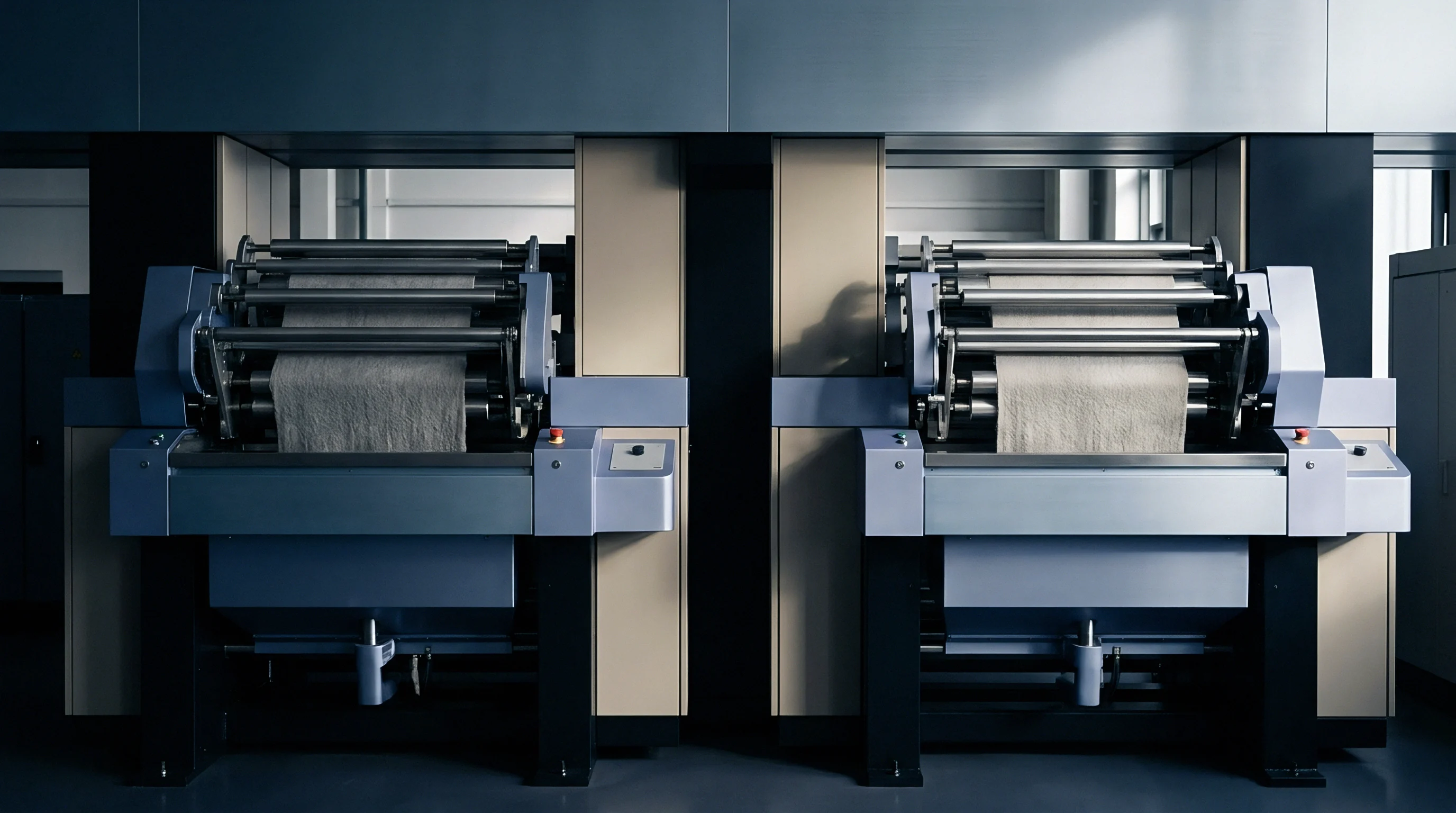
Running cotton knits and heavy wovens through continuous bleaching ranges forces flat fabric tubes into compressed ropes. In high-speed J-boxes and continuous washing conduits, guidance rings pack these ropes into dense volumetric bundles, pushing core mass density to between 0.35 g/cm³ and 0.58 g/cm³ ~ far above an uncompressed wet web density of under 0.12 g/cm³. Tight packing squeezes free liquor out of inter-yarn gaps while restricting fluid exchange inside internal fiber capillaries, while mechanical folding repeatedly bends and twists the moving strand under longitudinal tension.
Inside the bundle core, hydrodynamic boundary conditions shift radically. External wash agitation creates turbulent shear along the outer boundary of the strand, but fluid motion within intra-yarn pore networks drops near zero. As the strand moves through bath stages at speeds exceeding 150 metres per minute, stagnant interstitial liquor remains trapped inside the interior multi-end structure.
Mass transfer between the external bath and internal yarn cores relies almost entirely on molecular diffusion rather than convective fluid exchange, preventing rapid displacement of chemicals when fabric moves from alkaline peroxide bleaching into acid neutralization baths.
Denser rope compaction forces liquor transport to shift from convective bath exchange to slow molecular diffusion through intra-yarn capillaries.

Boundary Layer Fluid Entrapment
Rope washers rely on high-impact liquor jets and squeeze rolls to force fluid renewal across running strands, applying linear nip pressures from 30 to 80 N/mm to express residual chemicals. While squeeze rolls flatten outer yarn layers, core yarns within dense multi-layer folds receive reduced pressure transfer. Liquid trapped inside protected folds escapes displacement during short nip dwell times lasting under 15 milliseconds, leaving internal capillary channels with spent alkaline bleach or concentrated acid sours regardless of external wash flow rates.
Chemical residence times inside compressed rope cores exceed bulk bath dwell times by factors of four to twelve. In continuous sours following sodium hydroxide scouring or hydrogen peroxide bleaching, organic or inorganic acids enter outer fabric layers rapidly while inner cores maintain distinct chemical microenvironments. Localized stagnation prevents uniform distribution of neutralizer chemistry throughout the yarn matrix, and core degradation patterns are frequently mistaken for uneven chemical additions at the dosing pump rather than hydrodynamic isolation within the strand.


Gradient
Microenvironmental Ph Shifts in Entrapped Boundary Layers
Proton transport within dense cotton assemblies produces severe spatial concentration differences between external wash liquors and intra-yarn fluid. Bulk bath instrumentation reading a macro-pH of 4.5 frequently masks an internal core microenvironment operating at pH values below 2.0. As wet fabric sours pass through acid neutralization stages containing acetic, formic, or dilute sulfuric acid, hydronium ions diffuse inward down concentration slopes.
While neutralizing residual alkali inside inner fiber networks consumes hydronium ions rapidly, localized acid dosing spikes create proton accumulation whenever liquor exchange lags behind bath delivery.
Capillary walls carrying negative surface charges from carboxylation during alkaline bleaching create electrical double layers that alter ionic mobility. Small hydronium ions diffuse faster through water than larger acid anions, establishing localized charge imbalances and streaming potentials across internal fiber pores. Meanwhile, thermal energy from upstream hot bleaching stages remains stored within interior yarn folds due to poor convective cooling, keeping core temperatures at 85°C to 95°C while surface layers cool to bulk bath temperatures of 60°C. Coupled high proton activity and elevated thermal energy create severe localized degradation zones.
| Rope Packing Density (g/cm³) | Bulk Bath pH | Core Microenvironment pH | Bulk Bath Temp (°C) | Core Microenvironment Temp (°C) | Liquor Exchange Rate (mL/g/min) |
|---|---|---|---|---|---|
| 0.20 | 4.5 | 4.1 | 60 | 62 | 14.2 |
| 0.32 | 4.5 | 3.2 | 60 | 74 | 6.8 |
| 0.45 | 4.5 | 2.1 | 60 | 83 | 2.1 |
| 0.55 | 4.5 | 1.7 | 60 | 91 | 0.7 |
Mass Transport Barriers in Intra-Yarn Capillaries
Intra-yarn physical structure governs the rate of chemical equilibration across running fabric strands. Multi-filament yarn twist levels, fiber cross-sectional maturity, and fabric tight cover factors dictate the tortuosity of diffusion pathways inside the strand core, with high warp end counts in dense continuous wovens building physical barriers to transverse fluid flow.
- Inter-fiber capillary tortuosity lengthens the effective path hydronium ions must travel to escape compressed yarn cores.
- Fiber surface swelling under alkaline precursor conditions closes microscopic pores and delays subsequent acid penetration during souring.
- Hydrodynamic stagnation layers surrounding tight fiber bundles resist fluid displacement by external washer spray bars.
- Thermal retention zones inside dense rope folds prevent rapid dissipation of process heat accumulated during steaming steps.
Quantifying intra-yarn proton diffusion requires resolving coupled differential equations combining Fickian diffusion coefficients with chemical reaction consumption rates. Hydronium ion diffusion constants inside cotton pores drop from bulk liquid values of 9.3 x 10⁻⁵ cm²/s down to less than 1.1 x 10⁻⁵ cm²/s due to pore constriction and electroviscous effects. Accelerating strand velocity without increasing washer dwell time steepens chemical gradients, sending inner yarn bundles laden with high localized acidity straight into downstream drying units where proton accumulation attacks internal polymer chains.
At rope packing densities above 0.45 g/cm³, interior intra-yarn microenvironmental pH drops below 2.1 despite external bath monitoring holding stable at pH 4.5.

Scission

Acid-Catalyzed Glycosidic Bond Hydrolysis Kinetics
Protonation of the oxygen link joining anhydroglucose units initiates catalytic degradation of cotton cellulose. Hydronium ions present in localized low-pH microenvironments transfer protons to either the glycosidic oxygen atom or the cyclic ring oxygen of the cellulose chain, forming an unstable oxocarbenium ion intermediate along the polymer backbone. Subsequent slow nucleophilic attack by trapped water molecules breaks the beta-1,4-glycosidic bond, generating a shorter polymer chain with a new reducing end group.
Reaction rates for hydrolytic chain degradation follow pseudo-first-order kinetics driven by hydronium ion activity and thermal excitation. The kinetic rate constant k follows an Arrhenius relationship where activation energy Ea ranges from 105 to 112 kJ/mol depending on cellulose crystallinity. At localized core conditions of pH 1.8 and 90°C, the scission rate constant accelerates by a factor of 45 relative to surface conditions of pH 4.0 and 60°C.
Localized hydrolytic scission reduces the average degree of polymerization of cotton cellulose before external tensile testing reveals surface fabric damage.
Which Neutralization Parameters Prevent Hydrolytic Degradation?
Controlling process variable interactions prevents catastrophic loss of polymer chain length during continuous souring. Continuous bleaching ranges operating at high fabric throughput must balance acid dosing concentration, neutralization dwell time, wash water volume, and strand dwell temperature. A detailed kinetic step-through allows dyehouse engineers to calculate acceptable exposure windows.
- Determine baseline cotton cellulose intrinsic viscosity in accordance with ISO 5351 prior to acid processing stages.
- Convert intrinsic viscosity measurements to viscosity-average degree of polymerization using established Mark-Houwink constants for cupriethylenediamine solvent.
- Measure core microenvironmental pH using localized extraction sampling from tightly compressed rope sections immediately after souring squeeze nips.
- Calculate the maximum allowable thermal residence time at measured core pH values before degree of polymerization drops below critical specification thresholds.
- Adjust washer liquor flow rates and squeeze nip pressures until core microenvironmental pH matches bulk bath target values within 0.5 pH units.
Consider a continuous bleaching run processing 40,000 metres of 380 g/m² dense cotton woven canvas. The greige fabric enters wet processing with an initial cellulose degree of polymerization of 2,350. Standard processing targets require a finished degree of polymerization of at least 1,800 to maintain required tear and tensile parameters.
If improper washing allows core microenvironmental conditions to reach pH 1.9 at 88°C for a cumulative dwell time of 8 minutes across accumulators and dryers, the kinetic scission rate constant reaches 3.8 x 10⁻⁰ min⁻¹.
Executing kinetic rate equations under these localized parameters shows the degree of polymerization dropping from 2,350 down to 1,020. This structural breakdown reduces fabric strip tensile strength under ISO 13934-1 from an initial 850 N to less than 410 N in the warp direction. Squeezing excess acid out without adequate dilution washing accelerates degradation during subsequent stenter drying as moisture evaporates and local acid concentrates further.
Failure to regulate internal microenvironmental pH during continuous souring results in total loss of fabric commercial value through widespread tenderizing and strength rejection.


Assay

Laboratory Qualification of Polymer Degradation and Strength Loss
Detecting hydrolytic damage requires analytical methods that isolate chemical polymer degradation from mechanical fiber damage. Viscometric measurement of intrinsic viscosity using cupriethylenediamine solvent provides direct quantification of cellulose molecular weight loss. ISO 5351 specifies capillary viscometry protocols that dissolve dry, bleached cotton fibers into standardized copper-ethylene-diamine solutions under nitrogen atmospheres, where reductions in intrinsic viscosity reflect glycosidic bond scission occurring deep within yarn structures.
- Intrinsic viscosity testing per ISO 5351 measures molecular weight loss independent of fabric weave geometry or yarn count.
- Strip tensile determination under ISO 13934-1 measures ultimate load capacity and extension of conditioned fabric specimens.
- Pneumatic burst testing per ISO 13938-1 quantifies multi-directional structural integrity in knitted continuous bleaching ropes.
- Flex abrasion resistance under ISO 12947-2 assesses surface fiber degradation and resistance to mechanical wear.
Mechanical physical testing complements chemical viscometry by mapping molecular damage to performance degradation. ISO 13934-1 fabric strip tests reveal localized tenderizing through high variance in break loads across warp ends taken from rope core zones versus rope outer edges, as uncontrolled acid exposure causes uneven tensile loss across the width of unfolded strands.
| Exposure Condition (Core pH / °C / min) | Intrinsic Viscosity ISO 5351 (mL/g) | Calculated DP (Viscosity Average) | Warp Tensile Retention ISO 13934-1 (%) | Martindale Abrasion ISO 12947-2 (Rubs to Breakdown) |
|---|---|---|---|---|
| Greige Control (No Exposure) | 980 | 2310 | 100.0 | 45,000 |
| pH 4.5 / 60°C / 5 min | 920 | 2140 | 97.5 | 43,500 |
| pH 3.0 / 75°C / 8 min | 740 | 1670 | 82.1 | 31,000 |
| pH 2.0 / 85°C / 10 min | 510 | 1090 | 54.3 | 16,500 |
| pH 1.6 / 95°C / 12 min | 320 | 630 | 31.0 | 6,000 |
Integrating chemical and physical limits into procurement contracts protects buyers against latent hydrolytic damage. Standard quality specifications define minimum acceptable intrinsic viscosity values post-bleaching alongside conventional weight and width targets, establishing clear commercial allocation of technical risk.
Finished fabric specifications incorporating ISO 5351 intrinsic viscosity limits below 750 mL/g mandate immediate lot rejection due to irreversible cellulose chain degradation.
Standard delivery contracts enforce that bleached cotton fabrics exhibit an intrinsic viscosity of not less than 780 mL/g under ISO 5351 while maintaining a minimum of 85 percent tensile strength retention relative to greige parent lots under ISO 13934-1.

Liability
Commercial Allocation of Wet Processing Damage
Financial exposure resulting from acid tenderizing during continuous rope bleaching falls upon the converter or vertical dyehouse operating the continuous range. When finished goods fail tensile specifications or exhibit catastrophic strength loss after garment washing, origin tracing depends on viscometric verification: mechanical damage from aggressive calenders or over-stretched stenter frames leaves cellulose intrinsic viscosity intact, whereas acid hydrolysis depolymerizes the polymer matrix.
Dyehouse quality assurance systems install inline pH sensors, automatic wash water flow controllers, and continuous temperature logging along bleaching ranges to mitigate tenderizing risks. Audit protocols require mills to maintain continuous records of wash box liquor turnover ratios, squeeze roll pressure calibration logs, and acid dosing pump rates. When a buyer submits a formal commercial claim for tendered fabric, the mill must present batch viscometric records corresponding to the specific production lot.
Chargeback calculations for acid-damaged cloth encompass total landed material costs, freight charges, cutting losses, and garment manufacturing labor expended prior to failure detection. If a 20,000-metre continuous bleaching lot shows an intrinsic viscosity drop below 500 mL/g, total garment construction utility collapses. Re-finishing cannot restore broken glycosidic bonds, and industrial scrap recovery value for severely tenderized cotton fabric represents less than three percent of landed fabric cost.
Clear contractual boundaries prevent disputes regarding whether fiber strength loss originated from raw cotton ginning degradation or chemical damage in wet processing ranges. Specification sheets incorporating clear viscometric thresholds establish definitive proof of liability. Souring operations maintaining high liquor exchange ratios protect underlying cotton polymer structures while fulfilling neutralization goals, making intrinsic viscosity retention above minimum thresholds the primary technical benchmark for acceptable continuous bleaching execution.