Continuous Perchlorethylene Scouring Kinetics Impact on Polyester Filament Molecular Weight
Continuous perchlorethylene scouring degrades polyester molecular weight only when trace moisture and thermal breakdown generate hydrolytic acid cleavage.
Scission
Continuous open-width preparation exposes polyethylene terephthalate filaments to chlorinated organic solvents to remove synthetic spin finishes, knitting oils, and weaving wax residues. Scouring with perchlorethylene runs at elevated temperatures to speed up grease dissolution and maintain line throughput. Because polyester filament integrity relies on a high degree of polymerization through extrusion, drawing, and post-processing, chemical degradation during solvent washing alters molecular weight distribution and degrades yarn performance during high-speed warping, weaving, and heat setting.
Chemical Stability of PET in Chlorinated Solvents
At room temperature, anhydrous tetrachloroethylene barely reacts with ester linkages in polyethylene terephthalate, dissolving surface lubricants through simple physical action. Pure perchlorethylene does not hydrolyze polyester. When scouring baths run between 60 degrees Celsius and 90 degrees Celsius in open-atmosphere setups, however, thermal exposure combined with atmospheric moisture brings reactive water molecules into the solvent phase, altering chemical stability.
Thermal breakdown of perchlorethylene occurs via oxidative mechanisms that generate trace hydrogen chloride, phosgene, and trichloroacetyl chloride. In non-aqueous media, hydrogen chloride acts as a strong hydronium donor, catalyzing ester bond breakdown at elevated temperatures. This cleavage shortens the average polymer chain length and shifts molecular weight parameters.

Trace Water Hydrolysis Kinetics and Auto Catalysis
As moisture enters warm solvent tanks, conditions turn favorable for bond cleavage. Water solubility in perchlorethylene is low ~ around 0.015 percent by weight at 25 degrees Celsius ~ but climbs past 0.045 percent by weight at 80 degrees Celsius. Hydrolysis breaks the polymer backbone, converting an ester bond into terminal carboxylic acid and hydroxyl groups with each scission event.
Carboxylic acid end-groups then accelerate further hydrolysis through auto-catalysis. The kinetic rate equation for ester hydrolysis in solvent-bound polyester filaments follows second-order kinetics, tracked by the change in carboxylic acid end-group concentration over time:
d / dt = k
Moisture acts as the active reactant here. Raising water concentration from 0.01 percent to 0.05 percent by weight in acidic perchlorethylene increases the rate constant k by an order of magnitude at 85 degrees Celsius. Without active desiccant loops or solvent drying systems, continuous scouring lines gather moisture from ambient humidity and damp greige yarn moving through the wash boxes.
Trace moisture levels exceeding 0.04 percent by weight in perchlorethylene at 85 degrees Celsius accelerate polyester ester bond hydrolysis by a factor of four.
Chemical failure modes during continuous solvent processing emerge from distinct physical and operational mechanisms:
- Hydrolytic Ester Cleavage occurs when dissolved water molecules attack electron-deficient carbonyl carbons along the polyester chain backbone at elevated temperatures.
- Acid-Catalyzed Solvolysis proceeds when thermal decomposition products of perchlorethylene generate free hydrogen chloride, accelerating ester bond cleavage.
- Thermal Degreasing Scission develops in stagnant bath zones where local temperatures exceed 100 degrees Celsius near heating coils without adequate agitation.
- Auto-Catalytic Propagation advances as newly formed carboxyl terminal groups lower internal local pH within the solvent-swollen polymer matrix.
Acid values track bond breakage. Unchecked generation of terminal acid groups permanently alters the chemical composition of the filament core.
| Solvent Temperature (°C) | Water Content (wt%) | Dwell Time (s) | Initial Carboxyl Value (mmol/kg) | Final Carboxyl Value (mmol/kg) | Intrinsic Viscosity Loss (%) |
|---|---|---|---|---|---|
| 50 | 0.010 | 30 | 18.2 | 18.3 | 0.05 |
| 70 | 0.025 | 60 | 18.2 | 18.9 | 0.38 |
| 85 | 0.045 | 90 | 18.2 | 21.4 | 1.42 |
| 95 | 0.080 | 120 | 18.2 | 26.8 | 4.15 |
If water concentrations drift past critical limits in warm solvent wash systems, severe tensile failures and raw material losses ripple through downstream knitting lots.
Vapor
Immersion in solvent alters the physical structure of synthetic polymers by plasticizing non-crystalline regions. Polyethylene terephthalate consists of tightly packed crystalline lamellae set in an amorphous polymer matrix. Small halogenated solvent molecules enter these amorphous zones, swelling the matrix and weakening van der Waals forces between neighboring polymer chains.
Plasticization Dynamics and Tg Depression
Unmodified dry polyester exhibits a glass transition temperature near 78 degrees Celsius. Immersion in warm perchlorethylene depresses this transition point significantly, with solvent absorption dropping the effective glass transition temperature of amorphous PET down to between 35 degrees Celsius and 45 degrees Celsius.
Plasticization increases segmental mobility at temperatures well below standard thermal processing thresholds. Expanding free volume within the polymer matrix allows dissolved water and acidic catalytic species to diffuse directly into the internal filament core rather than remaining on the outer boundary.

Solvent Diffusion Coefficients and Matrix Swelling
Diffusion of perchlorethylene into polyester follows Fickian kinetics below the depressed glass transition temperature, transitioning to non-Fickian Case II transport as thermal energy approaches 80 degrees Celsius. The solvent diffusion coefficient D increases exponentially with bath temperature:
D = D0 exp(-Ea / (R T))
Measured activation energy Ea for perchlorethylene diffusion into fully drawn polyester filaments ranges from 48 to 56 kilojoules per mole. High line speeds limit total exposure, yet high solvent temperatures accelerate volumetric swelling rates.
Oligomer Extraction versus Polymer Chain Scission
Raw polyester filaments contain between 1.2 percent and 3.0 percent by weight of low molecular weight linear and cyclic oligomers, mostly cyclic trimer. Hot solvent treatment leaches these smaller species out of the swollen fiber matrix.
Dissolution of cyclic trimer reduces raw fiber mass without cleaving covalent bonds in high molecular weight polymer chains. Distinguishing mass loss caused by oligomer extraction from mass loss caused by backbone polymer chain scission represents a foundational analytical challenge in scouring verification. Oligomer extraction alters overall density and optical reflectance, whereas backbone scission permanently reduces average molecular weight.
Brief exposure times may not prevent solvent molecules from penetrating into crystalline filaments to cause structural rearrangement.

Viscosity
Quantifying macromolecular chain length changes after solvent processing requires precise analytical techniques. Intrinsic viscosity provides a direct empirical measure of polymer chain length in solution. Analytical laboratories dissolve scoured polyester filaments in specific solvent mixtures to measure flow times through calibrated glass capillary viscometers under tightly controlled thermal conditions.
Does Solvent Extraction Reduce Intrinsic Viscosity?
Solvent treatment alters measured viscosity figures through two simultaneous physical phenomena. Selective leaching of low molecular weight oligomers increases the average molecular weight of the remaining fiber, slightly raising intrinsic viscosity. Conversely, acid-catalyzed hydrolytic scission severs high molecular weight polymer chains, driving intrinsic viscosity down.
When scouring baths remain dry and neutral, oligomer extraction dominates, causing a slight apparent increase in intrinsic viscosity of 0.005 to 0.010 decilitres per gram. When baths contain trace moisture and acidic decomposition products, backbone chain scission dominates, decreasing intrinsic viscosity by 0.020 to 0.060 decilitres per gram. Net viscosity shifts reflect the competitive kinetic balance between oligomer extraction and backbone scission.
Capillary Viscometry Procedures under ISO 1628-5 and ASTM D4603
Standard testing protocols require strict operational control to yield reproducible results across production batches. Dissolving polyester requires aggressive solvent systems operating at controlled temperatures.
- Dry the scoured polyester filament sample at 105 degrees Celsius for 120 minutes in a vacuum oven to remove absorbed moisture.
- Weigh exactly 0.2500 grams of dried sample into a clean volumetric flask using an analytical balance accurate to 0.1 milligrams.
- Add 50.0 millilitres of solvent mixture containing equal mass ratios of phenol and 1,1,2,2-tetrachloroethane.
- Heat the mixture to 110 degrees Celsius under gentle agitation for 30 minutes until complete fiber dissolution occurs.
- Cool the solution to 30.0 degrees Celsius and transfer to a calibrated Ubbelohde capillary viscometer mounted in a thermostatic water bath maintained at 30.00 plus or minus 0.01 degrees Celsius.
- Record efflux time for the pure solvent blank and the polymer solution using automated optical timing sensors.
- Calculate relative viscosity, specific viscosity, and intrinsic viscosity using the Billmeyer equation:
Intrinsic Viscosity = (0.25 (Relative Viscosity – 1) + 3 ln(Relative Viscosity)) / Concentration
Compliance with ISO 1628-5 standard requirements mandates a solvent blank viscosity correction when evaluating perchlorethylene-treated polyester filaments.
Gel Permeation Chromatography and Molecular Weight Distributions
Capillary viscometry returns a single average metric, whereas gel permeation chromatography separates polymer chains by hydrodynamic volume, yielding absolute molecular weight distribution profiles. Chromatographic analysis measures number average molecular weight Mn, weight average molecular weight Mw, and polydispersity index Mw / Mn.
Hydrolytic chain scission increases polydispersity initially as long chains sever randomly. Continued scission shifts both Mn and Mw toward lower molecular weight regions. Gel permeation chromatography requires hexafluoroisopropanol or o-chlorophenol mobile phases at elevated temperatures to ensure full polymer solubility during column elution.
Incorporating ASTM D4603 test methodology with mandatory blank solvent correction into commercial purchasing agreements prevents misinterpreting oligomer extraction as polymer chain destruction.

Tenacity
Mechanical load capacities of synthetic yarns correlate directly with polymer chain continuity. Polyester filament yarns derive tensile strength from aligned crystalline domains connected by taut tie molecules traversing amorphous regions. Molecular weight reductions decrease the number of effective tie molecules per unit volume, compromising stress distribution under external tension.

Correlation between Intrinsic Viscosity and Filament Tensile Strength
Tenacity measures breaking force normalized to linear density, expressed in centinewtons per tex. Fully drawn industrial polyester yarns typically exhibit intrinsic viscosity values between 0.82 and 0.95 decilitres per gram, delivering tenacities from 75 to 88 centinewtons per tex. High-tenacity apparel yarns maintain intrinsic viscosity levels between 0.64 and 0.68 decilitres per gram, yielding tenacities of 42 to 52 centinewtons per tex.
Scission reduces filament tenacity directly. Small losses in intrinsic viscosity produce non-linear drops in yarn breaking force. A 5 percent decline in intrinsic viscosity translates to an approximate 12 percent loss in tenacity once average molecular weight drops below critical entangling thresholds.
Molecular chain scission reduces ultimate elongation at break, causing brittle failure behavior during high-tension processing operations.
Filaments suffering amorphous chain scission exhibit steep drops in tenacity before changes in dyeing uniformities become visible.
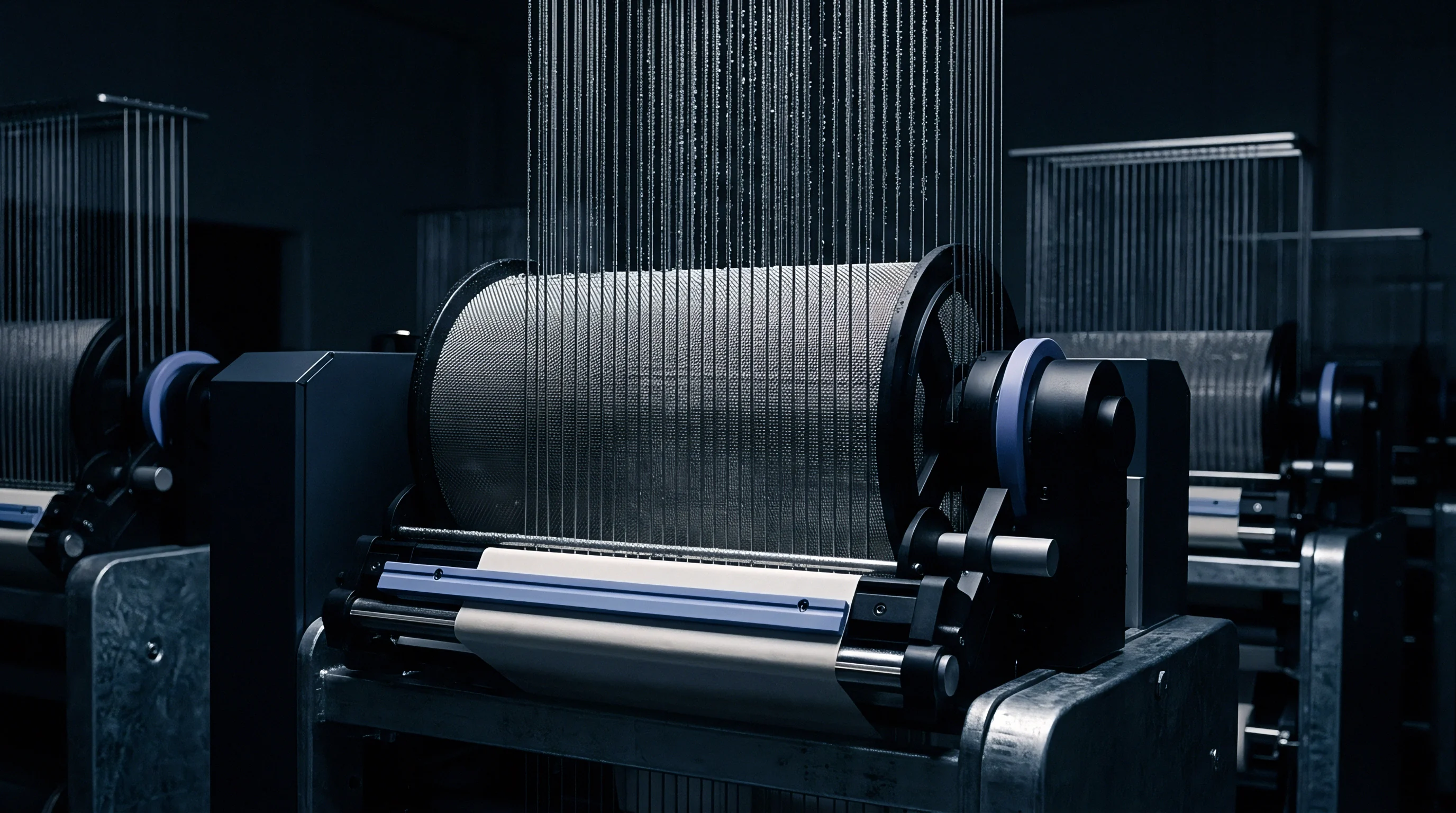
Surface Oligomer Redeposition and Friction Impacts
Scouring removes surface lubricants while dissolving internal oligomers. If solvent recovery flash systems run inefficiently, dissolved cyclic trimers precipitate out of saturated perchlorethylene baths, redepositing fine white crystalline powder onto filament surfaces.
Surface oligomer deposits elevate yarn-to-metal friction coefficients from a baseline of 0.18 up to 0.42. High friction causes filament abrasion, micro-looping, and static charge accumulation during warping. High tension over ceramic guides induces strand breakage even when internal polymer molecular weight remains uncompromised.
| Scouring Condition | Intrinsic Viscosity (dL/g) | Mn (g/mol) | Mw (g/mol) | Tenacity (cN/tex) | Elongation at Break (%) | Friction Coefficient (μ) |
|---|---|---|---|---|---|---|
| Control (Unscoured) | 0.655 | 18,400 | 44,200 | 46.2 | 22.5 | 0.22 |
| Clean Solvent (60°C, 30s) | 0.662 | 18,900 | 44,800 | 46.5 | 22.1 | 0.17 |
| Wet Solvent (85°C, 60s) | 0.628 | 16,800 | 40,100 | 41.8 | 18.4 | 0.19 |
| Acidic Solvent (95°C, 120s) | 0.574 | 13,200 | 33,500 | 33.1 | 12.8 | 0.31 |
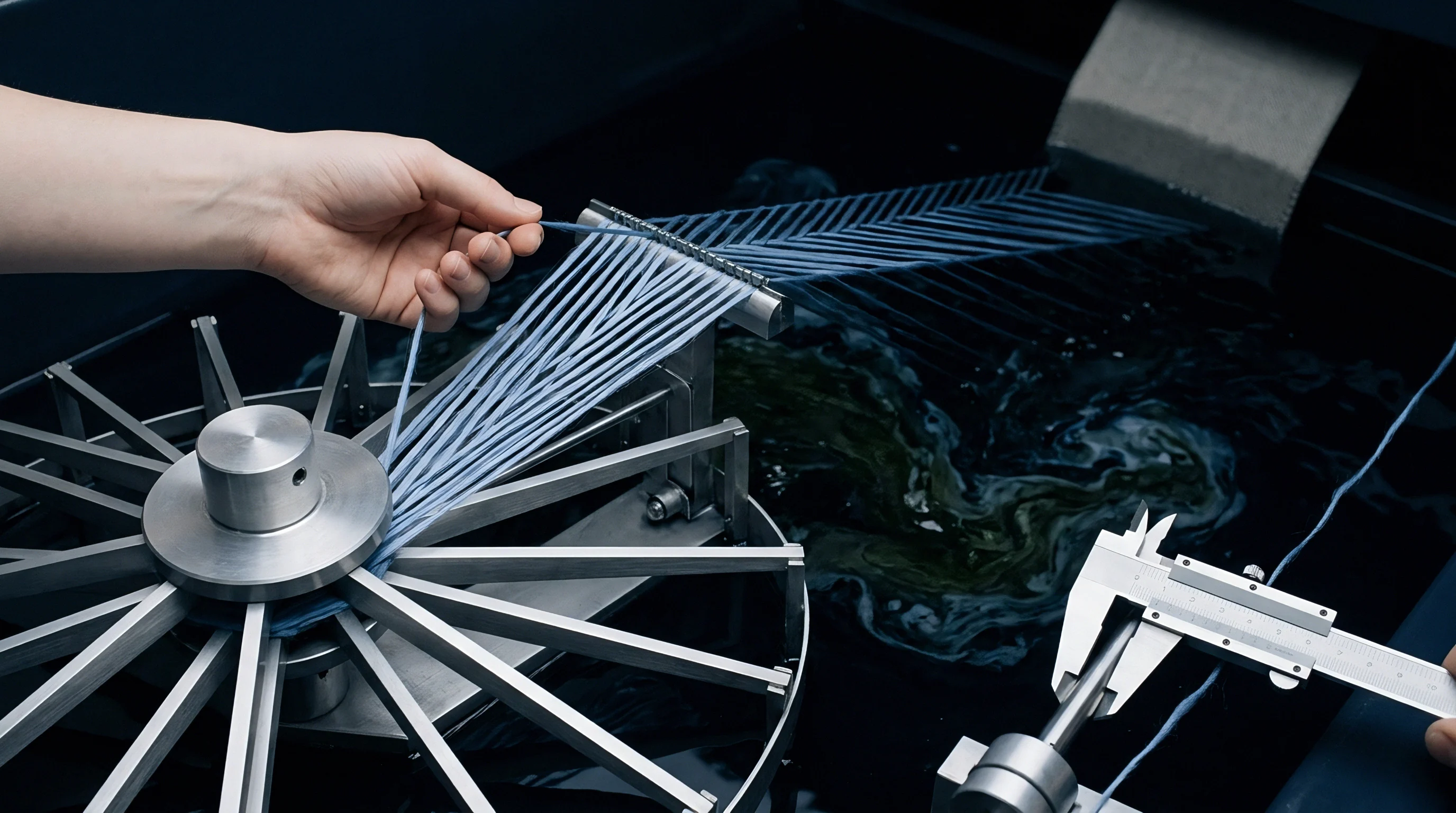
When tensile strength drops before filament cross sections display physical cracking, chemical cleavage within amorphous polymer regions has already altered the material structure.

Transit
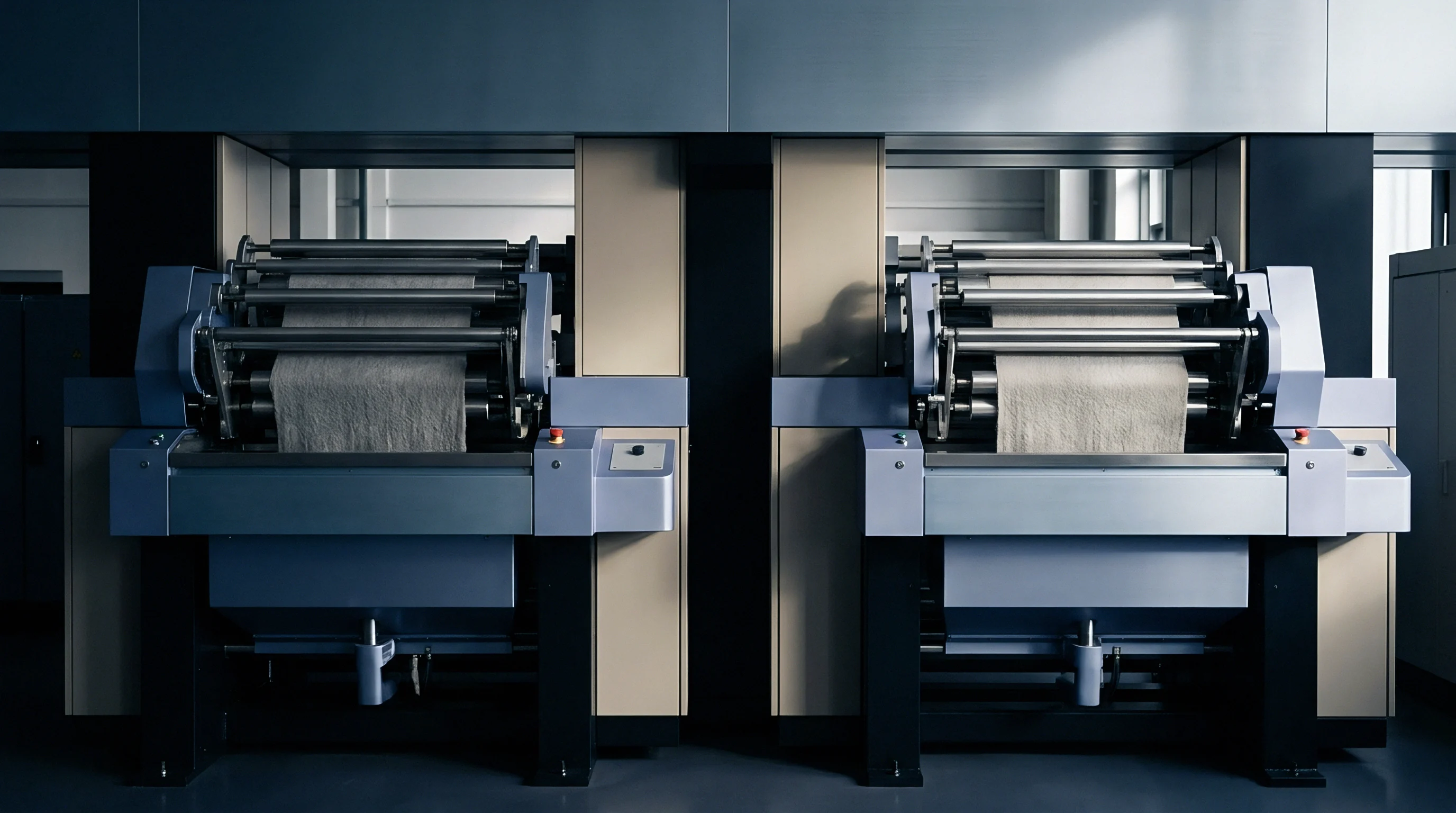
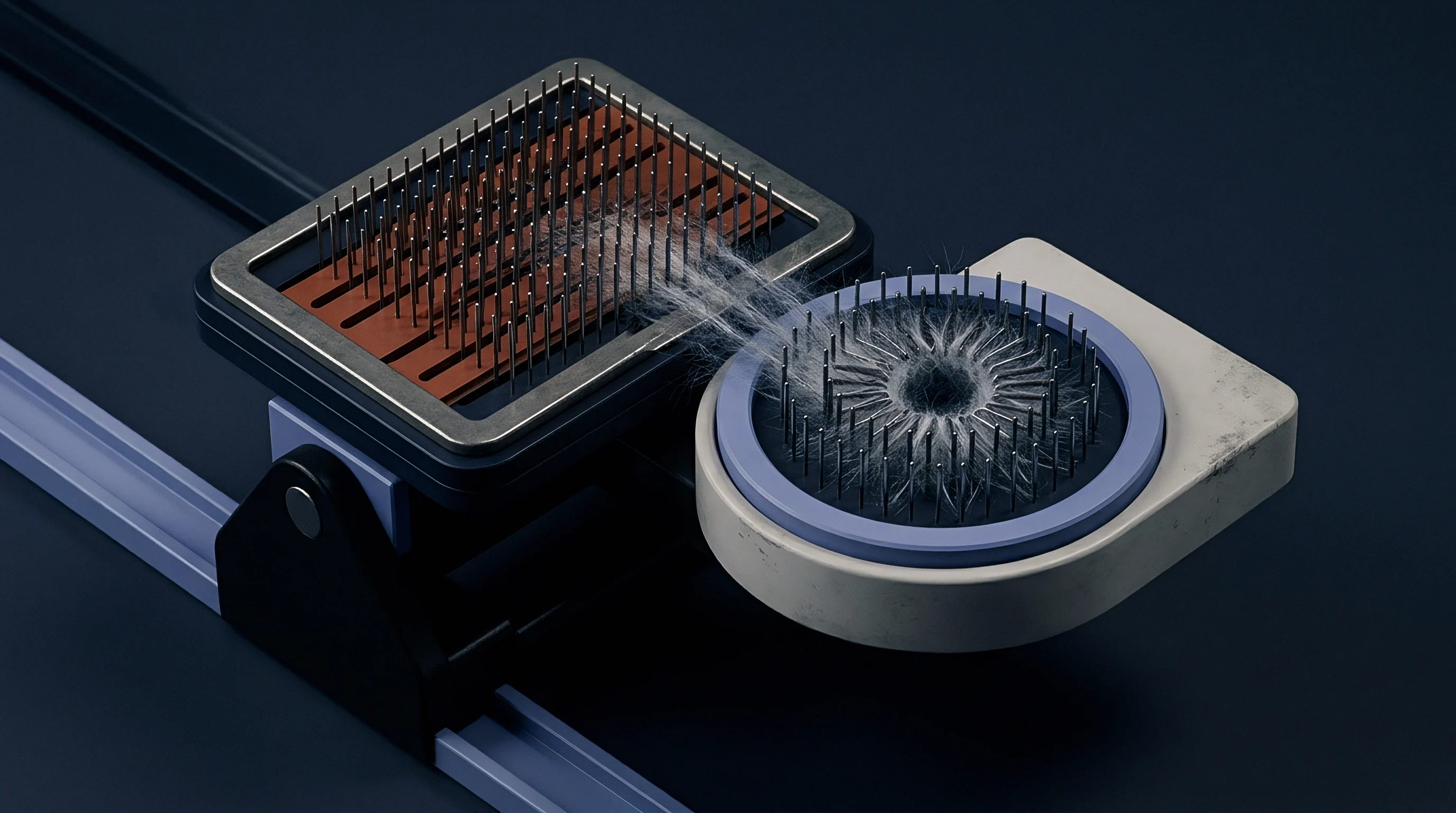
Industrial solvent processing units balance line speed against chemical extraction efficiency. Continuous open-width solvent scouring machines transport fabric or yarn sheets through multi-stage wash zones equipped with solvent sprays, immersion tanks, squeegee rollers, and vacuum drying chambers. Engineering operational parameters requires controlling temperature profiles, bath turnover rates, and moisture isolation systems.
Continuous Scouring Machine Kinetics and Residence Times
Production speeds in modern continuous lines range from 40 to 150 metres per minute. Tank volume and fabric path length dictate residence times within active solvent immersion chambers.
Consider a continuous scouring machine operating with an 8-metre active bath length at a fabric line speed of 80 metres per minute. Immersion dwell time equals exactly 6.0 seconds. Within this brief window, solvent must wet out filament bundles, dissolve spin finish additives, displace air pockets, and diffuse into outer polymer layers.
Short dwell times minimize potential hydrolytic damage provided solvent temperature stays below 70 degrees Celsius.

Solvent Purification Loops and Distillation Dynamics
Maintaining solvent purity requires continuous side-stream distillation. Contaminated perchlorethylene leaves wash tanks, passing through particulate filtration units before entering boiling stills operating at 121 degrees Celsius. Vaporized solvent condenses in water-cooled heat exchangers, entering gravimetric water separators before returning to fresh wash tanks.
Inefficient water separation allows condensed moisture to re-enter clean solvent return lines. Thermal distillation units without neutralizer dosing accumulate organic acids, driving up acid numbers in recycled solvent reservoirs.
Line control requires monitoring critical operational parameters:
- Solvent Temperature Control requires holding wash tank temperatures between 55 degrees Celsius and 65 degrees Celsius to balance wax solubility against kinetic degradation rates.
- Continuous Water Separation demands monitoring water separator sight glasses and maintaining coalescing filter cartridges to prevent free moisture recirculation.
- Acid Neutralization Dosing involves injecting trace alkali buffers or organic amine stabilizers into solvent stills to neutralize generated hydrogen chloride.
- Vacuum Stripping Efficiency necessitates maintaining drying zone vacuum levels above 40 kilopascals to eliminate solvent residues prior to high-temperature heat setting.
Operating continuous distillation systems with effective acid traps stabilizes yarn quality across extended production runs.
| Parameter | Target Operating Range | Critical Upper Limit | Action Threshold | Analytical Control Standard |
|---|---|---|---|---|
| Bath Temperature | 55 – 65 °C | 75 °C | Exceeds 70 °C | In-line Resistance Thermometer |
| Solvent Moisture Content | 0.005 – 0.020 wt% | 0.040 wt% | Exceeds 0.030 wt% | Karl Fischer Titration (ASTM E203) |
| Solvent Acid Number | 0.001 – 0.005 mg KOH/g | 0.020 mg KOH/g | Exceeds 0.010 mg KOH/g | Colorimetric Titration (ASTM D2989) |
| Non-Volatile Residue | 0.05 – 0.20 wt% | 0.50 wt% | Exceeds 0.35 wt% | Gravimetric Residue Test (ASTM D2109) |
| Control values apply to continuous open-width scouring of high-tenacity polyester filament fabrics running at line speeds above 60 metres per minute. | ||||
Engineers continue to debate whether micro-cavitation inside ultrasonic solvent agitation chambers accelerates local hydrolytic degradation beyond the rates predicted by macro-scale thermal kinetic models.


Tolerance
Commercial contracts for continuous scoured yarn deliveries require defined physical criteria. Specifying technical yarn requirements demands setting boundaries for intrinsic viscosity loss, acid end-group accumulation, breaking tenacity, and residual solvent content. Laboratory testing resolves mill disputes.
Establishing precise testing protocols prevents financial losses when processing issues surface downstream.

Contract Specifications and Quality Control Frameworks
Standard purchasing contracts for premium polyester filaments specify maximum allowable changes between greige yarn inputs and scoured fabric outputs. Intrinsic viscosity drop must not exceed 0.015 decilitres per gram across preparation sequences. Carboxylic acid end-group increases must stay below 2.0 millimoles per kilogram.
Tight tolerances protect landed value. When scoured filaments fail contract specifications, financial liabilities include fabric scrap costs, lost loom production time, and customer claim surcharges. Sourcing engineers insert clear sampling protocols requiring dual-laboratory verification before accepting bulk shipments.

Dispute Resolution and Retest Mechanics
Discrepancies between mill self-testing and buyer receiving verification arise from sampling variations, thermal history differences during storage, or improper solvent blank corrections during capillary viscometry. If receiving laboratories detect intrinsic viscosity drops exceeding 0.025 decilitres per gram, retest procedures engage automatically.
Retest protocols require drawing five composite samples across top, middle, and bottom sections of three randomly selected fabric rolls. Independent accredited testing facilities perform viscosity testing in accordance with ISO 1628-5 alongside gel permeation chromatography to verify molecular weight distribution profiles. Retest results override initial factory release documentation.
Systematic sampling of consecutive scoured rolls combined with immediate intrinsic viscosity verification establishes clear technical accountability between yarn throwsters, finishing mills, and fabric converters.