Standard Chemical Scouring and Solvent Extraction for Net Clean Fibre Yield Determination
Standard scouring, dichloromethane Soxhlet extraction, and muffle furnace ashing establish Wool Base to govern commercial clean fibre invoice settlements.
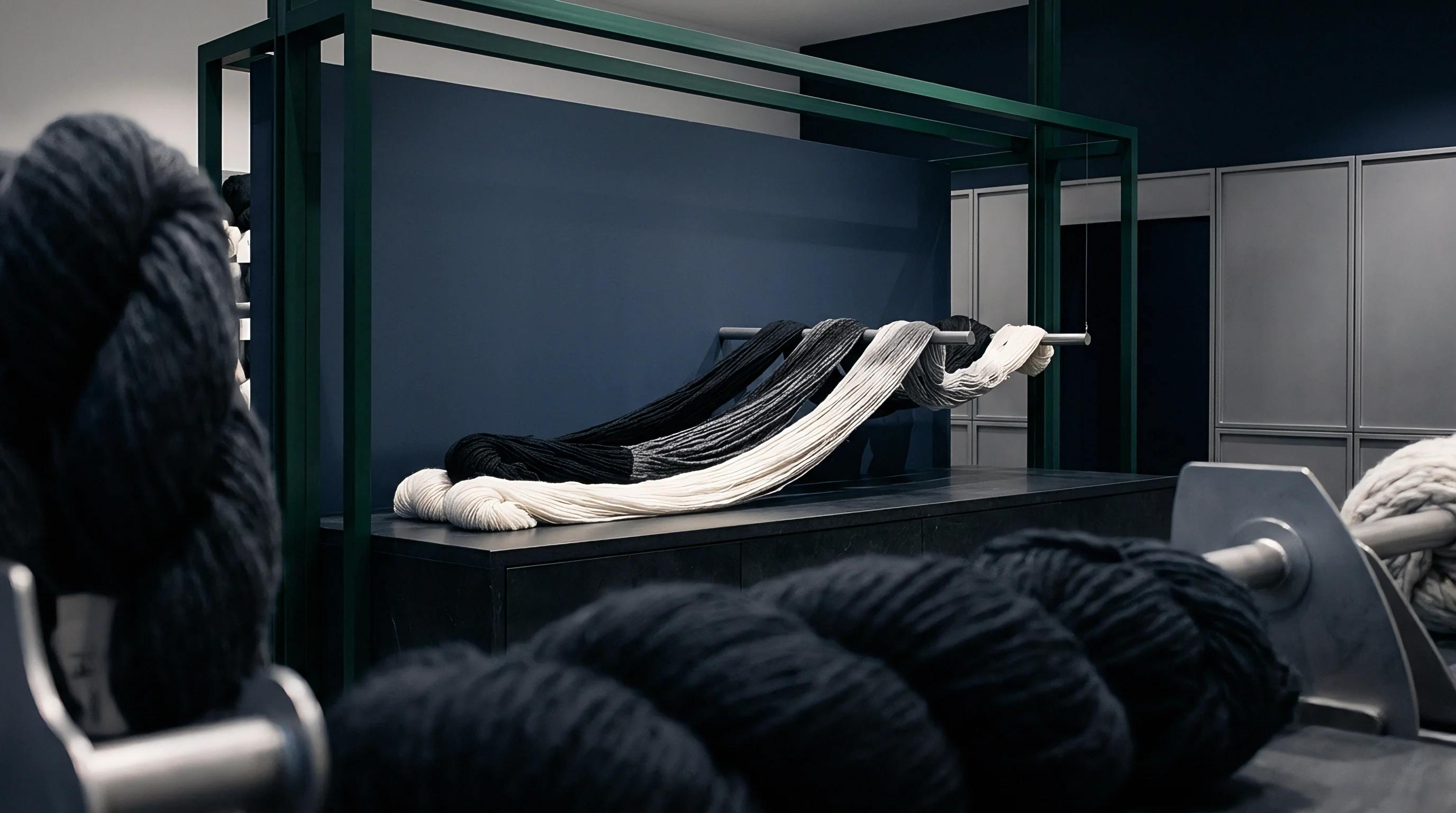
Flask
A certified core test certificate arrives from the laboratory with an oven-dry clean content reading of 64.20 percent, yet the greasy wool lot traded on an assumed 67.00 percent net yield. That 2.80 percent variance represents nearly three thousand kilograms of invoice mass on a one-hundred-tonne raw wool contract. Raw greasy wool carries variable fractions of fleece keratin, sterol esters, free fatty acids, suint salts, silica grit, and lignocellulosic plant matter.
Determining the true clean fibre yield requires stripping non-keratin components without degrading the protein chain. Solvent extraction forms the secondary gravimetric barrier in this determination, isolating residual extractable matter after preliminary aqueous scouring.
Standard laboratory scouring bowls wash core specimens in aqueous baths containing non-ionic surfactants, typically alcohol ethoxylates maintained between 60 and 65 degrees Celsius. The mechanical action removes bulk dirt and water-soluble suint salts, while emulsifying the majority of the external wax. Scoured wool retains an intractable fraction of un-emulsified wax, bound oxidized lipids, and processing surfactants.
Placing the oven-dried scoured specimen inside a Soxhlet extraction apparatus isolates this remaining greasy fraction. Dichloromethane serves as the primary extraction solvent under standard test schedules, boiling at 39.8 degrees Celsius to minimize thermal degradation of extracted lipid classes.
Dichloromethane strips oxidized external lipids.
Extraction duration dictates gravimetric accuracy. A cycle frequency of no fewer than six siphonings per hour across a four-hour extraction period ensures complete lipid clearance from dense wool plugs. Solvents of higher polarity extract internal cell membrane complex lipids, introducing systematic errors into the wool mass calculation.
Hexane extracts surface wool grease effectively, yet leaves oxidized sterols behind. Methanol penetrates the cortex, stripping structural lipids and inflating apparent extractable matter. The Soxhlet boiling flask captures non-volatile fatty matter, which technicians dry at 105 degrees Celsius until reaching mass stability.
A standard dichloromethane extraction run at six cycles per hour isolates residual lipid fractions without stripping cortical structural sterols from the keratin matrix.
Residual wax distorts scoured dry mass.
When technicians miscalculate extraction times or use contaminated solvent distillates, the residual fatty matter figure drifts downward, falsely inflating the clean wool base. A low extractable reading leaves residual grease counted as wool keratin. The lot appears cleaner than physical processing proves in the comb room, pushing real spinning top yields below invoice commitments and triggering downstream financial shortfalls across the processing batch.


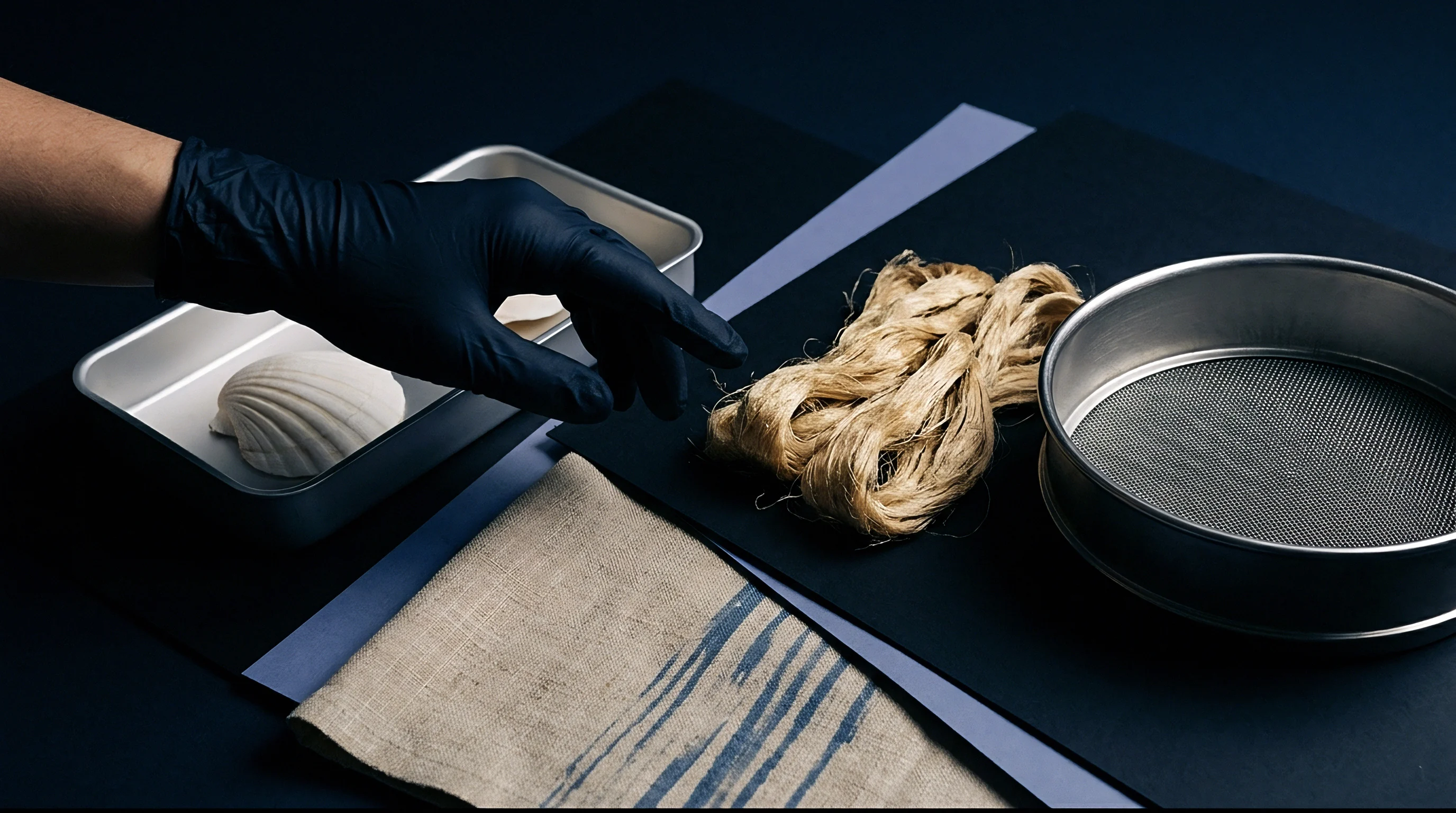
Sieve
Mechanical screening separates insoluble cellulose matter following the selective chemical hydrolysis of animal protein. Core samples contain varied burdens of burrs, seeds, twigs, and hard pastoral shives picked up by sheep during grazing. These contaminants survive aqueous scouring and solvent extraction intact.
Isolating the vegetable matter base requires digesting the keratin matrix in boiling sodium hydroxide solution at a concentration of ten percent by weight. Wool protein hydrolyzes into water-soluble peptides within three minutes of rapid boiling, while lignified plant structures resist alkaline breakdown.
Centrifugal separation assists in collecting the unhydrolyzed plant material before washing. Technicians pour the hot digestion liquor through a stainless steel perforated plate with apertures measuring between 180 and 200 micrometres. The alkaline liquor passes through, carrying soluble keratin hydrolysates into waste drainage.
Plant fragments collect across the mesh screen, where rinsing with cold running water halts further alkaline degradation of hemicellulose structures. The collected vegetable residue undergoes drying at 105 degrees Celsius to determine its preliminary dry gravimetric mass.
Cellulose withstands boiling dilute alkali.
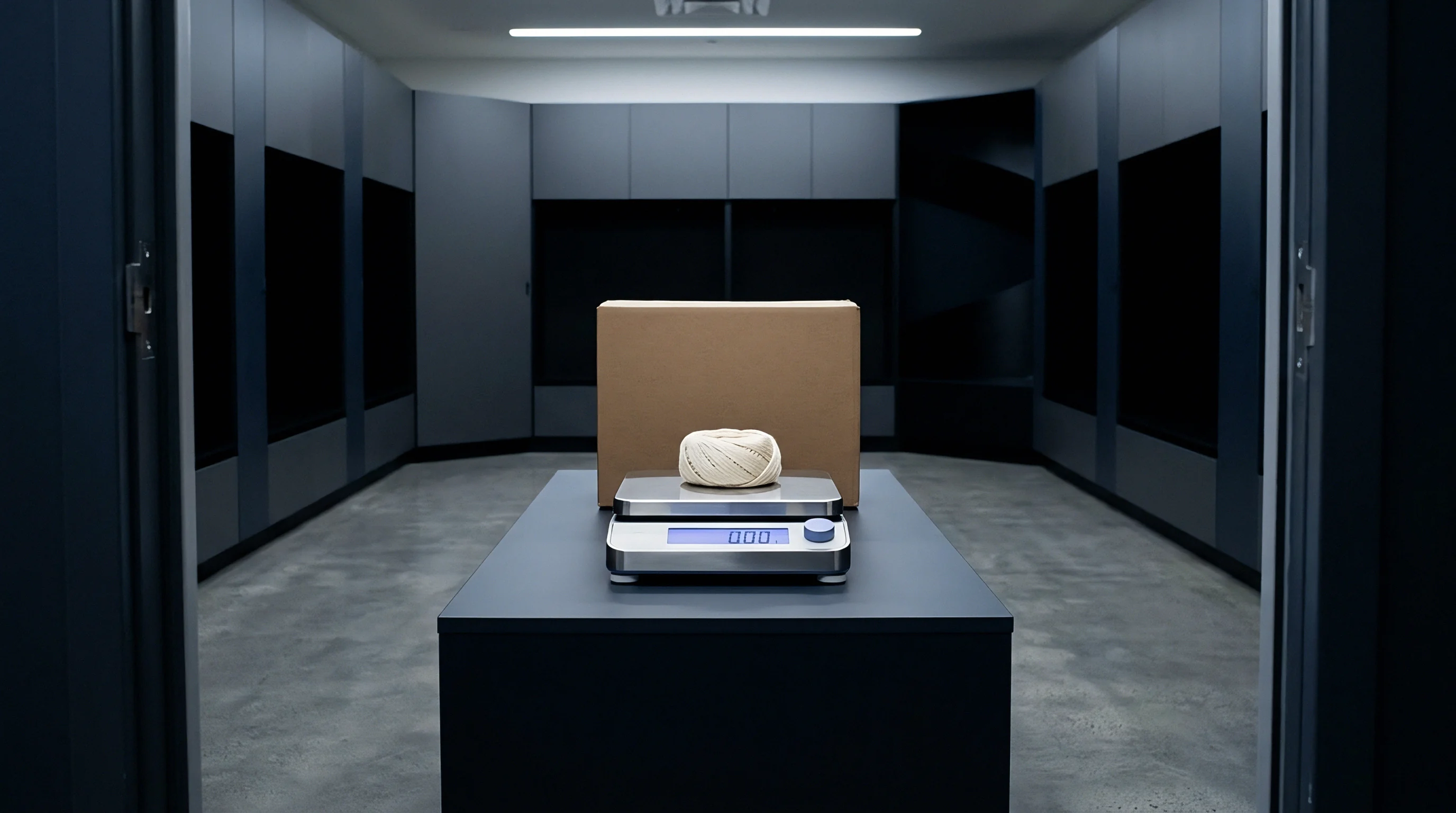
What Distinguishes Plant Debris Fractions during Alkaline Digestion?
Different botanical contaminants exhibit disparate mass losses when boiled in concentrated alkali. Fine pastoral grasses lose up to thirty percent of their dry weight through the dissolution of non-lignified hemicelluloses, whereas dense woody burrs from Xanthium spinosum lose less than ten percent. Standard test protocols establish correction factors for specific botanical classes, scaling the gravimetric residue back to its original raw contaminant mass before chemical digestion occurred.
The processing procedure follows a defined sequence across standardized bench apparatus:
- Mechanical blending homogenizes the raw core subsample across a rotary opening head.
- Aqueous scouring removes water-soluble suint and mineral clay across three temperature-staged bowls.
- Centrifugal dewatering expels free surface moisture before primary convection oven drying at 105 degrees Celsius.
- Alkaline digestion in boiling ten percent sodium hydroxide dissolves wool fibres over three minutes.
- Screening through two-hundred-micrometre wire mesh captures insoluble vegetable fragments.
- Subsequent washing with dilute acetic acid neutralizes residual alkali traces across the collected plant matter.
- Incineration of the dried botanical residue determines its internal mineral ash content.
Raw plant fragments carry inward-bound mineral grit and soil particles picked up in the paddock. The dried vegetable residue must undergo total incineration to separate inorganic dirt from actual botanical matter. Subtracting the vegetable ash yield isolates the true, ash-free vegetable matter base.
A supplier often claims that unexpected vegetable matter losses in chemical scouring stem from aggressive laboratory boiling rather than genuine lot contamination.
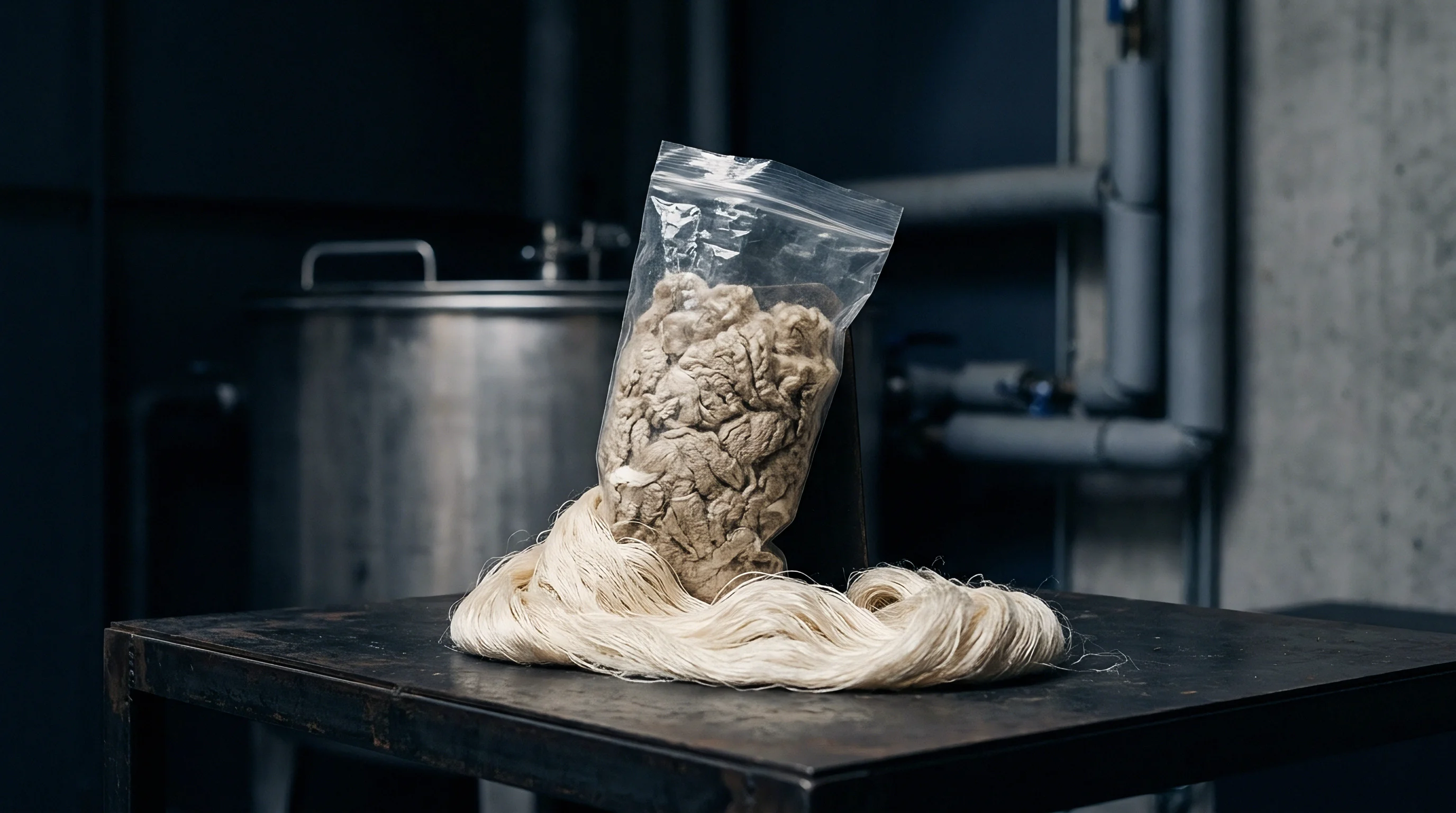
Ash
Mineral dirt constitutes the heaviest non-combustible impurity within greasy fleeces. Fine subsoil dust, paddock clay, and windblown sand adhere to greasy wool fibres via sticky lanolin secretions. Scouring bowls discharge ninety percent of loose soil through bowl hoppers, yet fine colloidal particles stay trapped within wool staple clusters.
Determining the inorganic residue of the scoured specimen establishes the true gravimetric baseline for pure wool keratin.
Muffle furnace incineration reaches seven hundred degrees.
Technicians place dried, scoured wool portions into porcelain or silica crucibles pre-conditioned to constant mass. Incineration occurs inside a temperature-controlled muffle furnace running between 700 and 750 degrees Celsius for three hours. At this thermal threshold, all organic matter oxidizes into carbon dioxide and water vapour.
Non-volatile mineral silicates, iron oxides, and alkaline earths remain as inorganic residue at the bottom of the vessel.
Crucibles cool inside desiccators before weighing.
Mineral matter sinks during centrifugal separation.
| Component Metric | Analytical Mechanism | Raw Mass Percentage | Laboratory Tolerance |
|---|---|---|---|
| Wool Base (WB) | Gravimetric balance post scouring, extraction, and ash deduction | 45.00 to 72.00% | 0.50% |
| Vegetable Matter Base (VMB) | Alkali digestion with botanical recovery factors | 0.20 to 6.50% | 0.25% |
| Extractable Matter | Soxhlet extraction with dichloromethane | 0.40 to 1.80% | 0.15% |
| Mineral Ash | Muffle furnace incineration at 750 degrees Celsius | 0.50 to 4.00% | 0.20% |
| Volatile Losses | Oven drying at 105 degrees Celsius to mass constancy | 8.00 to 14.00% | 0.40% |
Calculating the clean wool base involves consolidating these discrete analytical yields. Wool Base represents the oven-dry mass of pure wool fibre free from ash, extractable matter, vegetable matter, and moisture, expressed as a percentage of the original greasy lot mass. The mathematical derivation links each laboratory fraction into a closed mass balance:
Wool Base equals the percentage of oven-dry scoured wool multiplied by one hundred minus the percentage of ash in scoured wool minus the percentage of solvent extractable matter in scoured wool, all divided by one hundred, with secondary subtractions for residual fine vegetable fragments.
Under standard IWTO-19 test parameters, the certified Wool Base isolates absolute dry keratin content by deducting both solvent extractables and furnace ash from scoured dry weight.
Ash content swings with shearing conditions.
A contract adhering to IWTO Regulations requires official certification of both Wool Base and Vegetable Matter Base before establishing final invoice settlements on greasy auction purchases.
Schedule
Commercial transactions rarely trade on raw Wool Base figures because textile mills buy processing mass containing standard atmospheric moisture and processing allowances. Converting pure Wool Base into trade yield values requires standard commercial regain schedules defined by international trading bodies. The Wool Base figure accounts for zero percent moisture, zero percent residual grease, and zero percent foreign matter.
Commercial scoured wool, conversely, holds atmospheric moisture absorbed by hydrophilic amine and carboxyl groups within the keratin cortex.
What Governs the Conversion Factor from Base to Scoured Weight?
The International Wool Textile Organisation defines multiple commercial yield schedules, each adapted to regional processing practices and destination markets. The IWTO Clean Scoured Yield at 17 percent regain incorporates a standard moisture regain allowance alongside fixed residual grease and ash allowances. Applying these standard allowances scales the oven-dry keratin mass up to an agreed commercial delivery weight.
| Commercial Yield Schedule | Conversion Formula | Standard Moisture Regain | Processing Allowance Applied |
|---|---|---|---|
| IWTO Clean Scoured Yield (17%) | (WB + VMB adjustment) multiplied by 1.17 plus extractables allowance | 17.00% | 0.50% residual wax allowance |
| Schlumberger Dry Yield | WB multiplied by 1.1965 minus carding and combing waste factors | 18.25% | Zero residual fat allowance |
| Australian Carbonising Yield | (WB multiplied by 1.17) minus chemical carbonising loss factor | 17.00% | Deductions for burr removal losses |
| Japanese Clean Yield | (WB plus adjusted VMB) multiplied by 1.16 plus grease allowance | 16.00% | 1.00% residual ash and wax factor |
Evaluating commercial yields requires checking specific lot attributes against contract requirements:
- Regain Allowance scales the clean dry keratin weight to commercial moisture equilibrium values defined by the destination customs authority.
- Vegetable Burr Allowance penalizes heavily contaminated pastoral lots to compensate mills for mechanical fibre breakage during aggressive de-burring.
- Carbonising Loss Deduction accounts for protein dissolution during sulfuric acid baking cycles applied to lots carrying high spiral burr contents.
- Commercial Extractable Factor credits the buyer for unavoidable process waxes retained within clean scoured card slivers.
Consider a typical commercial lot testing at 58.50 percent Wool Base and 1.20 percent Vegetable Matter Base. Calculating the IWTO Clean Scoured Yield at 17 percent regain involves applying the standard multiplier of 1.17 to the base keratin mass while incorporating standard commercial allowances. The resulting commercial yield equals 69.45 percent on greasy mass.
If that same lot undergoes processing through the Australian Carbonising Yield schedule, heavy acid digestion deductions reduce the net yield figure to 63.80 percent.
Clean yield governs invoice pricing.
Moisture regain shifts invoice mass.
A contract pegged to Schlumberger Dry Yield applies an 18.25 percent regain allowance while deducting standard combing noil losses from the initial wool base figure.
How market participants will resolve persistent shifts in global moisture standards under changing international freight container conditions remains an active operational question across major export terminals.
Settlement
Commercial invoices on greasy wool lots derive directly from certified laboratory testing certificates rather than raw scale weights at the shearing shed. A raw clip weighing twenty thousand kilograms gross with a certified IWTO Clean Scoured Yield of 65.00 percent yields thirteen thousand kilograms of clean payable fibre. If retesting by a destination conditioning house returns a clean yield of 63.80 percent, the deliverable fibre content drops by two hundred and forty kilograms.
At an assumed market price of twelve dollars per clean kilogram, that single test discrepancy creates an immediate financial shortfall of two thousand eight hundred and eighty dollars.
Australian contracts peg to IWTO certs.
Disputes trigger bilateral laboratory retests.
Core tubes draw cross-sectional plugs.
Sampling precision underpins certificate validity. Core sampling tools must penetrate the full depth of compacted wool bales under hydraulic pressure, collecting equal cross-sectional plugs from every pack across the lot. International regulations require a minimum number of cores based on bale density to achieve a sampling precision within plus or minus one percent at the ninety-five percent confidence level.
Drawing shallow cores from bale caps captures excessive fleece edges, biasing the sample toward low-yield skirtings.
Secondary retesting procedures operate under rigid statistical tolerances. When a buyer challenges an auction test certificate, an independent laboratory draws new core samples from at least eighty percent of the original bales. A yield difference of less than 0.80 percent between primary and secondary certificates falls within accepted analytical variance, leaving the initial invoice price unchanged.
Discrepancies exceeding 0.80 percent trigger full re-invoicing based on the mean of the two test results, with retesting fees assigned to the losing counterparty.
Every commercial wool specification stands or falls on the integrity of the drawn core.