Dissolving Pulp Batch Traceability Protocols in Viscose Staple Production
Dissolving pulp traceability requires isotope or DNA markers to survive xanthation, as continuous dope mixing destroys physical batch boundaries.

Origin

Cellulose Purity and Timber Species Profiling
Dissolving wood pulp destined for viscose staple fiber production requires precise chemical purity parameters to endure the caustic processing route. Market Grade dissolving pulp typically contains an alpha-cellulose content between 90 and 96 percent. The remaining fraction consists of hemicellulose, traces of lignin, and inorganic ash.
Higher alpha-cellulose values, particularly those exceeding 94 percent sourced from softwood species like Norway spruce or slash pine, produce higher degree-of-polymerization profiles in the final filament. Hardwood pulps, derived predominantly from eucalyptus or acacia, offer shorter native cellulose chains and require modified steeping conditions. Alpha cellulose content dictates spinning stability.
Pulp characterization relies on standard chemical laboratory assays. Intrinsic viscosity testing according to ISO 5351 measures the degree of polymerization by dissolving the cellulose sample in a cupriethylenediamine solution. Alkali solubility tests per ISO 692 determine S10 and S18 values, representing the percentage of soluble pulp matter in 10 percent and 18 percent sodium hydroxide solutions respectively.
The S10 fraction isolates degraded cellulose and hemicellulose, whereas S18 measures residual hemicellulose alone. Softwood pulps processed through acid sulfite cooking yield S18 values below 2.5 percent, whereas prehydrolysis kraft pulps routinely register S18 values between 3.0 and 4.5 percent.
Standard ISO 692 testing establishes pulp degradation limits by measuring alkali solubility in sodium hydroxide concentrations.
High purity prevents polymer chain shear. Mill buyers evaluate timber species identification through gas chromatography mass spectrometry and DNA barcoding of residual cambium tissues. Hardwood pulps present distinct pentosan ratios compared to softwood alternatives.
Xylan levels in eucalyptus pulp average 2.5 percent, while mannan levels stay below 0.3 percent. Softwood pulps invert this ratio, displaying mannan levels up to 3.5 percent and xylan levels under 1.5 percent. These carbohydrate ratios act as chemical signatures before chemical transformation blurs molecular structure.
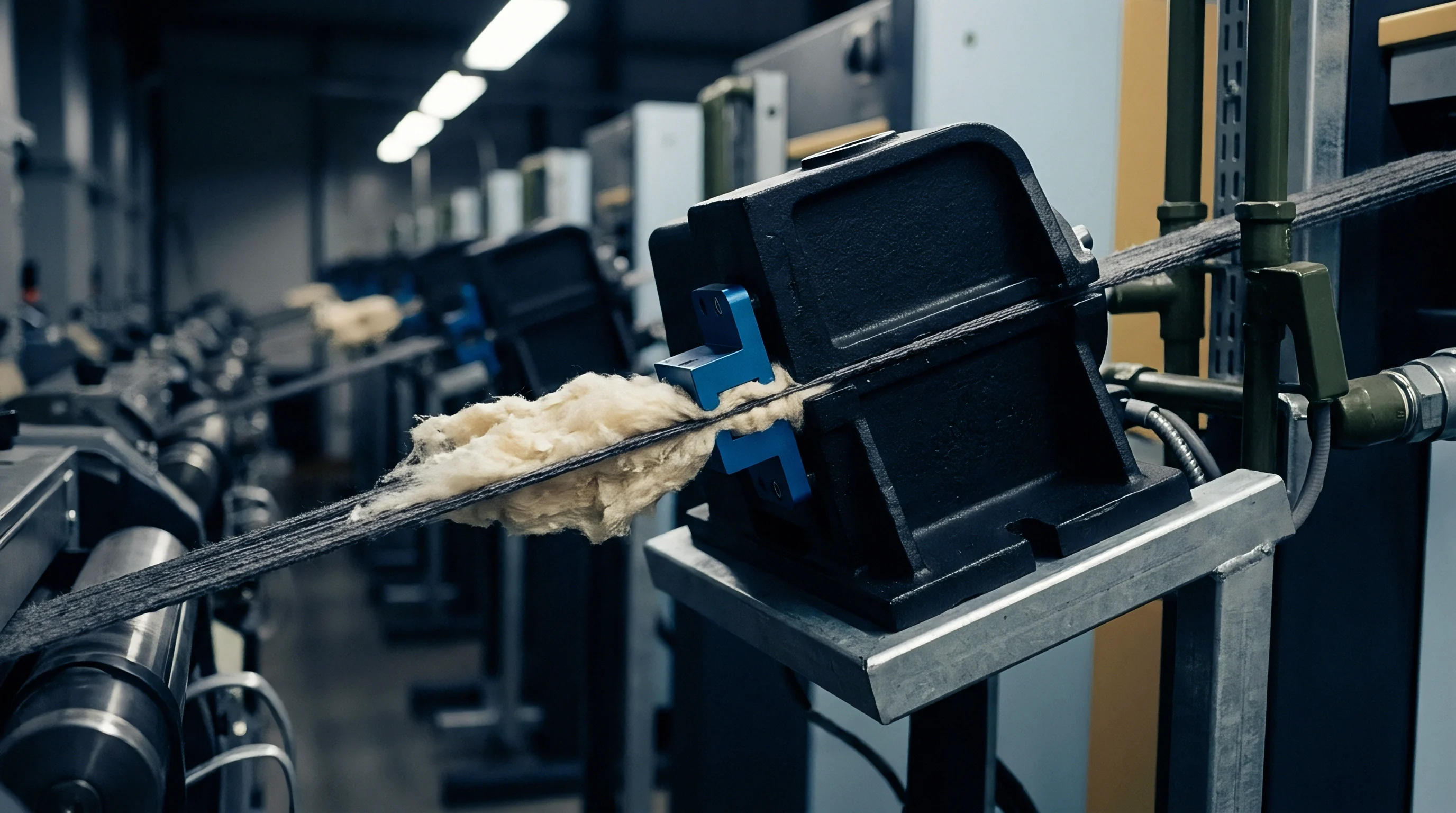
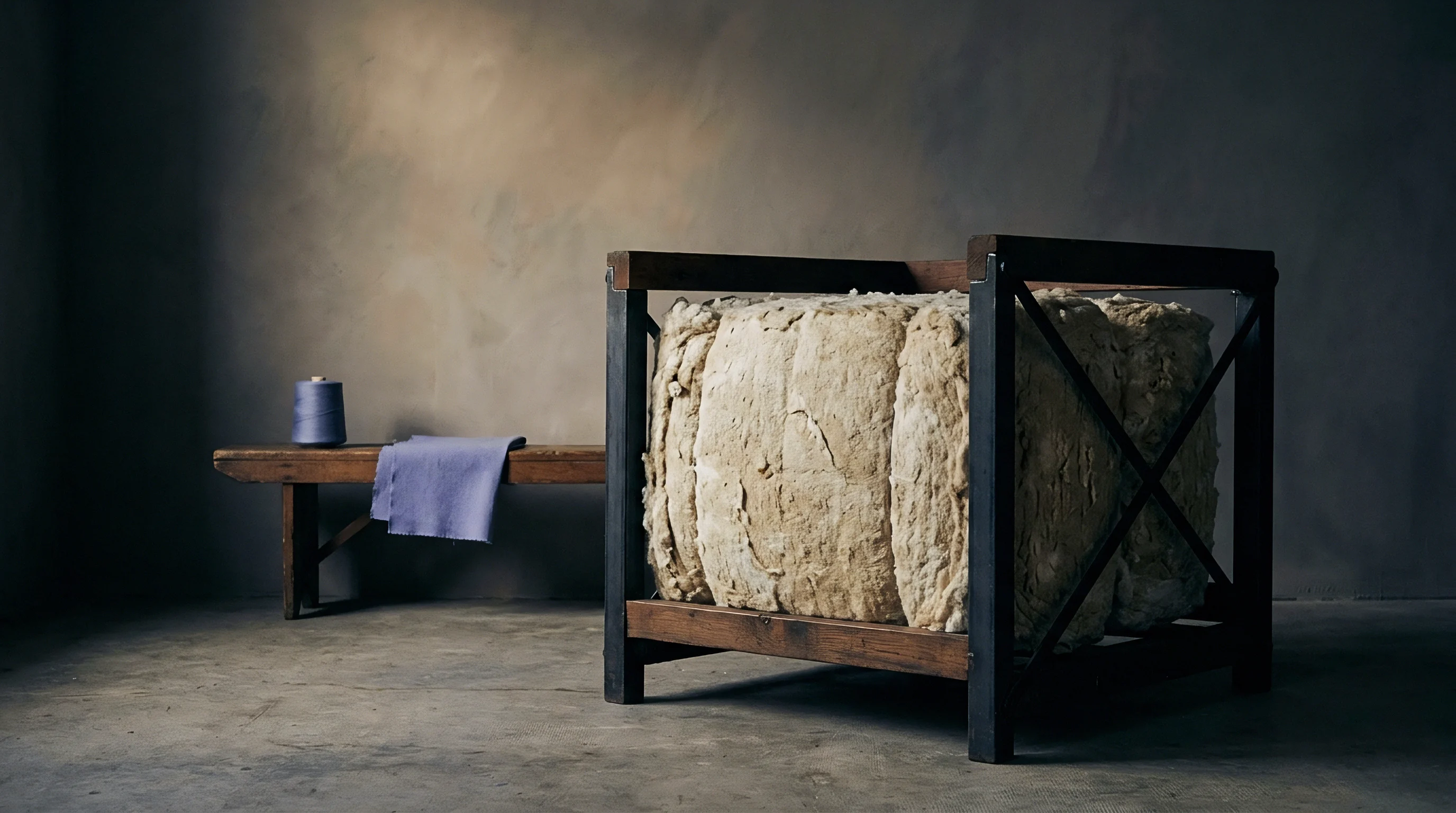
Bale room operations receive dissolving pulp shipped in tightly wrapped, wire-strapped units weighing approximately 200 to 250 kilograms per bale. Moisture content fluctuates during maritime transit, demanding immediate sampling upon arrival. ISO 6741 protocols mandate drawing pulp core samples from five percent of bales across an incoming lot to establish commercial mass at a standardized 10 percent moisture regain.
Variance between declared dry weight and laboratory oven-dry figures directly adjusts the invoice value per metric tonne.
A persistent operational boundary remains whether minor hardwood species blended into commercial softwood pulp lines can be definitively isolated after pulp digestion.


Tank
Mechanics of Viscose Solution Preparation and Mixing
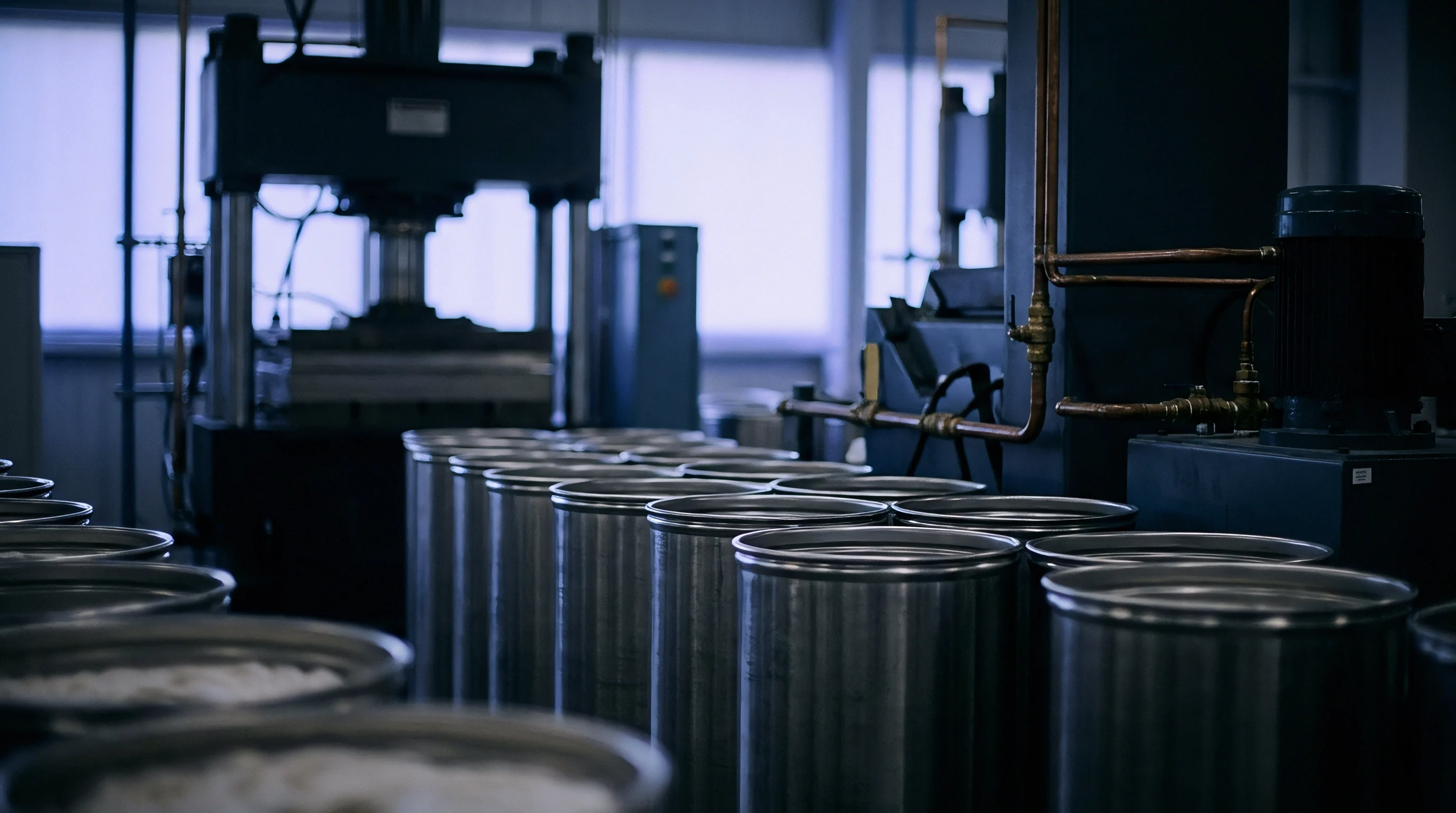
Caustic steeping transforms solid dissolving pulp into sodium cellulose. Steeping rolls or batch mercerizing presses submerge pulp sheets in an 18 percent sodium hydroxide liquor maintained at 45 degrees Celsius. The liquid penetrates the crystalline regions of the cellulose fiber, swelling the structure and converting Cellulose I into alkali-soluble Cellulose II.
Excessive steeping temperatures generate hemicellulose buildup in the recycled caustic stream, altering reaction kinetics in subsequent batches. Tanks hold thousands of cubic meters.
After pressing to remove excess caustic liquor, the alkali cellulose presscake undergoes shredding into crumbs. Shredded crumbs pass into aging drums where controlled temperature oxidation degrades the cellulose molecular weight to a targeted intrinsic viscosity. Shredded alkali cellulose then enters xanthation reactors.
Reaction with carbon disulfide, charged at 28 to 32 percent relative to dry cellulose weight, yields sodium cellulose xanthate. This orange, gel-like ester dissolves in a dilute sodium hydroxide solution to yield the viscous liquid known as viscose dope.

Which Chemical Markers Survive Xanthation without Cellulose Degradation?
Viscose dope flows continuously through spinnerets. Chemical markers introduced at the raw pulp stage must survive exposure to concentrated caustic soda, aggressive organic solvents, and strong acid regeneration baths. Fluorophore compounds degrade under the low pH of the spin bath, which contains 8 to 12 percent sulfuric acid, 15 to 20 percent sodium sulfate, and 1 to 2 percent zinc sulfate at 50 degrees Celsius.
Stable inorganic micro-particles and specialized synthetic isotopic tracers maintain atomic structural integrity across these redox environments.
Continuous dissolution systems introduce fluid dynamics that inherently obscure discrete batch boundaries. Dissolving pulp bales from different timber harvests or geographic origins are routinely fed into the pulper simultaneously to balance viscosity variances. Viscose dope travels through large ripening tanks arranged in series or parallel to ensure uniform maturation index values, measured via ammonium chloride or sodium chloride titrations, before wet spinning.
This physical blending inside storage tanks creates a continuous dilution curve where individual pulp lot identities merge over time.
| Process Stage | Chemical Environment | Temperature Range | Traceability Loss Mechanism |
|---|---|---|---|
| Alkali Steeping | 18% NaOH solution | 40 to 50 C | Dissolution of short-chain hemicellulose markers |
| Xanthation | Carbon disulfide vapor | 28 to 32 C | Esterification breaking organic taggant bonds |
| Dope Ripening | Dilute NaOH liquor | 18 to 22 C | Continuous tank mixing and dilution smoothing |
| Acid Spin Bath | 10% H2SO4, ZnSO4, Na2SO4 | 45 to 55 C | Acid hydrolysis and acid-bleaching of organic pigments |
Mill managers often claim that continuous fluid mixing makes physical isolation of pulp batches impossible without stopping production lines for expensive cleanouts.


Tracer
Forensic Tracking Mechanisms in Regenerated Cellulose
Isotope Ratio Mass Spectrometry analyzes stable isotopes of carbon, hydrogen, and oxygen within the regenerated viscose fiber. Ratios of Carbon-13 to Carbon-12 and Oxygen-18 to Oxygen-16 vary according to regional climate, latitude, altitude, and precipitation patterns where the timber grew. Softwood harvested from boreal forests in Scandinavia exhibits distinct delta Oxygen-18 depletion compared to eucalyptus cultivated in equatorial plantation environments.
Isotopic ratios reflect local rainfall chemistry.
Synthetic DNA taggants offer unique molecular sequences engineered for extreme chemical stability. Applied to the raw dissolving pulp sheets via liquid application systems before baling, these non-coding sequence tags adhere to the cellulose polymer network. Polymerase Chain Reaction amplification recovers and identifies these sequences even after xanthation, acid regeneration, bleaching, and multi-stage washing.
Taggant concentration levels stay below parts-per-billion thresholds to eliminate any alteration of fiber tenacity, elongation, or wet modulus performance metrics.
Inorganic luminescent taggants employ rare-earth elements integrated into the pulp slurry or spinning dope. Rare earth elements such as lanthanum, europium, or neodymium fluoresce under specific infrared wavelengths. Spectrophotometer instruments detect these emission spectra through non-destructive testing of finished yarn or woven cloth.
DNA tags withstand caustic steeping baths.
Analytical quantification of mixed isotopic signals requires mathematical deconvolution. Consider a viscose spinning run where a mill blends pulp from Region A with pulp from Region B. Assume Region A pulp exhibits a delta Carbon-13 value of -27.5 per mil, while Region B pulp exhibits a delta Carbon-13 value of -24.0 per mil. If a finished staple fiber lot returns a laboratory delta Carbon-13 reading of -26.1 per mil, linear mass-balance equations calculate the physical proportion:
Percentage Region A = (-26.1 – (-24.0)) / (-27.5 – (-24.0)) 100 = 60 percent Region A pulp content.
Measurement uncertainty margins of 0.3 per mil in mass spectrometry instruments mandate a confidence interval of plus or minus 5 percentage points on this blend calculation. Small isotopic shifts require precise reference baselines for every pulp mill in the supply chain.
Isotopic baseline shifts exceeding 0.5 per mil disrupt quantitative origin assignment without local timber library data.
Physical markers must remain detectable at concentrations that do not alter the commercial grade or dye absorption of the finished yarn.


Segregation

Physical Segregation Models versus Mass Balance Allocation
Physical segregation requires complete physical isolation of specific dissolving pulp batches from raw timber receipt through the fiber cutter. Fiber processing plants maintain separate storage bays, dedicated pulp pulpers, clean dissolution tanks, and isolated spinning lines. This model guarantees that 100 percent of the staple fiber in a outgoing bale originates from the declared pulp lot.
Physical segregation stops cross contamination.
Mass balance accounting systems track volume credits through manufacturing facilities without enforcing physical separation of fibers. Pulp carrying specific sustainability credentials enters the mill mixing tank alongside non-certified pulp. The mill credits the total weight of certified cellulose to an inventory ledger.
An equivalent weight of finished viscose fiber, minus calculated processing yield losses, is then sold with certified claims regardless of which specific physical fibers compose any individual export bale. Mass balance allows virtual volume transfers.
- Mill receiving docks register incoming pulp bales by scanning unique barcoded shipping manifests attached by the pulp supplier.
- Unloaded bales enter dedicated storage rows mapped inside the warehouse management database to prevent physical mixing with standard inventory.
- Production schedules allocate specific pulping tanks and spinning lines exclusively to the certified pulp run following a system flush.
- Spinning teams record line changeover times, flushing volumes, and transit delays inside the plant execution log.
- Finished viscose staple fiber bales receive physical barcoded labels linking the output lot number directly to the pulp input docket.
Fiber loss during viscose manufacturing averages 8 to 12 percent due to hemicellulose dissolution during caustic steeping, wash water losses, and staple crimping trim waste. Mass balance accounting frameworks adjust allocation ratios to reflect these yields. A mill processing 100 metric tonnes of certified dissolving pulp yields approximately 90 metric tonnes of certified viscose staple fiber, assuming a 10 percent conversion loss factor.
| Attribute | Physical Segregation (Identity Preserved) | Mass Balance Allocation |
|---|---|---|
| Physical Purity in Bale | 100 percent guaranteed certified fiber | Variable mix of certified and standard fiber |
| Mill Operational Expense | High due to dedicated lines and line flushes | Low as standard continuous production continues |
| Forensic Testing Validation | Fully verifiable via tracer or isotope assay | Non-verifiable via physical fiber testing |
| Claim Standard Compatibility | ISO 22095 IP Model, PEFC Physical Segregation | FSC Mass Balance, Textile Exchange CCS |
ISO 22095 Clause 6.3 mandates that facilities claiming physical segregation must document physical barriers or complete cleaning procedures between processing runs.

Chain

Custody Documentation and Document Verification
Paperwork mismatches halt mill production lines. Chain of custody documentation creates an unbroken administrative audit trail from forest concession boundaries to the spinning mill receiving dock. Bales of dissolving pulp travel with mill certificates of analysis, bills of lading, phytosanitary declarations, and customs clearance entries.
Every transfer point requires cross-referencing lot identification numbers, gross weight figures, and moisture-adjusted net weights.
Digital ledgers reconcile physical material movements against transaction records. When a pulp supplier ships 500 metric tonnes of dissolving pulp, the transaction registers on a shared network where weight credits deposit into the viscose producer’s account. Conversion algorithms automatically deduct processing waste allowances when the viscose mill issues finished fiber certificates.
Discrepancies between digital weight credits and physical bale laydown logs highlight potential fraud or unrecorded pulp blending.
Discrepancies in dry weight conversions across shipping documentation invalidate chain of custody claims during external audits.
Auditors examine physical bale tags and shipping dockets to detect administrative breakdown points. Mislabelled pulp bales or altered lot codes expose gaps in physical inventory control.
- Gross Weight Mismatch between pulp shipping manifests and warehouse entry scale tickets indicating transit moisture loss or stolen inventory.
- Duplicate Batch Identifiers appearing on separate import documentation sets indicating fraudulent reuse of single pulp allocation credits.
- Alpha Cellulose Deviations exceeding 1.5 percent from declared mill analysis certificates indicating unapproved timber source blending.
- Missing Transport Logs failing to connect forest harvest geolocational coordinates with specific pulp digester charging schedules.
An administrative failure in matching pulp batch dockets to finished fiber production lots causes immediate suspension of sustainability certification labels, forcing the mill to sell the affected fiber output into lower-margin non-certified commodity markets.

Tariff
Commercial Impact, Customs Rules, and Declaration Risk
Customs officers examine forest coordinates. Imported viscose staple fiber enters destination markets under Harmonized System Code 5504.10, covering artificial staple fibers of viscose rayon, uncarded or uncombed. Tariff rates vary significantly depending on preferential trade agreements, rules of origin declarations, and active anti-dumping duties.
Customs authorities inspect chain of custody dossiers to verify that declared origin claims reflect actual country-of-harvest locations rather than intermediate processing or transshipment stops.
Regulatory frameworks such as the United States Uyghur Forced Labor Prevention Act and the European Union Deforestation Regulation impose strict evidentiary standards on viscose importers. Importers must supply geolocational coordinates for the specific forest plots where the raw wood was harvested. These coordinates must link directly to the pulp production batch numbers, shipment manifests, and finished fiber lot numbers arriving at the destination port.
Non compliant shipments face immediate seizure.
Laboratory results confirm timber species identity. Failure to produce a complete, unbroken chain of custody dossier from tree to fiber exposes the importer to customs detentions, civil monetary penalties, and seizure of goods. The financial exposure includes not only forfeited goods but also accrued demurrage fees, re-testing costs, and tariff reclassifications carrying penalty duty rates reaching up to 50 percent of the entered value.
Landed costs double under customs detentions.
| Protocol Level | Implementation Cost per Kg | Customs Audit Clearance Speed | Regulatory Seizure Risk |
|---|---|---|---|
| Self-Declared Paperwork | 0.00 USD | Slow (Requires deep document audit) | High (Unverified pulp origin claims) |
| Mass Balance Certification | 0.02 to 0.04 USD | Moderate (Standard administrative review) | Medium (Physical fiber cannot prove origin) |
| Physical Segregation | 0.08 to 0.15 USD | Fast (Isolated batch documentation) | Low (Full physical origin tracking) |
| Forensic DNA / Isotope Marking | 0.05 to 0.12 USD | Immediate upon lab verification | Lowest (Physical proof in the fiber) |
A buyer structuring a supply contract for 200 metric tonnes of high-wet-modulus viscose staple fiber calculates landed cost factors by evaluating the duty spread between standard artificial staple and certified origin fiber. Assuming a base fiber price of 1.85 USD per kilogram delivered to a European port, incorporating physical segregation protocols adds 0.10 USD per kilogram in operational charges. If customs authorities detain an unverified shipment for 45 days, demurrage charges reaching 200 USD per container per day across ten 40-foot ocean containers accumulate 90,000 USD in unexpected landed costs, converting an expected 5 percent gross margin into a net loss on the fabric conversion contract.
Importers manage commercial risk by writing mandatory supplier compliance clauses directly into raw material purchase contracts, holding pulp and fiber vendors financially liable for customs detention costs resulting from incomplete geolocational or batch documentation.