Quantitative Depolymerization Residue Analysis for Border Enforcement of Recycled PET Content Claims
Depolymerization residue assays isolate monomer ratios and catalysts to prove genuine recycled polyester content before border customs seize noncompliant cargo.

Digest
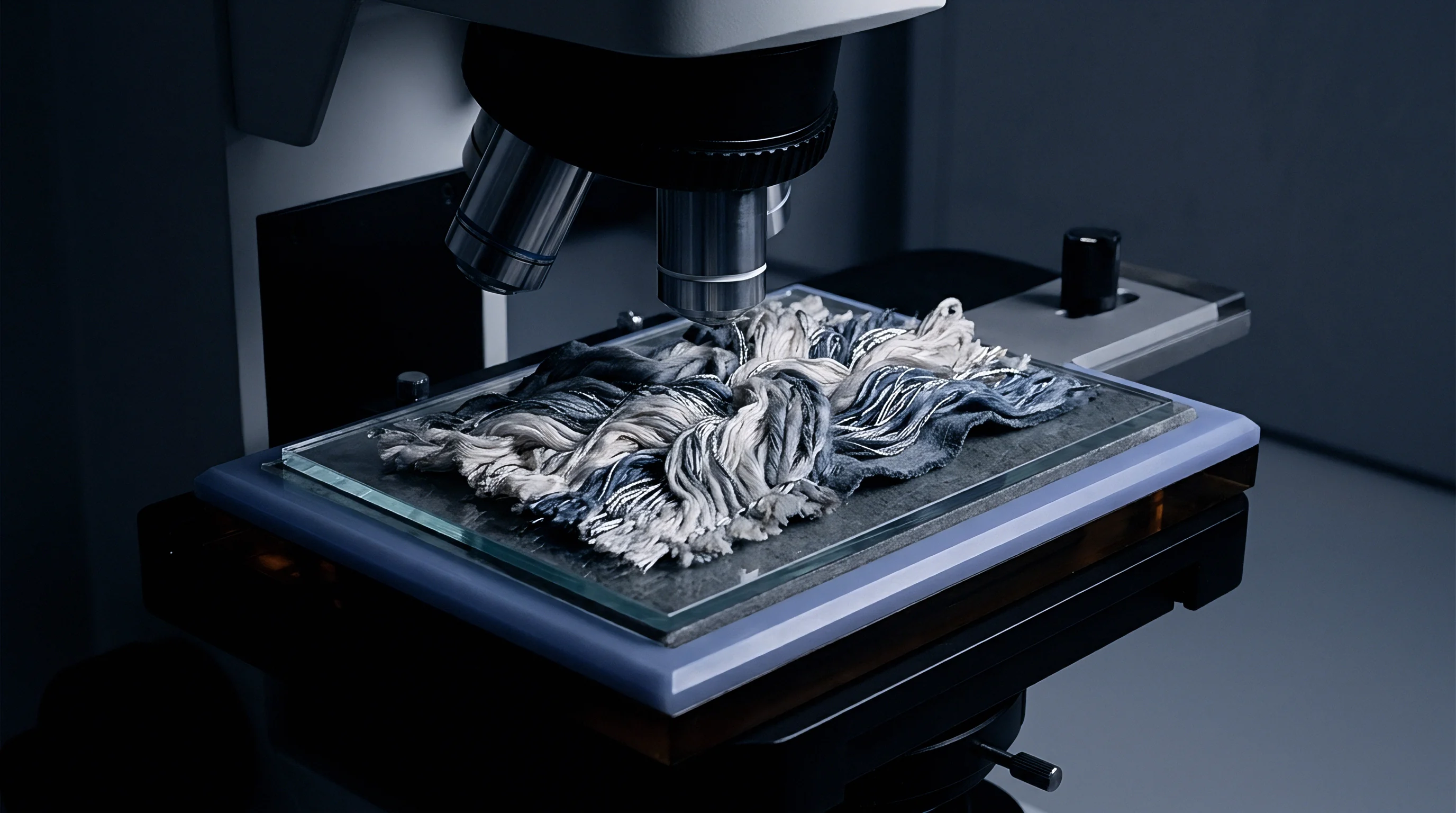
Border authorities inspect shipping manifests with analytical tools capable of disassembling the polyester polymer backbone into individual building blocks. When customs agents question whether a synthetic textile consignment contains genuine post-consumer resin or misdeclared virgin material, laboratory technicians subject the fabric swatches to complete chemical solvolysis. Solvolysis breaks ester linkages cleanly, converting high-molecular-weight polyethylene terephthalate into terephthalic acid, dimethyl terephthalate, or bis(2-hydroxyethyl) terephthalate, alongside ethylene glycol.
Methanolysis splits every ester bond. The reaction proceeds inside sealed stainless steel pressure vessels at 240 degrees Celsius under 4 megapascals of pressure in supercritical methanol.
Centrifugation separates the liquid reaction phase from insoluble fillers and pigments. The autoclave drops pressure. Pure dimethyl terephthalate crystallizes cleanly.
Virgin polyethylene terephthalate synthesis relies on pure petrochemical precursors, yielding a predictable, narrow chemical footprint upon disassembly. Recycled feedstocks originate from municipal post-consumer bottle bales, industrial thermoform trim, or discarded apparel. These scrap sources carry heat stabilizers, chain extenders, legacy catalysts, foreign comonomers, and degradation fragments through mechanical reprocessing steps.
Supercritical methanolysis recovers 98.4 percent of stoichiometric monomer mass from clean textile swatches at 240 degrees Celsius within sixty minutes.
The resulting monomer digest holds chemical residues reflecting the material thermal and mechanical history. Border verification procedures target these residual compounds. While standard optical examination and basic solvent dissolution cannot differentiate high-grade mechanically recycled resin from virgin polymer, analytical depolymerization exposes the chemical additives incorporated during earlier melt phases.
Customs laboratories quantify these trace components against declared bills of lading and transaction certificates.
Alkaline hydrolysis serves as a parallel depolymerization route for enforcement testing. Technicians immerse ground fiber samples in a 5 molar potassium hydroxide aqueous solution alongside phase transfer catalysts at 95 degrees Celsius. The reaction converts the polyester matrix into dipotassium terephthalate and free ethylene glycol.
Acidification with concentrated hydrochloric acid precipitates terephthalic acid, leaving low-molecular-weight contaminants suspended in the aqueous liquor for chromatographic isolation. Gas chromatography separates the fractions.
| Solvolysis Route | Reagent Formulation | Operating Temperature | Operating Pressure | Target Monomer Yield |
|---|---|---|---|---|
| Methanolysis | Anhydrous Methanol, 0.5% Zinc Acetate | 220 to 250 °C | 3.5 to 4.5 MPa | Dimethyl Terephthalate (96–99%) |
| Glycolysis | Ethylene Glycol, 1.0% Sodium Carbonate | 190 to 215 °C | 0.1 to 0.3 MPa | Bis(2-hydroxyethyl) Terephthalate (88–94%) |
| Alkaline Hydrolysis | 5M Potassium Hydroxide, Cetylpyridinium Chloride | 90 to 105 °C | Atmospheric | Terephthalic Acid (94–97%) |
| Neutral Hydrolysis | Demineralized Water, Phosphoric Acid Buffer | 240 to 260 °C | 3.0 to 4.0 MPa | Terephthalic Acid (91–95%) |
| Yields reflect recovered stoichiometric monomer mass following filtration and secondary solvent washing across ISO 17025 accredited test trials. | ||||
Supply agreements incorporating certified recycled content clauses specify ISO 17025 depolymerization protocols to bind downstream fiber blenders to verifiable chemical thresholds.


Marker
Trace signatures present within the depolymerized monomer filtrate establish whether recycled material exists in the yarn. Post-consumer bottle scrap almost universally incorporates isophthalic acid at concentrations between 1.5 and 3.0 mole percent to suppress crystallization during bottle stretch blow molding. Virgin textile-grade polyester filament contains isophthalic acid levels below 0.3 mole percent, prioritizing rapid crystallization and high molecular orientation during fiber spinning.
Elevated isophthalic acid concentrations within a depolymerized fabric digest signal the presence of post-consumer container resin.
Diethylene glycol constitutes an additional marker compound. Diethylene glycol forms as an ether-linked condensation byproduct during initial esterification. Virgin polymerization processes restrict diethylene glycol content to a window between 0.8 and 1.2 percent by weight to preserve melting point stability and tensile tenacity.
Mechanical recycling subjects polyester flakes to repeated thermal cycles across extrusion, drying, and yarn spinning operations, elevating diethylene glycol levels to 1.8 to 2.8 percent through localized chain scission and etherification reactions.

Which Monomer Tracers Signal Chemical Recycling?
Foreign compounds emerging from sorting aids and municipal collection streams survive depolymerization and enter the extract. Gas chromatography with mass spectrometry detects volatile plasticizers, consumer product fragrances, and printing ink constituents in the parts-per-million range. The presence of limonene, pinene, diethyl phthalate, and ultraviolet absorbers such as 2-(2H-benzotriazol-2-yl)-4,6-ditertpentylphenol demonstrates historical contact with post-consumer consumer packaging.
Flame ionization measures the mass. Analytical laboratories apply specific extraction sequences to quantify these trace constituents against standard calibration curves:
- Isophthalic Acid Ratio tracks the relative molar percentage of branching isomer content derived from beverage bottle preforms compared against linear terephthalic components.
- Diethylene Glycol Concentration reveals cumulative thermal exposure where values exceeding 1.6 percent indicate repeated melt extrusion cycles typical of mechanical flake recovery.
- Antimony Trioxide Residue indicates condensation catalyst loading, where values exceeding 280 milligrams per kilogram align with historical packaging resin formulas rather than newer titanium-catalyzed virgin spinning dopes.
- Foreign Polyolefin Fragments identify polypropylene and polyethylene cap seal residues that survive float-sink wash plants, yielding characteristic long-chain alkane peaks in pyrolysis gas chromatography.
Elevated isophthalic acid isomer fractions consistently point to beverage container flake feedstock.
Heavy metal catalyst screens provide supplementary verification. Packaging-grade polyethylene terephthalate historically utilizes antimony trioxide at concentrations between 200 and 350 parts per million. Certain contemporary virgin fiber lines utilize titanium, germanium, or aluminum catalyst systems to eliminate heavy metals from wastewater streams.
High antimony concentrations combined with elevated diethylene glycol content define a chemical fingerprint unique to recycled container stock.
The spinning mill representative claimed the excess isophthalic acid derived entirely from specialty dye-assisting copolymer lots rather than scrap flake.

Melt
Thermal processing leaves chemical modifications in the macromolecular architecture that depolymerization assays detect through end-group quantification. During virgin polymer synthesis, carboxyl end groups remain tightly controlled between 15 and 25 equivalents per metric ton of polymer to minimize hydrolytic degradation during subsequent yarn spinning. Mechanical recycling cycles and reprocessing steps elevate carboxyl end groups to values between 35 and 65 equivalents per metric ton through thermal oxidation and ester cleavage.
Solid state polymerization builds chain length.
Intrinsic viscosity measurements reflect the average chain length of the bulk polymer. Clean virgin yarn maintains intrinsic viscosity figures between 0.62 and 0.68 deciliters per gram for apparel textiles. Flake recovered from reclaimed bottles starts at intrinsic viscosity levels around 0.78 to 0.84 deciliters per gram before undergoing thermal shearing down to textile-compatible ranges.
This shear degradation produces cyclic oligomers, notably cyclic trimers, tetramers, and pentamers of ethylene terephthalate.
Chain scission reactions during thermal reprocessing elevate carboxylic acid terminus counts.
Technicians separate and quantify these cyclic oligomers using high-performance liquid chromatography following solvent extraction with 1,1,1,3,3,3-hexafluoro-2-propanol and chloroform. Virgin filaments exhibit uniform cyclic trimer content between 1.0 and 1.3 weight percent. Reclaimed flake processed through aggressive vacuum devolatilization and twin-screw extrusion registers altered oligomer distributions, often showing elevated pentamer fractions and linear oligomeric acids.
- Cryogenic Milling reduces fabric swatches into uniform 50-mesh particles using liquid nitrogen to prevent frictional overheating and artificial thermal oxidation.
- Solvent Extraction leaches surface spin finishes and lubricants using high-purity dichloromethane in an automated Soxhlet apparatus across twenty-four extraction cycles.
- Vacuum Desiccation strips residual volatile solvents under a 10-pascal vacuum at 60 degrees Celsius for four hours to yield a clean dry polymer substrate.
- Alkaline Cleavage dissolves the polymer particles in potassium hydroxide solution at 100 degrees Celsius to release carboxyl and hydroxyl termini for liquid chromatographic resolution.
Heat cycles leave indelible scars. Quench water cools the strand. When converters attempt to conceal virgin polymer usage by blending small fractions of recycled resin into high-speed spinning lines, the resultant carboxyl end group distribution displays bi-modal characteristics upon liquid chromatographic fraction collection.
The factory risks immediate shipment rejection when the measured intrinsic viscosity variance between outer and inner package windings exceeds 0.04 deciliters per gram.


Dispute
Disagreements arise when commercial transaction certificates conflict with port laboratory chromatographic findings. Importers routinely present chain-of-custody documentation, including scope certificates and transaction records issued under international certification systems, asserting one hundred percent post-consumer content. Port authorities encountering trace chemical profiles matching virgin fiber dopes detain the containers under customs statutes penalizing fraudulent origin or content declarations.
Demurrage accumulates daily. Detention fees compound hourly.

Will Dispersive Extraction Survive Customs Adjudication?
Legal challenges focus on the threshold limits separating accidental industrial contamination from intentional virgin polymer substitution. In European ports operating under Directive 2008/98/EC and emerging packaging waste frameworks, customs adjudicators demand quantitative proof of recycled origin to substantiate duty exemptions and recycled content mandates. Commercial testing laboratories frequently disagree on detection limits.
One laboratory utilizes microwave-assisted depolymerization yielding 99 percent extraction efficiency, while another relies on atmospheric heating mantles yielding 88 percent recovery, generating conflicting isophthalic acid ratios from the same shipment lot.
| Chemical Parameter | Virgin PET Range | Mechanical rPET Range | Enforcement Limit | Laboratory Uncertainty |
|---|---|---|---|---|
| Isophthalic Acid Content | 0.05 to 0.25 mol % | 1.40 to 2.80 mol % | 0.80 mol % Minimum | ± 0.12 mol % |
| Diethylene Glycol | 0.70 to 1.15 wt % | 1.60 to 2.65 wt % | 1.45 wt % Minimum | ± 0.08 wt % |
| Antimony Residue | 0 to 120 mg/kg | 210 to 340 mg/kg | 180 mg/kg Minimum | ± 15 mg/kg |
| Carboxyl End Groups | 14 to 24 eq/t | 36 to 62 eq/t | 32 eq/t Minimum | ± 3.5 eq/t |
| Residual Limonene Tracer | Less than 0.02 mg/kg | 0.15 to 1.85 mg/kg | 0.10 mg/kg Minimum | ± 0.03 mg/kg |
The published minimum threshold of 0.80 mole percent isophthalic acid rests on European customs surveillance data from 2022 examining blended post-consumer bottle flake, evaluated across 140 benchmark trials. A shift toward mono-material beverage packaging utilizing lower isophthalic acid copolymer resins would depress this baseline, allowing virgin polyester to masquerade as bottle-derived fiber under current regulatory screening algorithms. A buyer navigating this uncertainty specifies multi-parameter testing across both comonomer ratios and volatile organic compounds.
Similar ambiguity surrounds the 180 milligrams per kilogram antimony enforcement threshold. Certain spinning mills in South Asia employ high-antimony virgin polycondensation recipes exceeding 260 milligrams per kilogram, creating false positive recycled readings if evaluated solely on heavy metal content. The desk cannot fully defend antimony concentration as an independent proof of recycled content; a prudent importer pairs catalyst screening with isophthalic acid and diethylene glycol chromatographic profiling to verify genuine origin.
Similar authentication challenges occur in the aviation and defense industries, where forensic spectroscopy screens titanium fasteners and composite resins against counterfeit pedigree certificates before installation on flight assemblies. Port labs demand sample splits. Customs officers inspect physical declarations.
Resolution of these contested shipments follows an analytical protocol:
- Lot Stratification isolates individual rolls or yarn package cartons representing distinct spinning shifts to prevent blended averaging across divergent manufacturing batches.
- Independent Referee Testing submits blind sample cuts to an ISO 17025 accredited laboratory mutually selected by the importer and the customs chemical service.
- Instrumental Cross Calibration aligns gas chromatography and mass spectrometry retention times using certified external reference standards for dimethyl isophthalate and diethylene glycol.
- Mass Balance Reconciliation compares incoming post-consumer bale purchase weight against plant electrical utility draws and final packaged filament yield.
Customs tribunals routinely reject commercial paperwork when mass balance records fail to account for typical fifteen percent material shrinkage losses during flake hot-washing and drying. The evidentiary hierarchy places verified monomer chromatographic quantification above third-party paper certificates. The unresolved question remains whether international customs agencies will codify a single harmonized depolymerization index before member states enact conflicting unilateral chemical thresholds.

Cargo
Physical cargo detained under recycled content disputes incurs terminal storage and chassis lease penalties that rapidly consume commercial profit margins. Clearance files must assemble verified chemical reports alongside raw shipping bills. When customs agents open shipping containers to draw regulatory samples, they extract fifty-meter continuous lengths from the interior layers of selected textile bolts.
Surface swatches from exterior packaging wrappers risk false positive contamination from warehouse dust, packaging adhesives, and moisture absorption.
Vacuum ovens strip the solvent. Paperwork cannot alter polymer composition. Importers reduce seizure exposure by executing batch-level depolymerization testing at origin facilities prior to vessel departure.
Establishing that each production lot meets minimum comonomer and degradation thresholds provides the empirical evidence necessary to overturn arbitrary administrative holds.
Customs tariff enforcement regulations authorize cargo impoundment upon an unverified environmental declaration.
Cross-border supply chains require empirical alignment between mill-floor production parameters and destination customs clearance dossiers. Discrepancies between certified resin declarations and analytical monomer recovery profiles trigger severe tariff reclassifications, punitive dumping duties, and formal customs fraud investigations. Verified monomer residue testing provides the empirical certainty required to survive border scrutiny.
A paper certificate proves the transaction while the monomer digest proves the yarn.