Measuring Spin Finish Content in Synthetic Filament Yarns
Accurate spin finish quantification relies on gravimetric solvent extraction standard ISO 6741 to verify oil pickup levels and settle commercial mass disputes.

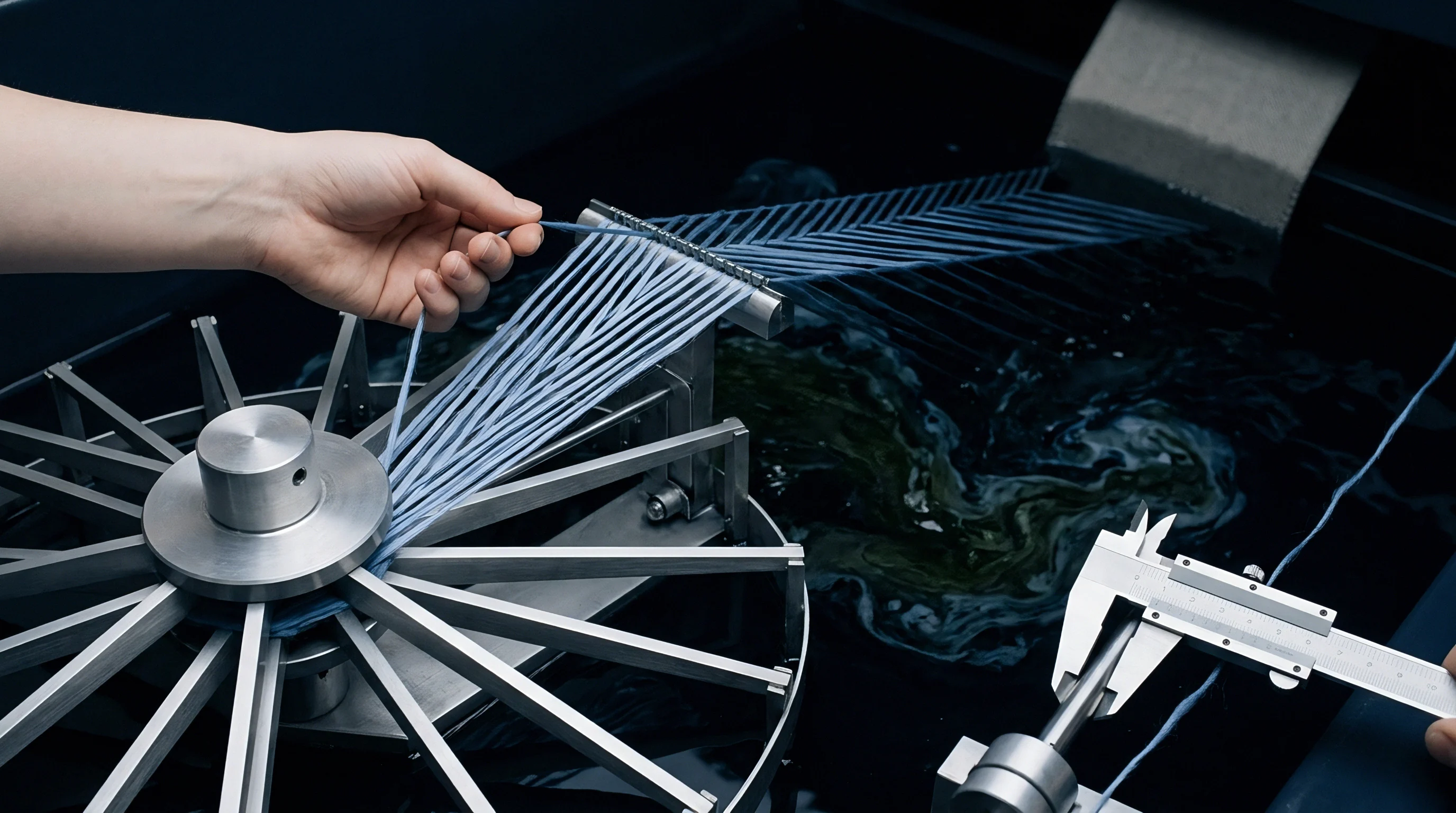
Finish
Synthetic filament yarn production applies a liquid surface formulation immediately after extrusion to enable mechanical processing. Without this application, static electricity builds rapidly on moving filaments, causing individual capillaries to balloon and snap across guide surfaces. Primary lubricants form a thin boundary film over the hydrophobic polymer matrix.
Antistatic agents provide conductive pathways for charge dissipation, while emulsifiers maintain chemical homogeneity in aqueous application baths. Target oil pickup figures vary strictly by downstream processing intention.
Gravimetric finish measurement on 167 dtex textured polyester yarns requires conditioning at 20°C and 65% relative humidity for four hours prior to solvent extraction.

Chemical Architecture of Synthetic Filament Surface Coatings
Formulations combine three core chemical classes suspended in aqueous emulsion or applied neat. Primary lubricants rely on mineral oils, synthetic esters, or refined fatty acid esters to reduce friction against metallic or ceramic machine components. Antistatic components utilize anionic potassium alkyl phosphates or cationic quaternary ammonium compounds to dissipate electrical charges generated at high spinning speeds.
Emulsifying agents consist of ethoxylated fatty alcohols or sorbitan esters, holding insoluble oil droplets in uniform dispersion. A standard target oil pickup of 0.85% for 167 dtex polyester draw textured yarn rests on a drawing speed of 900 metres per minute and polyurethane disc friction units; increasing speed to 1100 metres per minute elevates required surface oil to 1.15% to prevent filament abrasion.
Polymer chemistry dictates specific formulation choices. Polyamide filaments attract atmospheric moisture readily, allowing lower antistatic loading than polyethylene terephthalate. Polypropylene filaments require non-polar mineral oil foundations due to low surface energy.
High tenacity industrial filaments mandate high thermal stability ester bases to prevent thermal degradation during hot drawing at temperatures exceeding 220°C.

Target Oil Pickup Ratios across Filament Manufacturing Routes
Yarn manufacturing routes mandate distinct surface oil targets to match mechanical stress profiles. Partially oriented yarns require minimal surface lubrication during windup, designed for immediate draw texturing where excess oil fouls heating chambers. Fully drawn yarns receive higher surface oil loads to endure high speed warping and jet weaving tensions.
Draw textured yarns demand maximum surface coverage to stabilize bulk development and resist needle friction in circular knitting.
Finish choice alters friction.
| Polymer Matrix | Yarn Type | Linear Density (dtex) | Target OPU (%) | Primary Chemical Base |
|---|---|---|---|---|
| Polyethylene Terephthalate | Partially Oriented (POY) | 85 to 250 | 0.35 to 0.65 | Ethoxylated Fatty Acid Ester |
| Polyethylene Terephthalate | Fully Drawn (FDY) | 50 to 167 | 0.60 to 1.10 | Synthetic Ester Mineral Oil Blend |
| Polyethylene Terephthalate | Draw Textured (DTY) | 78 to 334 | 1.10 to 2.20 | High Viscosity Polyol Ester |
| Polyamide 66 | High Tenacity Industrial | 210 to 1880 | 0.50 to 0.95 | Thermally Stable Polyether Ester |
| Polypropylene | Fully Drawn (FDY) | 100 to 600 | 0.45 to 0.85 | Refined Hydrocarbon Mineral Oil |
Insufficient application leads to broken filaments, fuzz generation, erratic yarn tension, and catastrophic package collapse during transport. Excessive application causes oil dripping inside texturing heaters, smoke generation, friction disc slippage, uneven dye bath penetration, and elevated chemical waste in mill effluent streams.

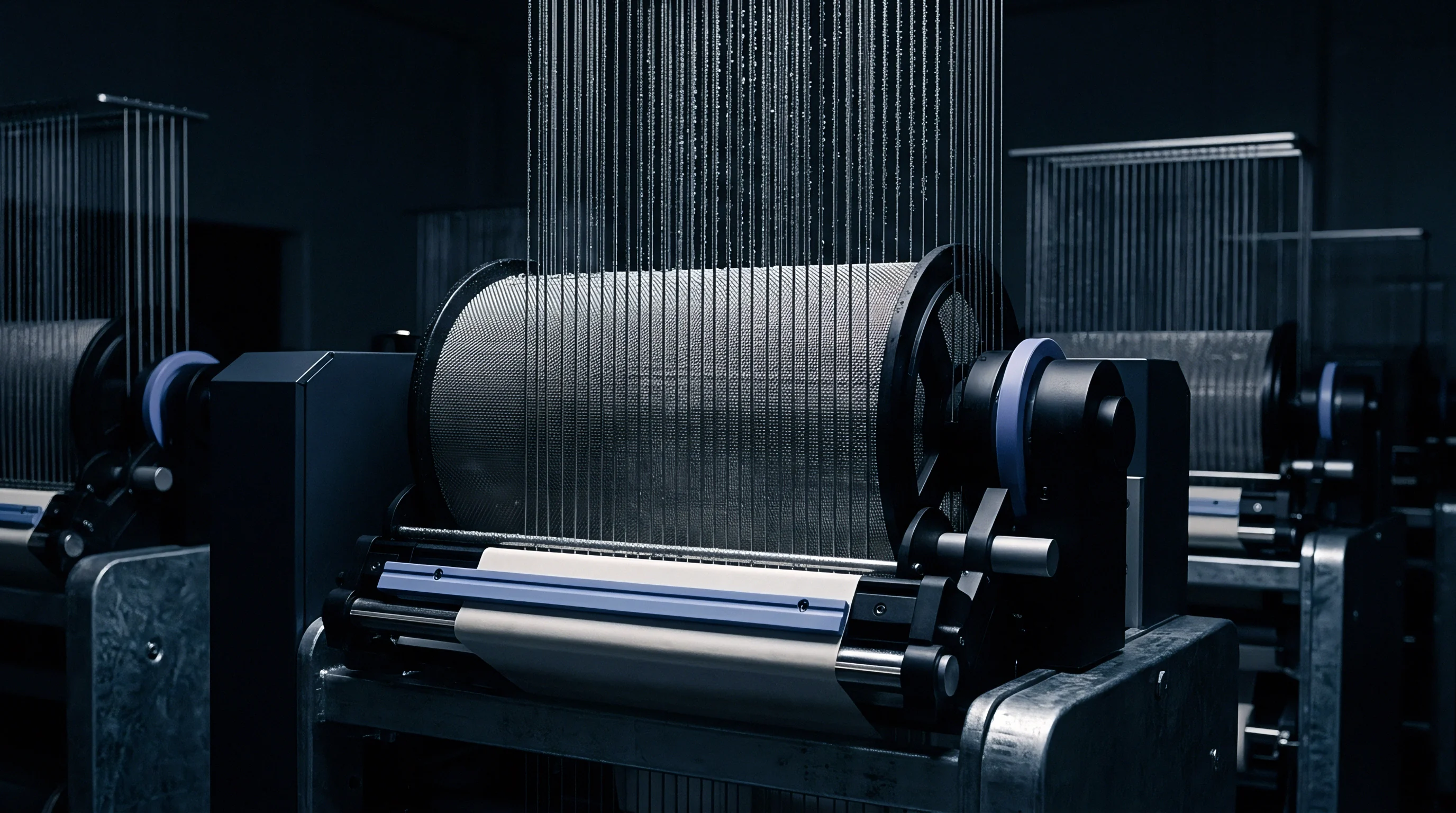
Extraction
Standardized quantitative analysis isolates applied surface chemicals from the solid polymer core using liquid solvents. Laboratories weigh a conditioned specimen, strip the surface layer inside an extraction apparatus, dry the residual yarn mass, and calculate mass loss. The gravimetric result establishes the legal baseline for commercial disputes and quality audits.

Gravimetric Extraction Chemistry and Solvent Selection
Solvent selection governs extraction completeness and polymer safety. Non-polar organic solvents dissolve fatty ester lubricants and hydrocarbon bases without dissolving the underlying polyester, polyamide, or polyolefin polymer chain. Petroleum ether boiling between 40°C and 60°C remains the benchmark solvent under international standard methods.
Hexane and diethyl ether provide comparable solubility parameters, though diethyl ether introduces flammability risks. Methanol or isopropanol additions dissolve polar antistatic salts, but prolonged exposure risks extracting low molecular weight polymer oligomers from inside the fiber matrix. Petroleum ether Soxhlet extraction standard duration of 4 hours at 20 reflux cycles per hour rests on a sample mass of 10.0 grams and a 100 millilitre solvent charge; altering thimble packing density slows solvent penetration, demanding 6 hours to recover hydrophobic ester components fully.
Hexane extracts non-polar fats. Methanol strips polar surfactants.
ISO 6741-1 defines commercial mass adjustments based on extracted dry mass plus agreed moisture and finish allowances.

Soxhlet Reflux Cycles and Temperature Control Rules
Analytical accuracy requires strict procedural execution. Operators prepare extraction thimbles, condition specimens, and manage heating mantles to preserve solvent integrity without scorching extracted residues.
- Condition yarn packages inside the testing atmosphere at 20°C and 65% relative humidity for twenty-four hours to stabilize moisture content.
- Cut a representative specimen of exactly ten grams from the middle layers of the package, avoiding outer hand-contaminated wraps.
- Place the cut yarn specimen inside a pre-weighed cellulose extraction thimble and insert it into the Soxhlet extraction chamber.
- Pour one hundred fifty millilitres of petroleum ether into the receiving flask and connect the water-cooled glass condenser unit.
- Apply heat to generate twelve to fifteen siphoning cycles per hour for a continuous period of three full hours.
- Remove the receiving flask containing dissolved oil, evaporate the solvent inside a vacuum rotary evaporator, and dry the residue at 105°C for two hours.
- Cool the residue flask inside a desiccator filled with active silica gel for forty-five minutes before taking the final analytical balance mass.
Drying requires two hours. Solvents dissolve boundary lubricants.
Textile mills frequently claim that thermal volatilization inside texturing heaters accounts for missing surface mass rather than insufficient oil application at the spinning block.


Spectroscopy
Rapid quality control on the spinning floor demands analytical methods that avoid hazardous solvents and return results in minutes. Modern filament plants utilize rapid physical instruments placed directly beside production lines. These instruments measure atomic responses of surface molecules under electromagnetic excitation, referencing signal strength against stored gravimetric calibration curves.

Does Nuclear Magnetic Resonance Replace Solvent Extraction?
Time-Domain Nuclear Magnetic Resonance isolates hydrogen proton relaxation rates between solid polymers and liquid coatings. Solid polymer chains exhibit short spin-spin relaxation times, losing radiofrequency signal energy within microseconds. Liquid surface lubricants exhibit long relaxation times, maintaining detectable radiofrequency signals for milliseconds.
Instrument electronics separate these signal components cleanly, outputting oil pickup percentages without destroying the yarn sample. Static charge snaps filaments.
Water corrupts nuclear signals. Hydrogen protons in absorbed moisture relax at rates overlapping liquid finish oils, generating false positive readings on polyamide yarns. Operators condition specimens inside heated sample wells at 50°C to drive off free water prior to signal acquisition.
Gravimetry remains reference law.
Spectrographic finish readings without daily gravimetric calibration lines transform quality control into educated guessing.
Time-Domain Signal Calibration across Polymer Matrix Variations
Instrument calibration demands rigorous gravimetric correlation. Technicians prepare matrix-matched calibration standards across five oil concentration levels for every specific yarn dtex and filament cross-section. Variations in polymer density, titanium dioxide dulling agent content, or filament cross-sectional geometry alter baseline signal decay curves.
| Methodology Parameter | Solvent Extraction (Gravimetric) | Time-Domain NMR (TD-NMR) | ATR-FTIR Spectrometry |
|---|---|---|---|
| Standard Protocol | ISO 6741-1 / ASTM D2257 | ASTM D7183 / ISO 139 | Internal Mill Benchmark |
| Testing Duration per Sample | 180 to 240 Minutes | 2 to 5 Minutes | 1 to 3 Minutes |
| Solvent Consumption | 100 to 150 mL per Test | Zero Solvents Used | Zero Solvents Used |
| Sample Destruction | Complete Extraction | Non-Destructive | Non-Destructive |
| Measurement Accuracy | ±0.03% OPU Absolute | ±0.05% OPU Absolute | ±0.08% OPU Absolute |
| Moisture Sensitivity | Low (Dried Post-Extraction) | High (Proton Signal Interference) | Moderate (OH-Band Interference) |
Direct spectroscopic measurement requires continuous operational validation against gravimetric extraction baselines.
- Calibration Drift occurs when polymer pigment formulations change without updating stored spectrometer reference spectra.
- Moisture Overshoot happens when ambient humidity shifts rapidly, causing uncorrected water proton signals in TD-NMR analyzers.
- Sample Packing Density causes path-length variation across Near-Infrared optical diffuse reflectance cups, generating inconsistent absorption values.
- Chemical Degradation of finish components inside heated storage drums alters characteristic infrared ester carbonyl absorption peaks at 1740 cm⁻¹.
Whether infrared spectroscopic methods can achieve legal standing under international trade contracts without secondary gravimetric confirmation remains an active commercial dispute.

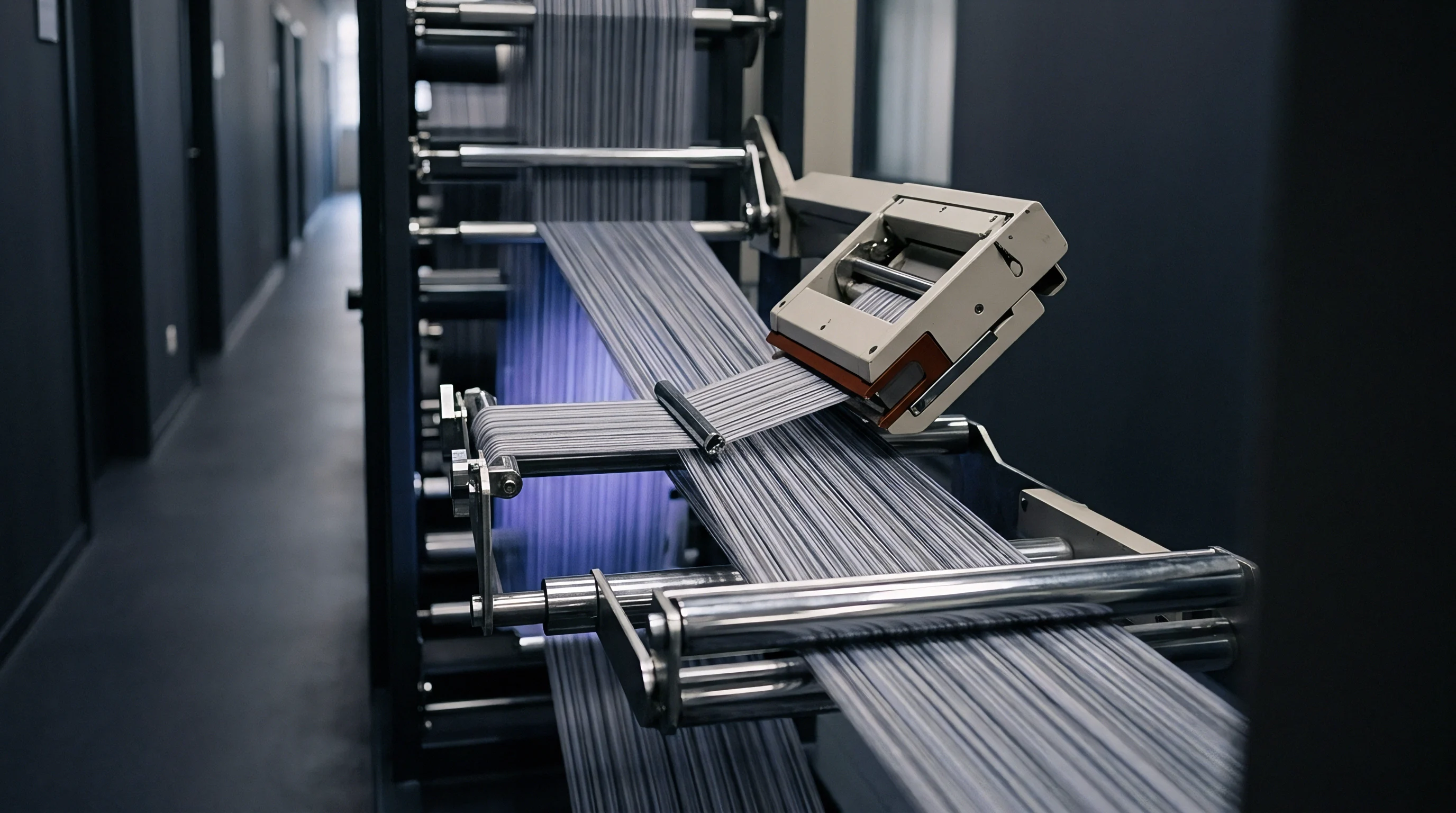
Dispute
Commercial transactions face financial claims when delivered yarn lots deviate from specified oil pickup thresholds. Variance across bobbin packages creates severe manufacturing defects in high-speed knitting and weaving mills. Buyers enforce strict sampling protocols to verify incoming shipment uniformity before releasing payment.
Outer yarn layers dry. Inner cores retain oil. Bobbins drain vertically during storage.

Package Distribution Variance and Doff-to-Doff Drift
Surface oil distribution across a spun package is rarely uniform. Liquid finish migrates inward toward the cardboard tube core under winding tension, while outer yarn layers lose volatile lubricant components to ambient air. Intra-package finish concentration migration estimates of 12% to 18% loss between core and shell layers during six-month tropical storage lack rigorous published baseline data across all lubricant formulations; a careful buyer mandates bobbin cross-section sampling from core, middle, and outer layers on every incoming lot.
Migration behavior in tightly wound synthetic yarn tubes closely mirrors micro-capillary oil separation observed in heavy industrial synthetic marine hawser ropes during long-term storage under tension. Tenacity drops under heat.
Uneven finish application generates tension spikes during high-speed warping that no downstream tension compensator can smooth.
Uneven spin finish application creates tension spikes during high-speed warping that no downstream tension compensator can smooth.
Commercial Settlement Adjustments for Finish Level Shortfalls
When tests reveal significant finish deviations, buyers calculate claim adjustments based on processing disruption risks and missing physical mass. Consider a 20-tonne shipment of 150D/48F textured polyamide 6 yarn contracted at $2.80 per kilogram with a specified oil pickup of 1.50%. If lab analysis shows actual oil pickup sits at 0.70%, the delivery contains 160 kilograms of missing lubricant mass, representing a direct raw material shortfall of $448.
The true financial risk sits in downstream processing: low finish causes filament friction, generating snow-like oligomer dust that clogs circular knitting needles, causing multi-line fabric structural defects costing thousands of dollars.
Texturing units require steady lubrication.
- Draw Representative Samples from top, middle, and bottom positions of ten randomly selected cardboard cartons per container pallet.
- Strip Shell Layers discarding the outermost fifty metres of yarn to remove handling contamination and volatile surface losses.
- Conduct Parallel Testing split between mill laboratory TD-NMR equipment and an ISO 17025 accredited third-party gravimetric lab.
- Calculate Mean Deviation against contract tolerance limits, typically set at ±0.20% absolute OPU from specified target.
- Issue Formal Claim within thirty days of port arrival, attaching complete Soxhlet extraction gravimetric residue reports.
Bureau International pour la Standardisation des Fils Synthétiques trade rules dictate that finish content disputes revert strictly to solvent extraction gravimetry using boiling petroleum ether.

Margin
Filament yarn invoices state net mass determined through commercial mass formulas. Commercial mass calculations adjust actual dry yarn weight by adding agreed standard allowances for moisture regain and surface finish. Understanding these mathematical adjustments prevents overpaying for synthetic fiber shipments.

Commercial Mass Calculations under Finished Allowance Rules
International rules define commercial mass to ensure fair trade between spinners and fabric manufacturers. The standard formula adds a fixed allowance percentage to oven-dry mass stripped of all finish components. ISO 6741-1 dictates the formula: Commercial Mass equals Oven Dry Mass after extraction multiplied by one hundred plus standard moisture allowance plus standard finish allowance, divided by one hundred.
Customs duties apply on net mass. Commercial mass governs invoices.
| Parameter / Condition | Case A: Exact Match | Case B: Excess Finish | Case C: Deficit Finish |
|---|---|---|---|
| Gross Invoiced Physical Weight | 50,000 kg | 50,000 kg | 50,000 kg |
| Lab Measured OPU (%) | 0.80% (Contracted) | 2.10% (Excess Oil) | 0.20% (Deficit Oil) |
| Oven Dry Yarn Weight (Extracted) | 48,910 kg | 48,270 kg | 49,200 kg |
| Standard Allowance (Moisture + Finish) | 0.40% Moisture + 0.80% Finish | 0.40% Moisture + 0.80% Finish | 0.40% Moisture + 0.80% Finish |
| Calculated Commercial Mass (ISO 6741) | 49,497 kg | 48,849 kg | 49,790 kg |
| Financial Settlement Adjustment ($2.20/kg) | Baseline ($108,893) | Buyer Credit: $1,425 | Supplier Invoice: +$644 |
Tariff Classification Impact of Surface Chemical Content
Customs authorities verify surface chemical content to prevent misclassification under Harmonized System tariff codes. Pure synthetic filament yarns fall under HS Chapter 54, bearing duty rates tied to physical mass. Importers declaring net weight including 3% finish content pay customs duty on oil at fiber prices, inflating landed costs across cross-border supply chains.
Dry mass determines true fiber cost regardless of surface oil volume.