Scope Certificate Verification for Synthetic Filament Extrusion Mills
Verify extrusion scope certificates by matching PR0027 codes, checking mass loss allowances, and confirming bottle-grade comonomers via analytical lab tests.


Intake
Synthetic filament assurance begins with document interrogation before purchase contracts bind capital. Licensing records filed under the Textile Exchange Content Claim Standard and Global Recycled Standard define whether an extrusion facility possesses authorized capacity to convert raw polymer chips into certified continuous filament yarns. Extrusion operations occupy a vulnerable position in supply chain tracking because thermal melting eliminates physical batch markers, turning paperwork into the primary barrier against fraudulent recycled claims.

Document Architecture and Licensing Scope
Accredited certification bodies issue scope certificates following physical on-site audits of manufacturing facilities. The certificate identifies the audited legal entity, all licensed production sites, authorized product categories, and approved processing steps. An extrusion mill cannot validate yarn shipments if its documentation covers solely fiber texturizing, mechanical blending, or trading without explicit spinning authorizations.
Licensing records reveal omitted processes.
Each document carries an alphanumeric licensing code that ties back to the central registry of the issuing certification body. Verifiers inspect the annexes of the scope certificate to confirm that the manufacturing facility address matches the bill of lading, tax registrations, and dispatch manifests. Multi-site certificates present specific commercial vulnerabilities.
A parent holding company frequently lists secondary facilities that never underwent environmental management system or chemical usage audits. Facility registers demand line audits.
| Processing Step | Standard Code | Extrusion Plant Audit Evidence | Discrepancy Impact |
|---|---|---|---|
| Extrusion | PR0027 | Melt hoppers, screw extruders, heated spinneret packs, quenching cabinets | Invalidates filament claims if omitted; indicates subcontracted spinning |
| Spinning | PR0016 | Take-up winders, godet drawing rolls, traverse guides, cross-wound bobbins | Prevents raw yarn conversion claims from polymer chip feedstocks |
| Texturizing | PR0031 | Draw-texturizing machines (DTY), heating pins, friction disc cooling tracks | Restricts facility to mechanical crimping of pre-extruded feeder yarns |
| Mechanical Recycling | PR0020 | Bottle shredders, flotation washing tanks, melt devolatilizing pelletizers | Limits plant to chip production; excludes continuous filament draw-down |

Operational Categorization across Extrusion Lines
Filament extruders operate continuous polymerization or chip-fed melting equipment. A scope certificate listing polyester filament yarn production must explicitly index product category PC0035 and product detail PD0070 alongside raw material composition codes. If the certificate lists only post-consumer polymer chips under code PC0023, the mill holds credentials to produce resin pellets while lacking credentials to melt-spin textured continuous filaments.
The certificate expires annually.
Auditors cross-reference certified output capacity against electrical consumption records and spinneret die inventory. A facility holding one single-screw extruder rated at three hundred kilograms per hour cannot generate five thousand tonnes of certified drawn yarn per year without uncertified toll spinning partners. Discrepant capacity figures expose paper-only broker transactions masquerading as vertically integrated extrusion runs.
- Omitted extrusion sub-codes invalidate yarn claims when the facility register lists only texturizing or mechanical recycling without filament spinning authorizations.
- Expired licensing windows destroy document validity immediately, stripping consignments of certified status when production dates fall outside annual inspection cycles.
- Mismatched legal entities create unbridgeable custody gaps between sales offices holding certificates and physical extrusion plants running the spinning screws.
- Unlisted polymer chemistries expose downstream buyers to regulatory rejection when certificates approved for polyester cover uncertified polyamide shipments.
The mill manager claimed that subcontractor registration was unnecessary because the satellite draw-texturizing plant belonged to the same parent corporate group.


Chip
Polymer feedstock arriving at the hopper throat carries chemical variances that determine final filament integrity. Recycled polyethylene terephthalate chip sourced from bottle flakes differs from virgin resin in molecular weight distribution, comonomer concentrations, and additive packages. Extrusion mills running high-speed spinning lines often add virgin masterbatches, chain extenders, and colorants directly at the feeder throat without reporting these mass fractions on transaction records.
Molten polymer degrades rapidly.

Thermal History and Additive Dilution
Virgin color masterbatches and melt stabilizers introduce uncertified fractions into recycled polymer streams. Mills introduce pyromellitic dianhydride or epoxy-based chain extenders to rebuild intrinsic viscosity lost during repeated thermal cycles. These processing chemicals modify melt flow indexes inside the barrel.
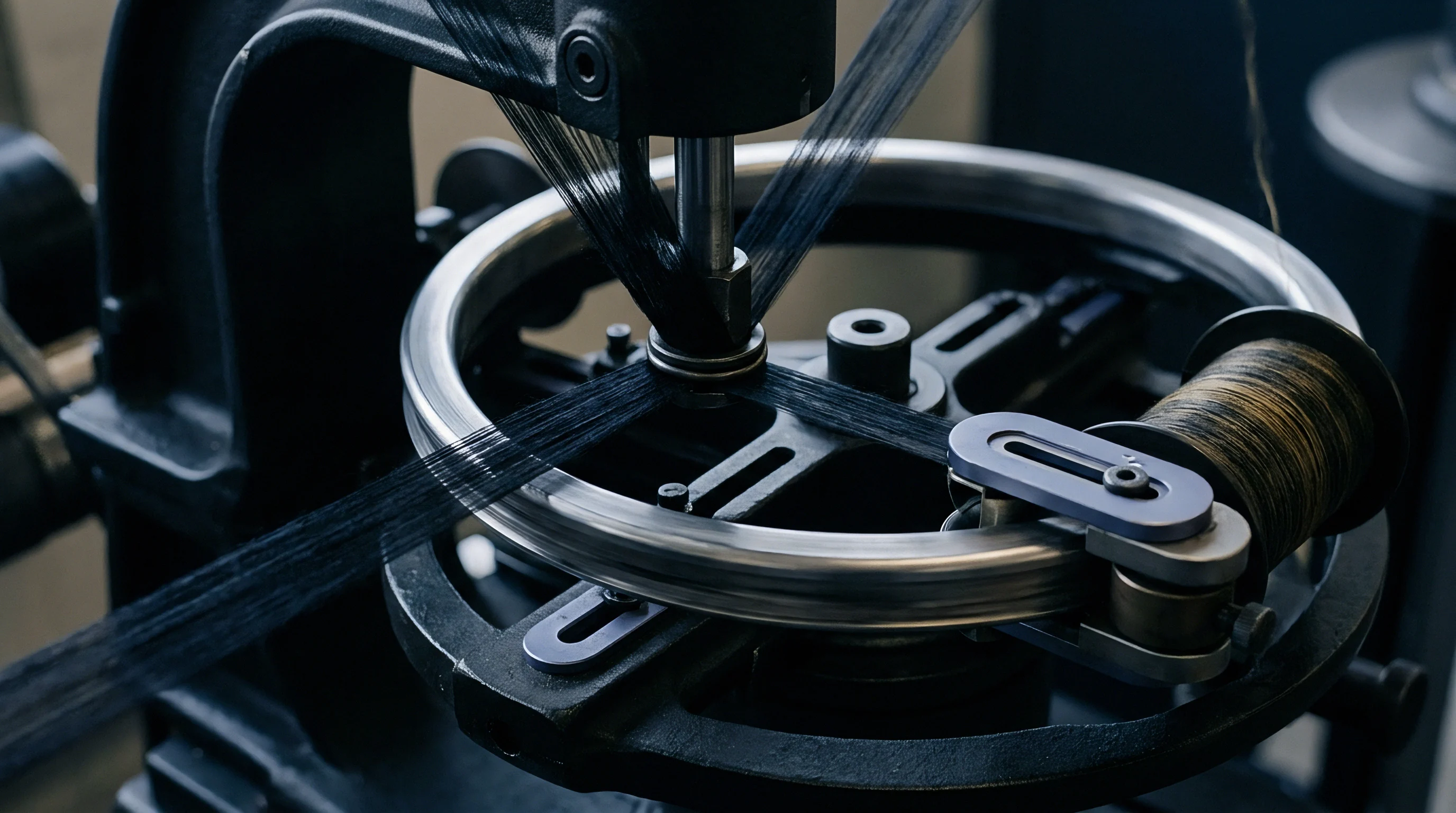
Extrusion screws generate shear heat that degrades contaminated batches.
When an extrusion mill spins dope-dyed black or colored yarns, masterbatch addition rates range between two and six percent of total yarn weight. Unless the scope certificate annex specifically accounts for non-certified virgin carrier resins and chemical pigments in the input-output bill of materials, the final yarn contains unaccounted virgin content. Clean polymer streams prevent spin-line stoppages.
A spinning mill that cannot separate dirty flake handling from clean filament take-up contaminates its entire production ledger.
Feedstock Classification and Mechanical Purity
Flake sorting efficiency dictates contamination levels prior to melt filtering. Polyvinyl chloride flakes present in post-consumer polyester degrade into hydrochloric acid at polyester melt temperatures around two hundred eighty degrees Celsius. This acid corrodes screw barrels and shears ester bonds, lowering yarn tensile strength.
Moisture hydrolyzes molten polyester chains.
Solid contaminants cause filament breakage. Unmelted polyolefin bottle cap residues carbonize against breaker plates, creating pressure spikes across the pack. Extruders lose mass continuously.
High particulate counts force frequent screen pack changes, dumping molten polymer onto the floor as purge waste. Uncontrolled purging creates material balance discrepancies that corrupt certified inventory ledgers.
Clean feedstock entering an unpurged screw yields contaminated filament at the winding head.


Balance
Extrusion facilities convert bulk polymer into continuous filaments through irreversible thermodynamic transformations that consume mass. Standard engineering calculations establish clear material loss rates across continuous drying, solid-state polycondensation, barrel degassing, filtration screen changing, and godet winding. A mill claiming one hundred percent conversion of incoming certified chip into outgoing certified yarn violates physical mass balance principles.
Mass balances govern certified claims.

When Do Mass Loss Allowances Invalidate Custody?
Volatile organic release, filtration cake extraction, and winding waste reduce net commercial yarn yields. Typical direct-melt synthetic filament spinning operations experience aggregate mass losses between three and seven percent. When an audit file demonstrates zero loss between incoming transaction certificates and shipped bobbins, auditors uncover phantom mass fabrication.
Screen changers collect carbonized gels. Melt filtration through two-ply Dutch weave wire mesh removes solid particulates from recycled chip. The resulting filter cake contains degraded polymer and trapped pigments discharged directly into waste bins.
If a spinning plant reports nominal scrap rates while running low-grade post-consumer flakes, the facility balances its books by adding uncertified virgin chip off the books.
Melt filtration mass loss exceeding four percent indicates degraded chip feedstock or uncalibrated screen backflush timing.
| Extrusion Stage | Input Material Form | Expected Mass Loss Range | Physical Byproduct |
|---|---|---|---|
| Crystallization and Drying | Amorphous or crystalline chip | 0.3% to 0.8% | Water vapor, dust, light volatiles |
| Extruder Barrel Degassing | Molten polymer melt | 0.2% to 0.5% | Volatile organic oligomers, acetaldehyde |
| Melt Filtration Screen Purge | Pressurized melt stream | 0.5% to 2.2% | Filter cake, degraded gels, charred polymer |
| Spinneret Wiping and String-up | Liquid filaments at die face | 0.4% to 1.1% | Melt drips, nozzle drool, start-up waste |
| Draw Winding and Bobbin Doffing | Continuous filament tow | 1.2% to 2.5% | Choked yarn, threadline wraps, yarn spools |
| Loss ranges derive from continuous direct-melt spinning installations operating solid-state polycondensation towers and sintered screen changers under dry nitrogen purge. | |||

Yield Reconciliation in Continuous Spinning
Material accounting models track raw input tonnage against wound bobbin gross weight. Consider a worked construction of a 40-tonne production run of 75-denier/72-filament drawn textured yarn to evaluate mass conservation assumptions across a direct-spinning melt plant. Assume an incoming raw material lot of 42,000 kilograms of mechanical post-consumer recycled polyethylene terephthalate chip with an intrinsic viscosity of 0.82 deciliters per gram and moisture content under 30 parts per million.
Extrusion line solid-state polycondensation and melt volatilization consume 1.2 percent of mass as light volatiles and water vapor. Continuous melt filtration through 20-micrometer sintered metal screens extracts 0.8 percent of input volume as backflush cake. Spin finish emulsion application adds 1.1 percent neat oil solids to yarn mass prior to bobbin collection.
Subsequent draw texturizing operations generate 1.8 percent winding waste and cut filaments. Net wound textured filament output totals 40,014 kilograms of certified yarn, representing an overall material yield of 95.27 percent against dry resin inputs. If the extrusion mill reports 41,800 kilograms of certified output from that same 42,000-kilogram chip intake, the mass balance exceeds stoichiometric limits and triggers an automatic audit non-conformity.
- Weigh incoming sealed bulk chip containers on calibrated truck scales before discharge into storage silos.
- Extract three composite pellet samples per twenty-tonne silo compartment to measure intrinsic viscosity and moisture fractions.
- Record solid-state polycondensation residence times alongside vacuum purge mass differentials during drying phases.
- Collect backflush screen cake after continuous filter cycling and log gross tare weights on the extruder floor shift report.
- Calculate total bobbin output across winding take-up stations and subtract spin finish emulsion solids to determine dry polymer yield.
Commercial contracts incorporating Textile Exchange Content Claim Standard Clause 5.3 assign unrecoverable administrative cancellation fees to mills that report negative production shrinkage.


Screen
Laboratory analytical instruments separate authentic recycled synthetic filaments from virgin petrochemical equivalents. Commercial documentation alone cannot guarantee that the yarn inside a shipping container corresponds to the lot number declared on a transaction certificate. Physical characterization methods detect macromolecular changes induced by mechanical recycling and thermal extrusion cycles.
Laboratory instruments establish molecular reality.

Analytical Benchmarks for Polyethylene Terephthalate
Solution viscometry measures intrinsic chain length to detect thermal degradation from prior processing cycles. Recycled filament yarns spun from bottle flake exhibit distinct molecular weight distributions compared to virgin textile-grade polymers. Viscosity drops during thermal shear.
Gel permeation chromatography reveals polydispersity index shifts caused by polymer chain cleaving during solid-state extrusion. Virgin polyester displays a narrow molecular weight distribution centered between 1.8 and 2.1. Mechanically recycled yarns demonstrate broader distribution profiles between 2.3 and 2.8 due to uneven chain scission and chain-extender branching.
Spectrometry separates true recycled feedstock.
Analytical chemistry confirms polymer molecular weight degradation that paperwork routinely conceals.
| Analytical Parameter | Standard Test Method | Post-Consumer Recycled Baseline | Virgin Petrochemical Baseline |
|---|---|---|---|
| Intrinsic Viscosity (PET) | ASTM D4603 / ISO 1628-5 | 0.62 to 0.70 dL/g (post-spinning) | 0.65 to 0.68 dL/g (unbroken narrow curve) |
| Isophthalic Acid Content | HPLC / GC-MS | 1.5 to 3.2 mol% (bottle resin markers) | 0.0 to 0.5 mol% (standard homopolymer) |
| Antimony Residue | EN 16711-1 / ICP-MS | 180 to 320 mg/kg (polycondensation catalyst) | 200 to 350 mg/kg (or zero in titanium systems) |
| Caprolactam Oligomers (PA6) | ISO 6427 / Solvent Extraction | 0.8% to 1.8% (thermal breakdown) | 0.2% to 0.5% (freshly polymerized) |
| Carboxyl End Groups | Titrimetric ASTM D7409 | 28 to 45 eq/10^6 g (thermal oxidation) | 15 to 25 eq/10^6 g (pristine terminal chains) |

Polyamide Degradation and Monomer Extraction
End-group titration reveals carboxyl and amine ratios altered by hydrolytic recovery processes. Virgin polyamide 6 filament shows balanced amine and carboxyl end groups, maintaining tight ratios determined by polymerization stoichiometry. Recycled polyamide 6 undergoes thermal oxidation in the melt extruder, driving carboxyl end group concentrations up while consuming reactive primary amine groups.
Contaminated polymer blocks spinneret capillaries.
Solvent extraction using boiling methanol separates cyclic caprolactam monomer and dimer residues from drawn polyamide filaments. Recycled polyamide runs exhibit elevated low-molecular-weight extractables due to thermal degradation occurring inside unvented extruder barrels. High monomer concentrations plasticize the filament, lowering initial modulus and altering colorfastness properties during yarn dyeing.
- Solution viscometry testing quantifies average molecular weight preservation through capillary flow timing in dichloroacetic acid solvents.
- Differential scanning calorimetry identifies secondary crystallization peaks caused by thermal history variations during previous pelletizing cycles. An absence of peak broadening indicates virgin resin substitution.
- Inductively coupled plasma spectrometry measures residual antimony catalysts and titanium dioxide delustrant concentrations against virgin feedstock baselines. Bottle-grade feedstocks display characteristic catalyst residues absent in pure textile-grade polymers.
- High-performance liquid chromatography isolates isophthalic acid comonomer fractions typical of beverage container resins. Extruded yarns showing zero isophthalic acid content fail post-consumer provenance validation.
Whether chemical tracer molecules can withstand commercial high-temperature solid-state polycondensation without decomposing into undetected volatile fractions remains unresolved across commercial testing facilities.

Recourse
Commercial remedies dictate financial recovery when synthetic yarn deliveries fail traceability audits. A defective scope certificate or a falsified transaction record invalidates trade claims along the entire supply chain, converting high-value recycled goods into non-compliant commodity textile stock. Brands face regulatory scrutiny under truth-in-advertising statutes and green claims legislation when supply chain documentation collapses.
Customs inspectors detain unverifiable cargo.

Whose Ledger Absorbs Border Quarantine Costs?
Port authorities impound synthetic textiles failing supply chain transparency mandates under regional import laws. When a container sits held at the terminal awaiting missing transaction certificates, storage demurrage and detention charges accrue against the importer of record. Demurrage charges accrue daily.
Detention costs frequently exceed the underlying commercial invoice value of the raw synthetic yarn inside the container. If customs authorities discover that the extrusion mill utilized unauthorized subcontract spinning lines, border officers reject entry, ordering destruction or re-export of the consignment at the buyer expense. Without clear contractual recourse clauses, the buyer carries these terminal expenses without reimbursement mechanisms.
Section 7 of the Textile Exchange Content Claim Standard invalidates all downstream transaction documents upon discovery of uncertified subcontractor processing.

Transaction Revocation and Downstream Indemnity
Certification bodies publish suspension notices that retroactively nullify previously issued trading instruments. When a certifier discovers volume reconciliation discrepancies during an annual renewal audit, the body revokes the scope certificate and notifies downstream brand partners. The cancellation cascades through every conversion stage, stripping fabric weavers, dyehouses, and garment assemblers of their finished product claims.
Arbitration panels enforce indemnity language. Prudent sourcing contracts stipulate that the extrusion mill assumes full liability for border penalties, recall costs, third-party laboratory verification bills, and commercial margin loss resulting from certificate revocation. The insertion of self-executing set-off clauses allows purchasers to debit pending payments on secondary production lots to cover losses incurred from fraudulent recycled claims on earlier shipments.
Failure to defend raw material provenance at the port triggers container re-export mandates, port storage tariffs, and immediate commercial debits against the seller.