Standard Test Method Selection for Azo Dye Analysis
Select EN ISO 14362-1 direct reduction for natural fibers, pre-extract synthetics with boiling xylene, and isolate 4-aminoazobenzene using EN ISO 14362-3.


Matrix
Analytical laboratories screen textiles for banned azo colorants by determining whether specific cleavage products exceed regulatory limits. Colorant chemistry dictates the instrument. When an azo dye breaks apart in a reductive environment, it releases target aryl amines that register on gas chromatography mass spectrometry systems.
The fiber blend determines the preparation pathway before any chemical reduction takes place. REACH Annex XVII Entry 43 restricts twenty-two specific aromatic amines to a limit of thirty milligrams per kilogram in articles intended to touch human skin or oral cavities. Commercial purchase specifications from global apparel brands set the limit lower, at twenty milligrams per kilogram.
Submitting a specimen under the incorrect analytical procedure produces legal vulnerability or unmerited rejection at international ports.
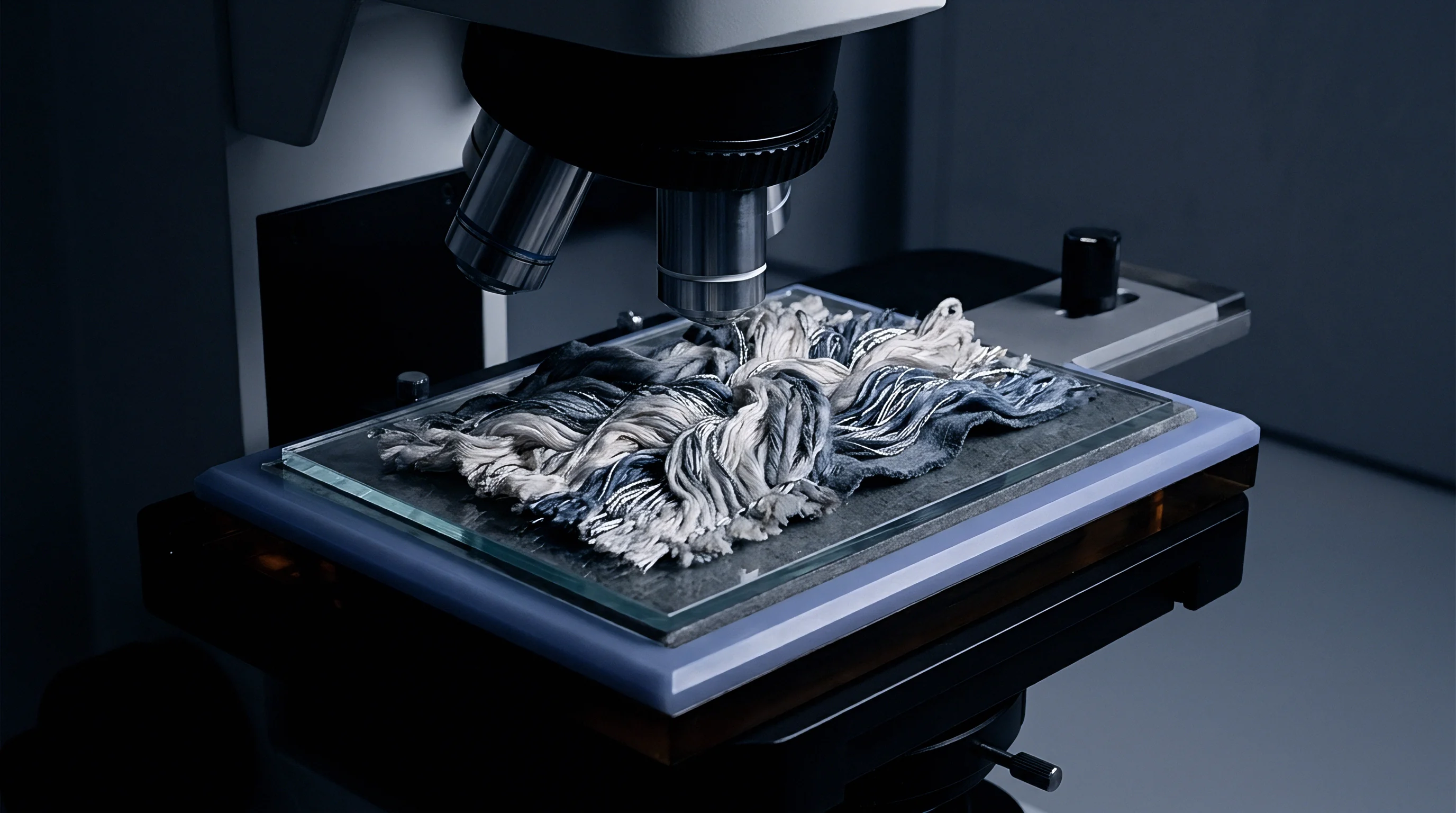
Cellulose fibers dissolve readily. Natural and regenerated cellulose, including cotton, linen, viscose, and modal, disperse colorant into aqueous solution under direct heating. Testing laboratories apply EN ISO 14362-1:2017 without solvent pre-extraction for these accessible plant structures.
The technician weighs a one-gram specimen, cuts it into two-millimeter fragments, places the material into a reaction vessel, and immerses it directly in citrate buffer at pH 6.0. Animal hair fibers behave similarly. Wool, silk, and cashmere expose their internal dye structures to the aqueous buffer solution without mechanical or organic swelling.
Recoveries of 4-aminobiphenyl drop below thirty percent when the water bath temperature exceeds seventy-two degrees Celsius during sodium dithionite reduction.
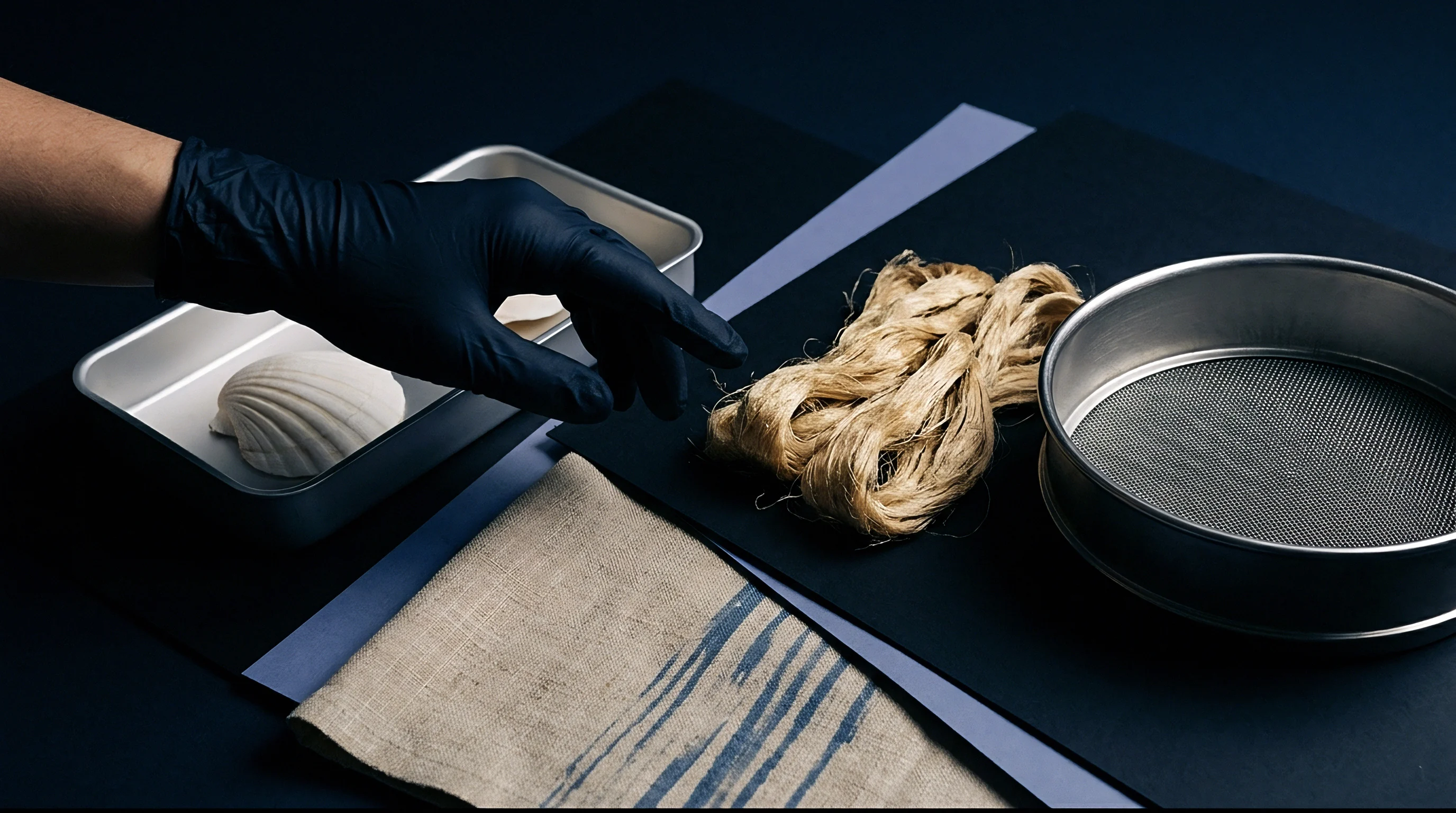
Polyester and synthetic polymers resist aqueous reagents. Polyethylene terephthalate chains sit in a tight crystalline structure that traps disperse dyes. Testing these materials without solvent pre-extraction yields zero detection even when the garment contains banned colorants.
Boiling xylene swells the lattice. The standard EN ISO 14362-1:2017 method contains two distinct procedural tracks: Method A uses direct reduction for plant and animal fibers, while Method B mandates extraction with boiling xylene at one hundred thirty degrees Celsius for polyester, polyamide, acrylic, and triacetate textiles. Applying Method A to a polyester knit yields an incomplete extraction, leaving hazardous dyes embedded within the polymer filament.

Substrate Method Selection Matrix
Laboratories select analytical standards based on raw material composition, finish type, and target chemical cleavage products.
| Substrate Class | Standard Designation | Pre-Extraction Stage | Target Analytes | Detection Threshold |
|---|---|---|---|---|
| Cellulose, Wool, Silk | EN ISO 14362-1:2017 | None (Direct Reduction) | 22 Restricted Amines | 30 mg/kg legal, 20 mg/kg buyer |
| Polyester, Acrylic, Polyamide | EN ISO 14362-1:2017 | Boiling Xylene (130 °C) | 22 Restricted Amines | 30 mg/kg legal, 20 mg/kg buyer |
| Textiles Dyed with 4-Aminoazobenzene | EN ISO 14362-3:2017 | Substrate Dependent | 4-Aminoazobenzene (CAS 60-09-3) | 30 mg/kg legal, 20 mg/kg buyer |
| Finished and Pigment Printed Leather | EN ISO 17234-1:2020 | None (Buffer Maceration) | 22 Restricted Amines | 30 mg/kg legal, 20 mg/kg buyer |
| Leather Dyed with 4-Aminoazobenzene | EN ISO 17234-2:2011 | None (Direct Extraction) | 4-Aminoazobenzene (CAS 60-09-3) | 30 mg/kg legal, 20 mg/kg buyer |
Blended yarns create composite compliance risks. A fifty-fifty cotton-polyester yarn contains colorant distributed between two chemical phases. Cotton holds direct or reactive dyes on the surface and within amorphous cellulose zones.
Polyester holds disperse dyes deep inside hydrophobic crystalline regions. Performing only Method A measures the cellulose colorant, skipping the disperse dyes in the synthetic portion. Performing only Method B dissolves synthetic coatings but dilutes natural fiber colorants during subsequent phase separations.
Compliant testing of intimate blends demands splitting the sample or running the combined extraction workflow outlined in Clause 10 of EN ISO 14362-1:2017. Omitting the solvent digestion stage on synthetic components leads to commercial detentions when customs border audits rerun the specimen with full xylene digestion.
Flask
Azo cleavage occurs through reduction of the nitrogen-to-nitrogen double bond using sodium dithionite. Technicians transfer the prepared textile specimen into a sealed glass vessel containing citrate buffer solution adjusted to a concentration of 0.06 molar. Heating takes place inside a regulated water bath held at seventy degrees Celsius.
Maintaining tight thermal control prevents premature decomposition of volatile amines. Ten percent aqueous sodium dithionite drops into the vessel to break the diazo linkages over a thirty-minute holding interval.
Phase separation isolates the liberated amines from residual dyestuff fragments. The laboratory cools the reaction mixture rapidly to room temperature using an ice-water bath. Rapid cooling stops secondary decomposition reactions.
The chemist passes the liquid extract through a kieselguhr diatomaceous earth column, eluting the organic phase with high-purity tert-butyl methyl ether. Evaporating the organic solvent down to a precise two-milliliter volume concentrates the analytes for chromatographic injection. Clean blanks confirm solvent purity.
- Specimen fragmentation produces uniform two-millimeter square particles to expose interior yarn twists to aqueous media.
- Citrate buffer conditioning stabilizes vessel pH at 6.0 during thermal exposure.
- Sodium dithionite reduction splits the diazo linkages at seventy degrees Celsius across thirty controlled minutes.
- Ice quenching arrests secondary fragmentation of volatile aromatic rings.
- Diatomaceous extraction retains water-soluble salts while passing amine residues dissolved in ether.
- Evaporative concentration stabilizes residue volume under a gentle nitrogen stream without heat degradation.
Standard reductive cleavage destroys 4-aminoazobenzene. The reduction of 4-aminoazobenzene with sodium dithionite yields aniline and 1,4-phenylenediamine. Neither of these degradation fragments appears on the REACH Annex XVII restricted amine list.
A laboratory running standard EN ISO 14362-1:2017 reports a false compliant result when testing cloth colored with dyes based on 4-aminoazobenzene, because the diagnostic molecule vanishes during the reaction. The analytical chemist deploys EN ISO 14362-3:2017 to catch this specific parent dye.
Colorants bound within synthetic polymers stay invisible to aqueous reducers until an organic solvent opens the polymer chains.
Under EN ISO 14362-3:2017, the reduction runs in an alkaline medium or through zinc dust reduction in acidic conditions. This technique preserves 4-aminoazobenzene intact or tracks intermediate cleavage signatures that differentiate added colorant from background chemical auxiliaries. Footwear, apparel, and upholstery trims colored with Solvent Yellow 1, Solvent Yellow 2, or Solvent Yellow 3 escape detection unless the test requisition form specifically names EN ISO 14362-3.
Dye houses exploit this procedural division when submitting bulk lots for type certification, claiming full test clearance while using cheap diazo intermediates.
A dye house representative will argue that a passing result on EN ISO 14362-1 proves total absence of all twenty-two restricted amines across the shipment.
Isomer
Chromatographic separation resolves structural isomers that share identical molecular weights. The laboratory injects concentrated extracts into a gas chromatograph coupled to a mass spectrometer operating in electron ionization mode. Capillary columns coated with five-percent phenyl methyl siloxane separate volatile amines across a programmed temperature ramp.
Capillary dimensions typically measure thirty meters in length with an internal diameter of 0.25 millimeters and a 0.25-micrometer stationary phase film thickness. Retention times match verified analytical reference standards.
False positives stop port clearances. Certain finishes, polymer matrices, and crosslinking agents split into compounds identical to regulated amines under thermal or chemical reduction. Polyurethane coatings release free amines.
Articles treated with methylene diphenyl diisocyanate release 4,4′-methylenedianiline when subjected to the seventy-degree sodium dithionite reaction. This chemical breakdown creates a high false peak for a restricted carcinogenic amine, even though no azo dyestuff touched the fabric during processing. Heat-degraded polyurethane elastane produces 2,4-toluenediamine through thermal cleavage of resin backbones.
Do Synthetic Blends Demand Solvent Extraction before Reduction?
Polyurethane and polyacrylic coatings dissolve into solvent extracts, contaminating downstream chromatography. Running direct xylene extraction on coated synthetic outerwear pulls uncured monomer chains directly into the collection flask. When the technician suspects interference from polymer backbones, the laboratory switches detection systems from gas chromatography mass spectrometry to high-performance liquid chromatography with diode array detection or triple quadrupole liquid chromatography tandem mass spectrometry.
Confirmatory testing avoids costly commercial disputes.
| Restricted Amine Name | CAS Number | Primary Chromatographic Ion | Interfering Matrix Component | Confirmatory Technique |
|---|---|---|---|---|
| 4-Aminobiphenyl | 92-67-1 | m/z 169, 168 | Diphenylamine stabilizers | LC-MS/MS Multiple Reaction Monitoring |
| Benzidine | 92-87-5 | m/z 184, 183 | Direct Black 38 dyestuff residues | GC-MS with second capillary column phase |
| 4-Chloro-o-toluidine | 95-69-2 | m/z 141, 140 | Chlordimeform pesticide trace | HPLC-DAD spectral matching |
| 2-Naphthylamine | 91-59-8 | m/z 143, 115 | Rubber vulcanization antioxidants | Triple quadrupole MS daughter ion scan |
| 2,4-Toluenediamine | 95-80-7 | m/z 122, 121 | Polyurethane elastane degradation | Thin layer chromatography comparison |
| 4,4′-Methylenedianiline | 101-77-9 | m/z 198, 182 | Polyurethane hot-melt adhesive | EN ISO 14362-1 Clause 10.2 check |
Interference resolution relies on distinct verification workflows. The analyst checks the ultraviolet absorption spectrum of the eluted peak between two hundred and four hundred nanometers against pure reference compounds. If retention time shifts by more than 0.1 minutes or ion ratios deviate beyond twenty percent of reference standards, the result remains unconfirmed.
Azo dye analysis permits no ambiguity between genuine banned dyes and process auxiliaries.
- Unconjugated monomer migration generates signals that mimic aromatic amine cleavage products when polyurethane coatings endure hot solvent baths.
- Antioxidant breakdown products yield false peaks during electron ionization when vulcanized elastomeric tapes contaminate apparel seams.
- Direct cleavage yields no aniline, leaving analysts uncertain whether detected mono-azo compounds derive from restricted yellow colorants or innocuous textile processing aids.
- Co-eluting chemical isomers overwhelm standard capillary columns unless laboratories switch to mid-polarity stationary phases.
The detector registers false peaks. When a sample releases 2,4-toluenediamine or 4,4′-methylenedianiline, an auditor cannot immediately determine whether the signal originates from a banned azo colorant or from the degradation of a compliant polyurethane membrane.
Scope
Accredited laboratories operate under ISO/IEC 17025 approvals that define specific testing parameters. A compliance manager evaluating third-party documentation must inspect the annex of the laboratory accreditation certificate. The document indicates whether the facility holds testing competency for EN ISO 14362-1, EN ISO 14362-3, and leather methods EN ISO 17234-1 and EN ISO 17234-2.
Laboratories frequently hold credentials for general textile cleavage while lacking accreditation for the complex 4-aminoazobenzene standard. A test report issued outside the laboratory scope fails during a customs investigation or brand chemical audit.
OEKO-TEX STANDARD 100 sets strict limits on restricted amines based on intended user exposure. Product Class I covers goods for infants up to thirty-six months of age, enforcing a twenty milligram per kilogram limit. Product Class II governs direct-to-skin textiles, while Class III and IV regulate outer layers and furnishing fabrics.
Certification requires testing every component, including sewing threads, woven labels, metallic zippers, and plastic buttons. A certificate listing only unfinished greige fabric covers none of the printed trims or dyed threads on the finished garment.
Testing under Entry 43 of REACH Annex XVII without separate proof for 4-aminoazobenzene leaves the importer liable for uncertified diazo colorants.
Laboratory scopes lapse every year. A scope document dated fourteen months prior provides no assurance of current accreditation. Transaction documents demand matching the bill of lading description, purchase order styles, article numbers, and color codes against the specific scope lines in the test report.
If the test report lists Black Navy 100% Cotton, but the commercial invoice lists Midnight Navy 60/40 Cotton-Polyester, border authorities reject the compliance file immediately.
- Accreditation annex alignment confirms that the testing facility maintains active ISO/IEC 17025 approval for the exact standard listed on the submission sheet.
- Article code parity links commercial shipping invoices directly to the sample description analyzed by the laboratory.
- Fiber composition concordance validates whether the test method applied matches the actual physical makeup of the commercial item.
- Colorway specific coverage ensures that dark shades, neon trims, and pigment prints receive independent chemical testing rather than relying on un-dyed base approvals.
A commercial purchase contract containing the clause ‘All shipments must comply with REACH Annex XVII Entry 43 verified through EN ISO 14362-1 and EN ISO 14362-3 under active ISO/IEC 17025 credentials’ shifts the financial liability for retesting and customs delays onto the manufacturing vendor.
Release
Regulatory authorities at international borders impound textile shipments when spot testing detects restricted aromatic amines above statutory thresholds. Customs labs test whole garments. Sampling officers cut swatches from composite sections, targeting high-color areas such as dark pocket linings, pigment prints, elasticated waistbands, and internal brand patches.
When testing finds thirty-five milligrams per kilogram of 4,4′-oxydianiline in a garment patch, the customs agency halts the entire bill of lading. Regulated limits permit no rounding.
Border detentions incur compounding storage, demurrage, and laboratory retesting expenses. A typical commercial cargo hold on forty thousand units of outerwear triggers container demurrage costs running between one hundred fifty and three hundred dollars per container per day. Retest bills follow invoice disputes.
Retesting requires independent sampling by an accredited third-party inspector who pulls rolls from the quarantined container under customs supervision.
| Detention Trigger | Underlying Root Cause | Mandatory Corrective Action | Retest Method Applied | Resolution Cost Impact |
|---|---|---|---|---|
| Detected 4,4′-MDA above 30 mg/kg | Polyurethane coating thermal breakdown | Matrix confirmation via GC-MS and LC-MS/MS | EN ISO 14362-1 Clause 10.2 | Intermediate analytical fee, freight release |
| Detected 4-aminoazobenzene | Low-grade diazo dye used in polyester trim | Physical excision of offending component | EN ISO 14362-3:2017 | Component rework, container demurrage |
| Benzidine detected in black cotton | Direct Black 38 salt contaminated dye lot | Total cargo destruction or re-exportation | EN ISO 14362-1:2017 Method A | Total inventory loss, border penalties |
| Unaccredited laboratory certificate | Mill submitted report from internal bench | Full accredited re-sampling and analysis | EN ISO 14362-1 and 14362-3 | Five-day port hold, premium courier fees |
Resolution depends on identifying whether the detected compound stems from colorants or substrate chemistry. When a buyer challenges a customs detention based on polyurethane curing agent breakdown, the laboratory demonstrates that the parent dye does not contain the azo linkage. The analytical protocol separates the surface finish from the underlying yarn, running comparative extractions before and after solvent stripping.
A test certificate showing zero amine release from the yarn substrate clears the import declaration, releasing the goods to distribution centers.
A test report proves validity only when the sample cutting matches the exact shade, construction, and chemical treatment of the production lot inside the container.