Analytical Laboratory Test Method Alignment for Azo Dye Clearance Certification
Laboratory clearance certification succeeds when fiber solvent pre-treatment, reductive cleavage chemistry, and chromatographic alignment match the batch matrix.

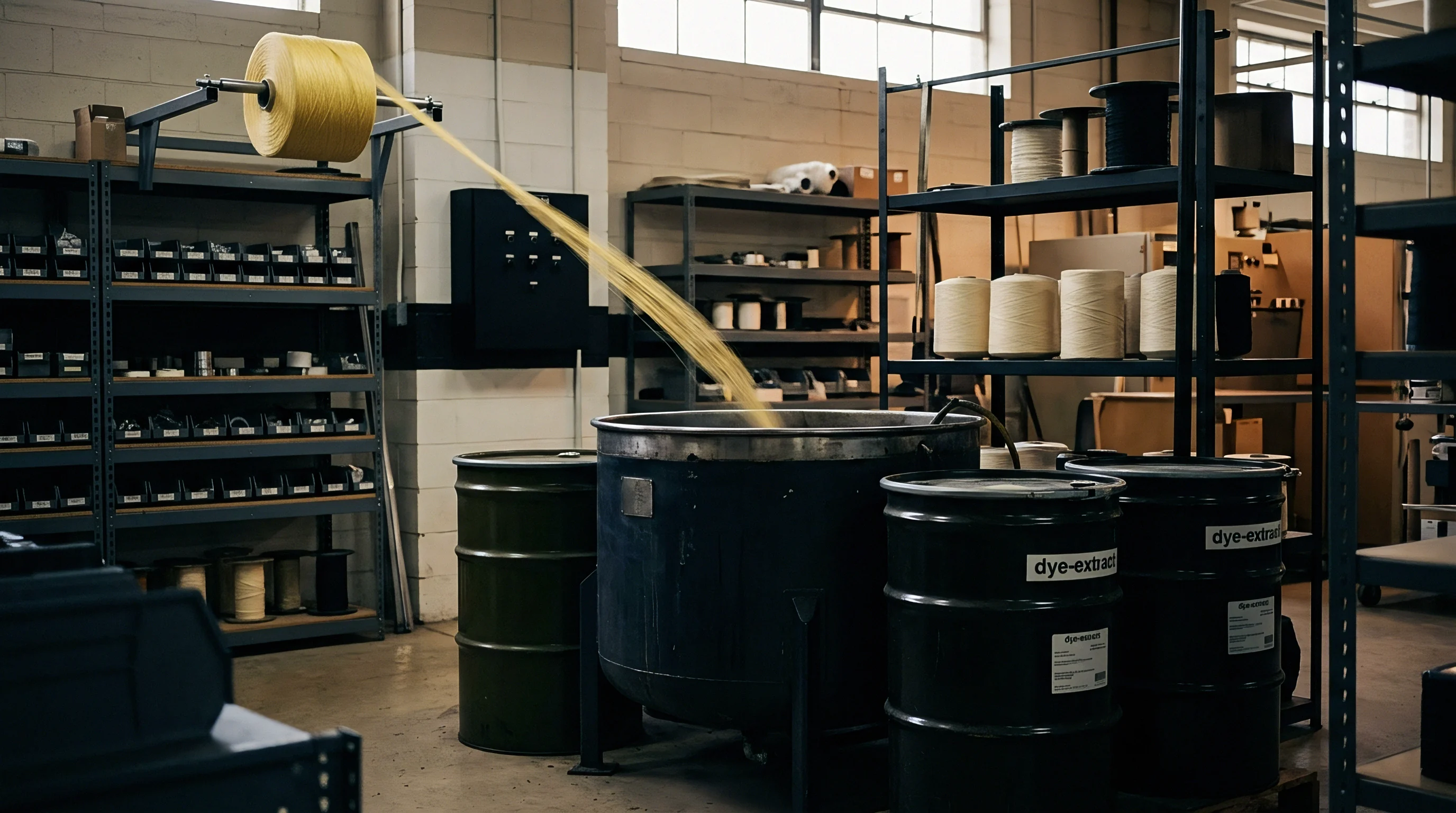
Extraction
Polymer matrices lock disperse dyes into hydrophobic crystalline regions that resist aqueous buffers. Routine compliance testing relies on complete solvent extraction to free trapped azo dyes before reductive cleavage. On synthetics like polyethylene terephthalate, polyamide, or acrylics, applying aqueous citrate buffer directly fails to reach colorants bound deep within the filament.
That barrier shields restricted azo dyes from reduction, leading to false-negative clearance certificates on non-compliant batches.
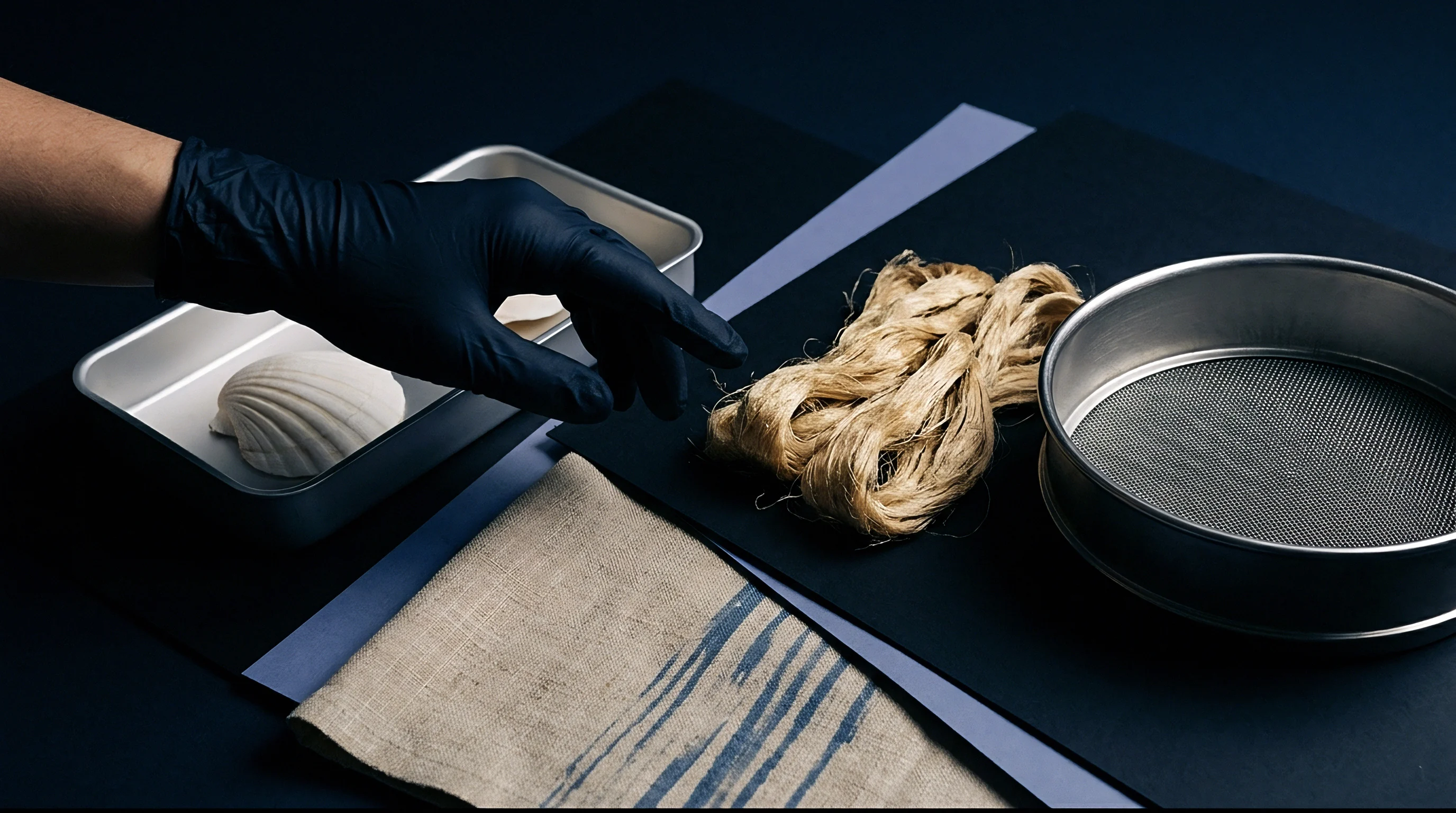
Polymer Accessibility and Solvent Conditioning
Synthetic yarns such as polyethylene terephthalate trap colorants within their extruded molecular structure. Standard protocols under EN ISO 14362-1 separate accessible dyes on natural fibers from enclosed dyes in synthetics. For cellulosic, protein, or regenerated fibers, direct reduction in aqueous citrate buffer at pH 6 releases target amines.
Polyester and dense synthetic blends require an initial swelling step using boiling chlorobenzene or xylene at 100 degrees Celsius for 45 minutes. This treatment swells the polymer matrix and dissolves hydrophobic disperse dyes into solution so chemical reduction can take place.
Skipping chlorobenzene extraction on synthetic fabrics makes the clearance test useless for verification. A report showing no detectable carcinogenic aromatic amines on polyester tested by direct aqueous reduction only proves the dye was absent from the fiber surface. Border control authorities and brand auditors re-test imported synthetic garments using solvent extraction, catching unextracted clearance certificates as false declarations.
Polyester dyeings evaluated without chlorobenzene extraction at 100 degrees Celsius yield false-negative aromatic amine results in up to forty percent of hydrophobic disperse dye structures.

Solvent Selection Matrix across Fiber Blends
Natural cellulosics wet out directly in aqueous buffers during sample preparation. Mixed-fiber yarns containing polyester, elastane, nylon, or acrylic need careful solvent selection to avoid incomplete dye recovery or matrix breakdown. Chlorobenzene is the standard extraction solvent for pure polyester, while xylene is better suited for certain heat-sensitive blends to keep fibers from melting into a gelatinous mass that clogs filtration columns.
| Fiber Classification | Standard Reference | Pre-Extraction Solvent | Thermal Exposure | Analytical Risk Factor |
|---|---|---|---|---|
| Cotton, Linen, Rayon | EN ISO 14362-1 Direct | Citrate Buffer (pH 6) | 70 °C for 30 min | Dye aggregation under acidic buffer |
| Polyester (PET) | EN ISO 14362-1 Extracted | Chlorobenzene | 100 °C for 45 min | Incomplete extraction yields false negatives |
| Polyamide (Nylon) | EN ISO 14362-1 Extracted | Chlorobenzene or Xylene | 100 °C for 30 min | Polymer matrix degradation at high temperature |
| Acrylic (PAN) | EN ISO 14362-1 Extracted | Chlorobenzene | 100 °C for 40 min | Solvent retention interference during reduction |
Choosing the right pre-treatment depends on identifying the fiber composition of each yarn component in the fabric, as synthetic fibers resist simple buffer penetration where cellulosic fibers wet out rapidly, and polyester requires thermal solvent extraction.
- Polyester and PET Blends Fiber matrices dyed with disperse colorants demand pre-extraction using chlorobenzene at 100 degrees Celsius for 45 minutes to dissolve embedded azo structures prior to chemical cleavage.
- Cellulosic and Protein Matrix Fabrics Direct dyes and reactive colorants on cotton, linen, silk, or wool undergo reduction directly in citrate buffer without pre-extraction solvents.
- Polyamide and Acrylic Yarns Synthetic matrices dyed with acid or disperse dyes undergo preliminary solvent extraction with xylene or chlorobenzene depending on dye binder formulation.
- Elastane and Polyurethane Blends Segmented polyurethane yarns release background oligomers that require specialized solvent washing to avoid instrument column contamination.
Raw gray fabric samples frequently clear standard aqueous screening prior to high-temperature disperse dye fixation.

Reduction
Sodium dithionite cleaves azo bonds in a buffered pH 6 citrate environment at 70 degrees Celsius. This reduction breaks the nitrogen-to-nitrogen double bond (-N=N-), releasing free aromatic amines that are then isolated, concentrated, and identified. Precise temperature and stoichiometric control during reduction prevents both incomplete cleavage of resistant azo dyes and thermal breakdown of delicate aromatic amines.

Cleavage Kinetics and Buffer Controls
Holding a stable reaction temperature prevents premature thermolysis of volatile aromatic rings. The reaction vessel is held at 70 degrees Celsius (± 2 °C) for exactly 30 minutes after adding aqueous sodium dithionite. Temperature shifts alter cleavage kinetics: staying below 68 degrees Celsius leaves sterically hindered azo dyes partially intact, under-reporting total amine content, while exceeding 75 degrees Celsius degrades sensitive amines like 4-aminobiphenyl or 2-naphthylamine into unidentifiable breakdown products.
Citrate buffer holds the system at pH 6.0 throughout the reaction. Alkaline conditions suppress the reduction potential of dithionite, whereas acidic media below pH 5.5 encourage side reactions, including the re-cyclization of target intermediates. Maintaining pH ensures consistent cleavage yields across different dye families.

The 4-Aminoazobenzene Analytical Discrepancy
Standard cleavage breaks 4-aminoazobenzene down into aniline and p-phenylenediamine. Since neither aniline nor p-phenylenediamine is listed as a restricted carcinogenic aromatic amine under EU REACH Annex XVII Item 43, routine reductive cleavage under EN ISO 14362-1 misses dyes derived from 4-aminoazobenzene (CAS number 60-09-3). Dyes based on it remain restricted because 4-aminoazobenzene itself is a classified category 1B carcinogen.
Testing for 4-aminoazobenzene requires the specialized EN ISO 14362-3 method. This protocol extracts the intact colorant before reduction, isolating the target molecule by phase separation before chemical treatment destroys the parent azo compound.
EN ISO 14362-3 specifies direct xanthogenate formation to isolate 4-aminoazobenzene before reductive cleavage destroys the target parent molecule.
Determining 4-aminoazobenzene compliance follows six preparation steps.
- Prepare fabric swatches by mechanical shredding into two-millimeter fragments to maximize surface area for solvent contact.
- Extract target colorants from the textile specimen using warm diethyl ether in a sealed glass reaction vessel.
- Concentrate the solvent extract under mild vacuum to isolate free colorants before chemical cleavage.
- Re-dissolve the isolated colorant residue in citrate buffer solution adjusted to pH 6.
- Perform reductive cleavage by adding aqueous sodium dithionite solution at 70 degrees Celsius for 30 minutes.
- Isolate target 4-aminoazobenzene directly through xanthogenate derivatization before chromatographic injection.
Sodium dithionite splits the azo linkage, though temperature drift quickly skews cleavage yields.
ISO 10576-1 Clause 6 shifts financial responsibility to the supplier whenever declared amine concentrations fall within the expanded measurement uncertainty interval of the test value.

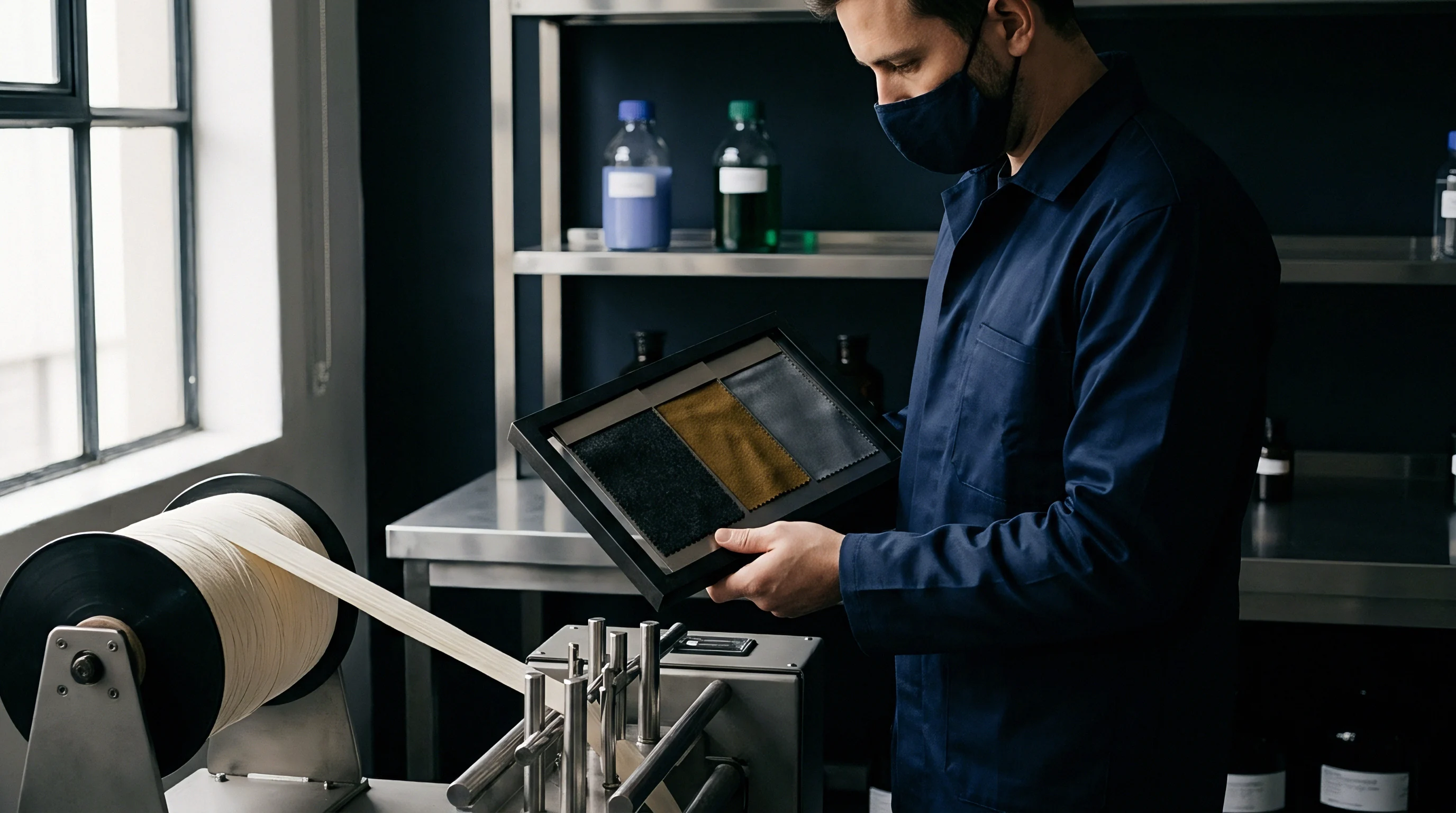
Chromatography
Instruments separate cleavage products through gas or liquid mobile phases before mass spectral identification. Gas Chromatography coupled with Mass Spectrometry (GC-MS) is the primary quantitative tool for identifying freed aromatic amines. Liquid Chromatography with Diode Array Detection (LC-DAD) or Tandem Mass Spectrometry (LC-MS/MS) provides secondary confirmation, resolving false positives caused by thermal degradation inside hot injector ports.
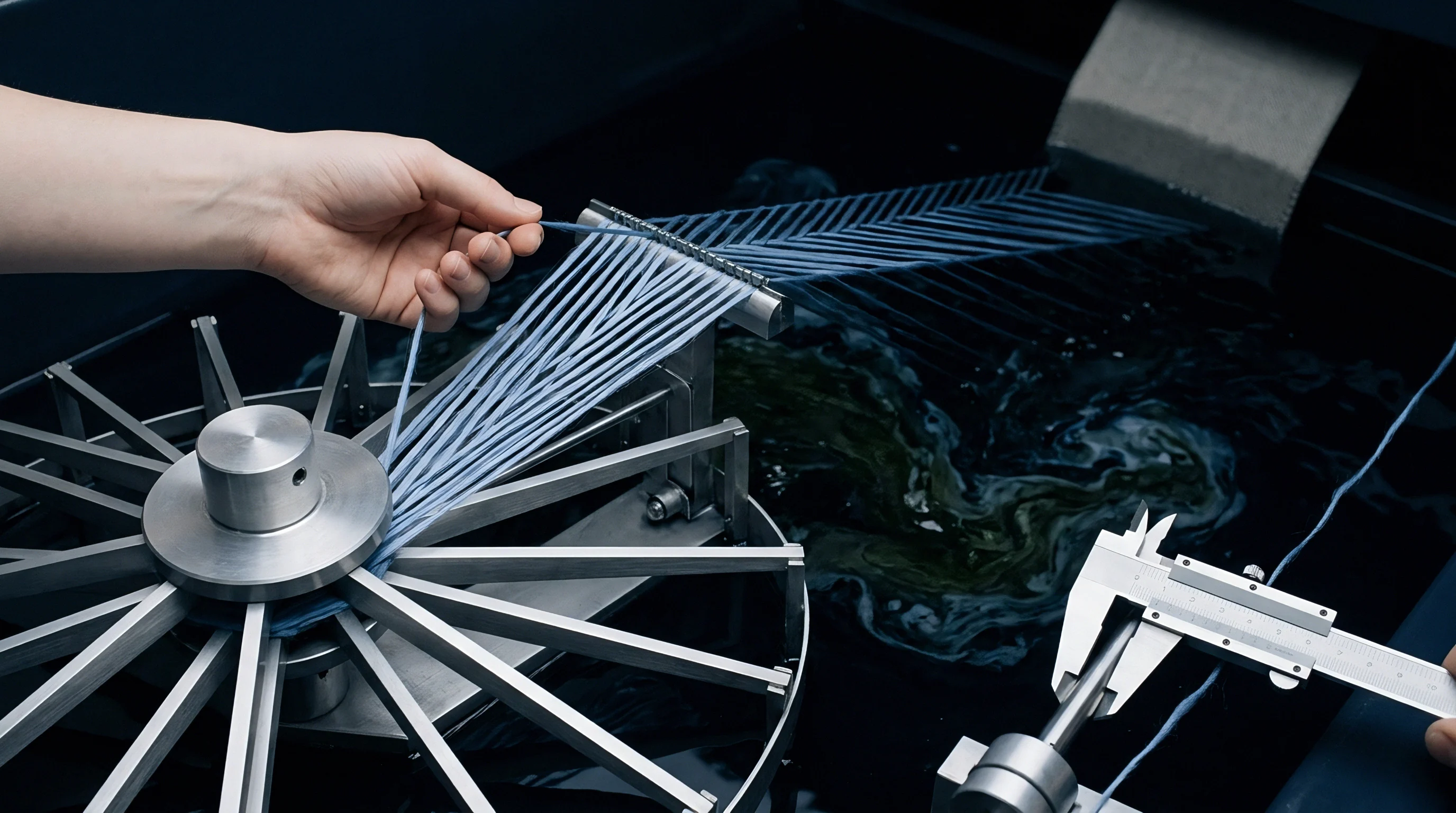
Injector Port Pyrolysis and False Positives
Injection temperatures above 250 degrees Celsius thermalize unfractured parent dyes in sample extracts. When unreduced azo dyes, pigment dispersants, or finishing auxiliaries hit a 280 degree Celsius GC injector port, thermal pyrolysis breaks bonds non-reductively. That breakdown generates free 4,4′-oxydianiline, 2,4-toluenediamine, or o-toluidine in the chamber, producing false positive mass spectrometer signals even when the fabric contained no free amines.
High injector temperatures trigger thermal breakdown, while co-eluting compounds generate false positive peaks that diode array detectors must confirm through light absorption.
Verification protocols require running sample extracts through LC-DAD or LC-MS/MS at ambient or mild temperatures (30 to 40 degrees Celsius). Liquid separation avoids thermal stress, confirming whether detected amines were present as free cleavage products in the reaction vessel or created as thermal artifacts inside the GC injector port.
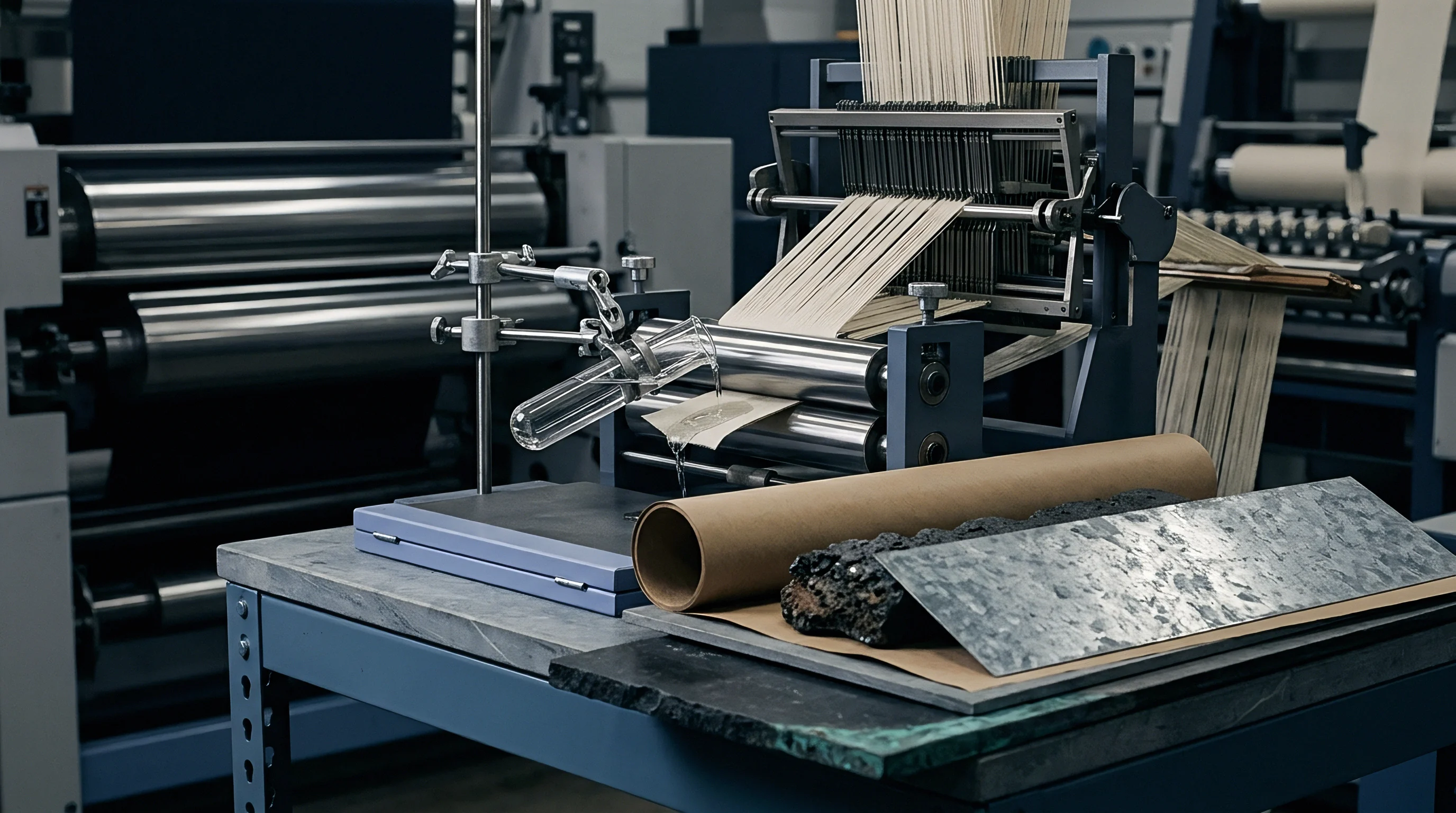
Liquid Phase Alignment and Isomer Resolution
Liquid separation paired with diode array spectral confirmation separates structural isomers like o-toluidine from co-eluting background peaks. Because structural isomers share identical molecular weights and mass fragment ions, mass spectrometry alone cannot reliably distinguish them. For instance, 2,4-xylidine (CAS 95-68-1) and 2,6-xylidine (CAS 87-62-7) produce identical electron ionization mass spectra.
Chromatographic separation on capillary columns with specialized stationary phases (such as 50% phenyl-methylpolysiloxane) resolves these isomers by retention time against certified reference materials.
| Target Aromatic Amine | CAS Number | Interfering Matrix Compound | Injector Artifact Mechanism | Confirmation Method |
|---|---|---|---|---|
| 4,4′-Diaminodiphenylmethane | 101-77-9 | Methylene diphenyl diisocyanate (MDI) | Thermal breakdown of elastane polyurethane blocks at 270 °C | LC-MS/MS under electrospray positive ionization |
| 4-Aminoazobenzene | 60-09-3 | Aniline and p-phenylenediamine cleavage products | Complete degradation during direct dithionite reduction | EN ISO 14362-3 liquid-liquid isolation prior to reduction |
| o-Toluidine | 95-53-4 | Unreacted pigment dispersant impurities | Thermal cleavage of non-restricted yellow azo pigments | HPLC-DAD retention time and spectral matching |
| 2,4-Xylidine | 95-68-1 | 2,6-Xylidine structural isomer | Co-elution on standard non-polar capillary GC columns | Capillary column phase shift (50% phenyl-methylpolysiloxane) |
Elastane blends introduce severe matrix interferences during chromatography. Segmented polyurethane polymers contain methylene diphenyl diisocyanate (MDI) residues. Thermal breakdown of these elastomeric components during sample preparation or GC injection releases 4,4′-diaminodiphenylmethane (CAS 101-77-9), causing false compliance failures on stretch fabrics.
Proper cleanup uses liquid-liquid extraction with t-butyl methyl ether before injection to isolate polyurethane interference.
- Thermal Pyrolysis of Unreduced Dyes High injector temperatures breakdown parent disperse dyes resting in dirty sample extracts, yielding false positive aromatic amine signals on mass spectrometers.
- Polyurethane Interferences from MDI Catalysts Thermal degradation of elastane elastomeric blocks releases 4,4′-diaminodiphenylmethane, skewing quantitative clearance reports for stretch fabrics.
- Co-Eluting Xylidine Isomers Inadequate chromatographic column phase length prevents clear separation of 2,4-xylidine from 2,6-xylidine, confusing regulatory compliance checks.
- Derivatization Reagent Degradation Unstable acylating agents introduce baseline noise during gas chromatographic analysis, elevating artificial quantification limits.
Whether mass spectrometry scanning alone can reliably differentiate co-eluting structural isomers of xylidine without secondary liquid separation remains a point of contention across commercial test facilities.
Limits
Regulatory bodies set allowable limits for restricted aromatic amines across consumer products. Under EU REACH Regulation Annex XVII Item 43, the legal threshold is 30 mg/kg (30 ppm) for each of the 22 listed aromatic amines in finished textile and leather goods. Voluntary certification schemes set lower limits.
OEKO-TEX Standard 100 sets a limit of 20 mg/kg per amine across Product Classes I through IV. The Global Organic Textile Standard (GOTS 7.0) mandates a reporting limit of 20 mg/kg, treating any finding at or above 20 mg/kg as an immediate batch rejection.

Method Detection Boundaries and Quantification
Analytical reporting thresholds depend on instrument signal-to-noise ratios established during laboratory qualification. ISO/IEC 17025 accredited laboratories set the Limit of Detection (LOD) and Limit of Quantification (LOQ) for each restricted amine. Typical LOQ values fall between 5 mg/kg and 10 mg/kg.
Peaks registered below 5 mg/kg reflect background noise or trace contamination and fall below actionable reporting thresholds.
Statutory limits define legal compliance ceilings, while voluntary standards enforce stricter chemical limits.
Discrepancies arise when test reports omit expanded measurement uncertainty. Under ISO 10576-1 guidelines, measurement uncertainty for aromatic amine quantification averages ± 15% to ± 25% near 20 mg/kg. A result returning 22 mg/kg carries an expanded uncertainty band ranging from 18.7 mg/kg to 25.3 mg/kg.
Guardbanding and Commercial Risk Allocation
Contractual specifications often require lower analytical cutoffs than statutory enforcement actions demand. To see how measurement uncertainty affects commercial clearance decisions, consider a 20,000-meter lot of dyed polyester-cotton twill fabric valued at 42,000 EUR in landed cost.
Assuming testing costs 180 EUR per composite sample, suppose the lab returns a concentration of 22 mg/kg for 4-aminobiphenyl (CAS 92-67-1). Applying an expanded measurement uncertainty of ± 15% (3.3 mg/kg) puts the confidence interval between 18.7 mg/kg and 25.3 mg/kg.
Under EU REACH Annex XVII statutory enforcement (30 mg/kg threshold), both the lower and upper bounds (18.7 to 25.3 mg/kg) fall below the 30 mg/kg limit, so customs clears the container for entry.
Under OEKO-TEX Standard 100 Class II buyer specifications (20 mg/kg threshold), guardbanding rules dictate that if the upper uncertainty bound (25.3 mg/kg) exceeds the target limit, the certification body rejects the batch certificate. The buyer can then invoke default clauses, withholding payment on the 42,000 EUR shipment for internal certification failure despite legal border clearance.
| Standard Framework | Regulatory Scope | Maximum Limit (mg/kg) | Mandated Test Standard | Retest Decision Rule |
|---|---|---|---|---|
| EU REACH Annex XVII Item 43 | Textile and leather articles in human contact | 30 (per amine) | EN ISO 14362-1 / EN ISO 17234-1 | Statutory rejection if lower confidence bound > 30 |
| OEKO-TEX Standard 100 | Class I (Baby) to Class IV (Decoration) | 20 (per amine) | EN ISO 14362-1 & 14362-3 | Certificate denial if point estimate > 20 |
| Global Organic Textile Standard (GOTS 7.0) | Organic textile certification | 20 (reporting limit) | EN ISO 14362-1 & 14362-3 | Immediate non-compliance notification to certifier |
| China GB 18401 (Category A/B/C) | National mandatory safety technical code | 20 (per amine) | GB/T 17592 & GB/T 23344 | Port detention and mandatory re-sampling of lot |
| Method note: All threshold limits apply to individual restricted aromatic amines listed in applicable statutory annexes. Laboratory reporting limits must not exceed 20 mg/kg to verify compliance across both voluntary schemes and national technical codes. | ||||
Importers manage commercial risk by setting audit documentation requirements directly in supply contracts.
- Specific Test Method Variant Reports list the exact analytical standard applied, explicitly distinguishing direct buffer cleavage from solvent-extracted procedures.
- Laboratory Accreditation Scope Code Certification documents include the ISO/IEC 17025 accreditation scope reference for each tested aromatic amine compound.
- Method Quantification Limit Quantitative findings state the laboratory limit of quantification alongside expanded measurement uncertainty figures.
- Fabric Construction and Colorway ID Sample descriptions state the unique commercial style number, fiber composition, and dye batch identification code.
Laboratory test reports matching commercial invoices by batch number eliminate border hold friction faster than generic scope certificates.
Setting contractual target thresholds at laboratory detection limits protects importers from boundary disputes when market surveillance authorities audit incoming shipments.


Foil
Light-sensitive aromatic amines decompose rapidly when exposed to ultraviolet radiation during swatch transit. Primary aromatic amines released during cleavage ~ specifically 4-aminobiphenyl, o-toluidine, and 2-naphthylamine ~ undergo photo-oxidative degradation under sunlight or ambient fluorescent room light. When swatches cut from fabric rolls are placed in clear polybags or transparent document pouches, light exposure degrades target amines within 48 hours of transit to the testing facility.

Volatile Amine Containment during Transport
Sealing sample specimens inside inert barrier packaging preserves target compounds prior to laboratory homogenization, as light exposure degrades free aromatic amines while aluminum wrapping blocks photo-chemical decay. Proper sampling protocols require wrapping cut textile swatches in heavy-gauge, light-impermeable aluminum foil immediately upon cutting at the mill table.
Wrapped specimens are placed into gas-tight aluminum laminate barrier bags flushed with dry nitrogen gas before heat sealing. Nitrogen flushing prevents oxidative loss of labile compounds during air freight transit. Unflushed samples stored in permeable plastic bags lose volatile amine compounds, skewing laboratory quantitative determinations downward.
Selecting sampling locations requires discipline across the fabric roll. Swatches taken from the outer wrap suffer environmental contamination and UV degradation during warehouse storage. Technicians discard the outer two meters of fabric on the roll, cutting full-width swatches at least one meter inward from the selvedge edge to capture representative dye concentrations.
Exposing unsealed swatch specimens to daylight during transit degrades sensitive primary aromatic amines, generating false-negative clearances that fail during border enforcement re-testing.

Scope
Clearance documentation requires exact alignment between test certificate line items and commercial invoice line items. Customs authorities, brand auditors, and market surveillance inspectors verify compliance by checking laboratory test reports against shipped article numbers, fiber compositions, and dye lots.
Transaction Certificates versus Type Testing
Annual accreditation documents confirm a mill’s baseline chemical capability without guaranteeing specific production lot compliance. A scope certificate issued under OEKO-TEX Standard 100 or GOTS verifies that a mill’s submitted product types met chemical safety criteria during an annual audit. It does not confirm that a specific 50,000-meter fabric shipment sitting in a customs warehouse was manufactured with compliant dye batches.
Batch clearance requires transaction testing backed by lot-specific reports, where commercial invoices link scope certificates to shipments and audit clearance depends on exact lot traceability.
When border authorities pull sample rolls for testing, they compare the laboratory scope against the container manifest. Discrepancies between the tested sample style code and the imported article style code make annual scope certificates useless for customs release.
Customs authorities reject clearance dossiers when the accredited laboratory scope excludes the specific extraction variant applied to synthetic fiber blends.
Importers protect commercial margins by putting clear testing terms into purchase orders. Purchase orders can specify that final balance payments release only after an ISO/IEC 17025 accredited laboratory issues a passing test report matching the specific production lot number. Matching purchase order line items to batch laboratory reports gives customs officers direct evidence of lot compliance, allowing importers with continuous batch traceability files to release detained containers without paying storage penalties.