Synthetic Bonding
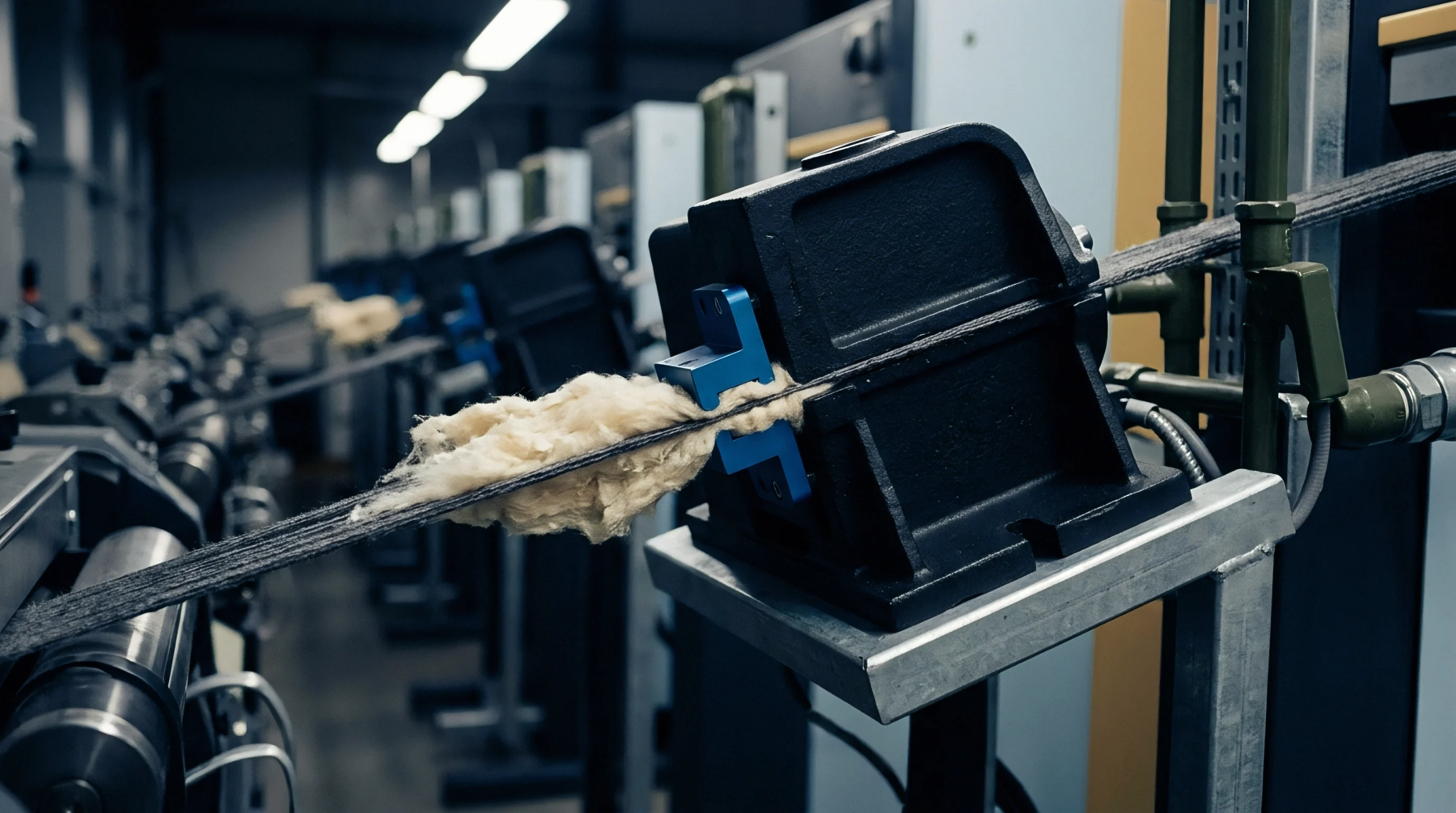
Pneumatic force defines the method for joining an elastic core with a covering filament to create air-jet covered yarn. Compressed air streams pass through a nozzle to tangle the wrap around the carrier, which generates friction without the twisting action found in traditional mechanical spindle covering. This construction maintains the stretch property of the core fibre while the sheath stabilizes the external surface for improved processing in knitting or weaving machines.
Producers utilize this technique to manufacture lightweight products that require high uniformity and lower production costs.
Production Velocity
Higher output speeds mark the primary advantage over rotor or ring systems because the lack of rotating spindles removes speed limitations based on centrifugal force. The air stream creates a series of interlocking points that anchor the outer filament firmly against the elastomer. Stability of these points governs the yarn quality during high tension tasks such as circular knitting.
Minor fluctuations in airflow pressure cause uneven wrapping density, which creates visible streaks in the finished textile.
Material Configuration
Two components define the structural balance of air-jet covered yarn consisting of a polyurethane elastane core and a multifilament polyester or nylon wrap. The filament diameter and the number of air entanglement points determine the final yarn modulus and recovery capacity. Technical laboratories measure the draw ratio and the entanglement frequency to certify batch consistency before bulk distribution.
A standard test involves pulling the filament under controlled conditions to ensure the sheath does not slip or detach from the core.
Processing Suitability
Superior handle and softness characterize fabrics constructed with this material when compared to conventionally covered variants. Machine operators prefer the stability of this product for high speed loom operations where breakage risks must remain minimal. Efficient conversion from raw yarn to apparel necessitates correct humidity and temperature controls to avoid filament degradation.
Consistent tension settings during the warping stage prevent the development of permanent deformation in the elastic core.