Machine Architecture
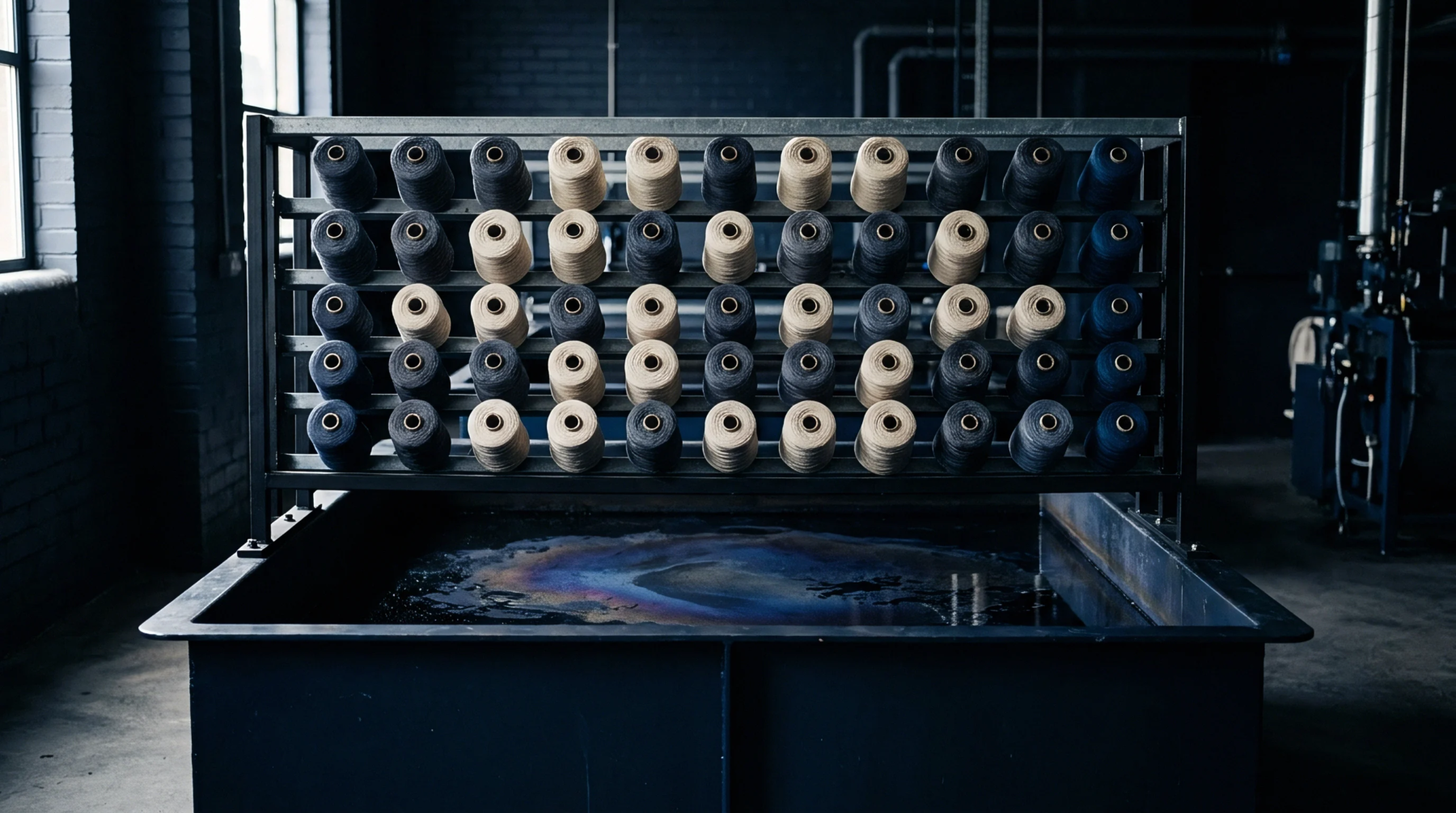
Dyeing machinery designed to process open-width fabrics under normal atmospheric pressure consists of two main rollers that wind the cloth back and forth through a shallow dye bath. The atmospheric jig dyer operates without a pressurized seal, making it suitable for processing cotton, viscose, and other natural fibers that do not require temperatures above one hundred degrees Celsius. This design allows operators to take samples easily during the process.
Process Flow
Batch processing of woven goods requires a steady, tension-controlled movement of the fabric web from the unwinding roll to the winding roll. In an atmospheric jig dyer, the fabric passes through the hot liquid dye liquor repeatedly to ensure uniform color absorption. The speed of the fabric must remain constant to avoid shade variations from one end of the roll to the other.
Operational Limit
Temperature constraints restrict the use of these open-topped machines when applying disperse dyes to synthetic materials like polyester. Polyester fibers require higher temperatures to open their structure, which cannot be achieved in an atmospheric jig dyer due to the evaporation of the liquid bath at boiling point. Mills must therefore choose pressurized beam or jet machines for those synthetic fabrics.
Quality Check
Shade matching and evaluation occur at regular intervals during each batch run. Operators inspect samples taken directly from the atmospheric jig dyer.