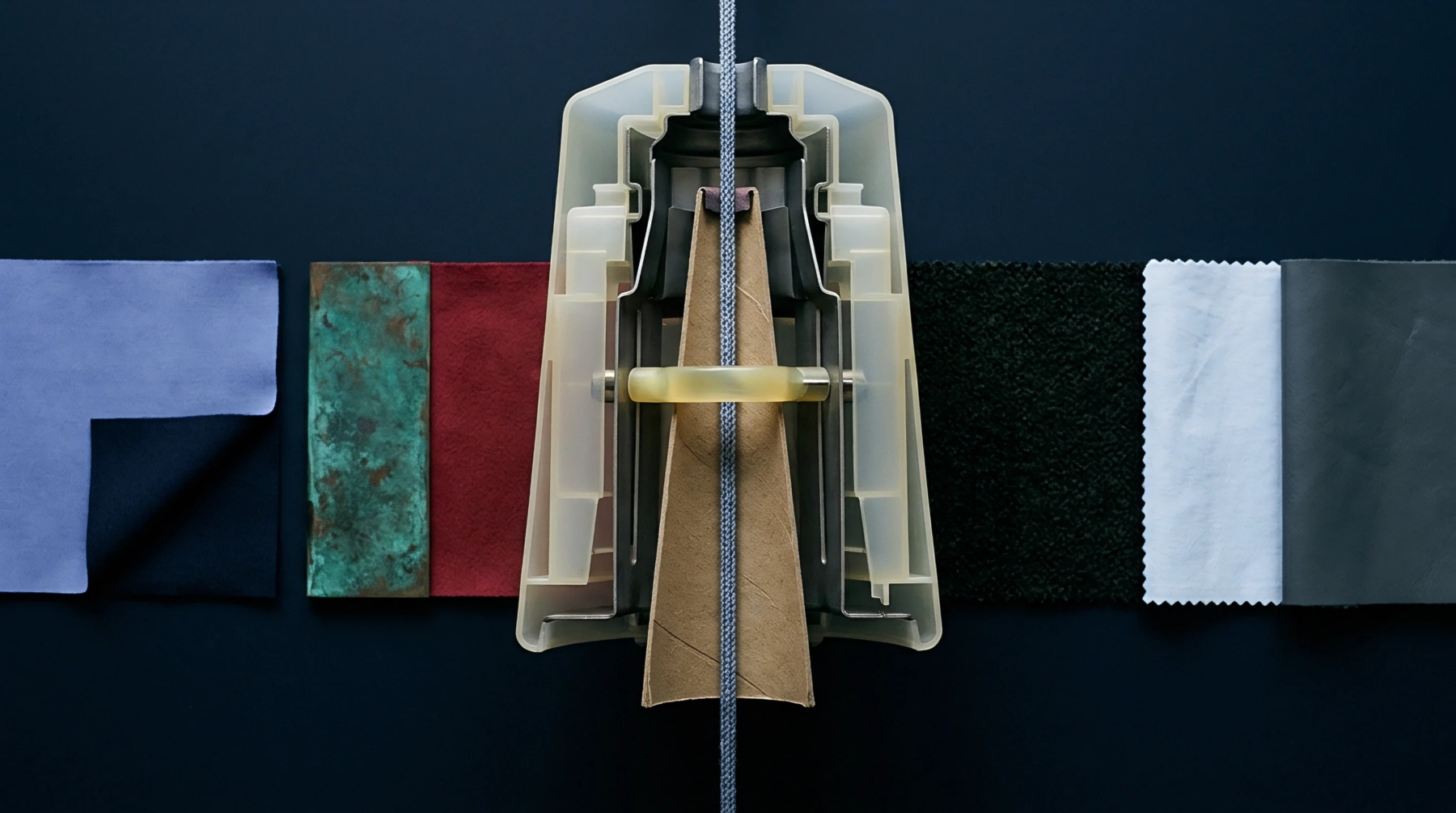
Feed Method
Knitting methods that feed an uncovered elastic filament alongside a companion yarn through a single guide determine the stretch properties of finished jersey fabrics. In bare elastane plating, the feeder delivers the elastic yarn directly to the needle hooks under controlled tension. Correct positioning prevents the elastic from slipping.
Tension Control
Maintaining uniform delivery tension prevents uneven fabric widths and structural distortions. If the elastane tension fluctuates, the fabric develops narrow regions or barre defects during subsequent scouring and heat setting. Constant-tension feeders actively monitor the yarn speed to adjust the output rate during knitting.
Precision feeders maintain a tension below three grams for standard deniers.
Fabric Structure
The resulting knitted fabric exhibits high elasticity and recoverability while retaining the hand feel of the ground fiber. High-grade plated jersey relies on the elastic yarn staying buried on the back of the knit loops. Loose plating causes the synthetic filament to show on the face, a defect known as grin-through.
Careful adjustment of the stitch length prevents this exposure. When stitch density is optimized, the ground yarn provides a shield that protects the elastane from friction during wear.
Process Margin
Processing conditions during finishing must remain below the thermal limits of the elastomeric core to avoid permanent loss of recovery. Heat setting stabilizes the dimensions but can weaken the plated structure if the temperature exceeds one hundred and ninety degrees Celsius. Testing fabric recovery after laundering confirms that the elastic behavior is preserved.