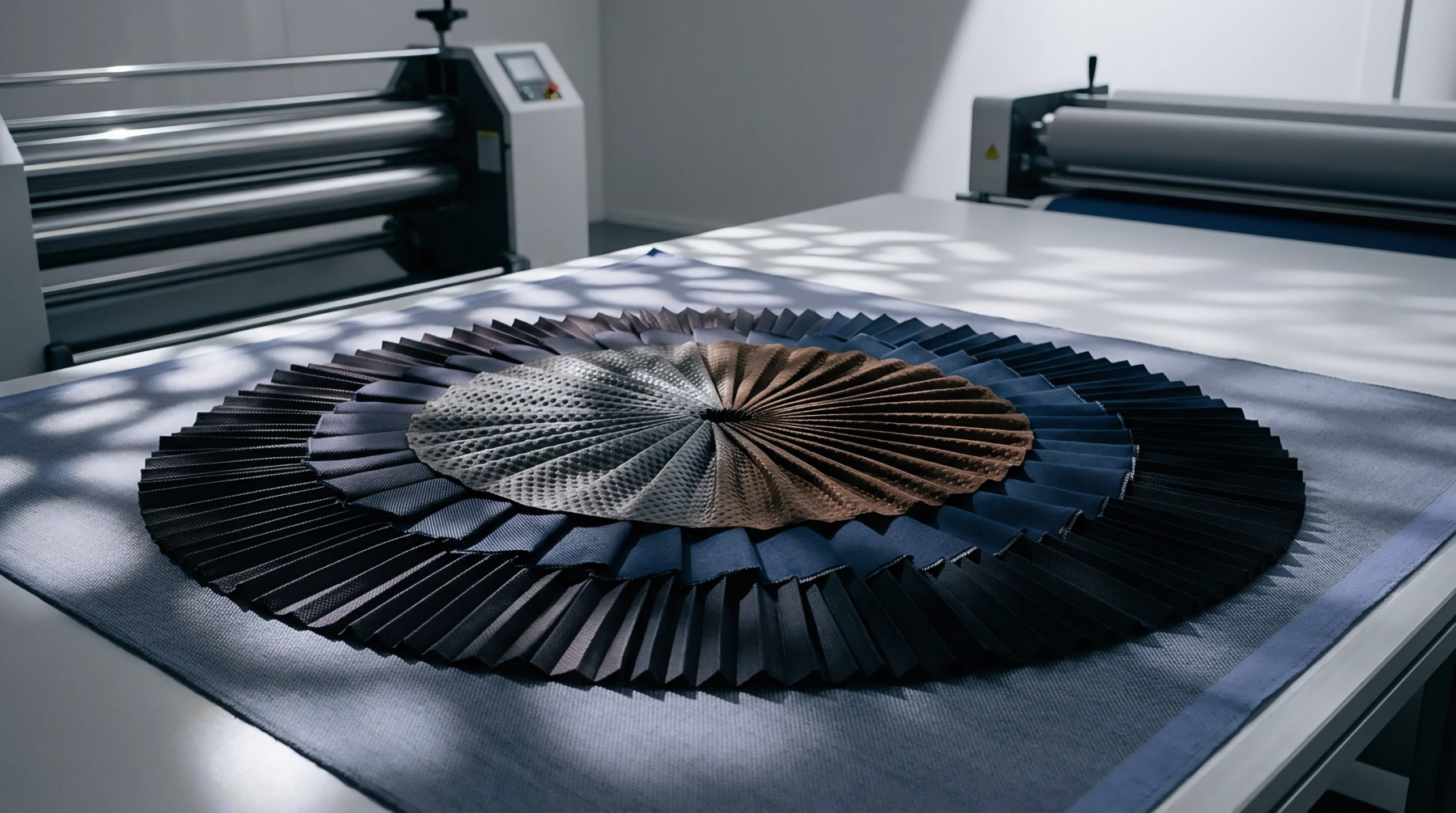
Cotton Polyester Blend Separation Behavior during Opening and Carding
Differential air drag and wire engagement strip cotton at carding zones, forcing synthetic sliver drift that triggers customs tariff threshold penalties.
Mechanical energy distribution across cotton bale opening and cleaning sequences defines blowroom dynamics within the primary spinning preparation stage. These physics govern the spatial separation of tufts and trash particles during pneumatic transport. Correct management of force application ensures that lint remains intact while heavy impurities drop into waste collection chutes.
High turbulence intensity prevents fiber entanglement but risks excessive breakage if fan speeds exceed operational thresholds. Airflow velocity variations across ducts dictate the trajectory of light matter and influence the density of material layers formed on condensation cages. Efficient control allows mills to minimize nep generation while achieving desired cleaning efficiency targets.
Effective setup reduces mechanical stress on staple lengths and preserves the structural integrity required for high quality yarn formation.
Controlled suction gradients maintain consistent throughput across the opening machinery lines. Precise regulation of the pressure drop ensures that individual cotton tufts travel through piping systems without settling prematurely. Machines operate by balancing kinetic energy against gravity to filter contaminants from the raw material stream.
Sensors placed along the conduits monitor local air speed to adjust damper settings automatically. Deviations in these patterns indicate clogs or irregular feeding that require immediate intervention to prevent uneven lap density. Proper equilibrium stabilizes the cleaning degree and prevents fiber clumps from reaching carding machines.
Operators monitor these shifts to sustain throughput rates during shift changes or raw material switches.
Trash separation relies on the divergence of mass between fiber tufts and heavy foreign objects. Objects with higher density follow parabolic paths toward extraction points once freed from the grip of opening rollers. Fiber tufts possess large surface areas that respond rapidly to air drag and remain suspended in the transport medium.
Mechanical geometry within the grid bars forces this separation by interrupting the laminar movement of the material. Sharp edges on cleaning blades provide the necessary shearing force to dislodge embedded husks. Smaller dust particles require finer perforated screens to exit the process stream without loss of usable lint.
Variations in grid bar spacing allow plants to tailor the removal intensity to match specific cotton grades and moisture levels.
Power draw fluctuates based on the mass flow rate and the resistance encountered by internal transport mechanisms. Motors consume electrical current proportional to the air displacement and material handling demand. Reduced efficiency often results from unnecessary friction inside ducts or worn cleaning blades that force the system to work against increased drag.
Constant monitoring reveals the underlying health of mechanical components and signals the need for maintenance before quality degrades. Systematic analysis of current spikes provides data for optimizing batch cycles during daily operations. Uniform load distribution across the opening line maximizes the lifespan of internal rotating parts.
Low electrical consumption signifies that pneumatic transport operates within the intended parameters for standard cleaning configurations.
Differential air drag and wire engagement strip cotton at carding zones, forcing synthetic sliver drift that triggers customs tariff threshold penalties.
Expertise is a utility, not a secret. sentiention™ publishes its working knowledge as open reference: intelligence layer covering the materials it sources, the markets it enters, and the reference that serves both.