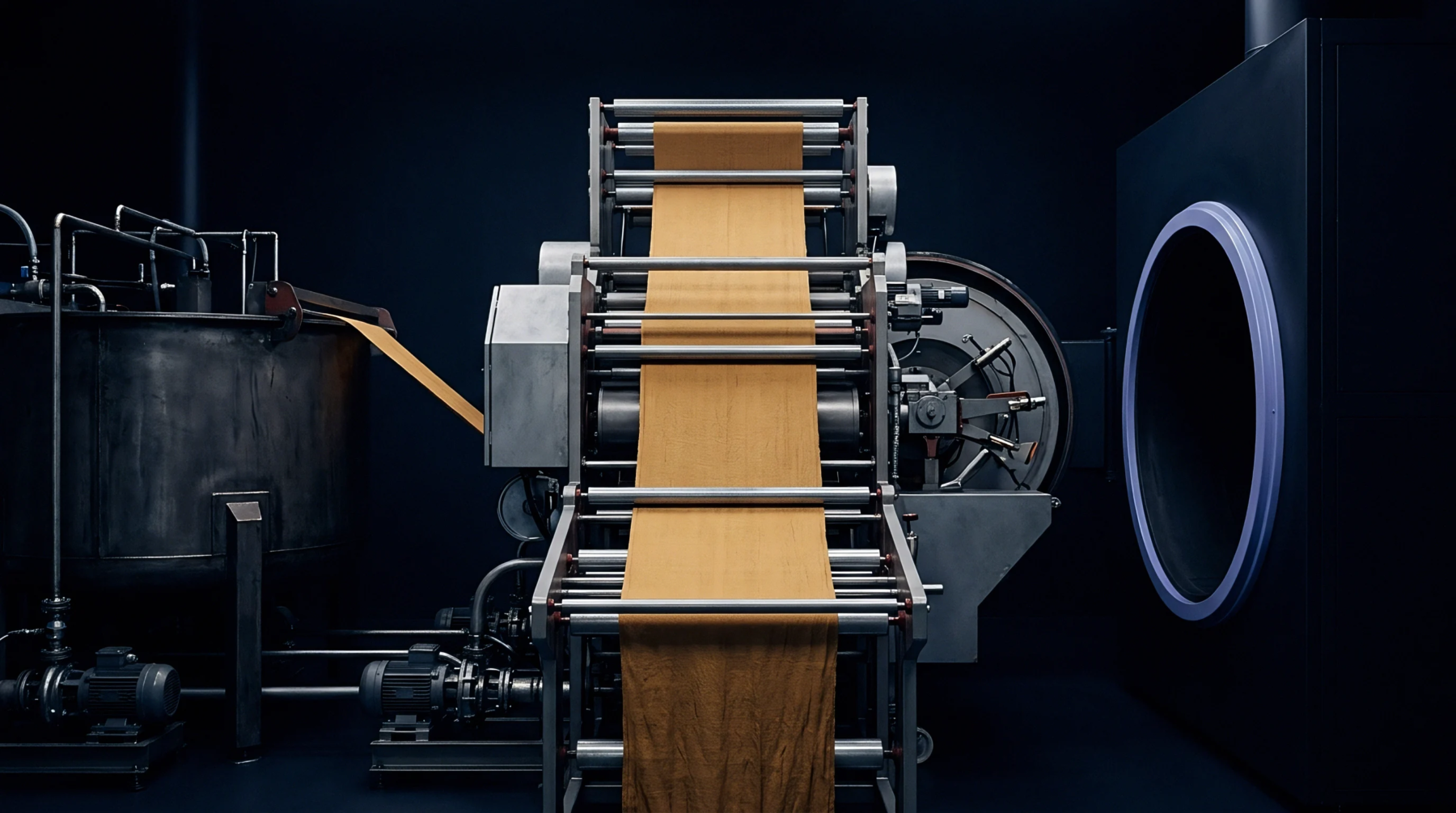
Thermal Process
Removal of moisture from a textile substrate through the application of a heated gas stream represents a fundamental method of thermal finishing. In industrial stenters, convective drying achieves this by passing hot air directly over or through the moving fabric web. This action simultaneously supplies the latent heat of vaporization and sweeps away the evaporated water molecules.
Heat Transfer
Energy transfer depends on the temperature difference between the gas stream and the wet fabric. During convective drying, the boundary layer of air surrounding the fibres acts as the primary barrier to both heat and mass transport. Higher velocity air streams break down this insulating layer, accelerating the rate of evaporation.
Operational Variable
Control of the humidity and temperature of the circulating air dictates the efficiency of the dryer. In production runs of polyester cotton blends, convective drying must be balanced with fabric speed to prevent over-drying and subsequent fibre degradation. Adjusting damper positions allows operators to purge moist air from the chambers while recycling dry heat to conserve fuel.
Fabric Response
Critical moisture limits determine when the process transitions to a diffusion controlled rate. Under excessive temperatures, convective drying can cause migration of dyes toward the fabric surface, resulting in uneven shading. Proper balance of airflow prevents this surface defect from occurring.