Standard Laboratory Oven Drying Protocols for Commercial Weight Determination of Fine Animal Hair
Commercial mass determination of fine animal hair requires forced-draft oven drying to constant weight at 105 degrees Celsius plus standard regain addition.
Swell
Water Binding Dynamics in Keratin Fibres
Fine animal hairs such as cashmere, mohair, alpaca, vicuña, and camel hair possess a highly complex, amorphous protein core wrapped in a protective hydrophobic cuticle. Moisture exists within these protein structures in three distinct physical states: structural water bound tightly through hydrogen bonds to chemical side-chains, capillary water held within intercellular pore structures, and free surface moisture. The polar amino acids within the keratin polypeptide chain attract water molecules, forming localized hydration shells that push adjacent polymer chains apart.
This molecular swelling expands the lateral dimension of the fibre while altering its mechanical tenacity, flexible rigidity, and measurable weight. Because fine animal hairs command high market valuations per kilogram, variations in ambient relative humidity translate directly into substantial financial swings during commercial transit and trade settlement.
Water sits deep inside the crystalline and amorphous regions of animal hair. Accurate weight determination requires forcing all non-structural water out of the fibre matrix without inducing chemical thermal degradation of the keratin protein itself. Fine animal hairs demonstrate distinct sorption isotherms compared to coarse crossbred wools.
Their thinner micron diameter provides a higher surface-area-to-mass ratio, accelerating the rate of moisture exchange with the surrounding air during handling and sampling. Standard laboratory drying protocols isolate the dry mass of the hair material by removing all moisture through controlled thermal desorption, establishing a fixed baseline from which standard commercial weight can be mathematically derived.
A fine hair lot weighed at seventy percent relative humidity contains up to four percent more water mass than the same lot weighed at standard laboratory equilibrium.
Desorption Kinetics across Specialty Fibres
The rate at which water leaves a specialty animal hair depends on the specific scale structure and residual surface lipophilic content. Cashmere features thin, continuous scales with low edge height, enabling rapid moisture release under elevated temperatures. Vicuña and fine alpaca fibers retain tight surface structure that can trap moisture pockets within inner cortical cells.
Untreated scoured hair retains natural suint and residual wool grease, both of which slow down the diffusion of moisture from the fibre core to the surrounding air. When heat is applied, surface water evaporates first, setting up a concentration gradient that draws internal capillary water toward the surface.
Desorption follows a non-linear decay curve during oven drying. Initial moisture loss occurs rapidly during the first fifteen minutes as surface and capillary water evaporate. As drying progresses, energy barriers increase because removing the final monolayers of bound water demands breaking strong hydrogen bonds within the amorphous keratin matrix.
Standard testing protocols govern the duration, airflow, and temperature profile necessary to reach a state of true constant weight, where ongoing moisture loss falls below measurable limits on an analytical balance.
Will structural chemical changes in ancient or highly degraded keratin fibres permanently alter the proportion of tightly bound water that can be desorbed at standard drying temperatures without destroying the fibre chain?
Heat
Convective Oven Mechanics and Thermal Control
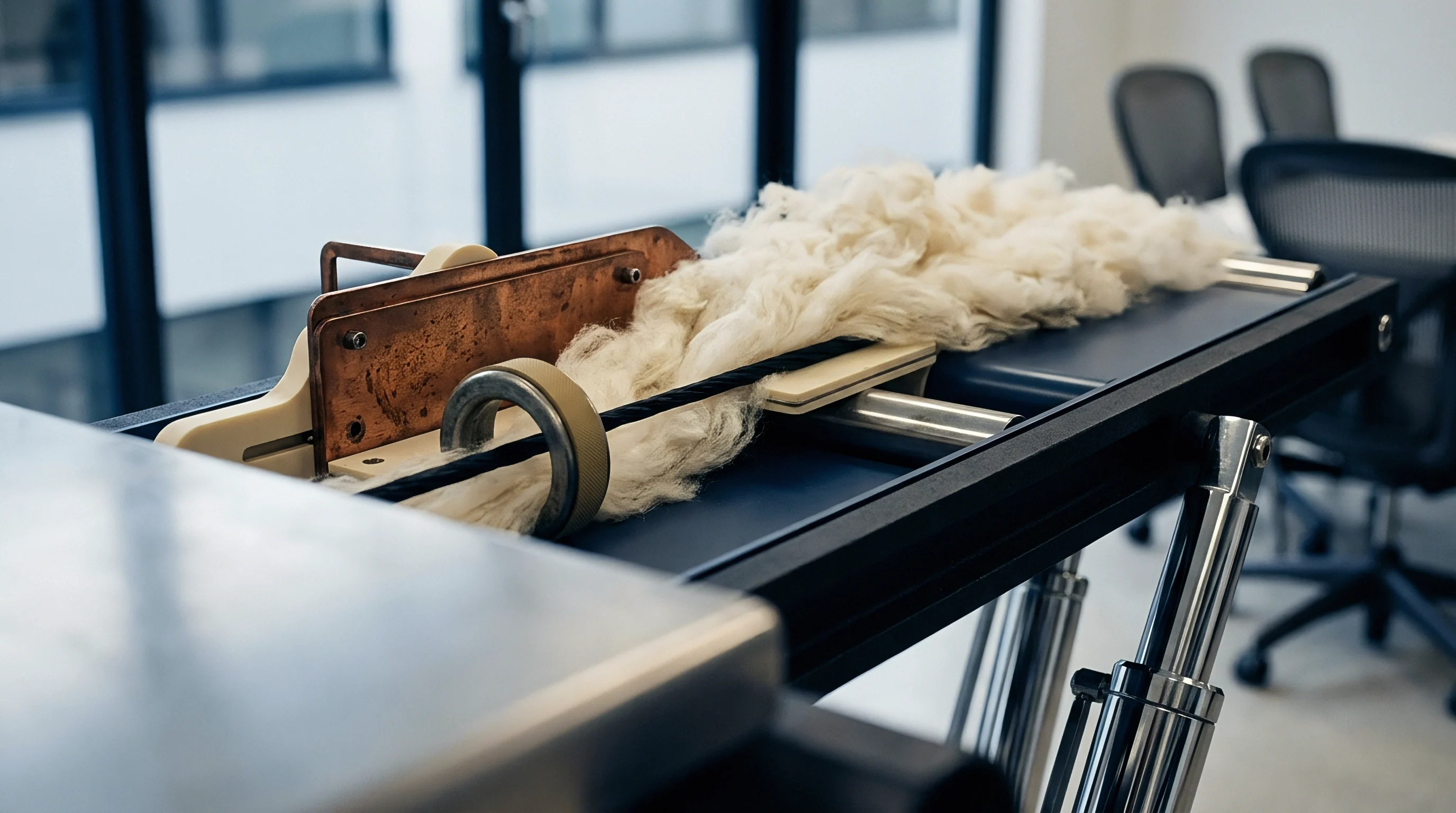
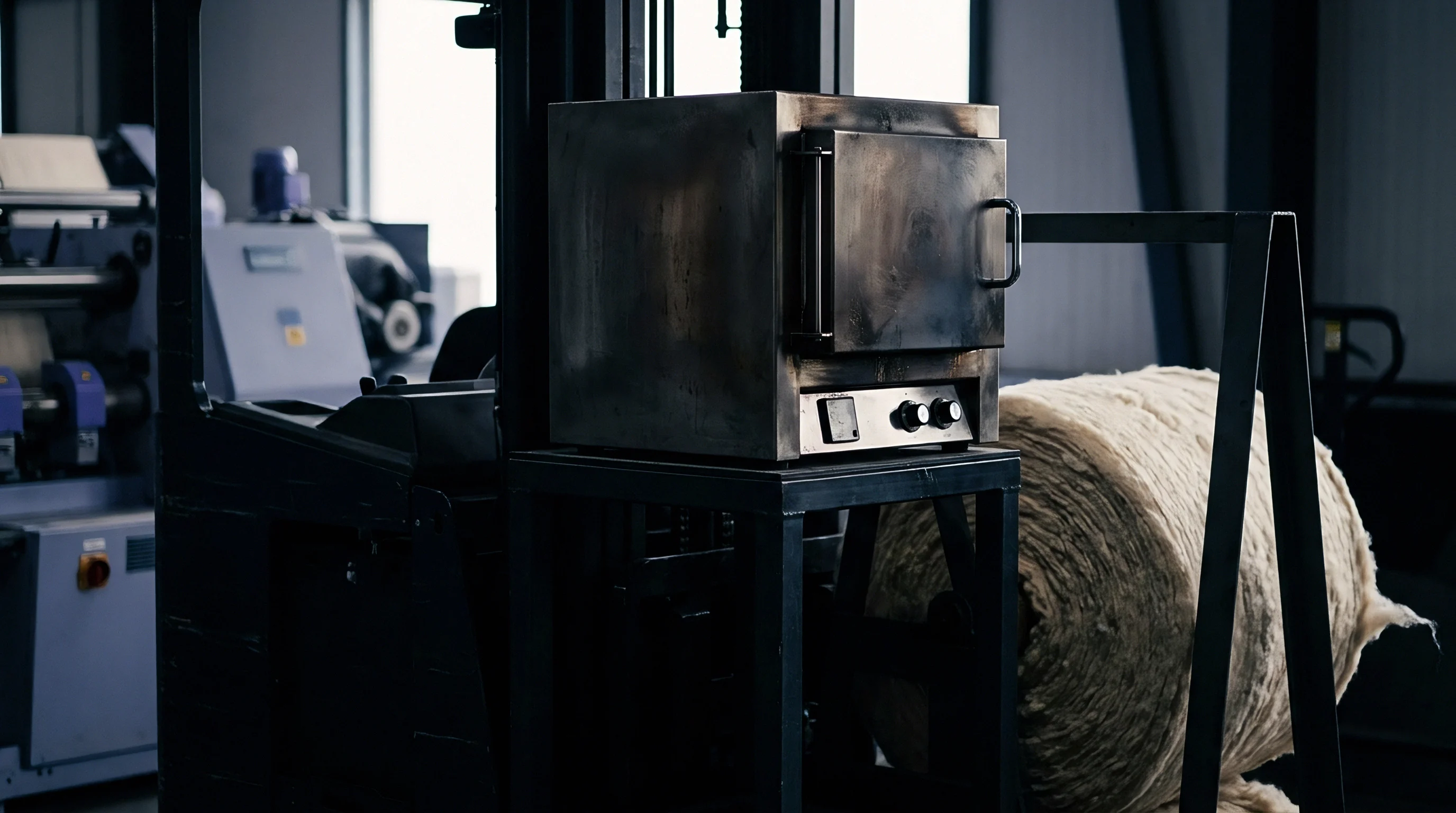
Laboratory determination of dry mass relies on forced-draft convective drying ovens built to strict metrological specifications. Standard testing frameworks such as ISO 6741 and IWTO-33 mandate an operating temperature regime of 105 degrees Celsius with a tight tolerance of plus or minus 2 degrees. Maintaining this thermal band ensures complete removal of unbound water while preventing thermal pyrolytic breakdown of the keratin structure.
If the oven temperature drops below 103 degrees Celsius, residual bound water remains trapped within the core, yielding an inflated dry weight reading. Conversely, temperatures exceeding 107 degrees Celsius risk yellowing the protein, driving off volatile organic compounds, and scorching fine hair structures.
Heat drives water out through continuous forced ventilation. Air inside the oven chamber must refresh at a rate of 20 to 30 air changes per minute. This airflow prevents local humidity saturation around the sample, maintaining a vapor pressure differential that forces moisture out of the fibre cluster.
The incoming air passes through desiccant columns or pre-heating chambers so that ambient atmospheric variations do not alter the drying potential within the oven interior.
Standard drying temperatures must remain within two degrees of target to prevent incomplete dehydration or protein scorching.
Thermal Artifacts and Experimental Anomalies
Oven drying protocols introduce potential measurement errors if thermal degradation or volatile mass loss accompanies water desorption. Technicians must recognize and limit specific operational failure modes during execution.
- Volatile Grease Loss occurs when residual solvent extractables or low-molecular-weight spinning lubricants vaporize at standard drying temperatures, causing the apparatus to record lost oil mass as lost water content.
- Thermal Oxidation develops during prolonged exposure to forced hot air, leading to oxygen uptake on the keratin chain that artificially increases the recorded dry sample mass.
- Scalping Degradation results from direct contact between hair fibers and unshielded metallic heating elements, causing localized charring and irrecoverable sample weight loss.
- Chamber Saturation happens when excessive wet sample mass overpowers the oven exhaust system, trapping humid air inside the chamber and halting evaporation before constant weight is reached.
Drying takes time. Reaching a verified constant mass demands heating the hair sample until successive weighings taken at fifteen-minute intervals show a mass change of less than 0.05 percent. Deviating from these prescribed heating durations leads to systematic overestimation of dry lot weights, transferring unearned moisture costs directly to the buyer.
Mass
Analytical Balance Precision and Buoyancy Adjustments
Precision weighing forms the foundation of commercial hair weight determination. Modern oven units incorporate an internal electronic balance capable of weighing samples directly inside the heated drying chamber, eliminating the need to move hot samples into external desiccators. Internal balances require a sensitivity of at least 0.001 grams for testing small laboratory samples, or 0.01 grams for large basket-scale testing apparatuses.
Heat alters air density inside the drying chamber. Convection currents rising off the heated sample basket create upwards aerodynamic drag that reduces the apparent weight on the scale sensor.
Air buoyancy alters mass. Hot air inside the chamber exhibits a lower density than the cooler ambient air surrounding the balance mechanism. To correct for this physical buoyancy error, laboratory protocols apply a mathematical correction or perform zero-point calibrations while the oven operates at full drying temperature with an empty sample basket.
Weighing hot hair samples outside the oven without using a sealed weighing bottle causes rapid re-absorption of ambient moisture. Fine hair absorbs up to one percent of its weight in water within thirty seconds of exposure to humid ambient air.
Does Solvent Extraction Precede Oven Drying in Standard Mass Testing?
Determining true commercial hair mass requires separating moisture content from non-wool impurities. Raw or partially processed fine animal hair carries variable quantities of natural oils, suint, dirt, and added processing lubricants. Standard laboratory procedures execute a dichloromethane or ethanol solvent extraction before or alongside moisture testing to isolate clean dry hair weight from residual greasy contaminants.
- Cut representative test specimens from the bulk lot using a multi-point zone sampling technique.
- Place the hair specimen into a pre-weighed porous metallic canister or glass container.
- Perform a cold solvent wash with dichloromethane to remove residual oils, waxes, and processing lubricants.
- Drain the solvent completely and purge residual vapors under a ventilated fume hood.
- Transfer the container to the forced-draft drying oven maintained at 105 degrees Celsius.
- Direct continuous heated airflow through the specimen basket for a minimum of sixty minutes.
- Record the preliminary hot mass directly from the internal balance while maintaining forced ventilation.
- Continue thermal exposure in fifteen-minute cycles until three consecutive balance readings confirm a mass variation below 0.05 percent.
Balances require leveling. Operating an uncalibrated balance inside an active forced-draft oven invalidates every subsequent weight entry on the commercial certificate.
Allowance
Standard Commercial Regain Conventions
Commercial mass does not equate to oven-dry mass. Because bone-dry hair is unworkable in textile processing and unrealistically light for trade accounting, international bodies such as the International Wool Textile Organisation establish standard commercial regain allowances. Commercial moisture regain is the agreed percentage of water mass added back to the clean, oven-dry mass of the fibre lot.
Standard allowances vary depending on the fibre type, whether the lot is scoured, dehaired, combed, or blended, and the specific international trade market executing the transaction.
Regain drives value. Standard commercial regain allowances are fixed contractual terms defined in trading regulations. Applying an incorrect regain value to a dehaired cashmere or mohair lot inflates or deflates the invoice mass by hundreds of kilograms across a multi-tonne lot.
The table below lists the recognized standard moisture regain and extractable matter allowances for key fine animal hair fibers under IWTO guidelines.
| Fibre Type | Processing State | Standard Regain Allowance (%) | Solvent Extractables Allowance (%) |
|---|---|---|---|
| Cashmere | Dehaired Clean | 13.00 | 1.50 |
| Mohair | Scoured / Top | 13.00 to 15.00 | 1.50 |
| Alpaca | Scoured / Combed | 13.00 | 1.50 |
| Camel Hair | Dehaired Clean | 13.00 | 1.50 |
| Vicuña | Dehaired Clean | 13.00 | 1.00 |
The total commercial allowance combines standard moisture regain with an allowance for residual fatty matter. If a dehaired cashmere lot contains less solvent-extractable matter than the standard allowance, the seller receives a weight adjustment upward. If residual grease exceeds the standard allowance, the excess grease weight is deducted from the billable commercial mass.
A contract clause mandating clean dry weight plus standard regain prevents dispute over atmospheric moisture gains during ocean transit.
Verification Documentation Criteria
Commercial certificates issued by accredited testing laboratories document every step of the mass determination protocol. A buyer reviewing a test report must confirm that the document reflects actual oven-dry testing rather than quick-read electronic impedance estimates.
- Accreditation Markings showing ISO/IEC 17025 laboratory credentials authorized for quantitative moisture testing on fine animal fibers.
- Sampling Methodology specifying compliance with multi-point bale core sampling standards such as IWTO-28.
- Oven Temperature Logs recording continuous thermal stability at 105 degrees Celsius throughout the drying cycle.
- Extractable Matter Content stating the exact percentage of dichloromethane residual grease removed during preparation.
Suppliers routinely argue that oven drying alters the handfeel of sample retains, claiming that laboratory conditioning certificates misrepresent the physical shipment weight measured immediately after factory baling.
Invoice
Commercial Weight Calculation Formulas
Calculating the official commercial weight of a fine hair shipment uses a standardized mathematical formula combining oven-dry mass, agreed regain, and grease corrections. The fundamental equation for commercial mass appears as follows:
Commercial Weight = Oven Dry Mass x (1 + (Standard Regain Rate / 100)) x (1 + (Standard Fat Allowance / 100)) / (1 + (Actual Fat Content / 100))
Precision protects margin. Consider a worked commercial case involving a nominal 5,000 kilogram lot of dehaired cashmere specified at 13.0 percent standard regain and 1.5 percent standard fat allowance. Core sampling across the lot yields an initial raw sample mass of 1,000 grams.
After solvent extraction of residual processing oil, the actual fat content measures 1.1 percent. The sample is placed in a convective drying oven at 105 degrees Celsius and dried to a verified constant weight of 870 grams, establishing an actual moisture content of 11.9 percent in the delivered bale lot.
Calculating the total clean dry mass of the 5,000 kilogram nominal lot based on the laboratory specimen yields 4,350 kilograms of bone-dry fibre. Applying the standard commercial regain factor of 13.0 percent increases this base dry mass to 4,915.5 kilograms. Adjusting for the actual fat content of 1.1 percent against the 1.5 percent contract allowance adds an additional 19.4 kilograms of allowable weight.
The final billable commercial weight settles at 4,934.9 kilograms. The buyer receives an invoice credit for 65.1 kilograms, preventing overpayment for excess water weight present in the raw bales at the time of initial weighing.
| Recorded Oven-Dry Mass (%) | Uncorrected Lot Mass (kg) | Commercial Mass at 13% Regain (kg) | Financial Settlement Delta at 120/kg () |
|---|---|---|---|
| 85.00 | 10,000.00 | 9,605.00 | -47,400.00 |
| 87.00 | 10,000.00 | 9,831.00 | -20,280.00 |
| 88.50 | 10,000.00 | 10,000.50 | +60.00 |
| 90.00 | 10,000.00 | 10,170.00 | +20,400.00 |
Calculating commercial settlement from unverified gross scale weights exposes the buyer to paying pure fibre prices for absorbed atmospheric water.
Customs audits weight. Standard commercial contracts incorporate specific settlement rules: All invoice calculations shall adjust to certified commercial weight determined by an accredited laboratory utilizing ISO 6741 oven drying protocols, with final settlement derived from oven-dry mass plus standard commercial regain.
Customs
Tariff Classification and Duty Implications
Weight determination protocols dictate the customs duty liabilities for international fine animal hair shipments. The Harmonized System classifies fine animal hair under Chapter 51, distinguishing between coarse animal hair, fine animal hair under heading 5102, and carded or combed fibers under heading 5105. Customs authorities assess import tariffs based on net mass.
If an importer declares shipment mass using gross bill-of-lading scale weights contaminated by high ambient moisture, duty payments increase proportionally across the entire shipment valuation.
Discrepancies between invoice weights and customs verification weigh-ins frequently trigger regulatory holds. Customs laboratories draw independent core samples from landed containers and execute standard oven drying procedures to verify declared net mass. When a customs laboratory finds that a container declared at 10,000 kilograms gross contains 12 percent moisture alongside 2 percent vegetable matter contamination, the official net taxable mass reduces to match the true commercial dry yield.
Importers who establish clear oven-dry mass documentation avoid administrative penalties associated with misdeclared shipment quantities.
National border agencies apply rigid physical tolerances when re-testing imported hair lots. If a laboratory re-test shows an oven-dry weight variation exceeding 1.5 percent from the declared commercial certificate, customs officers flag the lot for full physical re-inspection and potential valuation adjustment. Maintaining a complete audit trail from core sampling through laboratory oven log sheets establishes the legal proof necessary to defend declared commercial weights during post-clearance trade audits.