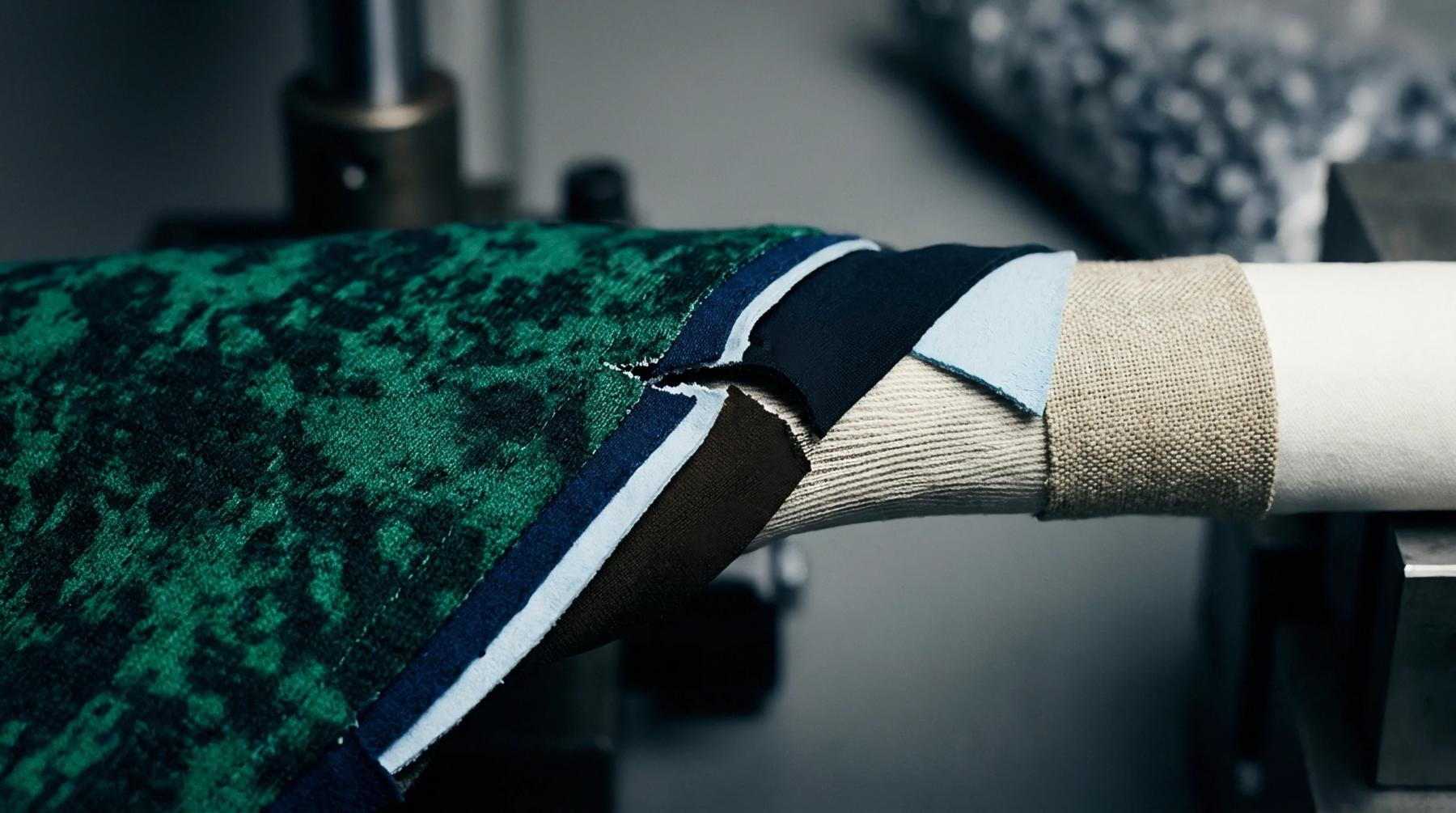
Thermal Assessment
Continuous monitoring of the internal heat levels of a fabric substrate or yarn package ensures proper chemical activation during thermal processing. The use of core temperature profiling allows finishing mills to track the actual temperature achieved inside thick or dense materials. This technique is critical during heat-setting and resin curing, where surface measurements do not represent the conditions at the center of the structure.
Without this data, thick materials are often under-cured or overheated.
Measurement Mechanism
Thermocouple probes inserted into the center of the material track the real-time thermal trajectory during the process. These sensors connect to a data logger that travels alongside the fabric through the stenter frame or curing oven. This logging system captures a continuous temperature curve, mapping heat distribution against time and zone position.
The resulting data shows the exact moment the interior reaches the necessary reaction threshold.
Curing Control
Finishing processes rely on specific dwell times at target temperatures to lock in fiber properties. Chemical reactions such as cross-linking in durable press finishes require the center of the fabric to maintain a specific heat level for a set duration. Utilizing core temperature profiling reveals whether the oven speed must be adjusted to compensate for wet-to-dry transitions.
This profiling ensures that the finishing chemicals react completely without degrading the outer surface of the fabric.
Quality Assurance
Maintaining precise thermal records is a requirement for meeting industrial performance specifications. Consistently logging these internal profiles prevents finish migration and ensures uniform fabric performance across the entire production lot.