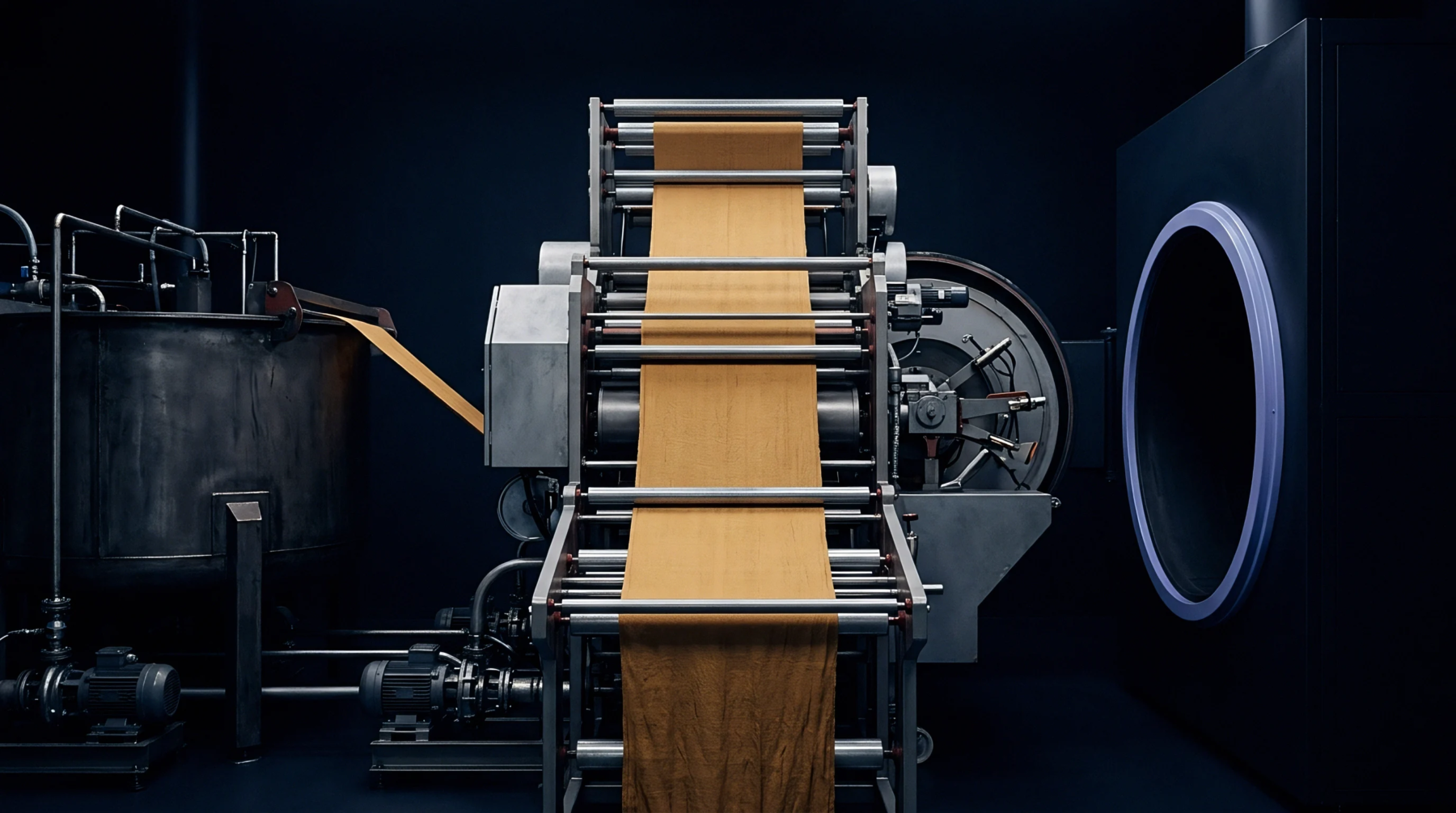
Controlling Continuous Dyeing Particulate Migration across Thermal Intermediate Dryers
Intermediate drying needs balanced radiative heat, controlled convection air speed, and pseudoplastic antimigrants to eliminate dye migration across woven fabric.
Hydroscopic fibre stability defines the physical state where textile components hold the maximum water content before structural degradation begins within the polymer chain. A critical moisture limit sets the boundary for drying cycles in high capacity industrial conditioning chambers. Operators establish these values through weight change analysis after exposing raw material samples to humidity ramps.
Standard gravimetric protocols demand precise oven drying to verify baseline mass before testing begins. Absolute dry weight provides the denominator for calculating specific regain ratios during production stages.
Environmental chambers cycle through controlled humidity levels while monitoring the mass loss of nylon and polyester substrates. Technicians trigger automatic shutoffs when the observed rate of water release drops below the specified tolerance for temporal stability. Heat transfer rates dictate the internal drying speed of dense yarn packages or high gsm woven goods.
Rapid temperature spikes cause surface skinning which traps water molecules deep inside the core of thick fabric bundles. Correct drying requires gradual temperature increments to ensure uniform vapor pressure across the entire batch. Low air velocity prevents surface damage while allowing internal moisture to escape the fibrous structure.
Laboratory records track total dwell time alongside the percentage of residual water detected after the process concludes. High precision scales integrated into the floor of the drying unit report mass adjustments every sixty seconds. Automated systems prevent over drying, a condition where fibre embrittlement reduces tensile strength during subsequent spinning or knitting operations.
Quality assurance departments require this measurement to define the shipping weight of processed textiles destined for international transit. Bulk loads fluctuate based on ambient atmospheric absorption throughout the supply chain. Shippers rely on standard regain values to adjust the net invoice weight of cotton and synthetic fibre shipments.
Discrepancies between factory exit weight and warehouse arrival weight highlight potential moisture loss during ocean freight or inland storage. Documentation reflects the condition of the material at the moment of inspection to protect both buyer and supplier from financial variances. Contractual agreements designate the testing method used to settle disputes involving excessive water content in natural yarns.
Precision instrumentation verifies the outcome of thermal processing by comparing sample output against established industry baselines. Digital sensors monitor both heat flux and vapor concentration to maintain accuracy within the chamber environment. Periodic recalibration of balances ensures that the detection of water loss meets the required industrial standards.
Consistent application of these limits allows factories to maintain fiber flexibility and structural integrity throughout the transformation from bale to finished apparel. Accurate records of the drying stage support claims regarding the quality of incoming raw materials or the processing standards of offshore facilities. This parameter dictates the safe operating range for industrial textile manufacturing equipment.
Intermediate drying needs balanced radiative heat, controlled convection air speed, and pseudoplastic antimigrants to eliminate dye migration across woven fabric.
Expertise is a utility, not a secret. sentiention™ publishes its working knowledge as open reference: intelligence layer covering the materials it sources, the markets it enters, and the reference that serves both.